 Blaine Roofing
 Exterior Contractors Serving Semiahmoo
Semiahmoo sits right where Whatcom County meets the water, and that location shapes almost everything about how a home's exterior ages here. Homes on or near the spit and the surrounding shoreline neighborhoods take on a different set of stresses than houses a few miles inland in Blaine proper. Salt-laden air, wind-driven rain coming straight off Semiahmoo Bay, and long stretches of shade and dampness that feed moss growth all combine to wear down roofing, siding, windows, and decks faster than in drier parts of the state. We work on homes throughout this area regularly, and the patterns repeat: fasteners that corrode ahead of schedule, siding seams that let moisture in from the side rather than the top, and roofs that hold moss in the shaded north- and east-facing slopes long after the rest of the roof has dried out.
None of that means a home here is destined for problems. It means the materials, details, and maintenance schedule need to match the actual conditions instead of a generic Pacific Northwest playbook. That's the approach we take on every Semiahmoo project, whether it's a full roof replacement, a siding recover, new windows, or a deck rebuild.
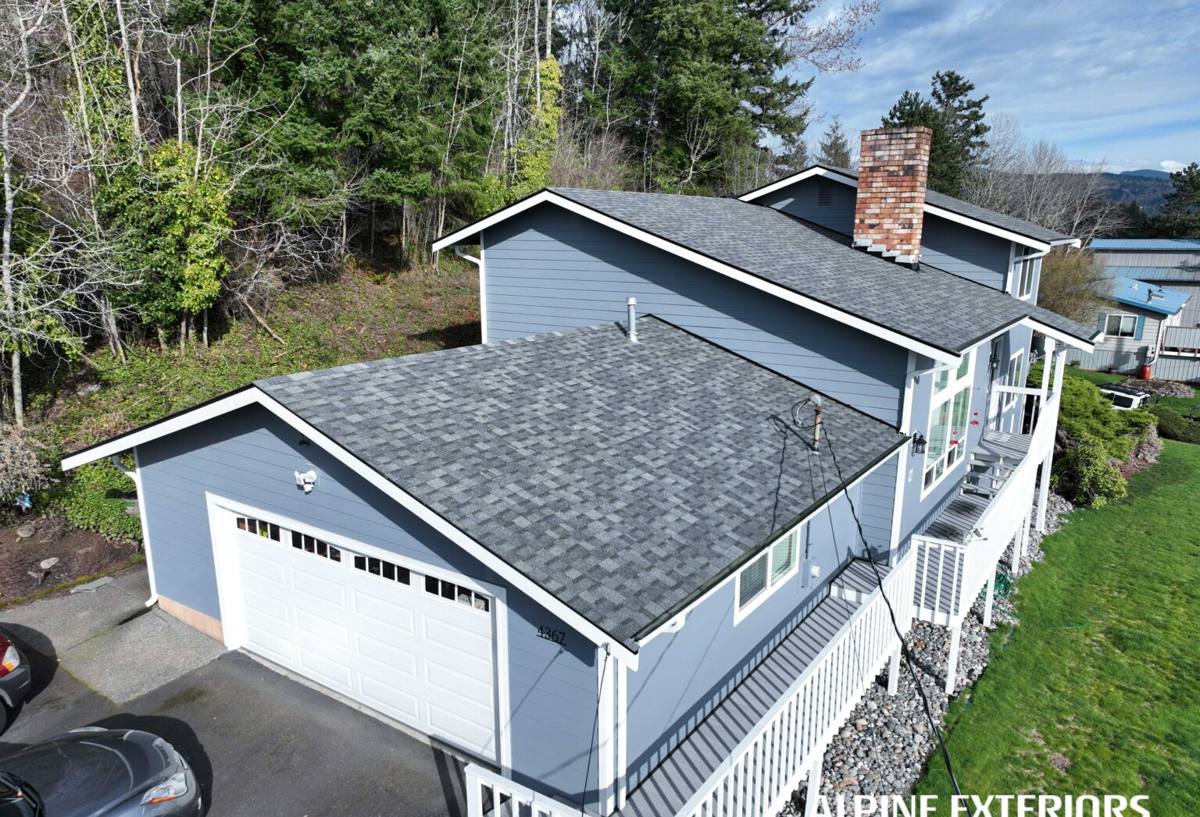
What the Marine Climate Actually Does to a Home
Salt Air and Corrosion
Proximity to salt water accelerates corrosion on anything metal — nails, flashing, gutter hardware, screws holding siding trim in place. Standard electro-galvanized fasteners hold up fine inland but can start showing rust streaks within a few years this close to the bay. The fix isn't complicated, but it does mean specifying stainless steel or heavy hot-dip galvanized fasteners and flashing on Semiahmoo jobs as a default, not an upgrade. It's cheap insurance against staining, weakening connections, and premature paint failure around every nail head.
Wind-Driven Rain
Rain that falls straight down is a much easier problem to manage than rain that's being pushed sideways by wind off open water. Wind-driven rain finds its way into laps, seams, and penetrations that would stay dry in a calmer setting. This is why flashing details at windows, roof valleys, and siding transitions matter more here than in sheltered inland neighborhoods — a shortcut that never causes a leak in Bellingham's east side can cause one within a season on an exposed Semiahmoo elevation.
Moss, Shade, and Roof Life
Whatcom County's long wet season is tough on roofs generally, but Semiahmoo's tree cover and shaded lots make it worse in specific spots. Moss and moisture-loving growth take hold fastest on north-facing and shaded slopes that don't get enough sun to dry out between rain events. Left alone, moss lifts shingle edges, holds water against the roof deck, and shortens the life of the roofing material well before it's actually worn out. Regular moss treatment and gutter clearing matter more here than the material choice itself.
Roofing Options for a Coastal, Moss-Prone Climate
There's no single "right" roofing material for Semiahmoo — it depends on the home's exposure, budget, and how much upkeep the owner wants to take on. Here's how the common options compare for this specific climate:
| Material | Coastal/moss performance | Typical lifespan here | Maintenance |
|---|---|---|---|
| Architectural asphalt shingle | Good with proper ventilation and zinc/copper strips to slow moss | 20-30 years | Annual moss check, gutter clearing |
| Standing seam metal | Excellent shedding of wind-driven rain; needs quality coating near salt air | 40-50+ years | Low; periodic fastener and coating check |
| Cedar shake | Attractive but holds moisture longest; highest moss risk in shaded areas | 20-25 years with upkeep | High; regular treatment required |
| Synthetic/composite shingle | Resists moisture absorption well, holds color in salt air | 30-50 years | Low to moderate |
For most Semiahmoo homes we lean toward architectural asphalt or metal, depending on the roof's pitch, exposure, and the look the homeowner wants. We'll walk through the trade-offs honestly rather than pushing whatever's easiest to install — a shaded, low-slope roof calls for different choices than an open, wind-exposed one.
Siding Built to Handle Salt Air and Sideways Rain
Siding on a Semiahmoo home is doing more work than siding a few miles inland. It's managing constant humidity, occasional salt spray, and rain that hits it at an angle instead of just running down. Fiber cement siding has become our default recommendation for exposed coastal elevations because it doesn't absorb moisture the way wood does and it holds paint well in salt air when properly primed and finished. Engineered wood products can work in more sheltered spots but need attentive caulking and flashing to avoid moisture problems at seams.
We generally steer away from products that rely heavily on face-sealed joints in this kind of exposure — not because the product itself is bad, but because that installation approach leaves less margin for error when wind-driven rain is a regular occurrence rather than an occasional event. A rainscreen gap behind the siding, proper weather-resistive barrier detailing, and correct flashing at every window and door opening matter more than which brand of siding goes on the wall.
Signs Your Siding Is Losing the Battle
- Soft or spongy spots when you press on the siding, especially near the bottom courses
- Paint or finish failing faster on one side of the house (usually the side facing the water)
- Visible gaps or separation at seams and corner trim
- Staining or streaking around fastener heads
- Persistent musty smell along an exterior wall inside the home
Windows That Can Take the Wind and the Wet
Window failure in a coastal setting is rarely about the glass itself — it's almost always about the flashing and installation around the window. A quality window installed with poor flashing details will leak in this climate, while a mid-range window installed correctly will hold up for decades. That said, for homes with direct water exposure, we do recommend vinyl or fiberglass frames over aluminum, since aluminum conducts cold and can contribute to condensation issues in a consistently damp climate. Dual-pane, low-E glass is standard at this point and helps with both moisture control and the energy loss that comes with big window walls facing the water, which a lot of Semiahmoo homes have.
Whatever the window brand, the flashing tape, sill pan, and head flashing details around it are what actually keep water out over the long run. That's where we spend the extra time on every install here.
Decks in a Climate That Never Fully Dries Out
Decks in Semiahmoo deal with the same moisture load as the roof and siding, plus direct foot traffic and standing water risk if drainage isn't right. Composite decking has become popular here because it doesn't need refinishing and resists the moisture absorption that leads to rot and splintering in wood decking. It's not maintenance-free — surface mildew can still develop in shaded, poorly ventilated spots — but it removes the annual staining and sealing cycle that a wood deck demands in this climate.
For homeowners who prefer the look and feel of real wood, cedar remains a reasonable choice as long as it's sealed on a consistent schedule and the substructure has proper airflow underneath. What we watch closely on every deck build here, regardless of decking material, is ledger board flashing and joist protection — those are the components most likely to fail quietly, out of sight, in a climate this wet.
Why a Local Crew Matters More Here Than Elsewhere
A roofing or siding crew that mostly works drier, more sheltered parts of Washington can do good work and still miss details that matter specifically in a place like Semiahmoo. Knowing which elevations take the worst of the wind-driven rain, which roof slopes hold moss the longest, and how fast unprotected fasteners corrode this close to the water isn't something you learn from a manual — it's something you learn by working on homes in this exact stretch of Whatcom County season after season. That local knowledge shows up in small decisions: where we add extra flashing, which fastener spec we use by default, and which products we steer clients away from for this specific exposure.
A Practical Maintenance Checklist for Semiahmoo Homeowners
- Clear gutters and downspouts at least twice a year — more often under heavy tree cover
- Have shaded roof slopes checked and treated for moss annually, not just when it becomes visible
- Inspect caulking and flashing around windows and doors each fall before the wet season sets in
- Rinse salt residue off siding and trim periodically if the home has direct water exposure
- Check deck ledger boards and under-deck framing yearly for hidden moisture damage
- Walk the roofline after major windstorms to check for lifted shingles or displaced flashing
What to Expect When You Reach Out
For most Semiahmoo projects, the process starts with a straightforward look at the home — current roofing or siding condition, exposure to wind and water, and what's actually causing any problems you've noticed. From there we can talk through material options honestly, including what each one costs to install and what it costs to maintain over time, since the cheaper upfront choice isn't always the cheaper long-term one in this climate. Every home on the water or near it has its own exposure pattern, so we tailor the recommendation to the specific lot and elevation rather than a one-size-fits-all package.
If you're dealing with moss buildup, a slow leak you can't pin down, siding that's showing its age faster than it should, or you're just planning ahead for a roof, siding, window, or deck project, we're happy to take a look and give you a straight answer. Use the form below to request a free, no-pressure estimate.