 Blaine Roofing
 Roofing Built for Birch Point's Waterfront Exposure
Birch Point sits close enough to the water that the weather doesn't behave like it does further inland. Homes here take on a steady mix of salt-laden air, wind-driven rain off the bay, and long stretches of gray, damp weather that never quite dries things out. That combination is hard on roofing, siding, windows, and decks alike, and it rewards work that's done correctly the first time. We've built our approach around what actually happens to a home out here, not a generic checklist written for a drier part of the state.
This page covers what Birch Point homeowners tend to run into and how our roofing, siding, window, and deck work is suited to it. We've kept it general where we should — every home and lot is different, and the right answer for your roof depends on its age, slope, and exposure, which is exactly what a free estimate is for.
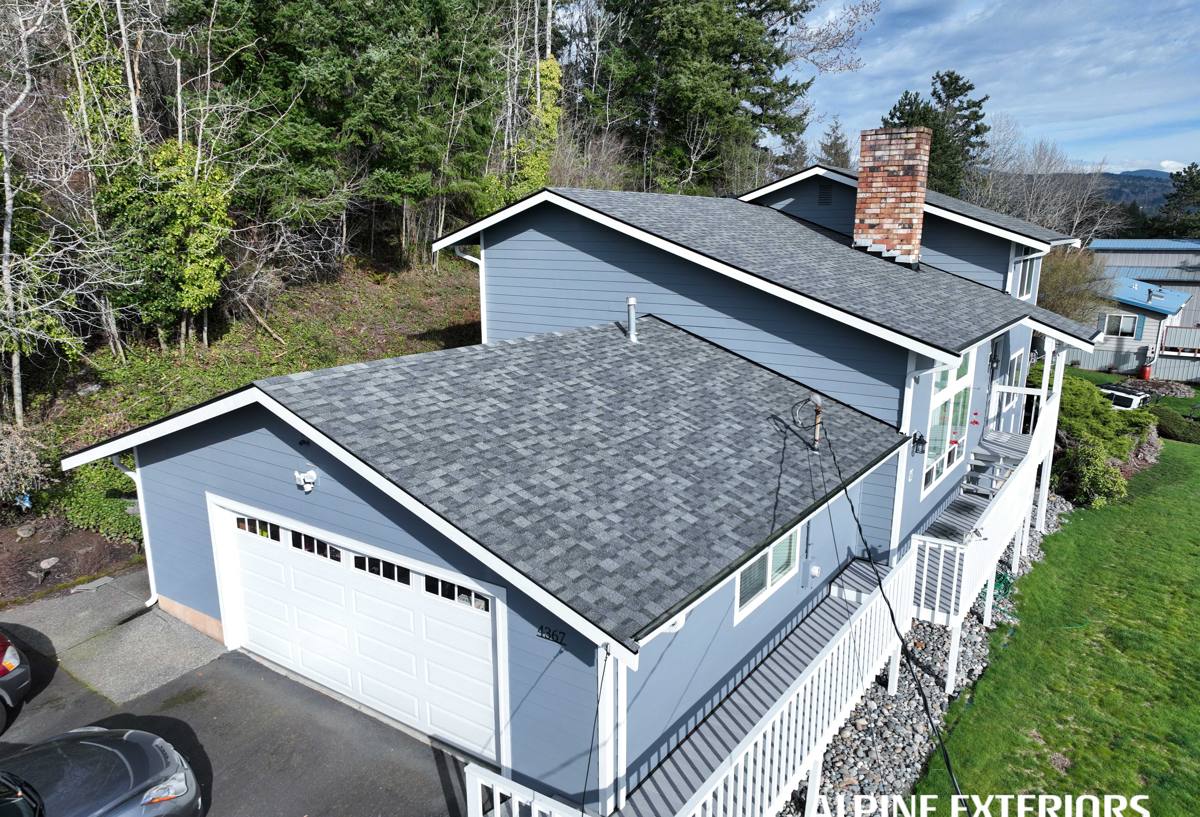
What Salt Air, Driving Rain, and Moss Actually Do to a Roof
Salt Air
Airborne salt from Semiahmoo Bay and the Strait of Georgia settles on roofing, flashing, and fasteners. Over years, it accelerates corrosion on exposed metal — nail heads, flashing edges, gutter hardware, and any exposed screws. It's a slow process, but it's continuous, and it's one of the main reasons material and fastener choice matters more here than it would twenty miles inland.
Driving Rain
Wind off the water doesn't just fall straight down — it pushes rain sideways and up under laps, flashing, and trim. A roof that would shed water fine in a calm downpour can still take on moisture at Birch Point if the underlayment, flashing details, and seams weren't installed with that wind-driven angle in mind. This is where installation quality matters as much as the material itself.
Moss Season
Whatcom County's wet season runs long, and north-facing or shaded roof sections in Birch Point often stay damp for weeks at a stretch. That's exactly the environment moss and algae need. Left unaddressed, moss holds moisture against the roofing surface, works into laps and seams, and can lift shingles or shakes over time — turning a cosmetic issue into a moisture problem.
Roofing Materials That Hold Up Near the Water
There's no single "best" roofing material for every home — it depends on your roof's pitch, your home's style, and your budget. Here's how the common options compare for a coastal Whatcom County setting like Birch Point.
| Material | Salt Air Resistance | Moss Resistance | Typical Lifespan Here |
|---|---|---|---|
| Architectural asphalt shingles (with zinc/copper strips) | Good, especially with corrosion-resistant fasteners | Good with algae-resistant granules and strip protection | 25–30 years |
| Standing seam metal | Very good with marine-grade coatings and stainless fasteners | Excellent — sheds moss naturally | 40–50+ years |
| Cedar shake | Fair — needs regular treatment and upkeep | Poor without diligent maintenance; holds moisture | 20–30 years with upkeep |
| Composite/synthetic shake or slate | Good | Good | 30–50 years |
For most Birch Point homes, we lean toward architectural asphalt with corrosion-resistant fasteners and zinc or copper strips at the ridge, or standing seam metal on homes where the owner wants the longest possible service life and lowest moss maintenance. Cedar shake can still be the right call for the look of certain homes, but we're honest with clients up front that it demands more attention in this climate — that's a maintenance trade-off, not a knock on the material.
Beyond the Roof: Siding, Windows, and Decks in a Coastal Setting
Siding
Siding on a waterfront-adjacent home deals with the same salt exposure and driving rain as the roof, plus more direct wind loading. Proper flashing at windows, doors, and butt joints — and a drainage plane behind the siding itself — matters more here than color or style choice. We pay particular attention to how water is meant to get out from behind the siding, not just kept off the front of it.
Windows
Wind-driven rain finds weak points at window flanges and sill flashing before almost anywhere else on a house. Correct window installation — proper flashing tape sequencing, sill pans, and sealant that's rated for this climate — is what actually keeps water out, more than the window brand itself. We also see condensation issues on older single-pane or poorly sealed windows in this humid, cool environment, which is worth flagging if you're noticing fogged glass or drafts.
Decks
Outdoor living space near the water takes a beating from moisture cycling — wet, dry, wet again — plus UV and salt. Fastener corrosion, ledger board rot where the deck meets the house, and slippery moss buildup on decking are the most common issues we see on Birch Point decks. Proper ledger flashing and drainage away from the house band are worth getting right at the start, since that connection point is where most structural deck problems originate.
Signs Your Birch Point Home Needs Roofing or Exterior Attention
Because the damage here tends to be gradual, it's easy to miss early warning signs from the ground. Worth checking, especially after a wet winter:
- Moss or dark streaking on north-facing or shaded roof slopes
- Rust staining below flashing, nail heads, or gutter seams
- Curling, cupping, or missing shingle tabs, particularly on wind-exposed slopes
- Soft or discolored siding near window and door trim
- Fogging or drafts around older windows
- Soft spots, staining, or gaps at deck ledger boards and stair stringers
- Granules collecting in gutters or downspouts
- Any interior ceiling staining, even faint, after a storm
None of these mean you need a full replacement automatically — but they're worth a look before they turn into something more expensive.
What Drives the Cost of Exterior Work in This Area
Every home is priced individually, but a few factors consistently move the number for Birch Point properties specifically:
| Factor | Why It Matters Here |
|---|---|
| Roof pitch and access | Steeper or harder-to-access roofs near the shoreline take longer to work safely |
| Corrosion-resistant fastener upgrade | Stainless or hot-dip galvanized fasteners cost more but hold up far better in salt air |
| Existing moisture damage | Roofs or siding with hidden rot from prolonged dampness need decking or sheathing repair, not just new surface material |
| Flashing detail complexity | Homes with multiple valleys, dormers, or wind-exposed walls need more flashing work to handle driving rain |
| Material choice | Metal roofing and higher-grade composites cost more up front but reduce moss and corrosion maintenance long-term |
How We Work in Birch Point
We start with an on-site inspection, not a drive-by estimate — coastal exposure varies a lot even within a few hundred feet depending on which direction a roof or wall faces relative to the water and prevailing wind. From there we walk you through what we're actually seeing, what's cosmetic versus structural, and what the realistic options are, including the honest lower-cost option when that's genuinely the right call. We use fasteners and flashing details suited to salt air exposure as standard practice on homes in this area, not as an upcharge add-on, because installing it any other way just means a callback in a few years.
Why a Local Crew Matters Out Here
A roofing or siding crew that mostly works inland jobs doesn't spend much time thinking about zinc strip placement, marine-grade fastener specs, or how far up a wall driving rain can actually push water. Working regularly in Blaine and along the Whatcom County shoreline means we see the same failure patterns repeatedly — which fasteners hold up, which flashing details actually stop wind-driven rain, and which roof sections chronically hold moss because of shade and orientation. That's the kind of judgment that comes from doing the work in this specific environment, not from a manual.
Maintenance That Actually Extends the Life of Your Roof and Exterior
Coastal exposure doesn't mean your roof or siding needs constant attention — it means a few specific things are worth doing on a schedule:
- Clear moss from shaded roof slopes before it spreads, rather than after it's established
- Keep gutters and downspouts clear so water isn't backing up under roof edges
- Rinse accumulated salt residue off siding and roofing periodically, especially after dry spells followed by wind
- Check and re-seal window flashing and deck ledger connections every few years
- Have flashing, valleys, and penetrations inspected after major windstorms
Staying ahead of these small items is almost always cheaper than repairing what happens when they're ignored for a decade.
Get a Free Estimate for Your Birch Point Home
If you're noticing moss, staining, drafts, or you just want an honest read on where your roof, siding, windows, or deck stand, we're glad to take a look. Fill out the form below for a free, no-pressure estimate — we'll tell you what we actually see and what your real options are, not just what's easiest to sell.