 Blaine Roofing
 Why Roofs in Semiahmoo Take a Different Kind of Beating
Semiahmoo sits right up against the water in the northwest corner of Whatcom County, and that waterfront setting is exactly what makes roofing here different from a typical inland job. Homes close to Semiahmoo Bay and the Strait of Georgia deal with a steady mix of salt-laden air, wind that comes straight off the water, and a wet season that stretches on far longer than most homeowners expect. None of that is dramatic on its own, but stacked together over years, it shortens the life of a roof that was never built with this exposure in mind.
Salt Air and Metal Fatigue
Airborne salt doesn't just affect boats and dock hardware. It settles on roofing metal — flashing, drip edge, nail heads, valley metal — and speeds up corrosion, especially on homes with a direct view of the water where the air carries more salt spray. Once flashing starts to pit or rust, it stops shedding water the way it should, and that's usually where leaks start, not in the field of the shingles themselves.
Wind-Driven Rain Off the Water
Open water exposure means wind-driven rain, and wind-driven rain behaves differently than a straight downpour. It gets pushed sideways and even slightly upward under shingle laps, at gable ends, and around any roof-to-wall transition. A roof that would hold up fine in a sheltered inland yard can leak in Semiahmoo simply because the water is being driven into places it was never meant to reach.
A Long Moss Season
Blaine's marine climate means mild, wet winters that stretch the moss-growing season out for months. Combine that with mature conifers shading a lot of Semiahmoo properties, and you get north-facing slopes that rarely dry out completely between rains. Moss doesn't just look bad — it holds moisture directly against the roofing material and lifts shingle edges, which is exactly the kind of slow, quiet damage that leads to an early replacement.
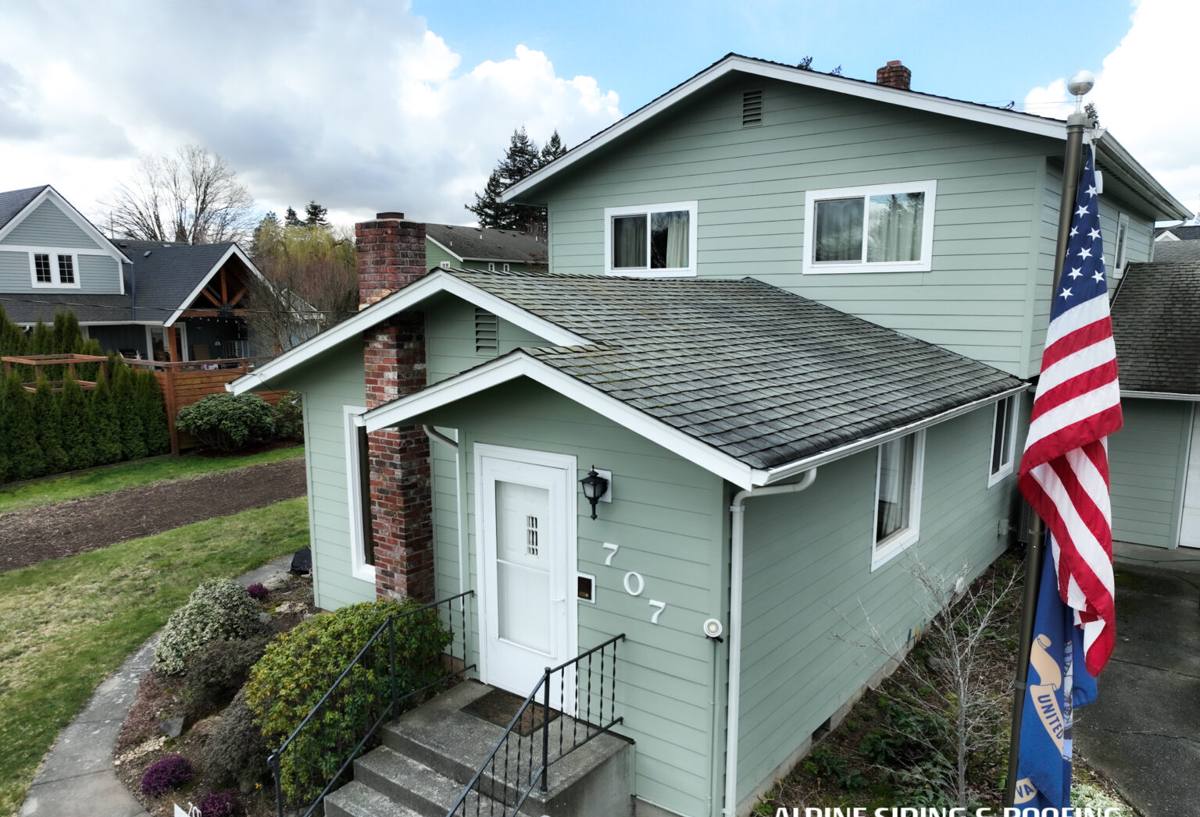
Signs a Semiahmoo Roof Needs Replacement, Not Another Repair
Every roof reaches a point where patching stops making financial sense. In this climate, that point tends to arrive earlier than homeowners expect because of the combined salt, wind, and moss exposure. Here's what usually signals a full replacement is the smarter call:
- Granule loss heavy enough that you're finding grit in gutters after every rain
- Corroded or pitted flashing around chimneys, skylights, and roof-to-wall junctions
- Moss established deeply enough that it lifts shingle tabs rather than just staining the surface
- Multiple past repairs in different areas of the same roof, rather than one isolated problem
- Soft spots, sagging, or visible daylight in the attic near eaves or valleys
- A roof past 20-25 years old on a home with direct water exposure, even if it looks fine from the ground
- Interior stains that reappear after repairs, suggesting the leak path has shifted rather than stopped
What a Correct Roof Replacement Involves in This Climate
A roof replacement done right in Semiahmoo isn't just "new shingles on the old roof." The details underneath the surface matter more here than in a sheltered, inland neighborhood, because those details are what stand between the house and driving rain, salt air, and moss.
Full Tear-Off and Deck Inspection
We remove the old roofing down to the deck rather than layering over it. That's the only way to actually see the sheathing, check for soft or delaminated spots from years of moisture intrusion, and catch problems — especially around valleys and eaves — before they're sealed back under a new roof for another twenty years.
Underlayment Built for Wind-Driven Rain
Given how much wind-driven rain a waterfront roof deals with, we treat underlayment as a real second layer of protection, not a formality. That typically means a synthetic underlayment across the field of the roof and a self-adhering ice-and-water membrane at vulnerable spots — eaves, valleys, and roof penetrations — where wind can force water backward under the shingles.
Ventilation That Actually Fights Moss
Moss thrives where a roof stays cool and damp. Proper intake and exhaust ventilation keeps air moving under the roof deck, which helps the surface dry out faster between the region's frequent rains. It also protects the deck itself from trapped moisture, which matters just as much for the life of the roof as anything happening on the surface.
Flashing and Fasteners Rated for Salt Exposure
On a standard inland roof, standard galvanized flashing and fasteners are usually fine. On a Semiahmoo roof close to the water, we lean toward more corrosion-resistant flashing metals and fastener coatings, because replacing a shingle is a small job — replacing rusted-through flashing that's already let water into the deck is not.
Comparing Roofing Materials for a Semiahmoo Home
There's no single "best" roofing material for every home here — it depends on the home's exposure, roof shape, and how much shade and moss risk it faces. This is a general comparison of how common options tend to perform against this area's specific conditions.
| Material | Salt Air Resistance | Moss Resistance | Wind Performance |
|---|---|---|---|
| Architectural asphalt shingle | Good with corrosion-resistant flashing and fasteners | Moderate — benefits from ventilation and periodic cleaning | Strong when properly nailed and sealed for high-wind zones |
| Standing seam metal | Very good with the right coating/finish | Very good — sheds moisture quickly, little surface for moss to grip | Excellent, among the best options for wind-driven rain |
| Wood shake/shingle | Fair — needs diligent maintenance near salt air | Poor without regular treatment and cleaning | Fair to good depending on fastening method |
| Composite/synthetic shingle | Good, low-maintenance in salt exposure | Moderate to good depending on the product | Good, generally rated for high wind |
For homes with heavy shade and a lot of moss history, the material matters less than the ventilation and slope beneath it. For homes right on the water, corrosion resistance in the flashing and fasteners often matters more than the shingle choice itself.
How Our Roof Replacement Process Works
We keep the process straightforward and communicate at each stage, especially since weather windows in this area can be narrow during the wetter months.
- On-site inspection of the current roof, attic, and ventilation, with photos of anything that affects the scope
- A written estimate that breaks down material options and the reasoning behind our recommendation for your specific exposure
- Scheduling timed around dry weather windows, since a proper tear-off needs a clear stretch of days
- Full tear-off, deck inspection, and repair of any compromised sheathing before anything new goes down
- Installation of underlayment, flashing, ventilation components, and the new roofing system
- A final walkthrough covering what was done, what to expect from the new roof, and basic upkeep going forward
Why Hiring a Crew That Already Works in Semiahmoo Matters
A roofing crew that mostly works drier, sheltered, inland neighborhoods can still do competent work — but they're not necessarily thinking about salt exposure on the flashing or wind-driven rain at the gable ends by default, because it's not what they see every day. Working regularly in Semiahmoo and along the rest of the Blaine waterfront means those details are standard practice for us, not an afterthought we add after something fails. That local familiarity also means realistic expectations about scheduling around this area's weather patterns, rather than a generic timeline that doesn't account for it.
What Affects the Cost of a Roof Replacement Here
Cost varies enough from home to home that broad numbers aren't much use without seeing the actual roof, but the main factors that move the price are consistent:
| Factor | How It Affects Cost |
|---|---|
| Roof size and pitch | Larger and steeper roofs need more material and labor time |
| Deck condition | Rotted or delaminated sheathing found during tear-off adds repair cost |
| Material choice | Metal and premium shingle systems cost more upfront than standard asphalt |
| Number of penetrations | Chimneys, skylights, and vents each need individual flashing work |
| Access and site conditions | Steep lots, tree cover, or limited equipment access can add time |
| Ventilation upgrades | Adding proper intake/exhaust venting where none existed adds a modest cost but pays off in roof life |
In general, expect a full replacement on a typical Semiahmoo-area home to fall into a broad mid-five-figure range, with the specifics — material, deck condition, and roof complexity — swinging it up or down from there. We won't know your real number until we've actually looked at the roof.
Caring for Your New Roof in a Marine Climate
A well-installed roof still benefits from basic upkeep in this environment. Keeping gutters clear so water isn't backing up under the eaves, having moss treated or removed before it establishes deeply, and a periodic check of flashing and sealant points will all extend the life of the investment you just made. None of this requires much time or money — it just requires not ignoring it for years at a stretch, which is how a lot of avoidable damage happens in the first place.
If your Semiahmoo home's roof is showing its age or you just want an honest read on where it stands, we're happy to take a look. Use the form below to request a free, no-pressure estimate.