 Blaine Roofing
 Why Semiahmoo Roofs Wear Differently
Semiahmoo sits right on the water, and that changes what a roof has to deal with compared to a home a few miles inland in Blaine or elsewhere in Whatcom County. The combination of salt-laden air, wind-driven rain coming straight off the water, and long stretches of shade and dampness that feed moss growth means roofing materials and details that work fine elsewhere can fall short here. A new roof installation in this area isn't just "put shingles on a house" — it's a job that has to account for corrosion, wind uplift, and moisture in ways a standard install doesn't always address.
We've installed and repaired roofs across Blaine and the surrounding waterfront neighborhoods long enough to know which details actually matter out here versus which are just upsells. This page walks through what a correct new roof installation looks like for a Semiahmoo home, and why the climate here changes the plan.
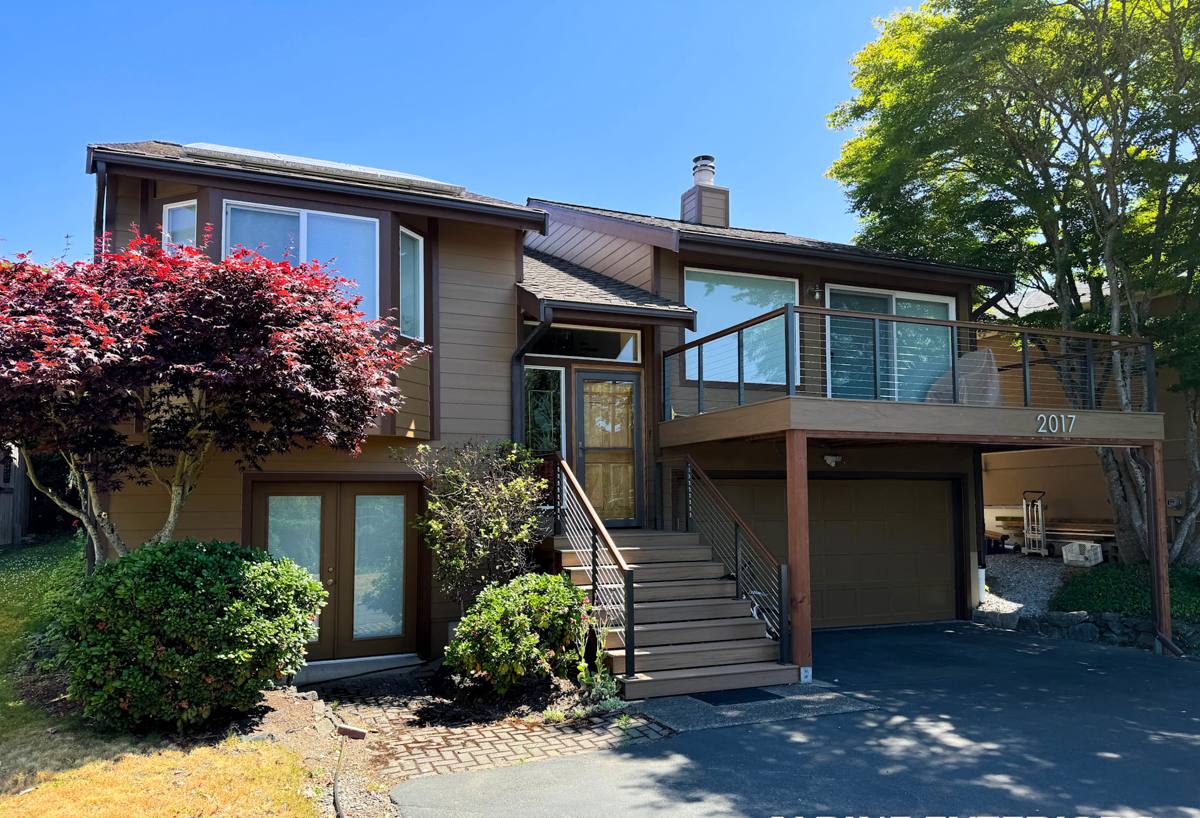
What Salt Air, Rain, and Moss Actually Do to a Roof
Salt air and metal components
Airborne salt accelerates corrosion on any exposed metal — nails, flashing, vents, and fasteners. On a standard inland install, builder-grade galvanized fasteners might last the life of the roof without issue. On a waterfront property like Semiahmoo, the same fasteners can start rusting years earlier, which leads to streaking, loose flashing, and eventually leaks at the exact spots where a roof is supposed to be sealed tight.
Driving rain
Rain that comes in mostly straight down is a different problem than rain that's being pushed sideways by wind off the water. Wind-driven rain finds its way under shingles, around vent boots, and through any flashing detail that was installed to a bare-minimum standard. It also puts more stress on shingle sealant strips and starter courses at eaves and rakes, which is where uplift and wind-driven infiltration usually start.
Moss and prolonged dampness
Many homes near Semiahmoo sit under tree cover or in shaded, humid pockets that stay damp far longer after a storm than an open, sunny roof would. That extended moss season isn't cosmetic — moss holds moisture against the roofing surface, works its way under shingle edges, and can lift tabs over time. On older roofs we've seen moss contribute to granule loss and premature wear well before the shingles were otherwise due for replacement.
What a Correct New Roof Installation Involves
A new roof is only as good as what happens before the new material ever goes down. For a Semiahmoo home, we treat these steps as non-negotiable, not optional add-ons:
- Full tear-off: Removing existing layers down to the deck so we can actually see the condition of the sheathing, not roof over problems that are already there.
- Deck inspection and repair: Replacing any soft, water-stained, or delaminated sheathing before new underlayment goes down — this is where hidden moisture damage from years of exposure usually shows up.
- Ice-and-water or self-adhering membrane at vulnerable areas: Eaves, valleys, and areas prone to wind-driven rain get a self-adhering waterproof membrane, not just standard felt.
- Upgraded synthetic underlayment: A durable synthetic underlayment across the full roof, as a second line of defense behind the shingles or metal.
- Corrosion-resistant fasteners and flashing: Stainless or coated fasteners and flashing at chimneys, walls, and penetrations, sized for a marine environment rather than a standard inland spec.
- Proper ventilation: Balanced intake and exhaust ventilation so moisture and heat don't get trapped in the attic, which matters even more in a damp, shaded climate.
Skipping any one of these doesn't necessarily show up on install day. It shows up three, five, or ten years later, usually as a leak at a detail that was never built to handle the exposure this location actually gets.
Choosing Roofing Material for a Waterfront Property
There's no single "best" material for every Semiahmoo home — it depends on the home's exposure, roof pitch, budget, and how much long-term maintenance the owner wants to take on. Here's how the common options compare for this specific environment:
| Material | Salt Air / Corrosion | Wind-Driven Rain | Moss Resistance | Typical Lifespan |
|---|---|---|---|---|
| Architectural asphalt shingle | Good, with corrosion-resistant fasteners and flashing | Good with proper sealant strips and starter detail | Fair — benefits from algae-resistant granules and periodic cleaning | 25–30 years |
| Standing seam metal | Excellent with proper coating/finish | Excellent — few seams for water to find | Excellent — sheds moisture quickly | 40–50+ years |
| Synthetic composite shingle | Good, non-corroding material itself | Good, depends on installation detail | Good — resists moisture absorption | 30–50 years |
We install and stand behind all three where they make sense for the home. What we won't do is treat the fastener and flashing spec as an afterthought regardless of which shingle or panel is chosen — that detail matters more here than the brand on the wrapper.
Our Installation Process
- On-site evaluation: We walk the roof and attic, check current ventilation, and look at exposure — how much direct wind and salt spray this particular roof actually takes, and how much shade contributes to moss.
- Written scope and material recommendation: A clear, itemized plan covering tear-off, deck repair allowance, underlayment, flashing, ventilation, and material — no vague "roofing package" pricing.
- Tear-off and deck inspection: Full removal, deck repair where needed, photos of anything replaced so the homeowner sees exactly what was underneath.
- Waterproofing and underlayment: Self-adhering membrane at eaves and valleys, synthetic underlayment across the field of the roof.
- Flashing and ventilation work: Corrosion-resistant flashing at all penetrations and walls, intake/exhaust balanced for the attic's actual size and use.
- Material installation: Shingles, metal, or composite installed to manufacturer spec plus our own added details for wind and moisture exposure.
- Final walkthrough: Site cleanup, magnet sweep for stray fasteners, and a walkthrough covering warranty coverage and basic maintenance.
Ventilation and Moisture: The Part Homeowners Don't See
A new roof can look perfect from the ground and still fail early if the attic underneath it can't breathe properly. In a climate with as much sustained moisture as Whatcom County's coastline gets, trapped attic humidity leads to condensation on the underside of the deck, which can rot sheathing from the inside out — a problem that has nothing to do with the shingles themselves. We size intake and exhaust ventilation to the specific attic, not a generic ratio, and we check that soffit vents aren't blocked by insulation before calling the ventilation "done."
What Affects the Cost of a New Roof Here
| Factor | Why It Matters in Semiahmoo |
|---|---|
| Roof size and pitch | More steep or complex rooflines mean more labor and material, and steeper pitches shed wind-driven rain differently than low-slope sections. |
| Deck condition | Homes with longer-standing moisture exposure or moss cover often need more sheathing replacement, which isn't known until tear-off. |
| Material choice | Metal and composite typically cost more upfront than asphalt but can mean fewer maintenance calls over the life of the roof. |
| Flashing and penetration count | Chimneys, skylights, and multiple roof-wall intersections each need corrosion-resistant detail work, which adds labor. |
| Access and site conditions | Waterfront lots with limited access, steep grades, or mature tree cover can affect staging and cleanup time. |
We don't quote a roof over the phone sight-unseen — an accurate number requires seeing the actual roof, pitch, and deck condition. But every estimate we provide breaks these factors out so a homeowner can see where the money is going, not just a single bottom-line total.
Why Local Experience Matters for This Job
Roofing crews that mostly work inland jobs don't always think about salt exposure, wind-driven rain angles, or moss-heavy shade the way a crew that regularly works Semiahmoo and the rest of Blaine's waterfront does. That shows up in small decisions — which fastener grade gets used, how flashing is lapped at a wall facing prevailing wind, whether ventilation gets sized for a genuinely damp attic instead of a textbook average. None of those choices are visible on a finished roof from the street, but they're the difference between a roof that performs for its full expected lifespan out here and one that starts showing problems early.
We also know this stretch of coastline well enough to set realistic expectations about maintenance — for example, most homes in shaded or damp spots benefit from periodic moss treatment or removal regardless of how good the initial install is, and we'll tell you that upfront rather than oversell a "maintenance-free" roof that doesn't really exist in this climate.
Before You Get a Quote: A Practical Checklist
- Ask whether the quote includes a full tear-off or assumes roofing over the existing layer.
- Ask what fastener and flashing material will be used — standard galvanized versus corrosion-resistant options matters more here than inland.
- Ask how attic ventilation will be assessed and whether it will be adjusted, not just left as-is.
- Ask what happens if deck repair is needed — how it's priced and how you'll be shown what was replaced.
- Ask about the underlayment type at eaves and valleys specifically, since that's where wind-driven rain causes the most trouble.
- Get the scope in writing, itemized, before any work starts.
If you're planning a new roof for a home in Semiahmoo or elsewhere along Blaine's waterfront, we're happy to take a look and put together a straightforward, no-pressure estimate. Use the form below to get started.