 Blaine Roofing
 Fiber Cement Siding on Semiahmoo: A Job the Water Doesn't Forgive
Semiahmoo sits out on the spit between Semiahmoo Bay and Drayton Harbor, right at the edge of Blaine and about as close to open water as a residential property in Whatcom County gets. Siding on a home out here doesn't get the benefit of a windbreak, a buffer of trees, or a few miles of distance from salt water the way a lot of inland siding jobs do. It takes the weather straight on, from more than one direction, for most of the year. Blaine Roofing Co installs James Hardie fiber cement siding on Semiahmoo homes specifically because it's the one product we've found that keeps performing under that kind of sustained exposure instead of just holding up for the first few years.
This page is about one job in one place: fiber cement siding, installed correctly, on a Semiahmoo property. Not a general overview of every exterior trade we touch — just what this specific material needs to do here, what a correct installation actually involves, and why the crew doing the work matters as much as the product itself.
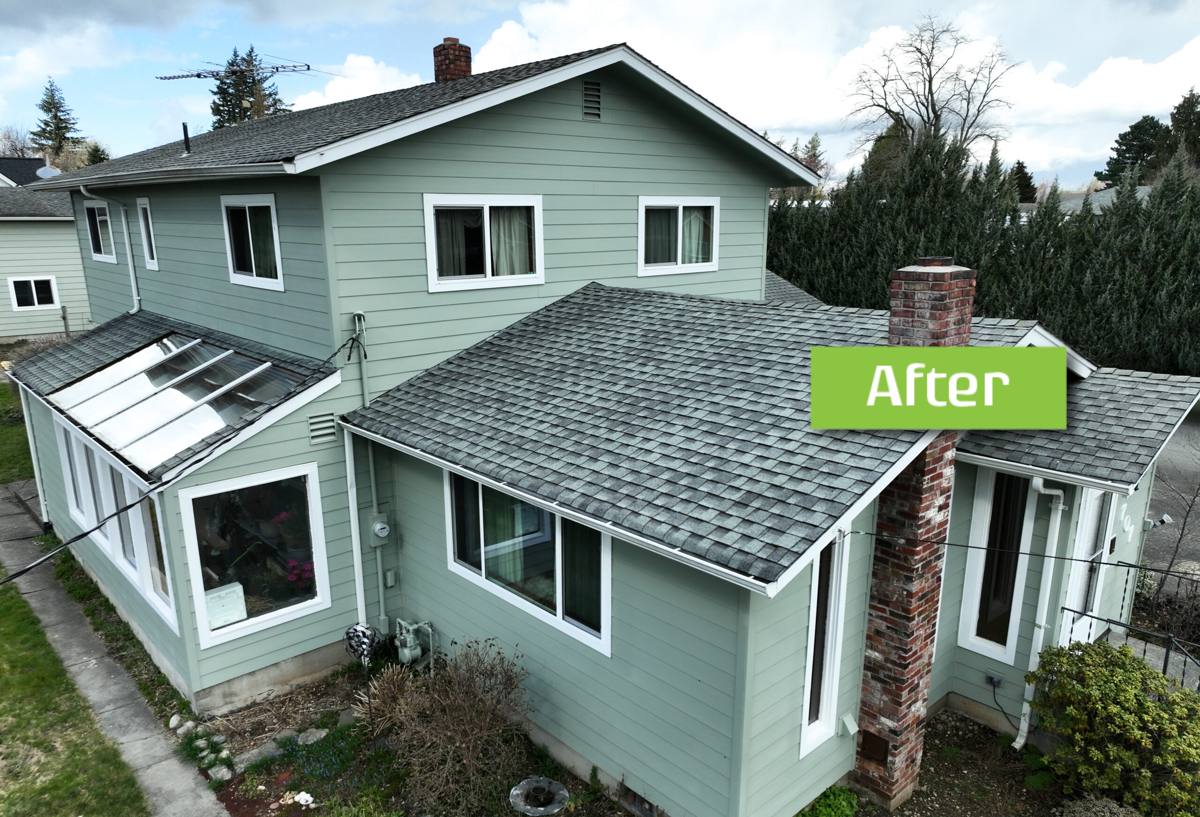
What Semiahmoo's Location Demands From Siding
Salt Air From More Than One Direction
Because the spit has water on more than one side, siding on a Semiahmoo home is exposed to salt-laden air from multiple bearings rather than a single prevailing direction the way most inland Blaine properties are. Salt speeds up corrosion in fasteners and any exposed metal trim, and it breaks down lower-grade paints and coatings faster than a drier setting ever would. That matters for siding specifically because the finish is the first line of defense — once it starts to chalk or fail, the material underneath is exposed to everything that follows.
Wind-Driven Rain That Doesn't Fall Straight Down
With almost no windbreak between the water and the wall, rain on the spit gets pushed sideways into laps, joints, and trim details with more force than a sheltered lot ever sees. Siding that's rated for average rainfall totals but installed with average joint and flashing details can still fail here, because the load isn't average — it's a sideways load hitting every seam in the wall.
A Moss and Mildew Season That Runs Most of the Year
Mild temperatures and near-constant humidity mean moss and mildew have a long growing season across Whatcom County, and shaded, north-facing walls on Semiahmoo properties rarely get enough sun or wind to dry out fully between storms. Siding that holds moisture at the surface, or that has an organic core for mildew to take hold in, tends to show it first on those walls — well before it's visible from the street.
Why We Install Only James Hardie Fiber Cement Here
We don't offer a menu of siding brands and let the homeowner pick based on price. On a property with this much direct exposure, we've made a professional call to install one system and stand fully behind it.
- Inorganic core: Fiber cement is cement, sand, and cellulose fiber — it doesn't have a wood-based core that can swell, cup, or feed fungus the way engineered wood or cedar can after repeated wetting.
- Factory-applied ColorPlus finish: The color is baked on in a controlled factory process rather than brushed on in the field, and it resists fading, chalking, and moisture intrusion far longer than site-applied paint does against salt air.
- HZ5 formulation: Hardie's HZ5 product line is engineered specifically for regions with heavy moisture exposure and freeze-thaw cycling, which is a reasonable description of a waterfront Whatcom County property.
- Non-combustible: The cement-based core doesn't feed a fire, which matters for household safety and can factor into insurance underwriting as well.
- Transferable warranty: Hardie backs its product with a long-term warranty that's typically transferable to a future owner, provided the installation followed their spec.
We won't install vinyl, LP SmartSide, Cemplank, Allura, primed spruce, or cedar on a Semiahmoo home. Each of those products can be a reasonable choice somewhere, for someone. But on an exposed spit property, we'd rather install one system correctly than offer a cheaper alternative that shifts long-term maintenance risk onto the homeowner a few years down the road.
What a Correct Installation Actually Involves
Fiber cement only performs the way it's engineered to when it goes on according to Hardie's published specifications. On an exposed property like this, skipping or shortcutting any one of these steps is where problems start.
Fastening and Clearance
Every fastener needs to be the correct type, length, and spacing for the substrate and the siding profile — corrosion-resistant hardware matters more here than almost anywhere else in the county. Clearance from grade, roof lines, and decks has to be held to spec so water has somewhere to go instead of wicking straight into the bottom edge of the siding.
Joints, Seams, and Trim
Butt joints need to be properly flashed or shingle-lapped, not just caulked and left to depend on sealant alone. Caulk fails eventually, even good caulk; a properly detailed joint keeps working after the caulk has done its job and started to wear.
Drainage Behind the Panel
On a property taking this much wind-driven rain, a drainage plane or rain-screen detail behind the siding gives any moisture that does get past the surface a way out instead of a place to sit against the sheathing. That detail is easy to skip and hard to see once the siding is up, which is exactly why it needs to be verified during installation, not assumed.
Flashing Integration at Windows and Roof Lines
Siding doesn't perform in isolation — it has to tie correctly into window flashing, door flashing, and roof-to-wall transitions. Most of the leaks we find on tear-offs in this area didn't start in the field of the siding at all; they started at one of these transitions where two systems meet and the detailing wasn't carried through.
Choosing the Right Hardie Profile for a Semiahmoo Home
James Hardie makes several siding profiles, and the right one for a given home depends on its style, exposure, and existing trim more than personal preference alone.
| Hardie Profile | Typical Use | Fit for Semiahmoo Exposure |
|---|---|---|
| HardiePlank lap siding | Traditional horizontal lap look, most common on single-family homes | Strong choice; lapped design sheds wind-driven rain well when installed to spec |
| HardiePanel vertical siding | Modern vertical look, often paired with board-and-batten trim | Works well on gable ends and accent walls; joint detailing needs extra care in high wind |
| HardieShingle | Staggered or straight shingle profile for a coastal or craftsman look | More seams to detail correctly; a good fit when the added maintenance attention is planned for |
| HardieTrim boards | Corner boards, window and door trim, fascia | Pairs with any profile above; corrosion-resistant fastening matters most here |
None of these profiles is automatically wrong for a waterfront property. The difference comes down to how many seams and joints the chosen profile creates, and whether the installation crew details every one of them correctly. A shingle profile with sloppy joint work will underperform a lap profile installed to spec, regardless of which one looks better on paper.
Why a Local Crew Matters on This Particular Job
A contractor who works Semiahmoo regularly already knows that this stretch of coastline behaves differently than Blaine proper just a few minutes inland, let alone the rest of Whatcom County. That shows up in specific decisions: which fastener grade gets specified without having to think twice about it, where an extra course of flashing gets added at a transition that wouldn't need it on a sheltered lot, and how existing sheathing on an older Semiahmoo home tends to have held up when the siding comes off. A crew seeing this kind of exposure for the first time is learning those lessons on your house. A crew that already works this spit learned them somewhere else first.
It also matters after the job is done. Warranty and service calls on a fiber cement installation are rare when the work was done correctly, but when something does need a look — a joint that needs re-caulking after a decade, trim that took a harder hit than expected in a windstorm — a crew that's still working this area is easier to reach than one that quoted the job once and moved on.
A Homeowner's Checklist Before Hiring for Fiber Cement Siding on Semiahmoo
- Confirm the contractor installs James Hardie specifically, not a similar-looking substitute, and ask which HZ formulation they're specifying
- Ask how they detail butt joints and window/door flashing integration, not just what the finished wall will look like
- Confirm current Washington contractor licensing and active liability insurance before signing anything
- Ask whether they plan a drainage plane or rain-screen detail behind the siding on this specific home
- Get a written scope of work that names the exact profile, color, and trim package being installed
Our Process for a Semiahmoo Fiber Cement Project
We start by walking the existing exterior in person, looking specifically at how the current siding and the sheathing behind it have handled years of salt air and wind-driven rain. On a tear-off, that first look at the sheathing tells us more about the real scope of the job than the visible siding condition ever does. From there we put together a written scope covering profile, color, trim, and fastening plan before any work begins, so there's no ambiguity about what's being installed.
During installation, clearance, fastening, joint detailing, and flashing integration get treated as the baseline standard for this property, not as optional upgrades priced separately. We walk the finished job with the homeowner before calling it complete, and we stand behind the installation with a workmanship warranty on top of Hardie's own product warranty.
Cost Factors for a Semiahmoo Re-Side
| Factor | What It Affects | Why It Matters on This Property Type |
|---|---|---|
| Tear-off vs. new construction | Labor scope and disposal | Tear-off often reveals moisture damage behind older siding that needs repair first |
| Sheathing and framing condition | Substrate repair cost before new siding goes on | Years of salt air and wind-driven rain can hide damage behind a wall that looks fine from outside |
| Profile selection | Material cost and installation time | More seams and joints mean more detailing work to do correctly |
| Trim and corner detailing | Material cost and long-term corrosion resistance | Trim boards and fasteners take the most direct salt exposure on an open lot |
| Site access | Labor time and equipment | Waterfront lots can have tighter access or exposed working conditions that slow the job |
Exact numbers depend on the home's condition and the scope once the old siding comes off, which is why we give real estimates after an in-person walk-through rather than a phone quote.
If you're weighing a fiber cement re-side for a Semiahmoo home, we're happy to walk the property with you, look at what the existing siding and sheathing are actually telling us, and give you a straight answer about what the job needs. Reach out below for a free, no-pressure estimate.