 Blaine Roofing
 Roofing in Nooksack: Built for Whatcom County Weather
Nooksack sits in the Whatcom County lowlands, close enough to the water to feel the Pacific's damp, mild influence but far enough inland to get its own weather patterns off the Nooksack River valley and the foothills to the east. Homes here deal with a long wet season, heavy tree cover in a lot of neighborhoods, and the kind of persistent moisture that doesn't always show up as a dramatic storm — it just sits, day after day, working on a roof that never gets a real chance to dry out. Blaine Roofing Co works throughout Whatcom County, and Nooksack is part of our regular service area, not an afterthought or a job we tack on when we're passing through.
We're not going to pretend Nooksack has the exact same exposure as a bluff-top home on the coast. It doesn't. But the broader Whatcom County climate — salt-tinged air moving inland off the Strait, driving rain that comes sideways more often than straight down, and a moss season that can stretch eight or nine months out of the year — touches every roof in this county to some degree, including the ones out here in the valley. That's the baseline we design and install against.
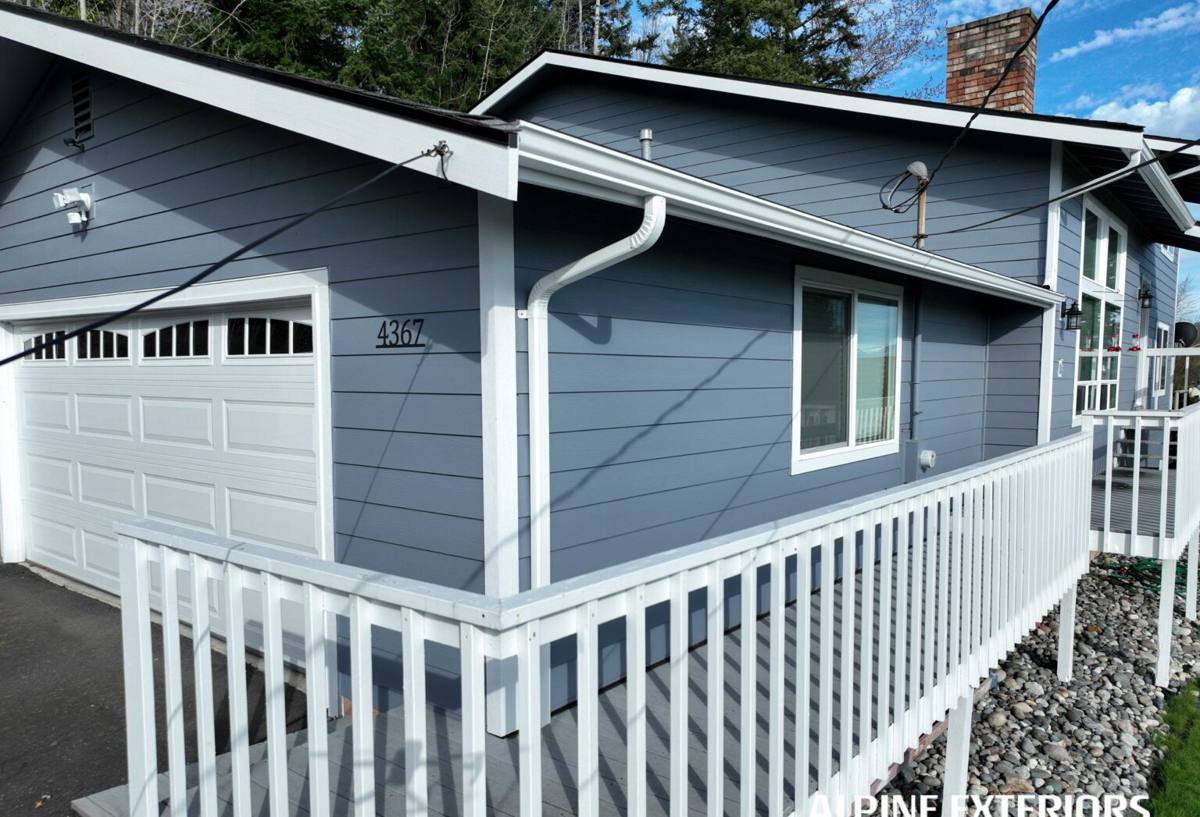
What Nooksack Homes Actually Face
Moss and Organic Growth
If you've got mature trees near your roofline — and a lot of Nooksack properties do, given the rural and semi-rural lot sizes out this way — you're dealing with shade, leaf litter, and needle debris that keeps shingles damp longer than roofs in more open, sunnier neighborhoods. Moss doesn't just look bad. It holds moisture against the roofing material, lifts shingle edges as it grows, and over years can shorten the life of an otherwise sound roof. Valley humidity plus tree cover is close to ideal moss habitat, and it's one of the most common issues we get called out for in this area.
Driving Rain and Wind-Driven Moisture
Whatcom County storms frequently come with real wind behind them, not just straight-down rainfall. That matters for how a roof is detailed — underlayment laps, flashing at valleys and penetrations, and starter courses all need to account for rain that's being pushed sideways and up under shingle edges, not just rain falling straight down. A roof that's fine in a light drizzle can leak in a wind-driven storm if those details were rushed.
Freeze-Thaw Swings
Nooksack sits far enough from the moderating effect of the water that winter nights can drop colder here than they do right on the coast. That means occasional freeze-thaw cycling on a roof surface that's often wet to begin with — water gets into small cracks or worn spots, freezes, expands, and gradually opens things up further. It's a slower, quieter form of damage than a big storm, but it adds up over a decade or two.
Roof Inspections: What We Actually Look At
A proper roof inspection isn't a five-minute glance from the ground. When we walk a Nooksack roof, we're checking:
- Shingle or panel condition — granule loss, curling, cracking, or lifted edges
- Flashing at chimneys, skylights, vent pipes, and valleys, where the majority of leaks actually start
- Moss and algae buildup, and whether it's just cosmetic or already lifting material
- Gutter and downspout function, since clogged or undersized gutters push water back under the roof edge
- Attic ventilation and any signs of trapped moisture, staining, or daylight where there shouldn't be any
- Overall structural signs — sagging decking, soft spots, or uneven roof planes
We'll give you a straight answer about what's cosmetic, what's worth watching, and what actually needs attention now. Not every roof with moss needs to be replaced — sometimes it needs a cleaning, better ventilation, or some trimmed-back branches, and we'll tell you that instead of upselling a job you don't need.
Roofing Materials: What We Recommend and Why
Composition (asphalt) shingles remain the most common roofing material in this part of Washington, and for good reason — they perform well in our climate, they're serviceable and repairable, and the cost-to-lifespan ratio is hard to beat for most homes. Metal roofing has a place too, particularly for homeowners who want a longer service life and better shedding of moss and debris, though it comes at a higher upfront cost. We install and stand behind both, and we'll walk you through the real trade-offs rather than pushing whichever one has a better margin.
Underlayment and Flashing Matter More Than the Shingle Brand
Homeowners often focus on shingle color and brand, but in a climate like ours, the underlayment and flashing details do more of the actual work of keeping water out. Synthetic underlayment with proper ice-and-water shield at eaves, valleys, and penetrations is a baseline we don't skip, regardless of which shingle line goes on top. A premium shingle over poor flashing work will still leak; a modest shingle over careful detailing will hold up for its full service life.
| Material | Typical Lifespan | Best For | Trade-offs |
|---|---|---|---|
| Composition shingle | 20-30 years | Most homes, budget-conscious replacements | Periodic moss maintenance, mid-range upfront cost |
| Architectural/laminate shingle | 25-35 years | Homeowners wanting more wind and impact resistance | Higher cost than standard three-tab |
| Standing seam metal | 40-60 years | Long-term owners, steep or moss-prone roofs | Higher upfront investment, specialized installation |
Beyond the Roof: Siding, Windows, and Decks
A roof doesn't work in isolation. Water that gets past a roof edge, a poorly flashed window, or an aging deck ledger board can cause damage that shows up nowhere near the original source. That's part of why Blaine Roofing Co handles siding, windows, and decks alongside roofing — we're looking at the whole exterior envelope, not just the shingles.
Siding in a Wet Climate
Siding takes a beating from the same driving rain and humidity that affects roofs, especially at corners, butt joints, and anywhere trim meets siding. Proper flashing and house wrap behind the siding matter as much as the siding material itself. We see a fair number of moisture problems in older homes that trace back to missing or degraded weather barriers rather than the visible siding failing on its own.
Windows and Moisture Intrusion
Older single-pane or poorly flashed windows are a common source of drafts and slow water intrusion around the frame. Replacing windows is also a good opportunity to correct flashing details that may have been done poorly — or not at all — during the original build.
Decks in a Damp Climate
Decks take direct weather exposure year-round, and ledger board attachment to the house is one of the most safety-critical details in residential construction. Wood decking needs regular maintenance in this climate; composite decking costs more upfront but requires less upkeep and handles moisture better over time. We'll talk through both honestly based on your budget and how much maintenance you want to take on.
Why a Local Crew Matters in Nooksack
Nooksack isn't downtown Bellingham, and it isn't the coastline either — it's its own kind of property, often with more acreage, more mature trees, and sometimes longer driveways or access considerations that a crew unfamiliar with the area might not plan for. Working throughout Whatcom County means we're used to that mix: valley properties, coastal exposure, and everything in between. We're not guessing at how this region's weather behaves — we're dealing with it on job sites across the county on a regular basis.
Local also means accountability. If something needs a follow-up visit, we're not driving in from out of state. We're a phone call away and familiar with the permitting and inspection process in this county, which keeps projects moving instead of stalled on paperwork neither side understands.
What to Expect When You Call Us
Here's the general process for a Nooksack roofing project, start to finish:
- Initial call or form submission — tell us what you're seeing (a leak, visible moss, an aging roof) or that you just want an inspection
- On-site assessment — we inspect the roof and any related exterior areas, and give you a written breakdown of findings
- Written estimate — clear scope, materials, and pricing, with options if more than one approach makes sense
- Scheduling — we work around weather windows, since roofing in this climate means planning around rain, not just calendar dates
- The work itself — with cleanup and a final walkthrough before we consider the job done
Maintenance Habits That Extend Roof Life
A few habits make a real difference in a climate like ours:
- Keep gutters clear, especially in fall when leaf litter is heaviest
- Trim back branches that overhang the roofline to reduce shade and debris
- Address moss early with a proper cleaning rather than letting it establish for years
- Check attic ventilation periodically — poor airflow traps moisture and accelerates roof aging from underneath
- Have a professional inspection every couple of years, even without an obvious problem
None of these replace a professional roof when one is genuinely needed, but they can meaningfully stretch the life of a roof that's still in reasonable shape.
Get a Free, No-Pressure Estimate
If you're in Nooksack and dealing with visible moss, a slow leak, an aging roof, or you just want an honest read on where things stand, we're glad to come take a look. There's no obligation and no pressure — just a straightforward assessment from a crew that works this climate every day. Use the form below to request your free estimate.