 Blaine Roofing
 Siding Built for a Waterfront Neighborhood
Semiahmoo sits right up against the water, tucked into the far northwest corner of Whatcom County near the Canadian border. That location is part of what makes it a beautiful place to own a home, and it's also exactly why siding here takes more punishment than siding a few miles inland. Homes in this neighborhood face a steady combination of salt-laden air off the bay, wind-driven rain that hits siding sideways instead of straight down, and a moss season that can stretch for most of the year on shaded, north-facing walls. Any siding installed here has to be chosen and installed with that specific combination of stresses in mind, not just "siding in general."
This page covers what siding installation looks like specifically for Semiahmoo homes — what the climate demands, what a correct installation actually involves, and why we install exclusively James Hardie fiber cement siding rather than the vinyl, LP SmartSide, or cedar products you'll see offered elsewhere.
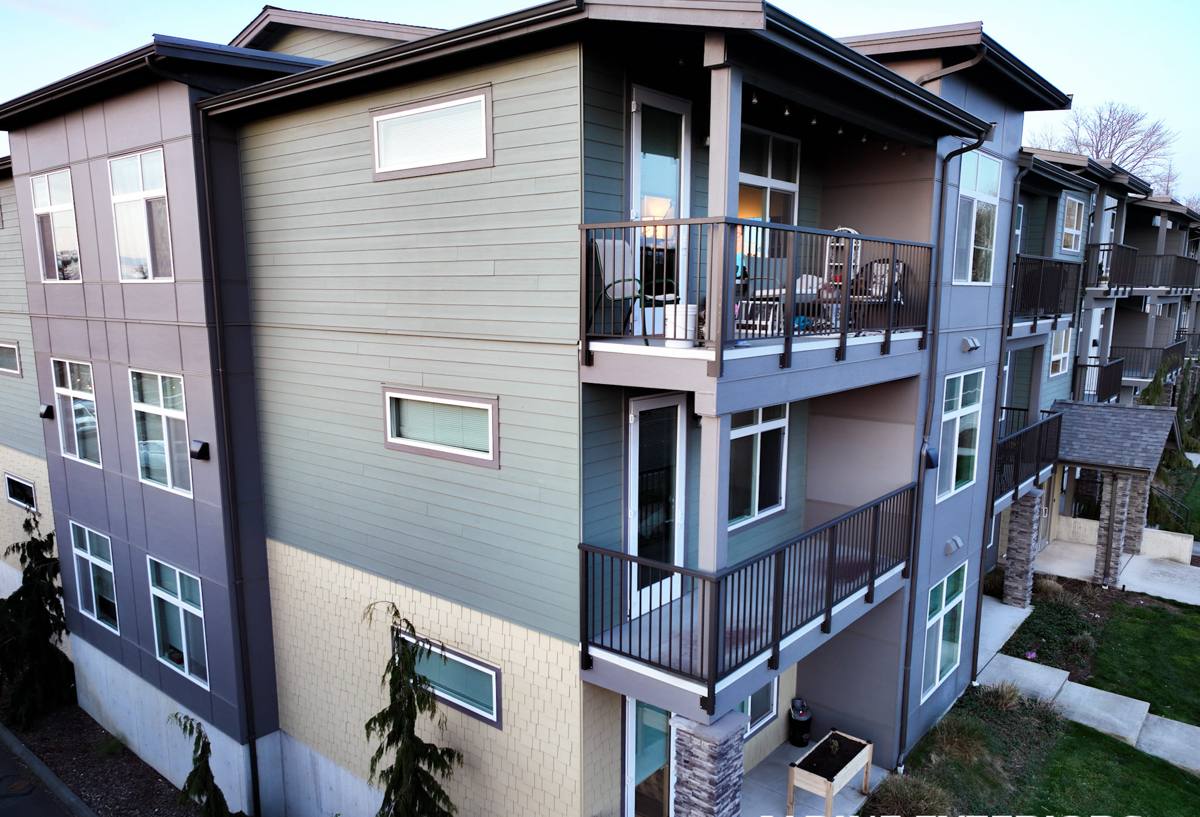
What Semiahmoo's Climate Does to Siding
Salt Air
Proximity to Semiahmoo Bay and Drayton Harbor means airborne salt is a constant, low-grade factor working against exterior materials. Salt air accelerates corrosion of exposed metal fasteners and trim, and over years it can degrade cheaper coatings and finishes faster than the same products would wear a few miles inland. Siding systems and fastening hardware need to be chosen with that corrosion exposure in mind, not just picked for looks.
Driving Rain
Wind off the water doesn't let rain fall straight down — it pushes it sideways into wall assemblies, which puts real pressure on every seam, joint, and penetration in the siding system. A siding job that would hold up fine in a sheltered inland yard can fail years early here if the flashing details, laps, and gaps weren't built for wind-driven moisture in the first place.
Moss and Shade
Many Semiahmoo lots carry mature trees and sit close enough together that entire wall faces stay shaded for much of the day. Combined with our regional rainfall, that shade keeps siding surfaces damp longer than they'd stay in full sun, which is exactly the condition moss and algae need to establish. Materials that absorb moisture or have a porous factory finish are far more prone to visible moss and mildew staining on these shaded elevations.
Why We Install Only James Hardie Fiber Cement
We don't offer vinyl siding, LP SmartSide, Cemplank, Allura, primed spruce, or cedar. That's a deliberate standard, not a limitation of what we're capable of installing. Every one of those products has legitimate strengths, but each also has a real-world trade-off that shows up faster in a coastal, wet, moss-prone climate like Semiahmoo's than it would somewhere drier.
- Vinyl is inexpensive and low-maintenance in mild climates, but it can warp or distort in temperature swings, its seams and butt joints give wind-driven rain more places to work into, and its color is baked into thin plastic that fades and chalks over time rather than a factory-cured finish.
- LP SmartSide is an engineered wood product. Engineered wood, by definition, is more moisture-sensitive than fiber cement — cut edges, fastener penetrations, and any breach in the factory coating are places where water can get into the substrate, which matters more in a wet, salt-air environment where every seam sees wind-driven moisture.
- Cedar and primed spruce are traditional, attractive, and completely legitimate materials — but they are wood, and wood requires an ongoing maintenance commitment (repainting, re-caulking, moisture monitoring) to keep performing near the coast. Skipping a maintenance cycle here has real consequences faster than it would inland.
- Other fiber cement brands like Cemplank and Allura are chemically similar to James Hardie's product, but we've standardized on Hardie specifically for its ColorPlus factory finish, its climate-engineered HZ5 product line built for the Pacific Northwest, and the strength of its transferable warranty when the installation is done to spec.
James Hardie fiber cement is non-combustible, dimensionally stable, and doesn't absorb water the way wood-based products can. Its ColorPlus finish is baked on at the factory under controlled conditions, which gives it more consistent, longer-lasting color than field-applied paint — a real advantage on shaded, moisture-prone walls where lesser finishes show mildew and fading first.
Siding Material Comparison for a Coastal Climate
| Material | Moisture Behavior | Salt Air Durability | Maintenance Burden |
|---|---|---|---|
| James Hardie Fiber Cement | Does not absorb/swell like wood; engineered for wet climates | Strong — non-combustible, stable finish | Occasional wash; repaint not required for decades |
| Vinyl | Sheds water but seams allow intrusion; can warp with heat | Moderate; fasteners and trim can corrode | Low, but color fades and can't be repainted easily |
| LP SmartSide | Engineered wood; sensitive at cut edges and fastener points | Moderate; coating breach risk near salt air | Coating and caulk maintenance required |
| Cedar / Primed Spruce | Absorbs moisture; needs sealed finish maintained continuously | Lower without diligent upkeep | High — repainting and sealing on a cycle |
What a Correct Installation Actually Involves
Siding fails less often because of the material and more often because of how it was installed. Fiber cement in particular is unforgiving of shortcuts — the manufacturer's installation instructions exist because gaps, fastening errors, and missing flashing details are the actual root cause of most siding failures we get called out to inspect.
Water Management Comes First
Before a single piece of siding goes up, the wall needs a correctly lapped weather-resistive barrier, properly integrated window and door flashing, and flashing at every horizontal trim transition. In a driving-rain environment like Semiahmoo's, this hidden layer is what actually keeps water out of the wall assembly — the siding itself is the second line of defense, not the first.
Clearances and Gaps
James Hardie specifies minimum clearances from grade, roof lines, decks, and other flatwork, along with gaps at butt joints and trim to allow the material to move without trapping moisture. Installers who close up those gaps for a "cleaner" look are setting the siding up to hold water against end grain, which is where fiber cement is most vulnerable if it isn't sealed and caulked correctly.
Fastening
Fastener type, spacing, and depth all matter — and given the corrosion pressure from salt air, using fasteners rated for the exposure isn't optional. Overdriven or underdriven nails, or fasteners in the wrong location on the board, are a common and avoidable cause of premature siding problems.
Caulking and Sealant Joints
Every trim joint, corner, and penetration needs the right sealant, applied correctly, as part of the water management system — not as a cosmetic afterthought at the end of the job.
Our Installation Process
- On-site assessment — we walk the property, check existing siding and sheathing condition, note wind exposure and shaded elevations, and identify moisture or drainage issues specific to the lot.
- Removal and substrate check — old siding comes off and we inspect the sheathing underneath for rot or hidden moisture damage before anything new goes up.
- Weather barrier and flashing — house wrap and flashing are installed and correctly lapped at every window, door, and horizontal transition.
- James Hardie installation — panels or lap siding installed to manufacturer spec: correct clearances, fastening, and joint treatment throughout.
- Trim, caulking, and final detail — corners, trim boards, and sealant joints finished to shed water at every seam.
- Walkthrough — we review the finished work with the homeowner before calling the job complete.
Why Hiring a Crew That Already Works Semiahmoo Matters
A crew that regularly works this specific stretch of coastline already knows which elevations on a typical Semiahmoo lot take the worst of the wind-driven rain, which shaded sides need extra attention to moss and moisture, and how the salt air factors into fastener and trim choices. That's knowledge that only comes from working this exact environment repeatedly — it's different from general siding experience gained in a drier or more sheltered part of the county. It also means fewer surprises during the job: local crews already understand permitting expectations in Whatcom County and how to sequence work around our wet-season weather windows.
What to Check Before You Hire
- Ask whether the crew is a certified or trained James Hardie installer, and ask them to explain the clearance and gap requirements they follow.
- Confirm the weather-resistive barrier and flashing details are part of the written scope, not an assumed extra.
- Ask what fastener type they use and why, given salt air exposure.
- Get clarity on how they handle window and door flashing integration — this is the single most common failure point.
- Ask about the ColorPlus finish warranty versus a field-painted finish, and get the warranty terms in writing.
- Ask for a plan for shaded, moss-prone elevations specifically, not a one-size-fits-all approach.
Living With Hardie Siding After Installation
One of the practical benefits of a correctly installed Hardie system is how little ongoing maintenance it asks for compared to wood. It doesn't need repainting on a cycle the way cedar or primed spruce does. A periodic gentle wash to keep salt residue and any moss growth from building up on shaded walls is generally the extent of the upkeep, along with keeping an eye on caulked joints over the years the way you would with any exterior material.
Get an Estimate for Your Semiahmoo Home
If you're weighing a siding replacement on a Semiahmoo property, we're happy to take a look, walk the exposures specific to your lot, and give you a straight assessment of what it needs. Fill out the form below for a free, no-pressure estimate.