 Blaine Roofing
 Building a Deck That Can Actually Handle Semiahmoo
Semiahmoo sits close enough to the water that its homes deal with a different set of conditions than decks built a few miles inland in Whatcom County. Salt-laden air off the bay accelerates corrosion on hardware and fasteners. Wind-driven rain finds its way into joints and end grain that would stay dry on a more sheltered lot. And the long stretch of gray, damp months every year gives moss and algae plenty of time to take hold on any surface that doesn't drain and dry properly. A deck built without those factors in mind might look fine for a season or two, then start showing soft spots, rust streaks, or slick green growth well before it should.
We build decks for homes in this area regularly, and the difference between a deck that lasts and one that doesn't usually comes down to decisions made before the first board goes down — material selection, fastener grade, framing spacing, and how water is allowed to move through and off the structure. This page walks through what that actually looks like for a Semiahmoo property.
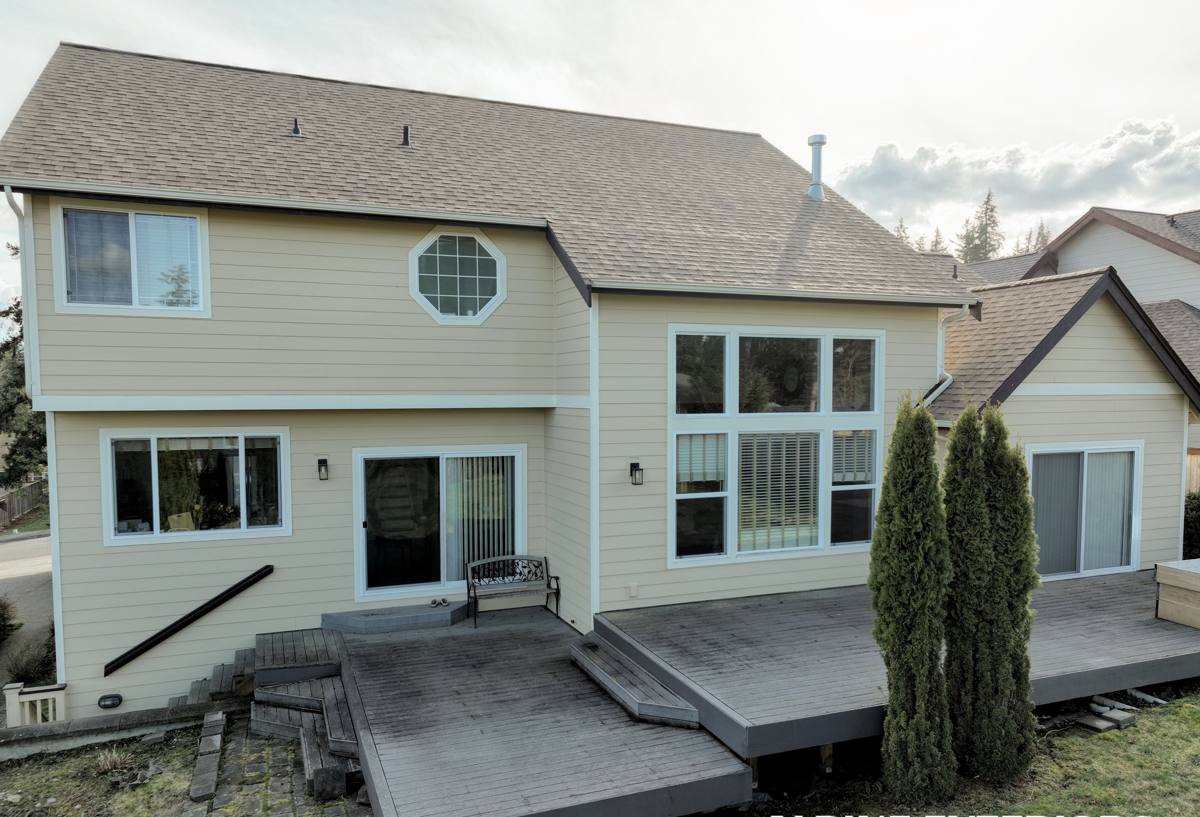
What the Local Climate Does to an Ordinary Deck
Salt Air and Corrosion
Proximity to Semiahmoo Bay means airborne salt is a real factor, even on homes that aren't directly waterfront. Standard galvanized fasteners can corrode faster here than the same hardware would inland, especially where two dissimilar metals meet or where a fastener head sits exposed to the weather. Over time, corroding hardware weakens connections at exactly the points that carry the most structural load — ledger boards, joist hangers, and stair stringers.
Driving Rain
Rain in this part of Whatcom County doesn't always fall straight down. Wind off the water pushes it sideways, which means it gets driven into places a vertical rain would never reach — behind fascia boards, under railing posts, into the end grain of decking where boards butt together. Once moisture is trapped in those spots without a way to dry out, rot and mold follow, usually from the inside out where it's hardest to spot early.
Moss Season
Western Washington's wet season stretches long, and a deck surface that stays damp for weeks at a time is an easy place for moss and algae to establish. Beyond looking bad, moss holds moisture against the decking material and makes surfaces genuinely slippery — a real slip hazard on stairs and near doorways.
What a Correctly Built Deck Needs Here
Framing and Fasteners
For a deck expected to hold up in this environment, we spec fasteners and structural hardware rated for coastal or high-corrosion exposure rather than standard-grade galvanized. That includes joist hangers, structural screws, and any hardware at the ledger connection, since that's the joint doing the most work and the hardest to inspect once the deck is finished. Framing lumber is treated for ground contact where it's close to grade, and we pay close attention to any point where two materials meet, since that's where trapped moisture does the most damage.
Drainage and Airflow
A deck that can't shed water and breathe underneath will hold moisture no matter what decking material sits on top. That means proper board spacing, a ledger flashing detail that actually directs water away from the house rather than behind it, and enough clearance and airflow beneath the structure that the framing can dry out between rain events instead of staying damp all winter.
Surface Material
The decking surface itself needs to handle repeated wet-dry cycles without cupping, splintering, or holding onto moss. That's as much about the material choice as it is about installation — covered in more detail below.
Comparing Decking Materials for a Semiahmoo Property
There's no single right answer for every home — it depends on budget, how much maintenance you want to take on, and how exposed the deck is to wind and rain off the water. Here's how the common options stack up for this specific climate:
| Material | How It Handles Salt Air & Rain | Moss/Algae Resistance | Maintenance |
|---|---|---|---|
| Pressure-treated wood | Good with correct fasteners and sealing; end grain needs attention | Moderate — needs regular cleaning | Annual cleaning and re-sealing recommended |
| Cedar | Naturally decay-resistant, but softer surface takes more wear from driving rain | Moderate | Periodic cleaning and finish maintenance |
| Composite decking | Excellent — doesn't absorb moisture or corrode | Good, though surface texture matters | Low — occasional washing |
| PVC/capped composite | Excellent — fully sealed surface resists water and salt | Very good | Lowest — soap and water rinse |
We'll talk through these trade-offs honestly during an estimate rather than steering every project toward the highest-margin option. A well-built pressure-treated deck with the right fasteners can perform very well here for homeowners who don't mind some upkeep; a capped composite makes more sense for anyone who wants to spend their weekends doing something other than deck maintenance.
Design Considerations for Waterfront-Adjacent Lots
Homes near Semiahmoo Bay often deal with more wind exposure than a typical inland lot, which affects more than just the framing. Railing design needs to account for wind load, especially on elevated decks or those facing open water. Stair and post placement should consider prevailing wind and rain direction so entryways and seating areas aren't sitting in the worst of it. And because many of these homes are built around the view, we design the deck footprint and railing style — cable, glass, or standard baluster — to keep sightlines open without compromising the structure's ability to shed water and resist wind loading.
Sun exposure is worth planning for too. Some Semiahmoo lots get a lot of reflected light and wind off open water, which can affect how quickly a finish weathers or how much shade a family actually wants on the deck through the year.
Our Process, Start to Finish
- On-site assessment — we look at your home's exposure to wind and rain, existing structure if you're replacing a deck, and how the space will actually be used.
- Design and material discussion — we walk through layout, railing style, and material trade-offs specific to your lot, not a generic recommendation.
- Permitting — decks of a certain size or height require a permit through the City of Blaine or Whatcom County depending on the property's location; we handle that process.
- Framing built for the exposure — corrosion-resistant hardware, correctly flashed ledger connection, and spacing that allows drainage and airflow.
- Decking installation — installed to manufacturer spec where composite or PVC is used, or with proper spacing and fastening for wood.
- Final walkthrough — we go over care and maintenance specific to the material you chose before we consider the job done.
Keeping a New Deck Ahead of Moss Season
Even a well-built deck benefits from some seasonal attention in a climate like this one. A short annual routine keeps most decks looking and performing well for years:
- Sweep debris and fallen leaves off the surface regularly, especially in fall — trapped organic matter holds moisture and feeds moss growth.
- Rinse or wash the deck surface a couple of times a year, more often in shaded or damp-prone areas.
- Check that gaps between boards stay clear so water can drain through rather than pooling.
- Inspect railing posts and stair connections annually for any sign of movement or corrosion at hardware points.
- For wood decks, plan on re-sealing on the schedule recommended for your specific product — usually every one to two years in this climate.
- Trim back nearby vegetation that shades the deck surface and slows drying time.
Why It Matters to Hire a Crew That Already Works This Area
A contractor who mostly builds decks in drier, more sheltered parts of the state may not default to coastal-grade fasteners or think twice about ledger flashing detail — because in their usual conditions, it doesn't matter as much. In Semiahmoo, it does. We work in this climate regularly, which means we're not guessing at what holds up here; we're building to what we've seen actually perform through repeated wet seasons and salt exposure. That also means we're familiar with the permitting process for both the City of Blaine and unincorporated Whatcom County, so there are no surprises partway through your project.
What This Means for Your Project
A custom deck for a Semiahmoo home isn't just about layout and style — it's about specifying the right hardware, getting drainage and airflow right underneath, and choosing a decking material that matches how much maintenance you actually want to do. Get those decisions right at the start and you end up with a deck that holds up through years of coastal weather instead of showing problems in year two or three.
If you're planning a new deck or replacing one that's struggling with rot, corrosion, or moss buildup, we're happy to take a look and talk through what makes sense for your specific home. Reach out for a free, no-pressure estimate using the form below.