 Blaine Roofing
 Living on the Water in Blaine Harbor
Blaine Harbor sits right where Whatcom County meets the water, close enough to Drayton Harbor and the Strait of Georgia that the weather off the ocean is a daily fact of life, not an occasional storm. Homes here deal with a combination most inland Whatcom County properties don't see in the same intensity: salt-laden air, wind-driven rain coming off the water, and a wet season that stretches long enough to keep roofs, siding, and decks damp for months at a time. None of that means a home here is doomed to constant repairs. It means the building envelope has to be built and maintained with that specific combination of stresses in mind, rather than treated like a generic Pacific Northwest roof.
We work on homes throughout Blaine and the surrounding harbor area, and the properties closest to the water consistently show wear in the same places: fasteners, flashing, north- and shade-facing roof slopes, and any spot where two materials meet. Understanding why helps homeowners make better decisions about materials, timing, and maintenance.
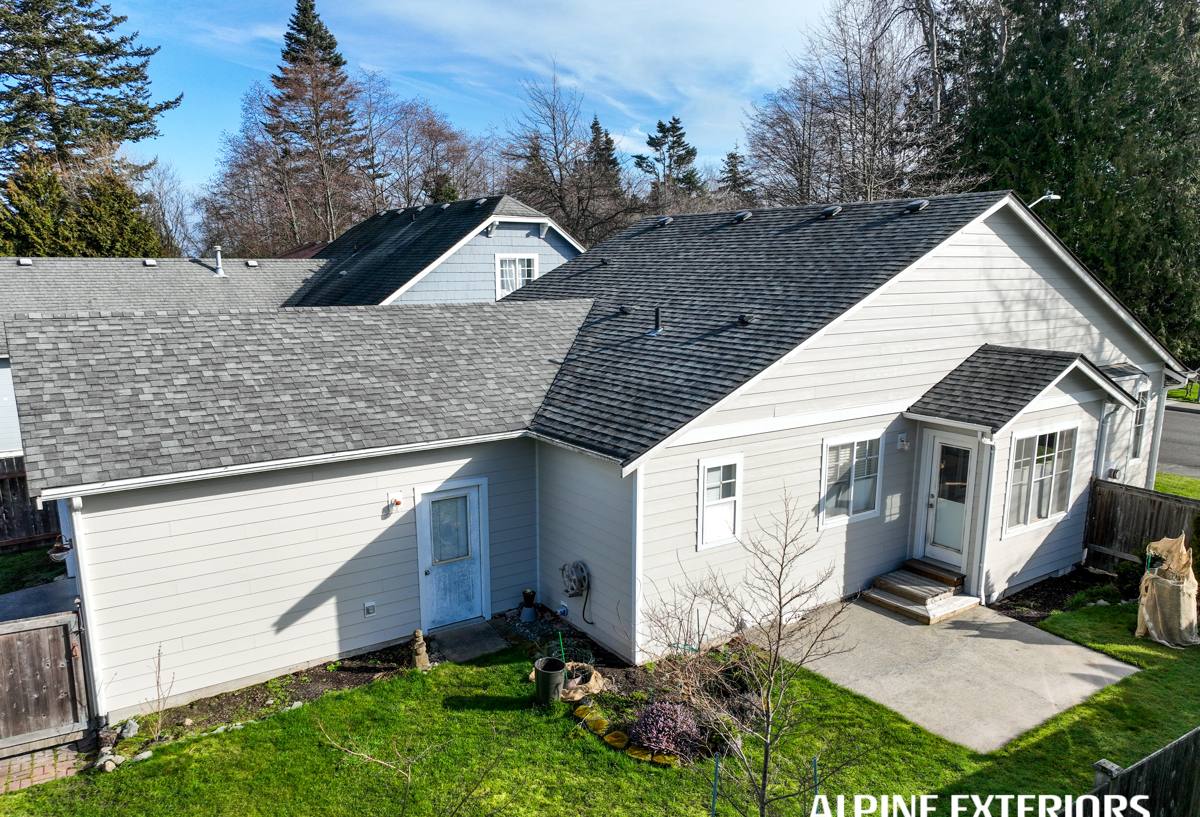
What Salt Air Does to a Roof and Exterior
Salt air isn't just a coastal cliché — it's airborne moisture carrying dissolved salts that settle on every exterior surface, and it's more corrosive to unprotected metal than ordinary rain. On a roof, that shows up first in fasteners: exposed nail heads, screws, and staples that aren't rated for coastal exposure can start rusting years before a comparable roof further inland. Once a fastener rusts, it loses holding power and can streak the surrounding material, which is often the first visible sign something needs attention.
Flashing is the other pressure point. Flashing around chimneys, skylights, valleys, and wall-to-roof transitions is usually thin-gauge metal, and if it isn't coated or isn't the right alloy for a marine environment, it corrodes from the inside of the seams outward — often out of sight until a leak shows up. The same logic applies to siding trim, gutter hardware, and any exposed hinges or fasteners on doors and windows. None of this is a reason to avoid metal components; it's a reason to specify coastal-rated materials and fastener types up front, which costs little extra at installation but saves a lot of grief later.
Driving Rain and Wind-Driven Water
Rain that falls straight down is relatively easy to shed. Rain that's being pushed sideways by wind off the water is a different problem, because it can work its way under laps, around fasteners, and into gaps that would never see moisture in a calmer setting. This is why the underlayment and flashing details matter as much as the visible roofing or siding material — they're what stop water that's already gotten past the first line of defense.
Where Wind-Driven Rain Usually Finds a Way In
- Roof valleys and any place two roof planes meet
- Around chimneys, vents, and skylights where flashing has aged or was undersized originally
- Siding butt joints and corners, especially on the side of the house facing the water or prevailing wind
- Window and door perimeters where old caulk or flashing tape has failed
- Low-slope roof sections and porch or deck roofs, where water has less help draining quickly
A roofing and siding system built for a wind-exposed location uses wider underlayment laps, properly sequenced flashing (so upper courses always overlap lower ones, never the reverse), and sealants rated for constant UV and moisture exposure rather than general-purpose caulk. It's slower to install correctly than it looks, which is part of why detailing quality varies so much between crews.
Moss, Algae, and the Long Wet Season
Whatcom County's wet season runs long, and shaded, north-facing, or tree-covered roof sections in Blaine Harbor can stay damp for weeks without a real drying-out period. That's exactly the condition moss and algae need to establish. Moss isn't just cosmetic — as it grows, it holds moisture against the roofing surface and can work its rhizoids under shingle edges and granules, lifting tabs and creating small channels for water to enter. Left long enough, moss growth shortens the useful life of an otherwise sound roof.
Algae staining (the dark streaks often seen on lighter-colored roofs) is a related but separate issue — it's cosmetic rather than structurally damaging, but it's a reliable sign that a roof surface is staying wet longer than it should, which is worth paying attention to even if the streaking itself doesn't need urgent action.
Keeping Moss From Coming Back
Moss removal without addressing why it grew back rarely holds for long. The more durable approach combines a few things: trimming back overhanging branches that keep a roof section shaded and damp, keeping gutters and valleys clear so water isn't sitting anywhere, and in persistent cases, using zinc or copper strips or granule-embedded roofing products that discourage regrowth over time. None of these are one-time fixes — they're maintenance habits that make sense for the climate.
Roofing Materials That Hold Up Here
There's no single "best" roofing material for a marine climate — the right choice depends on budget, roof slope, how much shade the property has, and how the homeowner weighs upfront cost against long-term upkeep. Here's how the common options compare for a property in a setting like Blaine Harbor.
| Material | How It Handles Salt Air & Rain | Moss/Algae Resistance | Typical Lifespan Here |
|---|---|---|---|
| Architectural asphalt shingle | Good, with coastal-rated fasteners and flashing | Moderate; algae-resistant (copper/zinc granule) versions perform better | 20-30 years |
| Standing seam metal | Excellent when specified with marine-grade coatings and fasteners | High — sheds moss growth better than most materials | 40-50+ years |
| Composite/synthetic shake | Good; doesn't corrode, but flashing/fastener quality still matters | Moderate to good, product-dependent | 30-50 years |
| Cedar shake | Requires more upkeep in constant moisture; needs regular treatment | Lower without regular maintenance | 20-30 years with upkeep |
We don't push homeowners toward the most expensive option by default. A well-installed architectural shingle roof with the right fasteners and flashing performs well in Blaine Harbor for decades; metal roofing costs more upfront but trades that for a longer service life and less moss upkeep. The honest answer for most homes comes down to budget, roof complexity, and how long the homeowner plans to stay in the house.
Siding for a Marine Climate
Siding on a harbor-facing home does two jobs at once: it's the finish surface people see, and it's the water-management system that keeps wind-driven rain from reaching the wall sheathing. The details that matter most are often invisible once the job is done — proper house wrap or weather-resistive barrier, correctly lapped and flashed openings, and rainscreen gapping in exposed locations so moisture that does get behind the siding can drain and dry instead of sitting against the wall.
Fiber cement and quality vinyl both perform well in salt air because neither corrodes, though fiber cement holds paint and resists impact better over time. Wood siding can absolutely work in this environment, but it asks for a real maintenance commitment — regular refinishing and prompt attention to any spot where the finish has worn through, since bare wood in a damp, salty environment deteriorates faster than in a drier inland setting.
Windows: Keeping Wind and Moisture Out
Windows in a wind-exposed, rain-heavy location earn their keep through the quality of the installation as much as the window unit itself. Flashing that directs water out and away from the rough opening, correctly installed sill pans, and sealants that stay flexible through temperature and moisture swings are what actually keep a window from becoming a leak point five or ten years down the road. Hardware and frame materials that resist corrosion matter too, particularly for homes with a direct water view where salt exposure is highest.
Failed seals show up as fogging between panes, drafts, or soft trim around the window — all worth addressing before they turn into hidden rot in the surrounding wall framing.
Decks in a Wet Coastal Climate
Decks take a beating in this climate because they combine constant moisture exposure with UV, foot traffic, and (near the harbor) salt air on top of it all. The most common failure points aren't the decking boards themselves but the structure underneath — ledger board flashing, joist tops, and fasteners that were never rated for prolonged wet exposure. A deck can look fine on the surface while the framing underneath is quietly deteriorating.
Composite decking has become popular here because it doesn't need refinishing and resists moisture damage well, though it still depends entirely on a properly flashed, coastal-rated substructure underneath. Wood decking works too, but like wood siding, it needs a real maintenance routine — cleaning, sealing, and prompt repair of any spots where water is pooling instead of draining.
A Practical Maintenance Checklist for Blaine Harbor Homes
Most of the exterior problems we see in this area didn't start as emergencies — they started as small, ignored maintenance items that had months of wet weather to get worse. A short annual routine catches most of it early.
- Clear moss and debris from roof valleys and gutters before the wet season sets in
- Check exposed fasteners and flashing for early rust staining, especially on roof and siding sections facing the water
- Trim back branches keeping any roof section in constant shade
- Look at window and door perimeters for cracked or missing caulk
- Inspect deck ledger boards and framing for soft spots, not just the visible decking
- Confirm gutters are pitched correctly and downspouts are draining away from the foundation
Why a Local Crew Matters
A crew that works across Whatcom County day in and day out knows which roof slopes in Blaine hold moss longest, which fastener and flashing specs actually hold up against salt air over years (not just on paper), and how local permitting and inspection processes work. That local pattern-recognition is hard to replace with a general contractor coming in from outside the area — it's the difference between a repair that solves the immediate problem and one that addresses why the problem happened in the first place.
If you're dealing with moss buildup, a suspicious leak, aging siding, drafty windows, or a deck that needs a closer look, we're happy to come out, take an honest look, and give you a straightforward assessment. Reach out for a free, no-pressure estimate using the form below.