 Blaine Roofing
 Roofing in Everson: What the Local Climate Demands
Everson sits inland along the Nooksack River in Whatcom County, tucked between farmland and the foothills that lead up toward the Cascades. It's a different setting than the coastline out by Blaine, but the roof over an Everson home works just as hard. Long stretches of drizzle, heavy fog off the river bottom, and tree cover throughout the surrounding neighborhoods all add up to one thing: roofs here stay damp for a large part of the year. That moisture is the single biggest factor in how long a roof lasts and how much trouble it causes along the way.
We've worked on homes across Whatcom County long enough to know that a roofing approach built for a dry climate simply doesn't hold up out here. Ventilation, underlayment choice, flashing detail, and moss control all matter more in this region than they would somewhere with a shorter wet season. This page is about what that means specifically for Everson homeowners, and how we approach roofing, and the siding, windows, and decks that go with it, for homes in this part of the county.
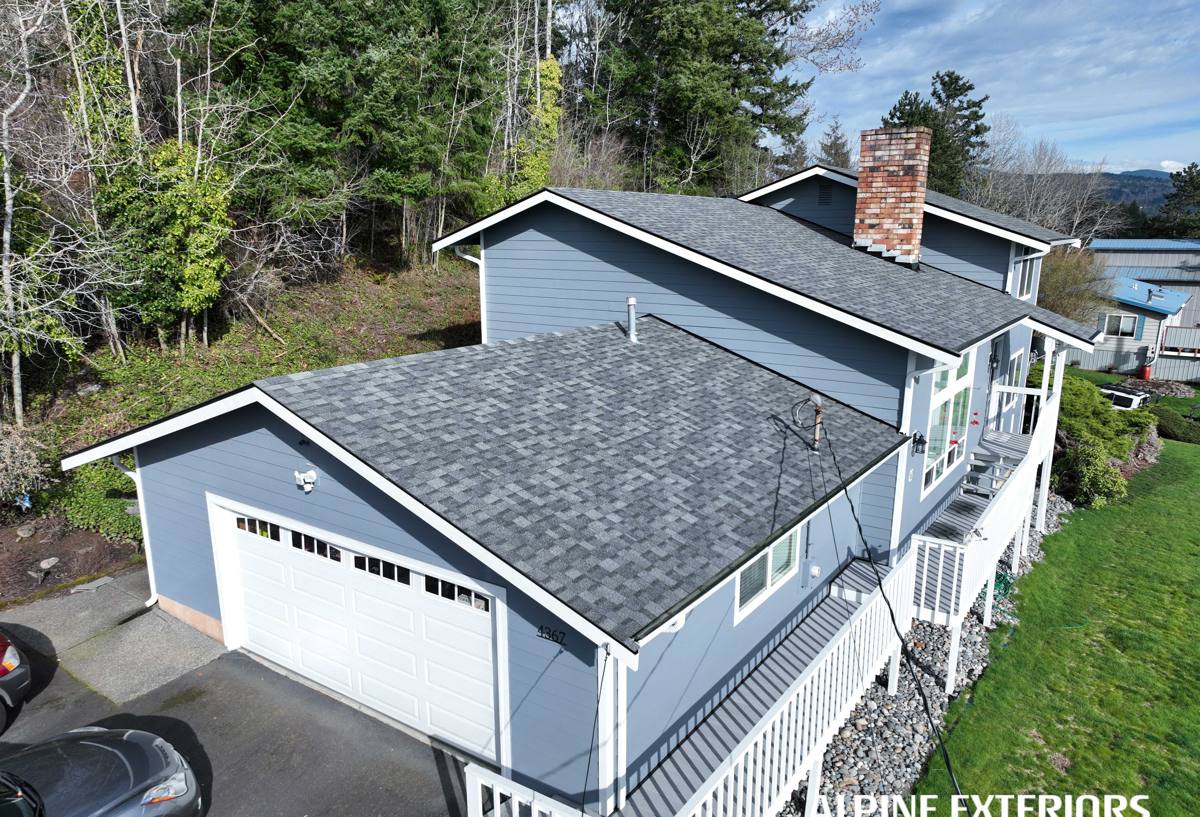
Common Roofing Problems We See in Everson Homes
Moss and Algae Growth
Moss is the most visible sign of a long wet season, and Everson gets its share. Shaded roof sections, especially on the north side of a house or under overhanging trees, stay damp long after the rest of the roof has dried out. Moss takes hold in that moisture, and as it spreads it lifts shingle edges and holds water against the roof deck. Left alone for a few seasons, that trapped moisture works its way into the roofing material itself and eventually into the decking underneath.
Driving Rain and Wind-Driven Water
Storms moving through the county don't always drop rain straight down. Wind-driven rain gets pushed sideways under shingle edges and around flashing, especially at valleys, chimneys, and skylights where the roof plane changes direction. A roof that's properly flashed and lapped handles this without issue. One with aging or poorly installed flashing lets water find its way in, often in spots that aren't obvious from the ground.
Extended Wet Periods and Slow-Developing Damage
Whatcom County's wet season isn't just about total rainfall, it's about how many days in a row a roof stays saturated. That extended dampness is harder on roofing materials than an occasional heavy downpour, because there's less time for the roof to fully dry between weather systems. Problems that would be minor in a drier climate, a small gap in flashing, a cracked pipe boot, tend to turn into real damage here simply because the moisture has more time to work.
Roofing Materials We Install
Every material has trade-offs, and the right choice depends on the home, the budget, and how much maintenance a homeowner wants to take on. Here's how the options we install most often compare for a climate like Everson's.
| Material | Typical Lifespan | Moss/Moisture Resistance | Maintenance |
|---|---|---|---|
| Asphalt composition shingle | 20-30 years | Moderate, needs periodic cleaning | Low to moderate |
| Architectural/dimensional shingle | 25-35 years | Good, denser mat sheds moisture better | Low to moderate |
| Metal (standing seam or panel) | 40-60+ years | Excellent, moss struggles to anchor | Low |
| Cedar shake | 20-30 years with upkeep | Fair, requires active moss/moisture management | High |
We install and stand behind composition and architectural shingles as our standard recommendation for most Everson homes, they balance cost, appearance, and performance well in this climate. Metal roofing is a strong option for homeowners planning to stay long-term and wanting to minimize moss maintenance over the life of the roof. Cedar shake has real visual appeal, but we're upfront with homeowners that it demands consistent moisture management in a climate this wet, and we walk through that maintenance commitment honestly before anyone commits to it.
Signs You Need a Roof Repair or Replacement
Most roofing damage in this region doesn't announce itself with a leak right away. By the time water is dripping into a room, the damage underneath has usually been building for a while. Homeowners in Everson can watch for:
- Moss or dark streaking concentrated on shaded or north-facing roof sections
- Granules collecting in gutters or at downspout outlets
- Shingles that look curled, cupped, or lifted at the edges
- Soft spots or slight sagging when walking the attic (or visible sag from the ground)
- Daylight visible through the roof deck from inside the attic
- Water stains on ceilings or upper walls, even faint ones
- Flashing that looks rusted, cracked, or pulled away from chimneys and vents
- A roof that's simply reaching the upper end of its expected lifespan
None of these alone means a full replacement is necessary. A lot of what we do is repair work, patching flashing, replacing a section of damaged shingles, clearing and treating moss before it causes real harm. A straightforward inspection is usually enough to tell repair from replacement, and we'd rather give an honest answer either way than push a bigger job than a roof actually needs.
Our Roofing Process
Inspection and Assessment
We start by getting on the roof, not just looking at it from the driveway. That means checking the condition of the shingles or panels, the flashing at every penetration, the state of the decking where it's accessible, and the attic ventilation. Ventilation gets overlooked often, but in a climate this damp, poor airflow under the roof traps moisture and shortens the life of everything above it.
Honest Scope and Estimate
Once we know what's actually going on, we walk the homeowner through it in plain terms, what needs to happen now, what can reasonably wait, and what the cost range looks like for each path. We don't pad scope to make a job bigger than it needs to be.
Installation
For a full replacement, that includes proper tear-off and deck inspection (not just laying new material over old), correct underlayment for the local rain and wind pattern, and flashing detail at every valley, chimney, and vent, since that's where the vast majority of leaks in this region actually start.
Cleanup and Final Walkthrough
We clear the site of old material and debris and walk the finished roof with the homeowner before calling the job done.
Roof Maintenance Tips for Everson Homeowners
A roof in this climate benefits from a little regular attention rather than being ignored until there's a problem. A few habits go a long way:
- Keep gutters and downspouts clear, especially heading into fall when leaves and needles build up fast
- Trim back tree limbs that overhang the roof to cut down on shade, debris, and moss growth
- Have moss treated before it spreads rather than after, it's a smaller job early
- Schedule a visual inspection every couple of years, or after any major windstorm
- Check the attic occasionally for signs of moisture, musty smell, or daylight through the deck
What Roof Maintenance Costs Depend On
| Factor | Why It Matters |
|---|---|
| Roof size and pitch | Steeper, larger roofs take longer and require more safety setup |
| Amount of moss or debris buildup | Heavier growth means more careful, time-intensive removal |
| Material type | Metal, shake, and shingle each require different handling |
| Access | Tree cover, tight lots, or multi-story sections affect labor time |
| Extent of repair vs. routine maintenance | Flashing or deck repair adds material and labor beyond a simple cleaning |
Beyond the Roof: Siding, Windows, and Decks
Roofing problems in a wet climate rarely stay isolated to the roof alone. Water that gets past flashing or under a roof edge often shows up next in siding damage, rot along trim, or moisture behind window frames. Because we handle siding, windows, and decks in addition to roofing, we're able to look at an Everson home as a whole system rather than one component at a time. If we're up on a roof and notice fascia board that's soft or siding that's holding moisture at a seam, we'll tell the homeowner, whether or not it's part of the original job.
The same climate factors that affect roofing, sustained moisture, moss and algae, wind-driven rain, apply to exterior siding and to decks left exposed through the wet months. A deck built or maintained without the right materials and drainage detail for this region will show wear a lot faster than one built with it in mind. It's the same principle as the roof: build and maintain for the actual climate, not a generic one.
Why a Local Crew Matters
Whatcom County's weather isn't dramatic, but it's persistent, and persistent moisture is what actually wears a roof down over time. A crew that works in this region regularly knows which details matter here: where flashing tends to fail first, which roof sections hold moss the longest, how much ventilation an attic actually needs to keep up with the humidity. That local, repeated experience shows up in the quality of the work, not just in familiarity with the area.
We also know that a roofing decision is a significant one for most homeowners, and we treat it that way. That means clear information, straight answers about what's urgent and what isn't, and materials and methods chosen for how they'll actually perform on an Everson roof over the years ahead, not just how they look on installation day.
Get a Free, No-Pressure Estimate
If you're dealing with moss buildup, a suspected leak, an aging roof, or you just want an honest read on where things stand, we're happy to take a look. There's no pressure and no obligation, just a clear assessment and straightforward pricing so you can decide what makes sense for your home and your timeline. Use the form below to request your free estimate.