 Blaine Roofing
 Exterior Contractor Serving the Dakota Creek Area
Dakota Creek sits close enough to the water that homes here live with a different set of exterior problems than a house twenty miles inland. Salt-laden air moves in off the bay, rain comes in sideways more often than straight down, and the shaded, tree-lined lots that make this part of Whatcom County so nice to live in also hold moisture against roofs and siding far longer than a drier, more open lot would. We're a local crew that works this area regularly, and this page is about what that actually means for your roof, siding, windows, and deck.
This isn't a sales pitch dressed up as an article. It's the same explanation we'd give a neighbor who asked us over the fence what to watch for on their house.
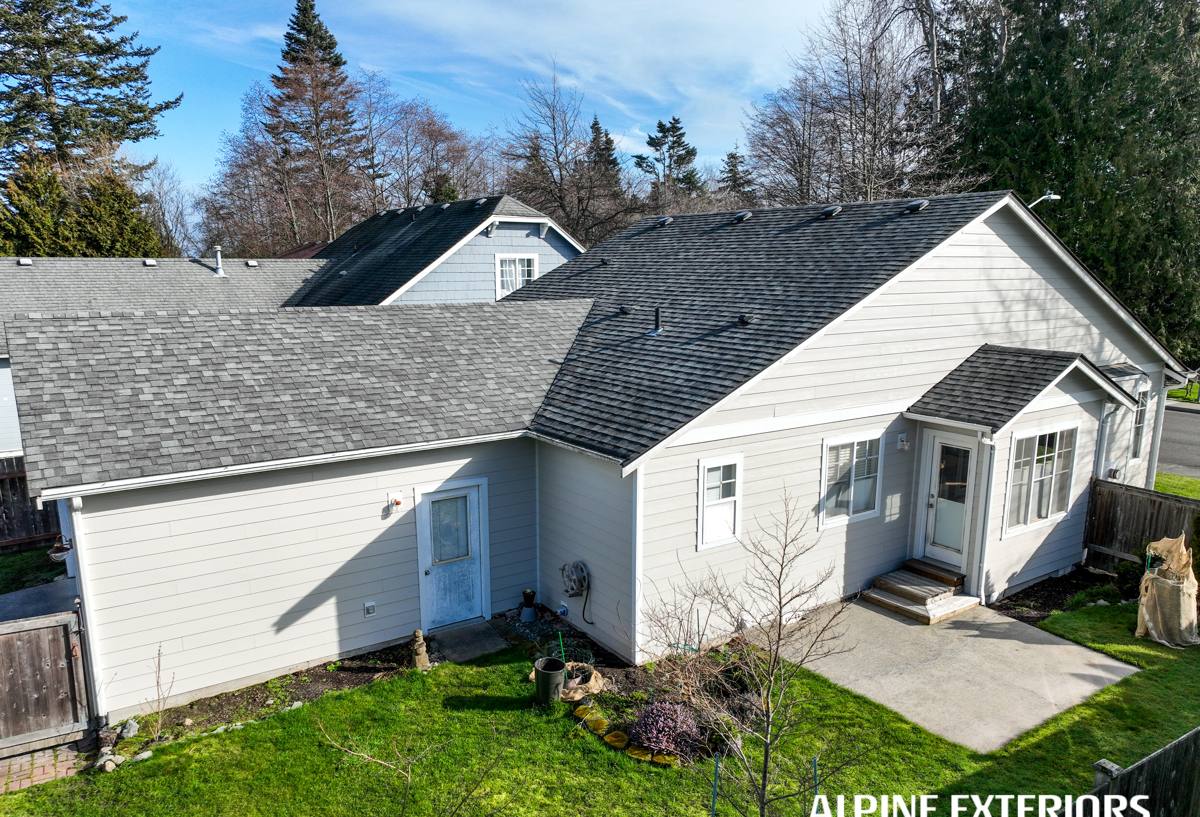
What the Climate Actually Does to Homes Near Dakota Creek
Salt Air and Metal Fatigue
Proximity to Puget Sound water means airborne salt gets carried onto roofs, gutters, flashing, and any exposed fasteners. Salt accelerates corrosion on unprotected or poorly coated metal — nail heads, drip edge, valley flashing, and older gutter systems are the first places it shows up. It's rarely dramatic; it's a slow, steady wear pattern that shows up as rust streaks and pitted metal years before it becomes a leak.
Driving Rain and Wind-Driven Moisture
Blaine catches weather systems coming off the water, and rain here frequently arrives at an angle rather than falling straight down. That matters because roofing and siding systems are designed with certain assumptions about water direction — driving rain can get up under laps, around fasteners, and behind trim that would stay dry in a calmer climate. Flashing detail and overlap matter more here than in a lot of places.
Moss, Shade, and a Long Wet Season
Between fall and spring, this region goes long stretches without a real drying window. Add tree cover, which much of Dakota Creek has, and you get roof surfaces that stay damp for days at a time. That's the exact condition moss and algae need to establish. Once moss gets a foothold on a roof, it holds water against the surface, lifts shingle edges as it grows, and shortens the life of the roofing material underneath it.
Roofing for Dakota Creek Homes
Roof work in this area is less about picking the flashiest material and more about getting the details right that keep water out over a 20-30 year span in a wet, salty, shaded climate.
- Flashing first. Valleys, chimneys, skylights, and wall-to-roof transitions are where driving rain finds its way in. We treat flashing as the part of the job that determines whether a roof actually performs, not a formality.
- Corrosion-resistant fasteners and metal. Given the salt exposure, we use fastener and flashing materials rated for coastal-adjacent conditions rather than whatever is cheapest at the yard.
- Ventilation that accounts for shade. Roofs under tree cover dry more slowly. Proper intake and exhaust ventilation helps the underside of the deck dry out between rain events instead of staying damp continuously.
- Moss-aware installation. Zinc or copper strips near the ridge, tighter attention to shingle exposure, and honest conversations about which trees are shading the roof too heavily are all part of a moss-resistant install — not a guarantee against moss, but a real reduction in how fast it comes back.
Siding: The Second Line of Defense
Siding on a Dakota Creek home is doing more work than people think. It's not just the finished look of the house — it's the barrier between wind-driven rain and the wall assembly behind it. A few things we pay close attention to on siding jobs in this area:
Drainage Plane and House Wrap
In a climate with sustained wind-driven rain, the water-resistive barrier and drainage gap behind the siding matter as much as the siding itself. If water gets past the siding surface (and eventually, some always does), it needs a path to drain back out rather than sitting against sheathing.
Material Behavior in Damp, Shaded Conditions
Different siding materials handle sustained moisture and shade differently. Fiber cement holds up well against moisture and doesn't feed mold the way some materials can, though it's heavier to install and needs proper caulking and paint maintenance at seams. Engineered wood products have improved a lot but are still more sensitive to standing moisture at butt joints and bottom edges, so installation detail and site drainage matter more with them. Vinyl is low-maintenance and handles moisture fine on its own, but in a shaded, damp yard it won't discourage moss and algae growth on its surface the way some other materials do, and it can show heat distortion if it sits close to certain reflective window setups. None of these are "bad" products — they're trade-offs, and the right one depends on your specific lot, sun exposure, and how much maintenance you want to do.
Trim and Butt Joints
Most siding failures we see aren't in the field of the wall — they're at trim boards, window returns, and butt joints where water can get behind the surface. Sealing and flashing these correctly the first time avoids callbacks and rot down the line.
Windows: Sealing Out Wind-Driven Rain
Window failures in this area are rarely about the glass — they're about flashing and sealant at the rough opening. A window that's a great product but poorly flashed will leak in driving rain regardless of its energy rating. When we replace windows here, the flashing sequence (pan flashing at the sill, proper lapping of house wrap over the flanges, correctly bedded trim) gets as much attention as the window unit itself. We also talk with homeowners honestly about condensation: older single-pane or poorly sealed windows in a humid coastal climate tend to fog and sweat more, which is often a bigger day-to-day annoyance than any actual leak.
Decks: Built for Standing Water and Shade
Decks near Dakota Creek deal with the same shaded, damp conditions as roofs and siding, plus direct foot traffic and standing water on horizontal surfaces. Ledger board flashing where the deck meets the house is one of the most common failure points we find on older decks — it's hidden, it's easy to get wrong, and it's expensive to ignore. Proper flashing tape and step flashing at that connection, correct fastener spacing to allow drying, and decking materials suited to shaded, wet conditions all extend the life of a deck significantly. Composite decking has become popular here because it doesn't rot, but it still needs a properly built and flashed substructure underneath — the decking surface isn't what keeps water out of your house.
Comparing Approaches: What Actually Matters Here
| Concern | Why It Matters in Dakota Creek | What We Do About It |
|---|---|---|
| Salt air corrosion | Coastal-adjacent air accelerates rust on metal flashing, fasteners, gutters | Corrosion-resistant fastener and flashing choices |
| Driving rain | Wind pushes rain sideways and up under laps and trim | Extra attention to flashing overlap and sealant detail |
| Shade and moss | Long wet season plus tree cover keeps surfaces damp | Ventilation planning, moss-resistant details, honest tree/shade talk |
| Wall moisture intrusion | Some water always gets past the outer surface | Drainage plane, house wrap, and back-venting done correctly |
| Deck rot at the house connection | Ledger flashing is hidden and commonly done wrong | Proper step and ledger flashing, not just caulk |
Maintenance: What Homeowners in This Area Should Actually Check
A lot of exterior damage in this climate is preventable with a short seasonal checklist rather than a major repair. This is the same list we'd walk a homeowner through on a maintenance visit:
- Clear gutters and downspouts before the fall rains start, and again mid-winter if trees are dropping needles or leaves onto the roof
- Look at north-facing and shaded roof slopes for moss growth at least once a year — catching it early is far cheaper than a full roof clean or replacement
- Check caulking around windows and trim boards annually; UV and moisture cycling break sealant down faster than people expect
- Look at the deck ledger board area (where the deck attaches to the house) for staining or soft wood, especially after a wet winter
- Keep an eye on any visible metal flashing for rust streaks, which are an early warning sign, not just a cosmetic issue
- Trim back tree branches that overhang the roof to reduce both debris buildup and the shade that feeds moss
Why a Local Crew Matters for This Kind of Work
A contractor who mainly works inland, drier parts of the state can do competent work and still miss the details that matter specifically here — the flashing tolerances for driving rain, the fastener choices that hold up against salt air, the ventilation planning that accounts for how slowly a shaded roof dries out. We work in and around Blaine and the surrounding Whatcom County communities regularly, which means we're not guessing at how this climate behaves — we're accounting for it in every estimate and every install. That also means we're accountable locally: if something needs a second look after the job is done, we're not driving in from out of the area to handle it.
Getting Work Done in the Right Order
When a home needs more than one exterior system addressed — say, roofing and siding, or windows and a deck rebuild — sequencing matters. Roof work generally comes first since it protects everything below it. Siding and window flashing integration should be planned together if both are being done, since they share transition points. Decks can usually be scheduled independently unless the ledger connection ties into siding that's also being replaced. We'll walk through the right order for your specific situation rather than pushing whichever service happens to be easiest to sell.
If you're dealing with moss buildup, a leak you can't pinpoint, aging siding, drafty or fogged windows, or a deck that's showing its age, we're happy to come take a look. There's a free, no-pressure estimate form below — no obligation, just an honest read on what your home actually needs.