 Blaine Roofing
 The Question Every Homeowner Eventually Faces
At some point, almost every roof in Whatcom County gives you a decision to make: patch it again, or replace it. It's rarely obvious. A roof with one bad leak isn't automatically a write-off, and a roof that "looks fine" from the ground isn't automatically healthy. The honest answer usually comes down to a handful of factors working together — age, material condition, how much of the roof is affected, and what's happening underneath the shingles or panels where you can't see it.
This page walks through how we actually think about that decision when we're up on a roof in Blaine, not a sales script designed to steer you toward the bigger job. Sometimes a repair really is the right call. Sometimes it's a band-aid that costs you more over three or four smaller visits than one proper replacement would have.
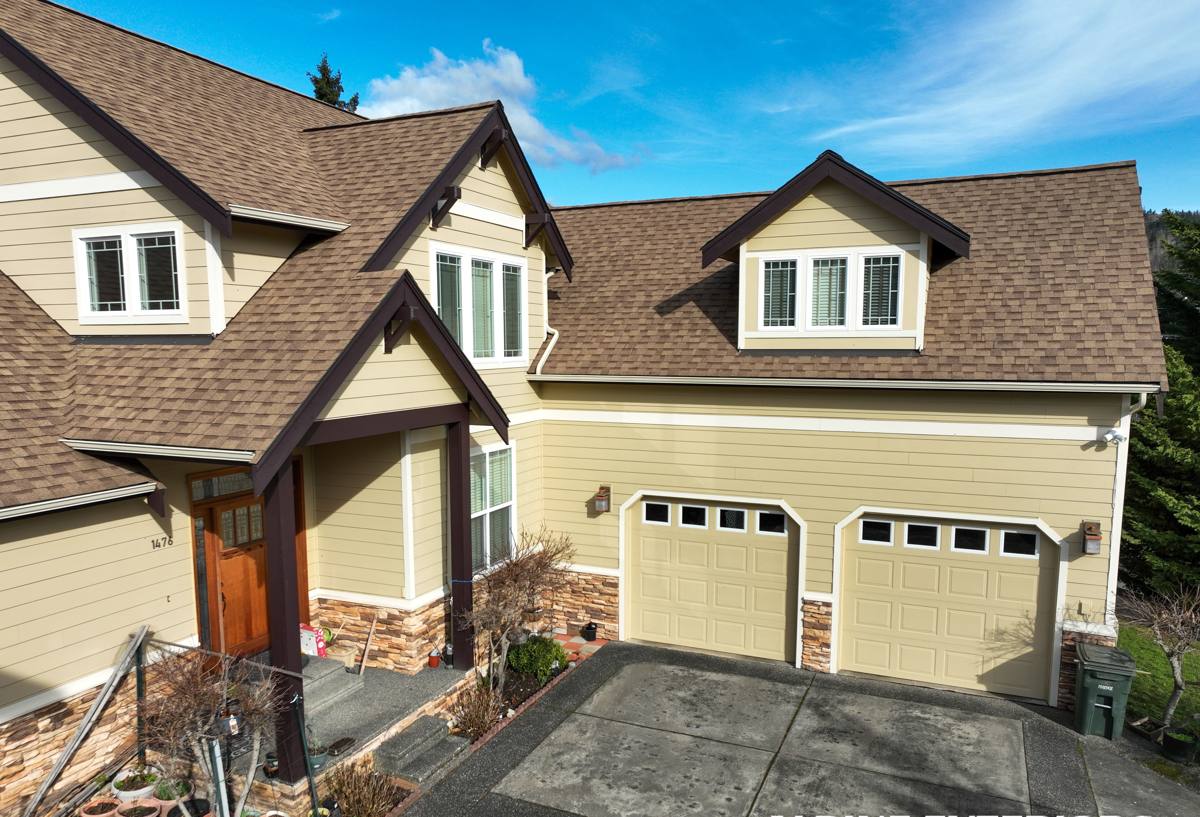
When a Repair Is the Right Answer
Repairs make sense when the damage is localized and the rest of the roof still has useful life left in it. Common examples we see around town:
- A handful of cracked, curled, or wind-lifted shingles in an otherwise sound field
- A single flashing failure around a chimney, vent pipe, or skylight causing a specific, traceable leak
- Isolated moss or debris buildup that's trapping moisture in one valley or shaded section
- Storm damage limited to one slope, with the rest of the roof unaffected
- A roof under 10-12 years old with an otherwise good installation and no widespread wear
In these cases, a repair addresses the actual problem without spending money on square footage that doesn't need to be touched. A good contractor should be able to point to the specific cause of a leak, not just guess and reroof the area.
When Repairs Stop Making Sense
The math flips once a roof needs repeated repairs in different spots, or once the underlying materials — the decking, underlayment, or the shingles/panels themselves — are failing broadly rather than in one location. If we find granule loss across the whole field, brittle shingles that crack when lifted, or soft decking in multiple areas, further patching is usually just delaying the inevitable while risking interior damage in the meantime.
Signs Your Roof Is Telling You It's Done
Some warning signs are visible from the ground; others only show up on close inspection or from inside the attic. Worth knowing both kinds:
From the Ground
Shingles that look curled, cupped, or bald (missing granules, showing dark or shiny patches), a roofline that sags or dips instead of running straight, moss or algae streaking heavily across multiple slopes, and daylight visible through the roof deck from inside the attic are all signals the roof has moved past isolated wear.
From Inside
Water stains on ceilings that reappear after a repair, insulation that's damp or matted, and a musty smell in the attic all point to moisture getting past the roofing system in more than one spot — which usually means the whole assembly, not just the surface layer, needs attention.
Age and Material: What the Clock Tells You
Every roofing material has a realistic service life, and that window matters as much as visible damage when deciding between repair and replacement.
| Roofing Material | Typical Service Life | Repair vs. Replace Guidance |
|---|---|---|
| Asphalt composition shingle | 18-25 years | Repair freely under 12-15 years; lean toward replacement past 18-20 years, especially with granule loss |
| Architectural/laminate shingle | 25-30 years | More tolerant of isolated repairs; watch for widespread curling near end of life |
| Standing seam metal | 40-50+ years | Fastener and seam repairs are common and reasonable; full replacement is rare before 30-40 years |
| Cedar shake | 20-30 years, maintenance-dependent | Requires ongoing upkeep in wet climates; splitting and moss intrusion often mean replacement sooner than the material's theoretical age |
| Flat/low-slope membrane | 15-20 years | Seam and flashing repairs are routine; membrane brittleness or widespread ponding usually means replacement |
A roof nearing the end of its expected life that also needs a repair is a different situation than a young roof with the same symptom. We factor both into the recommendation, not just what's failing today.
What's Different About Roofing in Blaine and Whatcom County
Local climate shortens the runway on some of these timelines. Blaine sits right on the water, and that salt air accelerates corrosion on exposed fasteners, flashing, and metal roofing components faster than it would inland. Add in the driving rain that comes through with winter storms off the Strait, and any weak point in flashing or underlayment gets tested hard, repeatedly, every season. Roofs here also deal with a long moss season — the combination of shade, moisture, and mild temperatures gives moss a much longer growing window than drier parts of the state, and moss that's allowed to establish itself holds water against the roof surface long after the rain stops.
None of that means every roof in Whatcom County needs premature replacement. It does mean we weigh material condition a little more conservatively here than a contractor might in a drier climate, because the margin for a "small" flashing gap or a patch of neglected moss is smaller.
The Cost of Repeated Patching
One repair is rarely the problem. The pattern that costs homeowners the most is three or four repairs spread across a few years — a flashing fix here, a shingle replacement there, a new patch after the next windstorm — each one reasonable on its own, but adding up to more than a single well-planned replacement would have cost, while the roof keeps aging underneath. If you've called a roofer out more than twice in the last two or three years for different issues on the same roof, that's usually the point to ask for a full assessment rather than another spot fix.
Interior and Structural Costs
The bigger risk with deferred replacement isn't the roofing material — it's what a slow, hidden leak does to the decking, framing, insulation, and interior finishes underneath. Repairing rotted decking or replacing water-damaged drywall and insulation typically costs more than the roofing work that would have prevented it. If a repair estimate turns up soft or discolored decking, that's a sign the roof has been letting water through longer than the visible symptoms suggested.
A Practical Decision Checklist
Before deciding, it helps to walk through the same questions we do on an inspection:
- How old is the roof relative to its material's typical service life?
- Is the damage confined to one area, or showing up in multiple spots?
- Has this roof needed repairs more than once or twice in the past few years?
- Is there any sign of moisture inside — attic, ceilings, or exterior walls?
- Is the decking solid everywhere it's been checked, or soft in places?
- Does the current roof still meet your needs (ventilation, insulation, appearance) or was it already due for an upgrade?
- What's the remaining warranty status, if any, on the existing materials or prior workmanship?
If most of these point toward "isolated and early," a repair is the sound, cost-effective choice. If several point toward "widespread or aging," replacement is usually the better long-term value even though it costs more upfront.
What a Fair Inspection Should Include
A recommendation is only as good as the inspection behind it. A thorough look should cover the full roof surface (not just the area you called about), the attic or interior access points where visible, flashing around every penetration, and the general condition of gutters and drainage, since backed-up water contributes to a lot of the moss and rot issues we see locally. You should walk away from an inspection with a clear explanation of what's failing, why, and what the realistic options are — including the option to simply repair and monitor, if that's genuinely the right call.
Making the Call
There's no single rule that applies to every roof, and any contractor who gives you a firm answer without actually inspecting the roof, the attic, and the flashing details is guessing. What matters is an honest look at age, extent of damage, and what's happening beneath the surface — weighed against how this particular roof has held up to Blaine's salt air, wind-driven rain, and moss season.
If you're trying to decide between a repair and a full replacement, we're happy to take a look and give you a straight answer either way. Reach out for a free, no-pressure estimate — there's a form below to get started.