 Blaine Roofing
 Board & Batten Siding on the Semiahmoo Waterfront
Homes in the Semiahmoo area sit about as close to the weather as a house in Whatcom County can get. The peninsula setting means near-constant exposure to wind off the water, salt-laden air, and long stretches of grey, wet weather that can run from October through May. Board and batten siding — with its bold vertical lines and deep shadow reveals — is a natural fit for the coastal and craftsman-style homes common in this part of Blaine. But the same design that makes it attractive also makes it less forgiving of a poor installation than standard horizontal lap siding.
This page covers what board and batten siding actually needs to hold up in a Semiahmoo microclimate, what a correct installation looks like from the framing out, and why we install it in exactly one material: James Hardie fiber cement.
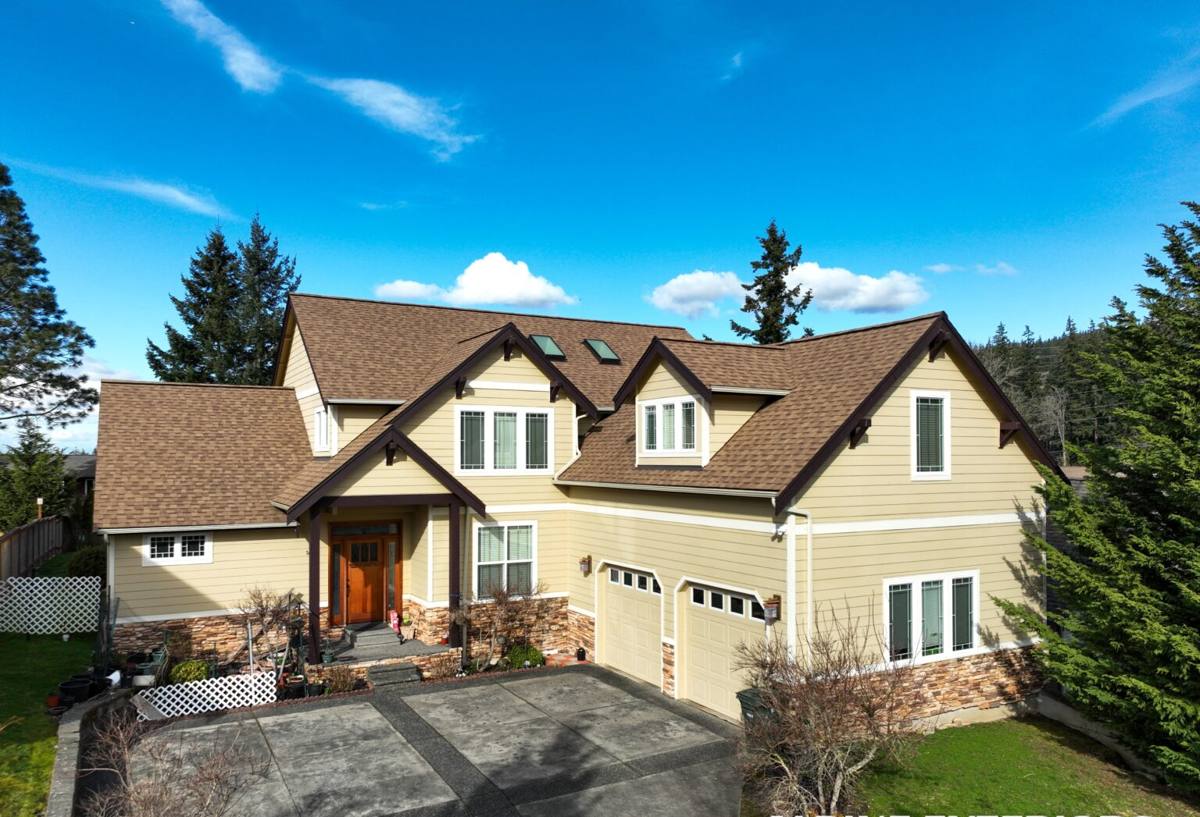
What Semiahmoo's Climate Actually Does to Vertical Siding
Three things wear on siding here more than almost anywhere else in Whatcom County: salt air, driving rain, and a moss season that can stretch nearly two-thirds of the year.
Salt Air and Corrosion
Salt-laden air off the water accelerates corrosion of fasteners, flashing, and any exposed metal trim. On board and batten walls, this matters more than on lap siding because the vertical battens create dozens of extra seams and fastening points running the full height of the wall — every one of them is a place where a poor-quality fastener or unsealed joint can start corroding years before the rest of the wall shows any wear.
Driving, Wind-Driven Rain
Wind off open water doesn't just drop rain straight down — it drives it sideways into the wall. Vertical board and batten siding channels water downward along the battens and board faces, which is good when the assembly is built correctly, but it also means any gap, unsealed joint, or missing flashing detail becomes a direct path for water to travel behind the siding rather than shedding off it.
Moss and Algae
Shaded, damp wall sections — common on the north and west faces of homes tucked near trees or facing prevailing wind — stay wet longer and grow moss and algae faster. Moss holds moisture against the wall surface, and on siding that isn't dimensionally stable or properly finished, that constant dampness leads to swelling, cupping, or paint failure well before the siding is actually worn out.
Why We Only Install James Hardie for Board and Batten
We install James Hardie fiber cement exclusively for board and batten projects in Semiahmoo. That's a deliberate standard, not a default.
Non-Combustible, Dimensionally Stable
Hardie's fiber cement doesn't expand and contract with moisture the way wood-based products do, and it won't rot, delaminate, or feed moss the way organic materials can. In a climate where a wall can stay damp for days at a time, that stability is what keeps board and batten joints tight and flat over decades rather than years.
Climate-Engineered HZ Product Line
James Hardie makes region-specific formulations (HZ5 for the Pacific Northwest's moisture and freeze-thaw conditions) engineered for exactly the kind of wet, marine climate Blaine sits in. That's a meaningful difference from a generic siding product not engineered for regional exposure.
Factory-Applied ColorPlus Finish
ColorPlus finish is baked on at the factory under controlled conditions, which gives more consistent, UV- and salt-resistant color than field-applied paint, and it comes backed by its own finish warranty separate from the substrate warranty.
What We Don't Install, and Why
We don't install vinyl board and batten, engineered wood (LP SmartSide and similar products), or primed cedar/spruce boards. Vinyl board and batten can look convincing from the street, but it's a thinner, more flexible material that shows waviness and seam movement over time, especially under the temperature swings and wind loads common on exposed lots. Engineered wood and untreated wood products carry real moisture-management risk in a climate this wet — even treated wood-based sidings depend heavily on flawless field sealing to avoid swelling at cut edges and fastener points, and that's a maintenance burden we're not willing to hand a homeowner in a salt-air environment. Cedar is a genuinely attractive natural material, but it requires ongoing refinishing and careful moisture management that most owners underestimate until the siding needs attention years sooner than expected. We'd rather stand behind one product system we trust completely than install several we'd have to caveat.
What a Correct Board and Batten Installation Actually Involves
Board and batten looks simple from the street — vertical boards, battens over the seams — but the assembly behind the visible surface is what determines whether it lasts.
The Rainscreen Gap
On a coastal, wind-exposed wall, we install furring strips or a rainscreen system behind the siding rather than fastening panels directly to the weather-resistive barrier. That gap lets any water that does get past the siding drain and dry out instead of sitting against the sheathing — a detail that matters more in Semiahmoo's wind-driven rain than in a sheltered inland lot.
Weather Barrier and Flashing
A correctly lapped weather-resistive barrier goes on first, with flashing integrated at every horizontal transition, window and door head, and wall penetration. Flashing is what actually keeps water out — the siding itself is the second line of defense, not the first.
Panel Layout and Fastening
Vertical Hardie panels or boards are laid out to minimize seams on visible elevations, fastened per manufacturer spec with corrosion-resistant fasteners (important given the salt air), and battens are installed over the seams with proper spacing to allow for material movement without trapping moisture.
Sealant and Joint Details
Joints, seams, and terminations get sealed with a high-quality, paintable sealant rated for exterior exposure — not a general-purpose caulk that will shrink and crack within a season or two of salt air and UV exposure.
Our Process, Start to Finish
- Site visit and assessment — we look at wall exposure, existing damage, moss/moisture patterns, and wind orientation before recommending anything.
- Product and detail selection — Hardie panel width, batten spacing, and ColorPlus color are chosen for the home's style and exposure.
- Tear-off and substrate check — old siding comes off and sheathing is inspected for hidden rot or moisture damage before anything new goes up.
- Weather barrier, rainscreen, and flashing installation — the parts of the job that don't show but do the most work.
- Board, batten, and trim installation — fastened and sealed to manufacturer and code specification.
- Final walkthrough — we go over the finished wall with the homeowner before calling the job done.
Cost Factors for Board and Batten Siding in Semiahmoo
Every project is different, but these are the factors that most often move the price up or down on a board and batten job in this area:
| Factor | Why It Matters Here |
|---|---|
| Wall exposure and wind loading | Waterfront and open-lot walls need more robust fastening and flashing detail than sheltered walls |
| Existing substrate condition | Hidden moisture damage from a prior siding failure adds repair work before new siding goes on |
| Rainscreen vs. direct-applied assembly | A ventilated rainscreen adds labor and material but is the right call on exposed, rain-driven walls |
| Batten spacing and board width | Narrower boards and tighter batten spacing mean more material and more fastening/sealing labor |
| Trim and detail complexity | Multiple gables, dormers, and window trim add cutting, flashing, and sealing time |
| Access and site conditions | Slopes, retaining walls, and tight waterfront lots can affect scaffolding and staging costs |
Living With Board and Batten in a Salt-Air, Moss-Prone Climate
James Hardie siding, installed correctly, needs far less upkeep than wood-based alternatives, but no siding is entirely maintenance-free in this climate. A short seasonal routine keeps a board and batten wall performing the way it's supposed to:
- Rinse salt residue and grime off exterior walls once or twice a year, especially on wind-facing elevations
- Keep gutters clear so overflow doesn't run down and pool behind battens
- Trim back vegetation and tree cover that keeps shaded wall sections damp and encourages moss
- Check caulked joints and trim seals annually and have any cracked sealant redone before winter rains
- Watch for moss buildup at the base of walls and battens and remove it gently rather than pressure-washing directly into seams
Why Hire a Crew That Already Works Semiahmoo
Board and batten siding done right depends on decisions made for the specific wall in front of the crew — which elevations need a rainscreen, how much flashing overlap a given wind exposure calls for, where moss has historically been a problem on similar homes nearby. A crew that's already worked on homes in this immediate area has seen how the wind and rain actually behave here, not just how a spec sheet says they should. We're also familiar with permitting through the City of Blaine and Whatcom County, and with the kind of exposure-driven detailing that waterfront and peninsula lots in this area typically need. That local pattern-recognition is what turns a correct installation on paper into siding that actually holds up through a Semiahmoo winter.
If you're considering board and batten siding for a home in the Semiahmoo area, we're happy to take a look and walk you through what your specific walls need — no pressure, no obligation. Use the form below to request a free estimate.