 Blaine Roofing
 Storm Damage Roofing for Semiahmoo Homes
Semiahmoo sits right where Whatcom County meets the water, and that location cuts both ways. The views are hard to beat, but the roofs out here take a beating that inland Blaine homes simply don't. Wind coming off Semiahmoo Bay and the Strait of Georgia hits with almost nothing to slow it down, driving rain finds every weak seam, and the salt in the air works on metal fasteners and flashing year-round, not just during storms. If you own a home on or near the spit, or anywhere in that stretch of shoreline, your roof is doing a harder job than a roof five miles inland.
This page is specifically about storm damage repair for that area — what causes it, what a correct repair actually involves, and how we handle it when we're called out to a Semiahmoo property.
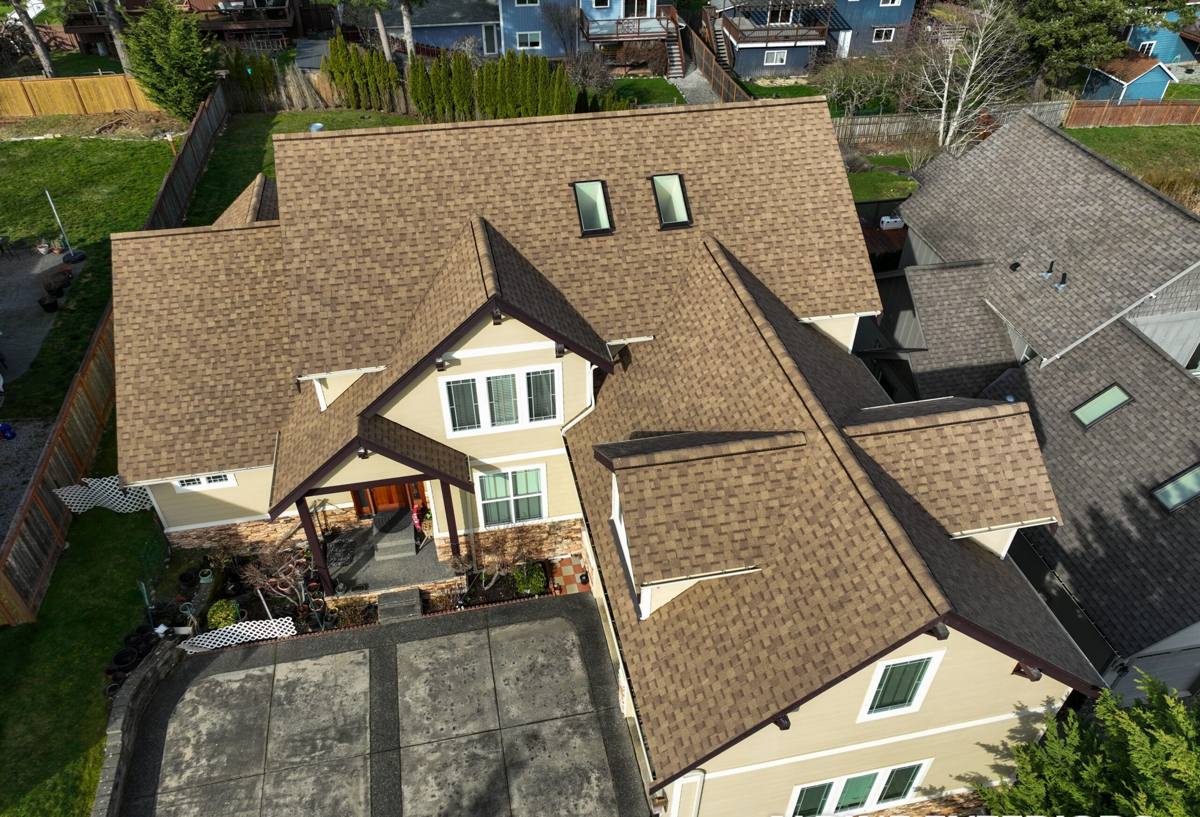
Why Semiahmoo Roofs Take a Different Kind of Beating
Three things combine on this stretch of coastline that don't combine the same way elsewhere in Whatcom County:
- Wind exposure — with open water on multiple sides, gusts during winter storms hit roof edges and ridge lines with more force than a sheltered inland lot ever sees.
- Salt air corrosion — airborne salt accelerates rust on exposed nail heads, metal flashing, and gutter hardware, weakening the very components that are supposed to keep water out.
- A long moss season — the Pacific Northwest's wet, mild climate gives moss and algae a long window to establish on north-facing and shaded slopes, and once it takes hold it holds moisture against the roofing material far longer than bare shingle would.
None of these on their own is unusual for a coastal Washington roof. Together, and repeated storm after storm, they shorten the useful life of flashing, fasteners, and shingle edges faster than a standard roofing inspection schedule might assume.
What Storm Damage Actually Looks Like on a Semiahmoo Roof
Wind Damage
Wind rarely tears a roof off in one dramatic event around here — it's usually more subtle. Look for shingles that are lifted, cracked, or missing at the edges and ridge, especially on the side of the house that faces the water. Wind can also work fasteners loose without visibly displacing the shingle, which is why a lifted-but-intact shingle can be just as much a problem as a missing one.
Water Intrusion
Driving rain during a storm doesn't need a hole to get in — it needs a gap. Flashing around chimneys, vents, and roof-to-wall transitions is the most common failure point, along with valleys where two roof planes meet. Once water gets under the roofing layer, the damage often shows up somewhere else entirely, like a ceiling stain in a room that isn't directly under the leak.
Debris Impact
Storms in this area bring wind-blown branches and, occasionally, larger debris off nearby trees. Impact damage can bruise or puncture shingles in ways that aren't obvious from the ground but that compromise the roof's ability to shed water.
Salt and Moss Related Wear
This one builds slowly rather than hitting all at once during a storm, but a storm is often what exposes it — a roof already weakened by corroded fasteners or moss-trapped moisture is far more likely to fail during high wind and heavy rain than a roof in good condition.
What a Correct Storm Damage Repair Involves
A rushed storm repair is one of the more common ways homeowners end up with a second, bigger repair bill a year or two later. A correct repair does a few things every time, regardless of how minor the visible damage looks:
- Full roof inspection, not just the reported spot — wind and rain damage is rarely confined to one area. We check the whole roof, including areas that aren't visible from the ground.
- Identify the actual entry point — water travels before it shows up as a stain. Chasing the visible symptom instead of the source is how leaks come back.
- Match materials and technique to what's already there — a patch that doesn't match the existing roofing's material, age, and installation method can create a new weak point instead of fixing the old one.
- Address the underlying cause, not just the symptom — if moss or corrosion contributed to the failure, that needs to be dealt with too, or the same spot fails again next storm season.
- Document the damage properly — for insurance purposes, clear documentation of cause and extent matters, especially for storm-related claims.
Our Process for Semiahmoo Storm Repairs
1. Fast Response, Realistic Timing
After a storm, we prioritize active leaks and structural concerns first. We'll give you an honest timeframe rather than a vague promise — sometimes that means a temporary weatherproofing measure while we schedule the permanent repair, especially if more storms are in the forecast.
2. On-Site Assessment
We inspect the full roof, not just the area you noticed damage. On a Semiahmoo property that means paying close attention to the water-facing slopes, flashing points, and any areas showing moss or algae growth, since those are the spots most likely to have hidden weakness.
3. Clear Explanation Before Any Work
You'll know what we found, what caused it, and what the repair involves before we start. If the damage points to a broader issue — widespread fastener corrosion, for example — we'll tell you that plainly instead of only patching what's visible.
4. Repair Using Materials Suited to the Exposure
For coastal properties like Semiahmoo, we lean toward corrosion-resistant fasteners and flashing components rather than standard-grade hardware, because standard hardware simply doesn't hold up as long this close to salt air. It costs a little more up front and saves a repeat repair down the line.
5. Cleanup and Follow-Up
We clear debris from the repair and check drainage paths — gutters and downspouts clogged with storm debris or moss buildup can undo a good repair by holding water against the roofline.
Repair or Replace? What Determines the Right Call
Not every storm-damaged roof needs full replacement, and not every roof that looks fine after a storm is actually fine. The honest answer depends on a few factors:
| Factor | Leans Toward Repair | Leans Toward Replacement |
|---|---|---|
| Roof age | Under 10-12 years, no prior major repairs | Near or past expected material lifespan |
| Extent of damage | Localized — one slope, one flashing point | Multiple areas, or damage found across the whole roof |
| Underlying condition | Decking and structure sound, isolated wear | Widespread fastener corrosion or moss-related decking softness |
| Storm frequency history | First significant damage in years | Repeated storm damage to the same areas over time |
| Cost over time | Repair cost is a small fraction of replacement cost | Repeated repairs are approaching replacement cost |
We'll give you a straight recommendation based on what we actually find — our job is to fix what needs fixing, not to upsell a replacement a repair could reasonably handle, or patch something that's genuinely past its useful life.
Storm Damage and Insurance Claims
Most homeowners insurance covers sudden storm damage — wind, impact, and wind-driven rain intrusion — though coverage details vary by policy and insurer. What tends to matter most is documentation: clear evidence of what happened, when, and what it damaged. We can provide a written assessment describing the damage and likely cause, which you can submit with your claim. We're not a public adjuster and don't handle the claim itself, but a clear, professional description of the roof's condition makes the claims process go smoother on your end.
Why a Crew That Already Works Semiahmoo Matters
Storm damage repair isn't just about roofing skill in general — it's about knowing how a specific type of exposure behaves over time. A crew that regularly works this stretch of Blaine's coastline already knows which flashing details tend to fail first in this wind pattern, which slopes hold moss longest given the local sun exposure, and what hardware actually holds up against the salt air instead of corroding out in a few seasons. That's the kind of knowledge that comes from doing the work here repeatedly, not from a general roofing checklist applied the same way everywhere in Whatcom County.
It also matters for response time. When a winter storm rolls through and several Semiahmoo homes need attention at once, being a local crew means we're not driving in from across the county — we can prioritize based on severity and get to active leaks sooner.
After the Storm: A Practical Checklist
If you've just been through a storm and are checking your own roof before calling anyone, here's what's worth looking for from the ground or from safe vantage points — we don't recommend climbing onto the roof yourself after a storm:
- Shingles that look lifted, curled, cracked, or are missing entirely, especially along ridges and edges
- Granules collecting in gutters or at downspout outlets — a sign of shingle surface wear
- Visible dents or damage on gutters, vents, or flashing
- New or worsening ceiling stains, especially near chimneys, skylights, or where roof planes meet walls
- Sagging or uneven areas on the roofline itself
- Debris resting on the roof that could be trapping moisture
- Moss or algae patches that look denser or wetter than before the storm
If you see any of these, especially an active leak, don't wait — water damage compounds quickly once it's inside the structure, and a small flashing repair now is a lot less than replacing damaged decking or insulation later.
Get a No-Pressure Look at Your Roof
If a recent storm has you wondering about the condition of your roof, we're happy to take a look and give you a straight answer — no obligation, no pressure toward a bigger job than you actually need. Fill out the form below and we'll get in touch to schedule a free estimate for your Semiahmoo property.