 Blaine Roofing
 Roofing in California Creek: A Climate That Doesn't Let Up
California Creek sits in the low, wooded country just outside Blaine, close enough to the water that salt air is a daily fact of life and close enough to the creek corridor that shade, moisture, and tree cover shape how a roof ages. Whatcom County doesn't get the dramatic storms some regions do, but it makes up for that with persistence: months of steady rain, damp air off the Strait, and short winter days that never quite dry a roof out before the next system rolls through. That combination is harder on a roof than a single big storm, because it works slowly, in the places you can't see from the ground.
Homes in this area tend to be shaded by fir and cedar, sit close to grade, or back up to green space near the creek. All of that is part of what makes California Creek a nice place to live, and all of it adds up to more moisture exposure for a roof than a home a few miles inland with more sun and wind.
What Salt Air, Rain, and Moss Actually Do to a Roof
Salt Air and Metal Fatigue
Blaine's proximity to the Strait of Georgia and Semiahmoo Bay means the air carries a fine salt content that settles on every exterior surface, including your roof. Over years, that salt accelerates corrosion on exposed fasteners, flashing, and any bare metal edges. It doesn't ruin a roof overnight, but it shortens the useful life of hardware that wasn't specified for a coastal environment, which is why fastener and flashing choice matters more here than it would 50 miles inland.
Driving Rain and Wind-Driven Water
Rain in this part of Whatcom County rarely falls straight down. Wind off the water pushes it sideways, which means water finds its way under shingles, around vents, and into wall-to-roof transitions that would stay dry in a calmer climate. This is why detailing at valleys, chimneys, skylights, and sidewalls matters as much as the roofing material itself. A roof can have good shingles and still leak if the flashing underneath wasn't built for wind-driven rain.
Moss, Algae, and the Long Wet Season
Shaded, tree-covered lots near California Creek stay damp for months at a stretch, and that's exactly the environment moss and algae need to take hold. Moss isn't just cosmetic. As it grows, it lifts shingle edges, holds water against the roof deck, and works its way into seams, which speeds up granule loss and rot in the sheathing underneath. A roof that looks fine from the driveway can still be holding moisture damage under a mat of moss along the north-facing slope or anywhere shade lingers longest.
Common Roof Types We See in This Area
Most homes around California Creek fall into a few categories, each with its own maintenance profile in this climate:
- Composition (asphalt) shingle: The most common option locally, reasonably priced, and a solid performer when installed with attention to ventilation and flashing.
- Metal roofing: Sheds moss and rain well and holds up over the long term, but requires coastal-rated fasteners and coatings to handle the salt air without premature corrosion.
- Wood shake: Attractive and traditional for this region, but it needs more frequent moss and moisture management than other materials, since wood is the material most affected by sustained dampness.
- Flat or low-slope sections: Common on additions, porches, and garages; these need careful membrane work since standing water and slow drainage are more likely on a low pitch in a high-rainfall area.
Roofing Material Comparison for a Coastal, Wet Climate
| Material | Typical Lifespan Here | Main Local Challenge | Maintenance Notes |
|---|---|---|---|
| Composition shingle | 20–30 years | Moss and algae in shaded areas | Periodic cleaning, gutter maintenance, prompt flashing repair |
| Metal panel | 40–50+ years | Salt-air corrosion of fasteners/edges | Coastal-rated fasteners, occasional inspection of seams and coatings |
| Wood shake | 20–30 years | Moss, moisture retention, rot | Regular moss treatment, ventilation is critical |
| Low-slope membrane | 15–25 years | Standing water, slow drainage | Keep drains clear, watch for ponding after long rain events |
None of these materials is wrong for California Creek. The right choice comes down to how much shade your lot has, how much upkeep you want to do, and what the rest of the home's exterior looks like. We'll walk through the honest trade-offs for your specific roof rather than push one product across the board.
The Rest of the Exterior: Siding, Windows, and Decks
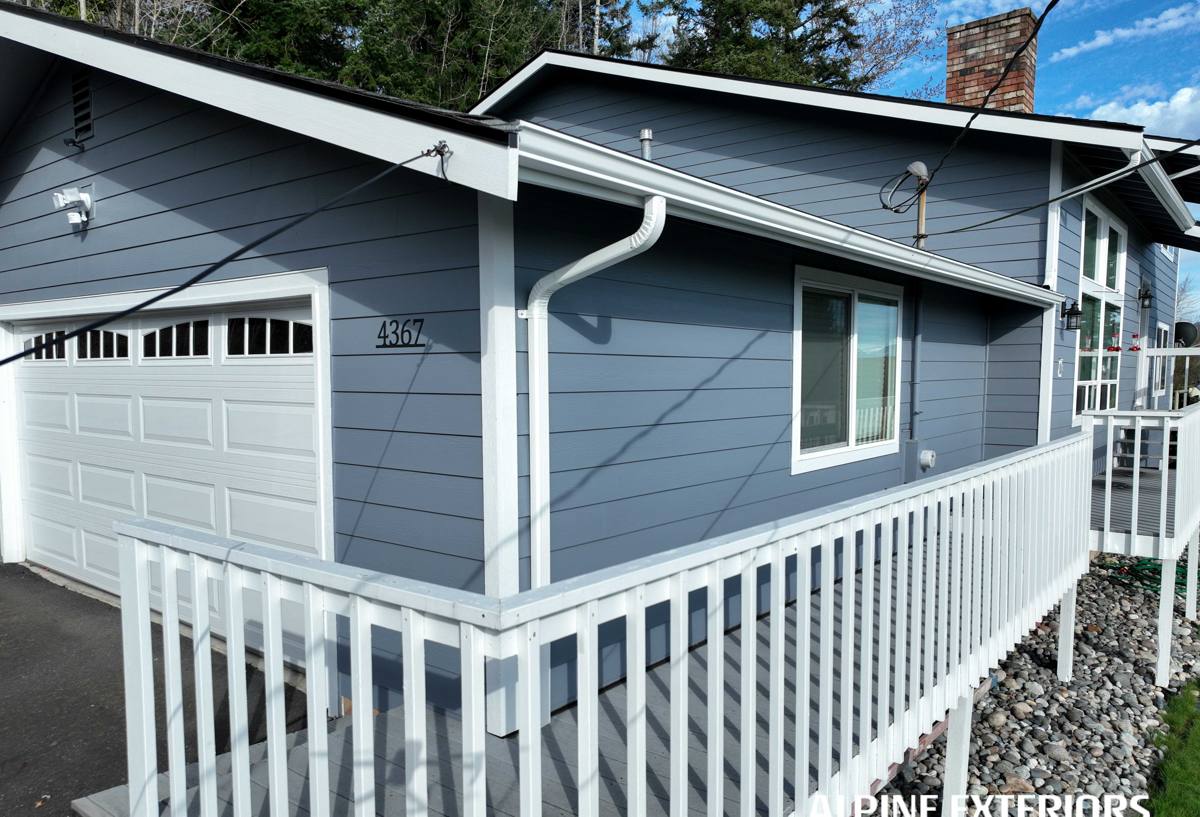
A roof doesn't fail in isolation, and neither does the rest of the exterior. In a climate like Blaine's, roof, siding, windows, and decks all take on moisture from the same weather patterns, so it's worth thinking about them together rather than as separate problems.
Siding
Wind-driven rain that gets past a roof edge or a poorly flashed window often shows up as siding damage first — staining, soft spots, or paint failure near the top of a wall. Siding in this area needs good drainage behind it and solid flashing at every penetration, not just a weather-resistant surface.
Windows
Older windows and worn flashing around window openings are one of the more common quiet leak points we find on homes in wetter, shaded lots. Condensation and fogging between panes is usually a sign the seal has failed, which is a window issue, not a roofing one, but it's worth checking at the same time since both are driven by the same moisture load.
Decks
Decks near the creek or under tree cover deal with the same standing-moisture and moss issues as a shaded roof slope. Ledger board connections and any spot where the deck meets the house need the same flashing discipline as a roof-to-wall transition, since that's a common point for water to work into the structure.
Because we handle roofing, siding, windows, and decks, we can look at a home's exterior as one system instead of quoting a roof repair without noticing a siding or window issue that's feeding the same water problem.
Maintenance That Actually Matters in California Creek
Not every home needs the same maintenance schedule, but for a shaded, coastal-adjacent property, this is a reasonable baseline:
- Clear gutters and downspouts at least twice a year, more often if you have overhanging conifers
- Have moss treated or removed before it spreads past a thin surface layer, especially on north-facing or shaded slopes
- Check flashing at chimneys, skylights, and roof-to-wall transitions every couple of years, since these are the most common leak points in wind-driven rain
- Look for granule buildup in gutters, which signals accelerated shingle wear
- Have metal fasteners and flashing inspected periodically for early corrosion, particularly on homes closer to the water
- Walk the exterior after major windstorms to check for lifted shingles or shifted flashing
Signs Your Roof Needs a Closer Look
Most roof failures in this climate don't announce themselves with a dramatic leak on day one. They show up as smaller signals first: a damp smell in an attic space, a stain on an interior ceiling near an exterior wall, moss thickening in one spot faster than the rest of the roof, or shingles that look curled or dark compared to the rest of the field. Any one of these is worth a look before the next wet season, since problems caught early are almost always simpler and less costly to fix than problems that have had a winter to spread.
Why a Local Crew Matters Here
A roofing crew that mostly works inland, drier climates will size up flashing, ventilation, and moss differently than a crew that works Whatcom County's coastline every week. We see the same conditions repeatedly — the same wind-driven rain angles, the same shaded lots, the same salt exposure — and that familiarity shows up in the details: how flashing is lapped, which fasteners hold up long-term near the water, and where moss tends to start on a given roof style. Being local also means we're a short drive away if something needs a follow-up look after a storm, not a call center routing you to whoever's available.
Get a Straightforward Estimate
If you're dealing with moss buildup, a slow leak, aging siding, foggy windows, or a deck that's starting to show its age, we're glad to take a look and give you an honest read on what's actually going on — no pressure, no inflated scope. Use the form below to request a free estimate for your California Creek home.