 Blaine Roofing
 Semiahmoo's Waterfront Setting Is Hard on Siding
Semiahmoo sits about as close to the water as a Whatcom County neighborhood can get, and that location cuts both ways. The views are part of why people live here, but the same exposure that makes the setting desirable also makes it one of the tougher spots in the Blaine area to keep exterior siding in good shape. Salt-laden air off the bay, wind-driven rain coming straight off the water, and a long, damp moss season each chip away at siding in their own way, and most of that damage happens slowly enough that homeowners don't notice until it's already serious.
Siding replacement in Semiahmoo isn't just a cosmetic project. Done right, it's the thing standing between your framing and a climate that rarely lets a house dry out completely between one rain event and the next. Done with the wrong material or a rushed install, it becomes a problem that resurfaces within a few years, often behind the wall where you can't see it until the damage is extensive.
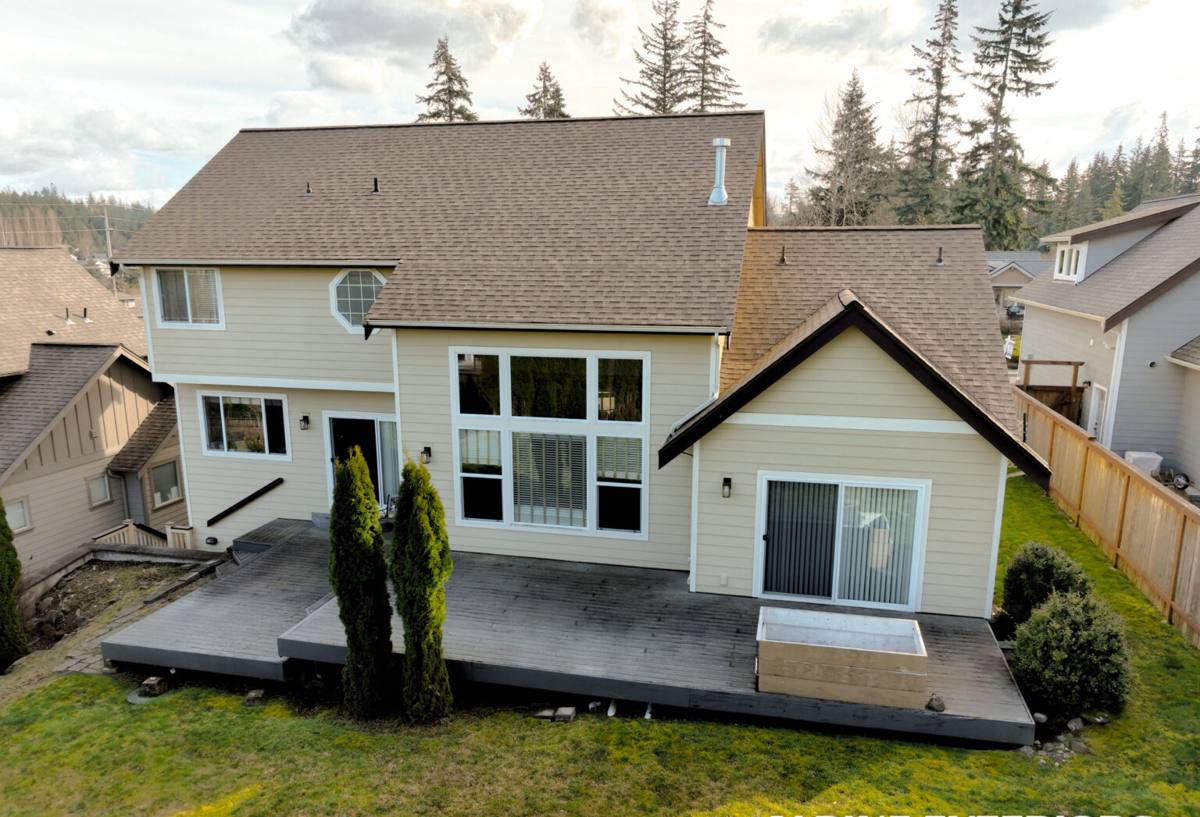
What Salt Air, Driving Rain, and Moss Actually Do to Siding
Salt Air
Airborne salt from the bay settles on exterior surfaces and accelerates corrosion on anything metal — fasteners, flashing, trim edges — and it can also degrade certain paint and coating systems faster than they'd wear inland. Siding that isn't engineered to handle a marine-adjacent environment tends to show fading, chalking, and finish breakdown well ahead of schedule.
Driving Rain
Wind off the water doesn't just drop rain straight down — it drives it sideways into every seam, joint, and butt edge on a wall. Siding systems depend on correct laps, gaps, and flashing details to shed that water. When those details are wrong, or when the siding material itself absorbs water at the edges, moisture works its way behind the cladding and into the sheathing.
Moss Season
Whatcom County's mild, wet stretch from fall through spring keeps north-facing and shaded walls damp for months at a time. That's exactly the environment moss and algae need to take hold. Beyond the cosmetic green tint, sustained moisture against a wall surface keeps the substrate behind it wetter for longer, which matters a great deal if the siding material or its coating isn't built to tolerate that.
Signs Your Semiahmoo Home's Siding Has Reached the End of Its Life
- Soft, spongy, or crumbling spots when you press on the siding, especially near the bottom courses or around windows
- Persistent moss or algae staining that comes back within a season or two of cleaning
- Visible warping, cupping, or separation at seams and butt joints
- Paint that's failing faster than it should, or a chalky residue that wipes off on your hand
- Bubbling, peeling, or dark staining around window and door trim
- A musty smell near exterior walls, or rising utility bills that suggest moisture-compromised insulation
- Visible corrosion streaking from fasteners or metal trim pieces
Any one of these can be isolated and minor. Several showing up together, particularly on walls that face the water or stay shaded most of the day, usually means the siding is past the point where patching makes sense.
Why We Install Only James Hardie Fiber Cement Siding
We don't install vinyl, LP SmartSide, primed wood, cedar, or other fiber cement brands. That's a deliberate standard, not a sales preference, and it comes directly from what we see on homes in exactly this kind of environment. Materials that perform fine in a drier, more sheltered setting often struggle here. Vinyl can warp and fade under sustained UV and salt exposure and offers little real protection against moisture intrusion at seams. Wood-based products like LP SmartSide use engineered wood strand technology that, while treated, still relies on an intact factory coating and careful field sealing to keep water out — a single missed cut edge or damaged seal in a wet climate can lead to swelling. Cedar and primed wood need consistent, ongoing maintenance to keep finishes intact, which is a harder standard to hold on a home that's exposed to driving rain and salt air most of the year.
James Hardie fiber cement is a different category of material. It's non-combustible, dimensionally stable, and manufactured with a factory-applied ColorPlus finish that's baked on and warranted against fading and peeling — not a field-applied coat of paint that has to fight the elements from day one. Hardie also makes climate-specific HZ product lines engineered for different moisture and temperature conditions, which matters in a region that swings between hot, dry summers and a long, wet, mild winter. It doesn't absorb water the way wood-based products can, and it holds paint and color far longer than vinyl. That combination — stability, a real factory finish, and a strong transferable warranty — is why it's the only siding system we put our name behind.
What Correct Siding Replacement Involves
Siding is a system, not just a set of boards nailed to the wall. A correct replacement addresses everything underneath and around the visible siding, not just the siding itself.
| Step | Why It Matters in Semiahmoo's Climate |
|---|---|
| Full tear-off and sheathing inspection | Reveals hidden rot or moisture damage behind old siding before it's covered up again |
| Weather-resistant barrier (house wrap) | Provides a secondary drainage plane if any water gets past the siding itself |
| Rainscreen or drainage gap where appropriate | Lets walls dry out between rain events instead of staying damp against the sheathing |
| Flashing at windows, doors, and penetrations | Directs wind-driven rain away from the most vulnerable points on the wall |
| Correct fastener type and placement | Reduces corrosion risk from salt air and prevents siding from working loose |
| Proper lap, gap, and caulking per manufacturer spec | Keeps water from being forced sideways into seams during driving rain |
| James Hardie ColorPlus panels or lap siding | Delivers a factory finish built for sun, salt, and moisture exposure |
Skipping or rushing any one of these steps is how a siding job that looks fine on installation day starts failing within a few wet seasons. The siding itself only performs as well as everything installed underneath it.
Installation Details That Matter Most Here
- Six-inch minimum clearance between siding and grade, roofing, decks, and other horizontal surfaces to limit splash-back and standing moisture
- Caulking and sealing only at manufacturer-specified locations — over-caulking can trap moisture rather than shed it
- Butt joints and corners detailed to shed water outward, not channel it behind the panel
- Corrosion-resistant fasteners appropriate for a marine-influenced environment
- Field-cut edges primed or sealed per Hardie's installation requirements to protect the exposed cut
Our Process for Semiahmoo Siding Replacement
We start with an on-site inspection of the existing siding, trim, and any visible signs of moisture or rot, since Semiahmoo's exposure means we're often finding more going on behind the wall than a homeowner expected. From there we walk through material and color options within the James Hardie line, explain what a proper tear-off and re-side will involve for your specific home, and put together a clear, written estimate before any work begins. During the job, we handle full removal of the old siding, inspect and repair sheathing as needed, install the weather barrier and flashing details correctly the first time, and finish with Hardie panels or lap siding installed to manufacturer spec. We walk the finished job with you before calling it done.
Cost Factors for Semiahmoo Siding Replacement
Every home is different, but a few factors consistently drive the scope and cost of a siding replacement project in this area:
| Factor | How It Affects the Job |
|---|---|
| Extent of hidden sheathing or framing damage | Water-exposed homes near the shoreline sometimes need sheathing repair or replacement before new siding goes on |
| Home size and wall complexity | More corners, dormers, and trim detail mean more labor and material waste |
| Siding profile and finish selected | Lap siding, panel siding, and shingle-style Hardie products vary in material and labor cost |
| Number of stories and access | Multi-story or hard-to-access walls require more scaffolding and time |
| Trim, fascia, and flashing scope | Replacing trim and flashing alongside siding adds cost but avoids mismatched, shorter-lived repairs later |
We don't quote broad averages upfront because the sheathing condition alone can swing a project significantly once we're inside the wall — that's why the on-site inspection comes first.
Why Hiring a Crew That Already Works in Semiahmoo Matters
A siding crew that's spent time working in this specific neighborhood understands things a general contractor from farther inland might not think to check: which wall orientations take the worst of the driving rain off the bay, where moss tends to build up fastest, and how much clearance and drainage detailing actually holds up here versus what looks fine on paper. That local knowledge shows up in the small decisions — where to add extra flashing, which cut edges need extra attention, how tight to run caulk joints — that determine whether a siding job is still performing well a decade out. It also means a crew that's familiar with permitting and inspection expectations in Whatcom County and the City of Blaine, so the project moves without avoidable delays.
A Few Things to Confirm Before You Hire
- Does the contractor carry current Washington State contractor licensing and adequate liability insurance?
- Do they install James Hardie as certified or trained installers, and can they explain the specific HZ product line they're recommending for your exposure?
- Will the estimate include sheathing inspection and repair as a line item, not an assumption?
- Does the proposal specify flashing, house wrap, and fastener details, or just "siding installation"?
- Do they offer a written warranty on both material and workmanship?
If your Semiahmoo home's siding is showing signs of wear, or you'd simply like an honest read on how much life it has left, we're happy to take a look. Reach out for a free, no-pressure estimate — there's a form right below to get started.