 Blaine Roofing
 Two Very Different Shingles, One Big Decision
When a homeowner in Blaine starts pricing out a new roof, the first fork in the road is usually shingle type: architectural (also called dimensional or laminate) versus traditional 3-tab. They look similar in a brochure photo, but they behave very differently once they're nailed down fifteen miles from the Salish Sea and exposed to a Whatcom County winter. This page walks through the real differences — construction, weight, wind performance, cost, and how each one holds up against salt air, driving rain, and the long moss season that defines roofing life out here.
This is general information to help you understand the trade-offs, not a sales pitch for one product over the other. Both shingle types have a place. The right call depends on your roof's exposure, your budget, and how long you plan to own the home.
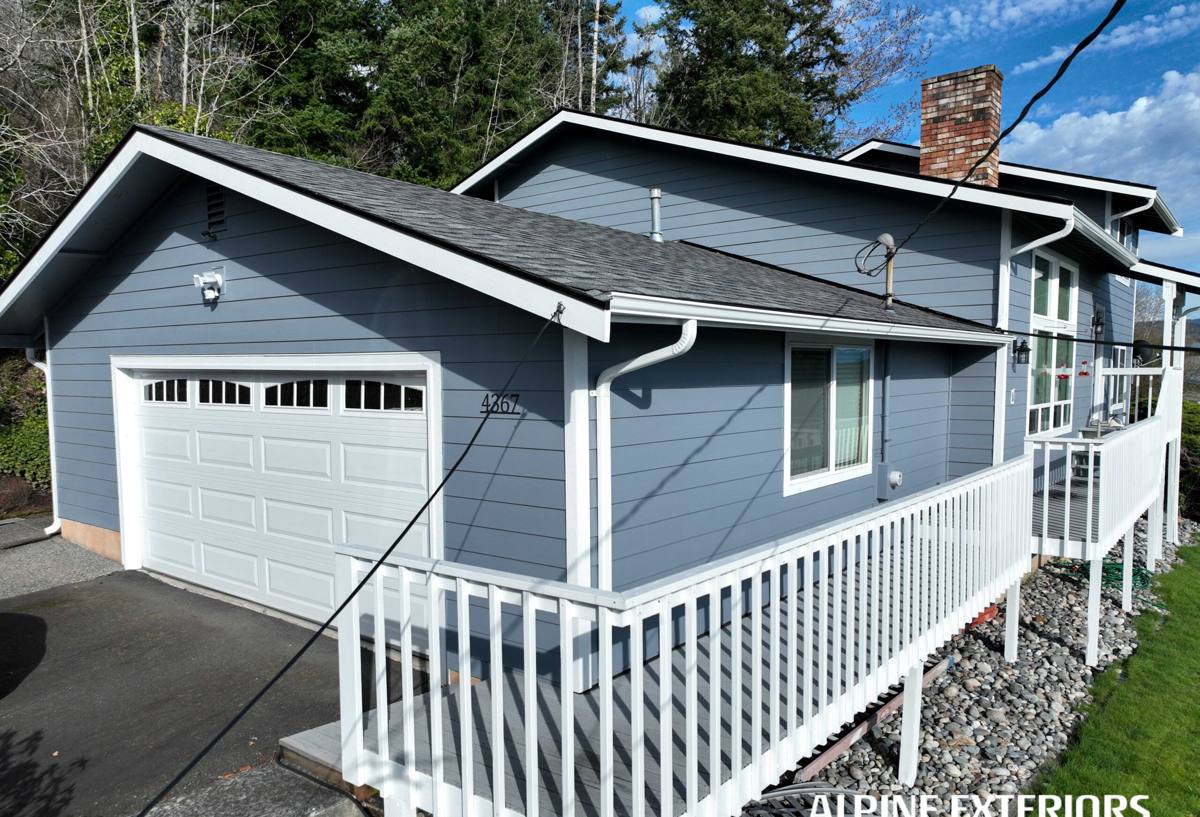
What Makes Architectural Shingles Different
Construction
Architectural shingles are built from two or more laminated layers of asphalt fiberglass, fused together and cut with a randomized tab pattern that creates shadow lines and a dimensional look on the roof. That extra layer isn't just cosmetic — it adds mass, thickness, and a heavier layer of ceramic-coated granules that shield the asphalt from UV breakdown and moisture intrusion.
Weight and Wind Rating
A typical architectural shingle weighs noticeably more per square than a 3-tab, often in the 240-340 lb per square range compared to roughly 200-250 lb for 3-tab. That added weight, combined with a wider nailing zone and thicker laminate, is why most architectural lines carry wind ratings of 110-130 mph when installed to spec, versus 60-80 mph for standard 3-tab. On an exposed ridge or open lot near the water — common around Blaine and Semiahmoo — that wind rating difference matters every time a winter front rolls in off the Strait of Georgia.
Where 3-Tab Shingles Still Make Sense
3-tab shingles aren't obsolete — they're a lighter, flatter, single-layer product with a uniform tab pattern and a lower price point. They still meet code, they still shed water, and on a budget-driven project — a rental property, a detached shop roof, a shed roof, or a home that's a short-term hold — they can be the practical choice. The trade-off is a shorter realistic service life, less impact resistance, and a flatter appearance that some homeowners simply don't like as much on a primary residence.
Where we steer people away from 3-tab is on any roof plane with heavy sun and rain exposure, steep pitches prone to wind uplift, or homes people plan to own long-term. The lower material cost up front tends to get eaten up by an earlier re-roof.
Side-by-Side Comparison
| Factor | 3-Tab Shingles | Architectural Shingles |
|---|---|---|
| Layers | Single layer | Laminated, 2+ layers |
| Typical wind rating | 60-80 mph | 110-130 mph |
| Typical warranty | 20-25 year | 30 year to lifetime (varies by line) |
| Appearance | Flat, uniform tabs | Dimensional, shadow-lined |
| Weight per square | ~200-250 lb | ~240-340 lb |
| Moss/algae resistance options | Limited | Widely available (copper or zinc granules) |
| Relative material cost | Lower | Moderate to higher |
Labor cost to install the two is close — the framing, underlayment, flashing, and ventilation work is identical either way. Most of the price gap between the two shows up in material cost, not installation time.
Why Blaine's Climate Changes the Math
Blaine sits right on Semiahmoo Bay, which means salt-laden air is a constant factor on roofs facing the water. Salt air accelerates the breakdown of exposed asphalt and speeds up corrosion on any unprotected metal flashing, fasteners, or drip edge. Combine that with the driving, wind-pushed rain that comes through Whatcom County in the fall and winter, and a roof here works harder than the same roof would fifty miles inland.
Wind-driven rain doesn't just fall straight down — it gets pushed sideways under shingle tabs and around flashing details. This is where the extra thickness and wider nailing pattern of architectural shingles earns its keep: a heavier, better-sealed shingle resists that lateral water intrusion better than a flat, single-layer 3-tab, especially at hips, ridges, and valleys where wind pressure concentrates.
Moss, Algae, and the Long Whatcom County Moss Season
Anyone who's lived in Blaine for more than a winter knows moss isn't a seasonal nuisance here — it's close to a year-round condition on north-facing and shaded roof planes. Consistent moisture, filtered sunlight from surrounding trees, and mild temperatures create ideal moss and algae growing conditions for most of the year, not just a few wet months.
This is one of the more practical reasons architectural shingles have become the default recommendation for full re-roofs in this area. Many architectural lines are available with algae-resistant granules — typically copper or zinc-infused — that actively discourage the black streaking and moss colonization that plague untreated roofs. 3-tab shingles offer this less often, and even when available, the thinner granule bed wears down faster, shortening how long that protection actually lasts.
Moss isn't just cosmetic. Left unchecked, it holds moisture against the shingle surface, lifts tab edges, and works its root structure into the granule layer — all of which shortens roof life regardless of which shingle you started with. Whatever shingle you choose, a roof that's shaded by trees or faces north deserves periodic moss treatment and gutter clearing as part of normal upkeep.
Cost Factors to Weigh Beyond the Shingle Itself
The shingle line item is only part of the budget conversation. A few things that shift the real cost comparison:
- Roof pitch and complexity — steep roofs, multiple valleys, and dormers add labor regardless of shingle type, but architectural shingles' added weight can matter more on complex framing.
- Underlayment upgrade — pairing either shingle with a quality synthetic or ice-and-water underlayment at eaves and valleys matters more here than the shingle choice itself, given our rain volume.
- Ventilation — poor attic ventilation shortens the life of any shingle by trapping heat and moisture from underneath; it's worth addressing during a re-roof rather than after.
- Warranty length — architectural shingles generally carry longer manufacturer warranties, which can factor into resale value if you plan to sell within the warranty period.
- Long-term ownership horizon — the cost-per-year math favors architectural shingles the longer you plan to stay in the home.
Warranty and Manufacturer Considerations
Manufacturer warranties on 3-tab shingles are typically shorter — often in the 20 to 25-year range — reflecting the thinner, single-layer construction. Architectural shingles commonly carry 30-year to lifetime warranties, though "lifetime" language varies by manufacturer and is usually prorated after an initial full-coverage period. It's worth reading the actual warranty document rather than relying on the marketing term, since wind-speed coverage, algae-resistance coverage, and workmanship coverage are often separate clauses with their own conditions.
We don't push one manufacturer or product line as universally "best" — the right shingle depends on the specific warranty terms, algae-resistance package, and wind rating that make sense for your roof's exposure. What we do insist on, as a professional standard, is installing to the manufacturer's specified nailing pattern and exposure, since that's what keeps the wind-rating and warranty valid in the first place.
A Practical Checklist for Choosing
- Is the roof plane exposed to open wind off the water, or sheltered by trees and neighboring structures?
- Do you plan to own the home long enough to benefit from a longer warranty and slower granule wear?
- Are there north-facing or shaded sections prone to moss — if so, algae-resistant granules are worth the upgrade.
- Is the existing underlayment and flashing in good shape, or does it need replacing regardless of shingle choice?
- What's the total project budget, including any deferred maintenance like ventilation or rotted decking?
- Does the home's resale timeline make a longer warranty period a real financial factor?
Our Honest Take
For most full roof replacements in Blaine and the surrounding Whatcom County area, architectural shingles are the more sensible long-term choice given the wind exposure off the bay, the driving rain, and the extended moss season. They cost more up front, but the added wind rating, thicker granule protection, and algae-resistant options tend to pay for themselves over the life of the roof. 3-tab shingles remain a reasonable option for secondary structures, budget-driven projects, or situations where the roof's exposure is genuinely mild.
Every roof and every budget is different, and the right answer depends on details we can only see in person — pitch, exposure, existing decking condition, and how the roof has weathered so far. If you're weighing this decision for your own home, we're happy to take a look and walk through the options with you. There's no pressure and no obligation — just a straight assessment and a free estimate using the form below.