 Blaine Roofing
 If you've started calling around for roof replacement quotes in Blaine, you've probably noticed the numbers don't line up. One contractor quotes $9,000, another quotes $19,000 for what sounds like the same job. That spread isn't random, and it isn't always a sign someone's overcharging or underbidding. Roofing cost depends on a specific set of variables — some obvious, some easy to miss — and once you understand them, bids start to make a lot more sense.
This guide walks through what actually drives roofing cost in Whatcom County, why Blaine's climate changes the math a little compared to drier parts of the state, and how to read a bid so you're comparing apples to apples.
The Big Cost Drivers, in Order of Impact
Every roofing estimate is built from the same handful of inputs. Understanding them in order of how much they actually move the price helps you spot where a bid is padded or where it's cutting corners.
1. Roof size and complexity
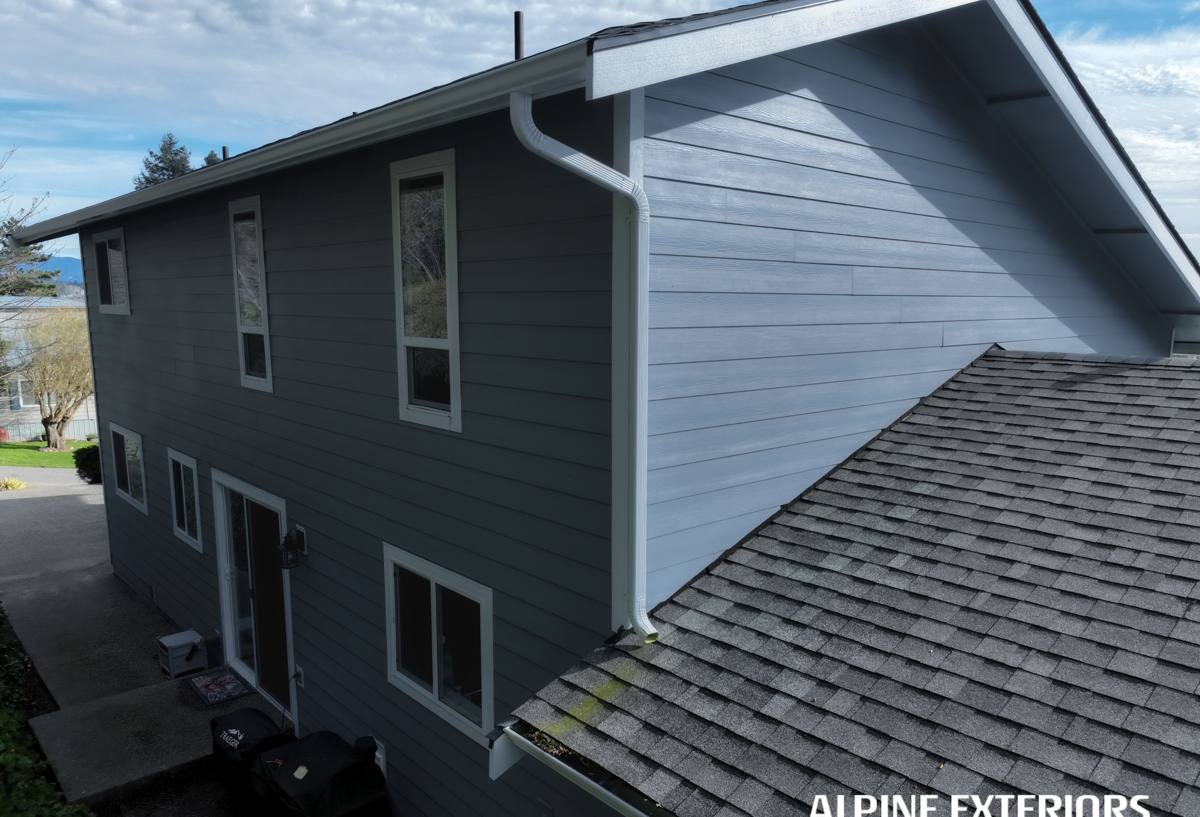
Square footage sets the baseline, but complexity matters more than most homeowners expect. A simple gable roof with two planes costs meaningfully less per square than a roof with multiple valleys, dormers, hips, and steep pitches. More cuts mean more waste, more flashing detail, and more labor hours — even on a roof that's the same total size.
2. Material choice
Asphalt composition shingles remain the most common and most affordable option for most Blaine homes. Metal roofing, cedar shake, and synthetic/composite products all cost more up front but bring different lifespans, maintenance needs, and appearance. We'll break this down in more detail below.
3. Tear-off and layers
If your home has one layer of old shingles, tear-off is straightforward. If it has two layers stacked (common on older Whatcom County homes that were re-roofed over rather than torn off), removal takes longer, generates more waste for disposal, and adds cost before a single new shingle goes down.
4. Decking condition
No one knows for certain what's under the old roofing until it comes off. Rot, delamination, or soft spots in the plywood or plank decking happen more often in this region because of how much moisture the roof sheds over its lifetime. Replacing damaged decking is priced separately, usually per sheet, since it can't be quoted with full confidence until tear-off is underway.
5. Access and site conditions
Steep pitches, tall walls, tight lot lines, or a home surrounded by mature trees all add labor time and safety setup. A single-story ranch with easy driveway access will always cost less to re-roof than a multi-story home on a wooded lot, even with identical square footage.
Typical Cost Ranges
These are broad, honest ranges for a full tear-off and replacement on an average Blaine home. Treat them as a starting point for budgeting, not a quote — your actual number depends on the factors above.
| Roofing Material | Relative Cost | Typical Lifespan | Notes for This Climate |
|---|---|---|---|
| Asphalt composition shingle (standard) | Lowest | 20-25 years | Good value; algae-resistant granules help with moss and moisture staining |
| Asphalt composition shingle (architectural/premium) | Low-mid | 25-30 years | Thicker profile handles wind-driven rain and impact better than standard 3-tab |
| Metal (standing seam or panel) | Mid-high | 40-50+ years | Sheds moss and moisture fast; performs well near salt air with the right coating |
| Cedar shake | Mid-high | 20-30 years with upkeep | Requires regular moss and moisture maintenance in this climate; higher long-term labor |
| Synthetic/composite shake or slate | High | 40-50 years | Mimics premium looks with lower moisture maintenance than real wood |
Why Blaine's Climate Changes the Equation
Whatcom County sits right up against the water, and Blaine gets the full package: salt-laden air off the Strait of Georgia, driving rain that comes in sideways more often than straight down, and a moss season that can run most of the year in shaded, north-facing areas. None of this makes roofing here impossible — it just changes what "the right roof" means for a given house.
Salt air and metal components
Fasteners, flashing, and any exposed metal on a roof see more corrosion pressure close to the water than they would further inland. This is why we pay attention to fastener and flashing material specifications on coastal jobs — it's a durability decision, not an upsell.
Driving rain and flashing detail
Wind-driven rain finds any weak point in flashing around chimneys, skylights, and roof-to-wall transitions. In this climate, flashing detail work matters more than it does in calmer, drier regions, and it's one of the areas where cutting corners shows up years later as a hidden leak rather than an immediate problem.
Moss and moisture cycling
Moss doesn't just look bad — it holds moisture against the roofing surface and can work its way under shingle edges over time. Homes with heavy tree cover or north-facing slopes in Blaine tend to need moss treatment or removal more often than homes in sunnier, drier parts of the state. Algae-resistant shingle granules and good attic ventilation both help slow this cycle.
What's Usually Included in a Full Roof Replacement
- Tear-off and haul-away of existing roofing material
- Inspection and replacement of damaged decking (priced separately, as noted above)
- New underlayment (synthetic or felt, and ice-and-water shield in vulnerable areas)
- New flashing at chimneys, valleys, skylights, and wall transitions
- New shingles, metal panels, or other chosen roofing material
- New ridge vents or other ventilation components as needed
- Site cleanup, including magnetic sweep for nails
- Manufacturer material warranty and workmanship warranty documentation
If a bid doesn't clearly spell out which of these are included, that's a fair question to ask before signing anything.
Repair, Overlay, or Full Replacement?
Not every roof problem calls for a full tear-off. Here's the honest breakdown of when each option makes sense.
Repair
If the roof is under 15 years old, damage is localized (a storm-damaged section, a failed flashing point, a few displaced shingles), and the rest of the roofing is in good shape, a targeted repair is the right call. It's the least expensive path and doesn't need to be more than that.
Overlay (roofing over existing shingles)
This is a shortcut we generally avoid recommending, and it's worth explaining why rather than just saying no. An overlay traps whatever moisture or damage already exists under a new layer, makes it impossible to inspect or replace decking, and often voids or shortens material warranties. It can also violate local building code depending on how many existing layers are already present. In a climate with as much moisture cycling as Blaine sees, we think the long-term risk outweighs the short-term savings.
Full replacement
Once a roof is past its expected lifespan, showing widespread wear, or has decking issues, full replacement is the only option that actually resets the clock. It costs more up front but it's the only path that lets us verify what's under the surface and warranty the whole system as a unit.
How to Read a Bid Without Getting Fooled by the Bottom Line
The single number at the bottom of a quote tells you almost nothing on its own. Two bids can list the same price and mean very different things.
| What to Check | Why It Matters |
|---|---|
| Material brand and product line named specifically | "Architectural shingle" can mean a wide range of products at different price points |
| Underlayment type specified | Synthetic and ice-and-water shield cost more but perform better in wind-driven rain |
| Decking replacement — is it included or an add-on? | Some bids quote a low number assuming zero decking damage, which is rarely realistic |
| Ventilation addressed or ignored | Poor attic ventilation accelerates moss growth and shortens shingle life |
| Warranty terms — material vs. workmanship, and length of each | A cheap bid with a thin workmanship warranty shifts risk back onto you |
| Licensing, bonding, and insurance verification | Washington requires contractor registration; verify it rather than take it on faith |
Questions Worth Asking Before You Sign
- What happens if you find rotten decking once tear-off starts, and how is that priced?
- What underlayment and ice-and-water shield are included, and where specifically will it be installed?
- How many crew members will be on site, and roughly how many days will the job take?
- What's the plan for protecting landscaping, gutters, and siding during tear-off?
- Is there a written workmanship warranty separate from the manufacturer's material warranty?
- Who's pulling the permit, and is that cost included in the bid?
Timing Your Roof Replacement
Roofing can be done nearly year-round in Whatcom County, but dry stretches make for cleaner installs and fewer weather delays. Many homeowners plan replacement for late spring through early fall when rain is less frequent, though a well-run crew can work around Blaine's weather most of the year. If your roof is showing granule loss, curling, or visible moss buildup, it's worth getting an inspection before the next wet season rather than waiting for a leak to force the decision.
Every roof and every budget is a little different, and the only way to get real numbers is to have someone look at your specific roof. We're happy to walk the property, answer questions honestly, and put together a written estimate with no pressure to sign anything on the spot — reach out using the form below to get started.