 Blaine Roofing
 Why Semiahmoo Decks Wear Out Faster Than You'd Expect
Semiahmoo sits right on the water, and that waterfront setting is exactly what puts extra stress on an outdoor deck. Salt-laden air off the bay accelerates corrosion on anything metal, driving rain off Puget Sound and the Strait of Georgia drives moisture into every joint and fastener hole, and the long, wet Whatcom County winters mean decks rarely get more than a few dry months to recover before the next rainy season starts working on them again. A deck built the same way you'd build one twenty miles inland simply won't hold up as long out here.
We work on decks throughout Blaine and the Semiahmoo area regularly, and the failure patterns we see are consistent enough that we can usually tell what's wrong with a deck before we even get underneath it. That local pattern recognition is worth something — it's the difference between a repair that guesses and one that knows.
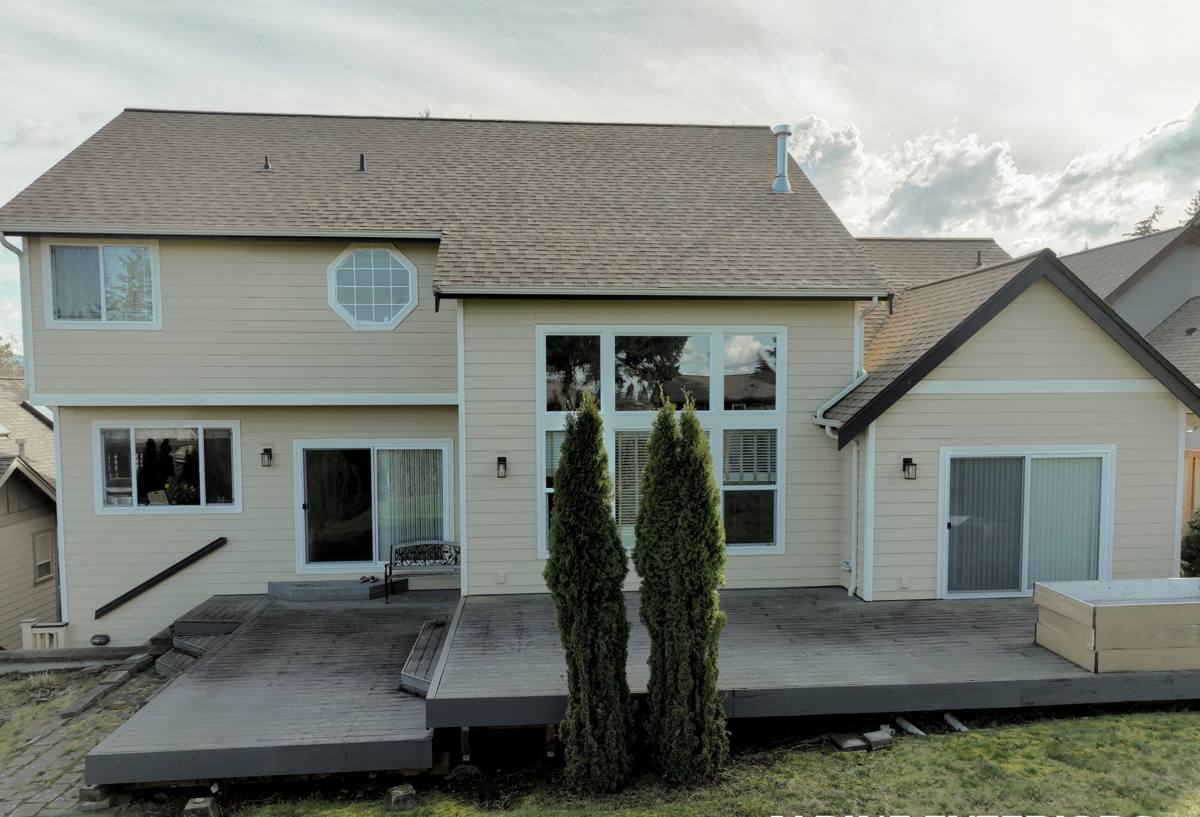
Common Deck Problems We Find in Semiahmoo Homes
Ledger Board and Rim Joist Rot
The ledger board — where the deck attaches to the house — is the single most important structural connection on most decks, and it's also the one most exposed to trapped moisture. Flashing that was skipped or installed wrong lets water sit against the house rim joist and ledger board for months at a time. In a marine climate this rot progresses quietly behind the decking boards, and by the time it's visible from underneath, the connection may already be compromised.
Fastener and Hardware Corrosion
Salt air corrodes fasteners, joist hangers, and structural screws faster than a standard inland environment does. Decks built with basic electro-galvanized hardware near the water often show rust streaking, weakened joist hangers, and screws that shear off at a fraction of their rated strength years before the wood around them has failed. This is one of the most common reasons a deck that "looks fine" on top is actually unsafe underneath.
Moss, Algae, and Surface Deterioration
Blaine's long moss season isn't just cosmetic. Moss and algae hold moisture against decking boards and railings, which speeds up rot in wood decking and can stain or degrade composite surfaces over time. Shaded decks under trees or on the north side of a house are especially prone to a slick, green film that's also a genuine slip hazard, particularly on stairs.
Railing and Guard Post Failures
Railing posts are frequently under-attached to begin with — toe-screwed into the rim joist rather than properly bolted through with blocking. Add years of moisture cycling and the post can loosen well before it visibly wobbles. This is one of the most serious safety issues we find, since a railing failure happens without warning.
What a Correct Deck Repair Actually Involves
A repair that only replaces the boards you can see is not a repair — it's a temporary patch. Doing it correctly means treating the deck as a structure first and a surface second. That means:
- Pulling decking in the affected area to inspect joists, beams, and the ledger connection directly, not just probing from below
- Checking flashing at the ledger board and correcting or adding it where it's missing
- Testing fasteners and hardware for corrosion, not just visible rust — a screw can be structurally weak before it looks bad
- Confirming footings and posts haven't shifted or settled, especially on decks built on grade near the water
- Verifying railing posts are through-bolted with proper blocking, not just screwed to the rim joist
- Matching replacement lumber and hardware to the exposure the deck actually gets, not the minimum code allows
Skipping any of these steps means you're covering a problem instead of fixing it, and in a coastal climate the covered problem comes back faster than you'd expect.
Repair vs. Replace: How We Make the Call
Not every deck with problems needs to be torn out. The decision usually comes down to how much of the structural framing — versus just the surface decking and railings — is affected.
| Factor | Points Toward Repair | Points Toward Replacement |
|---|---|---|
| Ledger board condition | Solid, dry, properly flashed | Soft, rotted, or improperly flashed |
| Joists and beams | Sound, isolated soft spots | Widespread rot or undersized for the span |
| Footings | Stable, no visible movement | Settled, cracked, or undersized |
| Fasteners/hardware | Isolated corrosion, easily replaced | Widespread corrosion throughout framing |
| Age of structure | Under 15-20 years with good maintenance history | Older structure nearing end of service life |
| Decking surface | Boards worn but framing is sound | Decking failure is a symptom of deeper structural issues |
We'll walk you through exactly what we find and why, so the repair-versus-replace decision is based on what's actually happening in your deck's framing — not a guess from the surface.
How We Approach a Semiahmoo Deck Repair
- On-site inspection. We look above and below the deck — decking, railings, ledger connection, joists, beams, footings, and hardware condition.
- Written scope and estimate. You get a clear breakdown of what needs to be replaced, what can be repaired, and why, before any work starts.
- Repair the structure first. Framing, flashing, and hardware get addressed before any surface work, since fixing the top of a deck over a compromised structure just hides the real problem.
- Surface and railing work. Decking, stair treads, and railings are repaired or replaced to match the rest of the deck as closely as possible.
- Final walkthrough. We show you what was done and what to watch for going forward, especially anything specific to your deck's exposure and setup.
Materials: What We Use and Why
In a salt-air environment, material choice matters more than it does further inland. For structural hardware — joist hangers, structural screws, bolts — we favor stainless steel or heavy hot-dip galvanized rated for coastal exposure, not the standard electro-galvanized hardware sold for general use. It costs more up front, but replacing corroded structural hardware in five years costs more than that difference many times over.
For decking and railings, both quality wood and composite materials can work well in this climate if they're detailed correctly — proper gapping for drainage, correct fastening patterns, and flashing that actually sheds water away from framing. We'll talk through the trade-offs for your specific deck: wood typically costs less up front but needs more regular maintenance (cleaning, sealing, occasional board replacement); composite costs more initially but generally needs less upkeep against moss and moisture. Neither is automatically the "right" answer — it depends on your budget, how much maintenance you want to do, and the deck's exposure to sun, shade, and rain.
Maintenance That Actually Extends a Deck's Life Here
- Clean moss and algae off decking and stairs at least once a year, more often on shaded sections
- Keep gutters and downspouts clear so roof runoff isn't dumping extra water onto or near the deck
- Check railing posts periodically for looseness — don't wait for a visible wobble
- Look underneath the deck once a year for early rot or hardware staining, especially near the ledger board
- Reseal or re-stain wood decking on the manufacturer's recommended schedule, not just when it looks faded
- Keep planters and furniture off wet decking boards for extended periods, which traps moisture underneath
Permits and Local Code Considerations
Deck repairs that involve structural framing — joists, beams, footings, or the ledger connection — can trigger permit requirements depending on the scope of work and Whatcom County's current building code. Railing height and spacing requirements also come into play on any repair that touches the guard system. We handle this as part of the process rather than leaving you to sort it out, so the repair is both safe and compliant, not just fixed.
Why Local Experience on This Job Matters
A deck repair crew that hasn't worked near the water before will often default to standard inland practices — standard hardware, standard flashing details, standard maintenance advice. On a Semiahmoo deck, that approach tends to fail early. Working in Blaine and the surrounding waterfront communities regularly means we've already seen how salt air, driving rain, and moss affect decks here over time, and we build and repair accordingly rather than learning that lesson on your project.
If you're noticing soft spots, a wobbly railing, corroded hardware, or a deck that's just not holding up the way it used to, we're happy to take a look. Reach out for a free, no-pressure estimate — we'll give you a straight answer about what's going on and what it will take to fix it right.