 Blaine Roofing
 Roofing Built for Grandview's Coastal Conditions
Grandview sits within the stretch of Whatcom County that runs along the water toward the Canadian border, and homes here take on a specific kind of weather load: salt-laden air off the Salish Sea, long stretches of driving rain, and a moss season that can run most of the year in shaded yards. A roof that performs well in Spokane or even Seattle proper doesn't necessarily perform well a few miles from the water in Blaine. We build and repair roofs with that difference in mind, because we work in this exact climate every week, not as a once-a-year job that happened to bring us out this way.
Blaine Roofing Co. handles roofing, siding, windows, and decks, which matters more than it might seem for a coastal property. Roof problems in this area rarely stay isolated to the roof — a failing gutter or a gap at a roof-to-wall transition sends water into siding and trim, and salt air ages exposed wood and metal on the whole exterior at a similar pace. Treating the roof as one piece of a connected exterior system, rather than a standalone project, is how you actually stop repeat problems instead of chasing them one at a time.
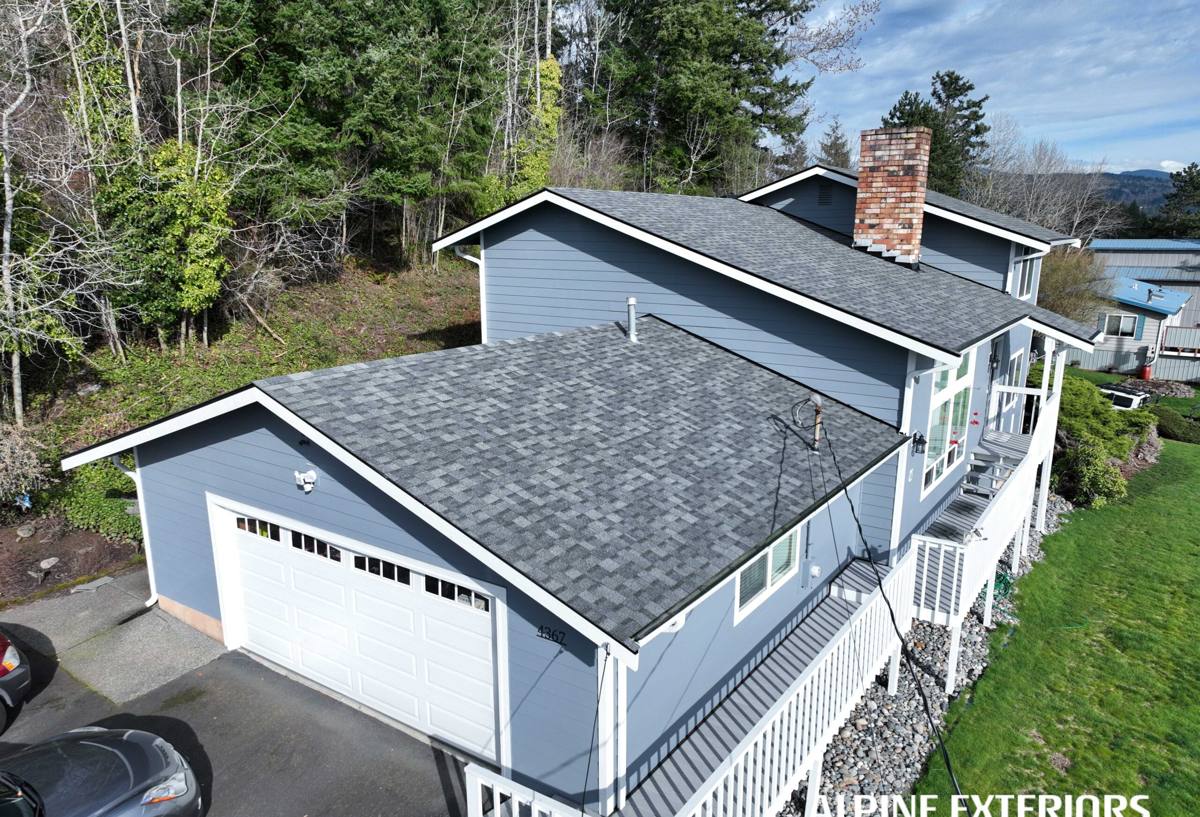
What the Climate Actually Does to a Grandview Roof
Salt Air and Coastal Exposure
Even set back from the immediate shoreline, homes in this part of Blaine sit close enough to the water that airborne salt reaches roofing metal, fasteners, and flashing. Salt accelerates corrosion on unprotected steel and lower-grade fasteners, which is why we pay close attention to flashing material and fastener spec rather than treating that as an afterthought. It's a slower failure than a storm-damaged shingle, but it's a steady one, and it shows up first at the small metal details — valleys, vent boots, drip edge — long before it shows up in the field of the roof.
Driving Rain and Wind-Driven Moisture
Storms coming off the water don't just drop rain straight down; wind pushes it sideways and up under laps, seams, and trim that would stay dry in a calmer climate. This is where installation detail matters more than material choice alone. Underlayment coverage, proper shingle or panel overlap, and correctly sealed penetrations are what keep wind-driven rain out, and they're also the details that get shortchanged on a rushed job. A roof can look fine from the ground and still be letting water in at the edges.
A Long, Damp Moss Season
Shaded roof sections and north-facing slopes in Grandview stay damp for extended stretches, and moss takes hold anywhere organic debris and moisture sit undisturbed. Moss isn't just cosmetic — it lifts shingle edges, holds water against the roofing surface, and works into gaps over time. Left unmanaged for a few seasons, moss growth can shorten the effective life of an otherwise sound roof.
Roofing Services We Provide in Grandview
Roof Replacement
When a roof is past the point where repair makes sense — widespread granule loss, multiple leak points, or age combined with storm damage — full replacement is the honest recommendation. We walk homeowners through material options, underlayment upgrades, and flashing detail before any tear-off starts, so there are no surprises about what's being installed and why.
Roof Repair and Maintenance
Not every issue calls for a new roof. Localized leaks, damaged flashing, a section of wind-lifted shingles, or a failing vent boot are often straightforward repairs when caught early. We'll tell you plainly when a repair is the right call versus when it's a stopgap on a roof that's genuinely at end of life — we'd rather lose a bigger job than sell someone a replacement they don't need yet.
Moss Treatment and Roof Cleaning
Given how much of the year moss can be active here, periodic cleaning and treatment is one of the highest-value, lowest-cost things a Grandview homeowner can do for roof longevity. We use methods intended to remove growth without stripping granules or damaging the roofing surface, which pressure washing can do if it's handled carelessly.
Materials That Hold Up Near the Water
There's no single "best" roofing material for every home — it depends on budget, roof design, and how much maintenance a homeowner wants to take on. Here's how the common options generally compare for coastal Whatcom County conditions:
| Material | Coastal/Salt Performance | Moss Resistance | Typical Lifespan Here |
|---|---|---|---|
| Architectural asphalt shingle | Good, with quality flashing and fasteners | Moderate — needs periodic cleaning | 20–30 years |
| Standing seam metal | Very good with proper coatings and fasteners | High — sheds moss more easily | 40–60 years |
| Cedar shake | Requires more upkeep in damp, salty air | Lower — prone to moss without maintenance | 20–30 years with upkeep |
| Synthetic/composite shingle | Good, consistent performance | Moderate to high depending on product | 30–50 years |
We're upfront that we steer most Grandview homeowners away from untreated cedar shake unless they're committed to ongoing maintenance, simply because the combination of salt air and extended damp periods raises the maintenance burden considerably compared to asphalt or metal. That's a maintenance and moisture-behavior tradeoff, not a knock on the material itself — cedar can be a great fit for the right owner in the right setting.
Siding, Windows, and Decks — The Rest of the Exterior
Because we handle the full exterior, we often catch roofing-related issues while working on siding or trim, and vice versa. A few ways these systems interact in this climate:
- Siding: Salt air and driving rain stress seams and butt joints the same way they stress roof flashing — poor sealing at those points is a common source of hidden water intrusion.
- Windows: Older window flashing details are a frequent leak source during wind-driven storms; proper integration with the surrounding siding and trim matters as much as the window unit itself.
- Decks: Ground-level and elevated decks near the water see accelerated fastener corrosion and moss/algae buildup on shaded boards, similar to what happens on a roof.
If you're planning a roof replacement, it's often a good time to have siding, trim, and window flashing at the roofline inspected together, since that's where most cross-system leaks originate.
Why a Local Crew Matters for Grandview Homes
A contractor based in Whatcom County isn't guessing at what your roof needs to handle — we see the same salt exposure, the same storm patterns off the water, and the same moss growth cycle on our own projects year-round. That local familiarity shows up in practical decisions: which flashing metals and fastener grades we default to, how much underlayment coverage we build in beyond code minimums, and which roof details tend to fail first in this specific microclimate along the Blaine coastline.
It also matters for response time and accountability. If a repair needs a follow-up visit, or a storm raises a new concern a season after the work was done, a local crew is easy to reach and has a direct stake in its reputation in the community it works in.
What Affects the Cost of a Roofing Project
Every roof is different, and we don't publish blanket pricing because roof size, pitch, access, and existing damage all move the number. In general terms, these are the main factors that drive cost up or down:
| Factor | Effect on Cost |
|---|---|
| Roof size and number of stories | More material and labor, higher access cost |
| Roof pitch and complexity (valleys, dormers) | Steeper or more cut-up roofs take longer to install correctly |
| Material choice | Asphalt is typically the most economical; metal costs more upfront but lasts longer |
| Extent of existing damage or rot | Hidden deck or framing repair adds cost once uncovered |
| Tear-off vs. overlay | Full tear-off costs more but is generally the sounder long-term choice |
We provide written estimates that break these factors out so homeowners can see exactly what's driving the number, rather than a single lump figure.
A Simple Maintenance Checklist for Grandview Homeowners
Between professional inspections, a few homeowner-level checks go a long way in this climate:
- Clear gutters and downspouts at least twice a year — clogged gutters are one of the fastest ways wind-driven rain finds its way behind fascia and siding
- Look for moss or dark streaking on shaded roof slopes each fall and spring
- Check attic spaces after major storms for damp insulation or staining, an early sign of a flashing or shingle failure
- Trim back tree limbs that keep roof sections shaded and damp longer than necessary
- Have flashing at chimneys, vents, and roof-to-wall transitions checked every few years, since these are the first points salt-air corrosion and wind-driven rain tend to reach
Our Process for Grandview Projects
We start with an on-site inspection and an honest assessment — repair, partial replacement, or full replacement — before any pricing conversation. From there, we put material and scope in writing, schedule around weather windows that make sense for the work being done, and walk the finished project with the homeowner before calling it complete. Nothing about that process changes based on neighborhood; it's the same standard we hold on every roof we touch in Blaine and the surrounding Whatcom County communities.
If you're noticing moss buildup, a slow leak, or just want an honest read on how much life is left in your roof, we're glad to take a look. Reach out for a free, no-pressure estimate using the form below.