 Blaine Roofing
 Exterior Contracting for Custer Homes
Custer sits inland from Blaine along the Whatcom County corridor, close enough to the water to catch the same salt-laden air and driving rain that batter the rest of the coastline, but with its own mix of older farmhouses, newer builds on acreage, and everything in between. Homes here see a different wear pattern than a tight in-town lot — more tree cover in places, more open exposure in others, and roofs and siding that often go longer between inspections simply because the property is bigger and the house isn't the first thing you walk past every day.
We work Custer regularly as part of our Blaine-area service territory. That means when we quote a roof, a siding job, new windows, or a deck rebuild, we're pricing it against what we've actually seen on comparable homes nearby — not guessing from a general Pacific Northwest average.
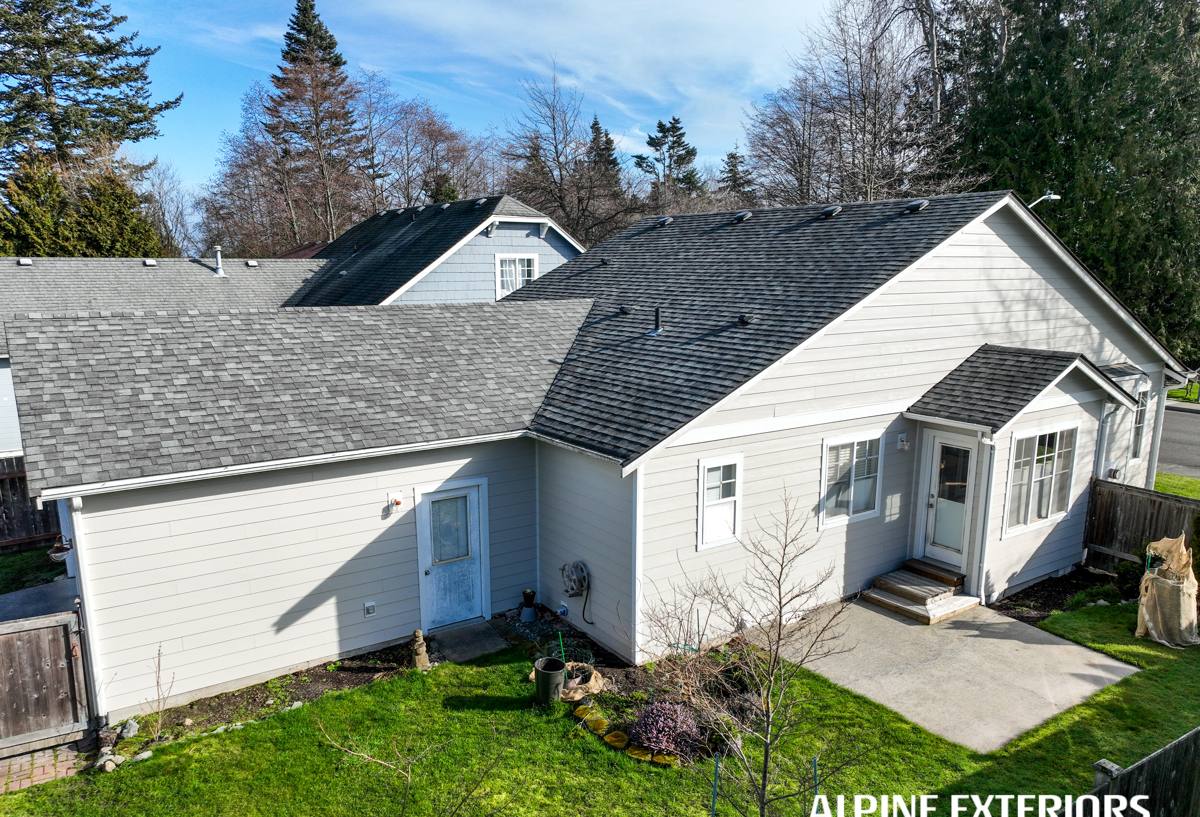
What the Climate Does to Custer Homes
Salt Air and Driving Rain
Whatcom County's proximity to the Strait of Georgia means airborne salt travels further inland than most homeowners assume, especially when winter storms push moisture in sideways. Combined with driving rain — rain that hits siding and window flashing at an angle instead of straight down — this accelerates corrosion on exposed metal fasteners, trim, and flashing, and it finds any gap in a building envelope that isn't sealed correctly. A roof or siding system that would hold up fine in a drier inland climate can fail years early here if it wasn't detailed for wind-driven moisture from day one.
The Long Moss Season
Moss isn't just a cosmetic issue. In this region the moss season runs long — mild, damp conditions for much of the year give it a wide window to establish on north-facing roof slopes, shaded valleys, and anywhere debris collects. Moss holds moisture against the roofing material, works into shingle laps and joints, and over time lifts edges and accelerates granule loss on asphalt roofs or rot on wood-based products. Left unchecked, it shortens the life of an otherwise sound roof.
Tree Cover and Debris
Custer's larger lots often mean more mature trees close to the house. That's good shade in summer but it means more organic debris in gutters and valleys, more standing moisture, and more shade that keeps roof surfaces damp longer after a storm — all of which feeds the same moss and rot problems described above.
Roofing Built for This Exposure
For Custer roofs, the details that matter most are the ones you don't see once the job is done: proper underlayment for wind-driven rain, correctly lapped and sealed flashing at every penetration and valley, and ventilation that lets a roof dry out between storms instead of trapping moisture in the attic. We also talk through moss-resistant material options and simple maintenance steps — like keeping valleys and gutters clear — that meaningfully extend the life of a new roof in this climate.
Common Roofing Work We Handle
- Full roof replacement when a roof is past economical repair or has widespread moss and granule loss
- Targeted repairs for leaks, damaged flashing, or storm-related damage
- Roof inspections ahead of a home sale or after a significant storm
- Moss treatment and removal, paired with advice on preventing regrowth
- Gutter and ventilation work tied into a roofing project
Siding That Handles Salt Air Without High Maintenance
Siding on a Custer home is doing two jobs at once: keeping weather out and standing up to the corrosive effect of salt-laden air on fasteners, trim, and any exposed metal components. We install siding systems chosen for how they perform in this specific environment, not just how they look on day one.
Our standard for material selection favors options with a track record of holding paint or finish, resisting moisture intrusion at seams, and requiring reasonable — not constant — upkeep. Where a product has a known maintenance burden or moisture sensitivity in a wet, salty climate, we'll say so directly and explain the trade-off rather than push it because it's cheaper up front. That's a professional standard, not a knock on any manufacturer — every siding material has conditions it's better or worse suited for, and our job is matching the material to your house and its exposure.
Siding Options Compared
| Material | Salt/Moisture Performance | Maintenance | Typical Lifespan |
|---|---|---|---|
| Fiber cement | Strong resistance to moisture and pests when installed and sealed correctly | Periodic repainting; joints need proper caulking maintenance | 30-50 years |
| Vinyl | Doesn't rot, but can become brittle and crack over time with UV and temperature swings | Low; occasional cleaning | 20-40 years |
| Wood | Vulnerable to moisture and rot in a wet, salty climate without diligent upkeep | High; regular sealing/staining required | Varies widely with maintenance |
| Engineered wood | Good moisture resistance when factory-sealed edges stay intact | Moderate; watch cut edges and seams | 25-30 years |
Windows: Sealing Out Wind-Driven Rain
Window failures in this area are rarely about the glass — they're about flashing and installation. A window that's flashed correctly to shed wind-driven rain will outperform a more expensive unit installed poorly. When we replace windows in Custer, we pay close attention to head flashing, sill pan details, and integration with the surrounding siding or trim, because that's where leaks actually start.
Newer windows also bring real energy performance gains over older single-pane or early double-pane units, which matters on the larger, more exposed homes common in this area. We'll talk through frame material, glazing options, and where replacement makes more sense than repair.
Signs a Window Needs a Second Look
- Fogging or condensation between panes (seal failure)
- Soft or discolored trim and sill areas — a sign moisture is getting in
- Drafts or noticeable temperature difference near the window
- Difficulty opening, closing, or locking properly
- Visible gaps or cracked caulking around the frame
Decks: Standing Up to Year-Round Moisture
A deck in Custer spends most of the year damp, whether from rain, morning dew held in by tree cover, or splash-back off the ground. That constant moisture cycle is hard on fasteners, ledger connections, and any wood-to-ground contact points. We build and repair decks with attention to drainage, proper ledger flashing against the house, and fastener choices that won't corrode prematurely in this air.
Composite decking has become a popular choice here because it removes the sealing and staining maintenance cycle that wood decking demands in a wet climate — though it comes at a higher material cost, which we'll walk through against a wood deck's lower upfront price and higher ongoing upkeep.
Cost Factors for Custer Projects
Every property is different, but a few factors consistently move the price on exterior projects out here:
| Factor | Why It Matters |
|---|---|
| Roof or house size and pitch | More material, more labor, more safety setup on steeper slopes |
| Tree cover and access | Larger lots with mature trees can mean more debris removal and harder equipment access |
| Existing damage or rot | Hidden moisture damage found during tear-off or siding removal adds scope |
| Material choice | Fiber cement, composite, and higher-end window lines cost more upfront but often less over time |
| Number of trades involved | Bundling roofing, siding, and window work can reduce total disruption and sometimes total cost |
Why a Local Crew Matters Here
A contractor working from a generic regional playbook might spec the same roof or siding for Custer as they would for a dry inland town three states over. We don't. Being based in this immediate area means our crews know how wind-driven rain actually behaves on a given roof orientation, how long moss season really runs here, and which details get skipped by contractors who don't work this specific stretch of Whatcom County often enough to know better. It also means we're not disappearing after the job — if something needs a warranty check or a follow-up years later, we're still local.
What to Expect When You Call Us
- An honest, in-person assessment of your roof, siding, windows, or deck — not a sales script
- A clear explanation of what's actually wrong versus what's cosmetic
- Straightforward material recommendations suited to Custer's climate, with trade-offs explained
- A written estimate you can take time to review
- No pressure to sign on the spot
If you're noticing moss buildup, a draft around an old window, siding that's holding moisture, or a deck that's seen better days, we're happy to take a look. Reach out for a free, no-pressure estimate — the form below gets you straight to us.