 Blaine Roofing
 Two Solid Roofing Options, Two Different Trade-Offs
If you're re-roofing a home in Blaine, you've probably narrowed it down to two realistic choices: standing seam metal or architectural asphalt shingles. Both are proven products. Both can last decades when installed correctly. The right answer isn't about which one is "better" in the abstract — it's about which one fits your house, your budget, and how much maintenance you're willing to keep up with over the years you own the place.
Whatcom County sits right up against the Salish Sea, which means our roofs deal with a specific combination of stresses: salt-laden air blowing in off Drayton Harbor and Semiahmoo Bay, long stretches of driving rain off the water, and a moss season that can run nine months out of the year in shaded, north-facing sections of a roof. That combination narrows the field a bit and changes how each material actually performs here versus how it performs in a drier inland climate.
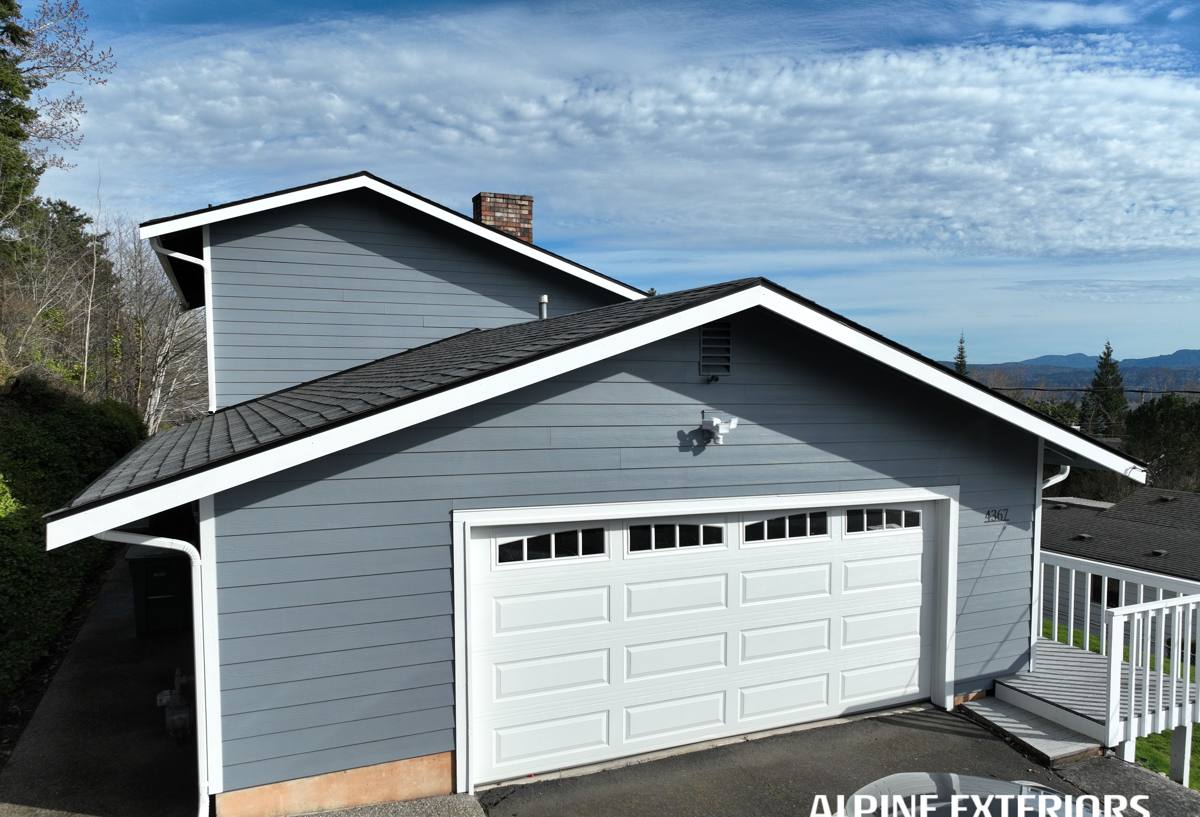
How Salt Air Affects Roofing Materials
Blaine's proximity to the water means airborne salt is a real, ongoing factor for anything metal on your property — fasteners, flashing, gutters, and the roofing panels themselves. This doesn't rule metal out; it just means the metal has to be the right metal.
Metal Roofing in a Coastal Environment
Aluminum and properly coated steel (Galvalume or similar coated substrates with a quality baked-on finish) hold up well against salt air, but bare or lower-grade galvanized steel can start showing surface corrosion faster this close to the water. Fastener quality matters just as much as panel quality — stainless or coated fasteners rated for coastal exposure are worth the small upcharge, because a rusting screw head years down the line is a leak point, not just a cosmetic issue.
Asphalt Shingles in a Coastal Environment
Asphalt shingles don't corrode, so salt air isn't a direct threat to the shingle mat itself. Where it shows up instead is in the metal components paired with an asphalt roof — flashing, drip edge, vent boots, and gutters — which need the same coastal-grade attention regardless of which roofing material sits on top of them.
Driving Rain and Wind-Driven Water
Blaine gets its share of sideways rain off the water, and that's a detail that matters more than raw rainfall totals. Wind-driven rain doesn't just fall on a roof, it gets pushed up under laps, around penetrations, and into any gap that wasn't sealed with that scenario in mind.
Standing seam metal roofing has an advantage here because its panels are mechanically seamed and run in long, continuous sheets with far fewer horizontal joints than a shingle roof. There's simply less opportunity for wind-driven water to find a way in. Asphalt shingle roofs can absolutely be built to shed wind-driven rain well — it comes down to proper underlayment (we don't cut corners on ice-and-water shield at eaves, valleys, and penetrations), correct nailing pattern, and sufficient shingle overlap for the exposure. A well-built asphalt roof and a poorly built metal roof can trade places in performance; installation quality is often the bigger variable than material choice.
Moss: The Slow, Quiet Damage in Whatcom County
This is the one most homeowners underestimate. Moss doesn't just look bad — on a shingle roof, moss holds moisture against the granule surface, works its way under shingle tabs as it grows, and can lift edges enough to let water track sideways. Over years, that shortens the effective life of the roof, especially on shaded north- and east-facing slopes that don't get enough sun to dry out between our wet stretches.
Metal roofing gives moss almost nothing to grip. The smooth, hard surface and steep drainage of standing seam panels make it much harder for moss and algae to establish and spread compared to the textured surface of a shingle. It's one of the more practical, long-term maintenance advantages metal has in a climate like ours — not because asphalt is a bad product, but because moss is genuinely one of the toughest local conditions a roof has to deal with here.
Lifespan, Cost, and Maintenance Compared
| Factor | Asphalt Shingles | Standing Seam Metal |
|---|---|---|
| Typical lifespan | 20-30 years (product-dependent) | 40-60+ years |
| Upfront cost | Lower | Higher, often 2-3x asphalt |
| Moss/algae resistance | Moderate; needs periodic cleaning | High; sheds debris and moisture quickly |
| Wind-driven rain performance | Good with correct installation | Excellent due to fewer seams |
| Coastal salt exposure | Shingle mat unaffected; trim/flashing needs coastal-grade metal | Needs coastal-grade panel and fastener spec |
| Repair approach | Individual shingles replaceable | Panel or section replacement, less forgiving of spot repairs |
| Noise in heavy rain | Minimal with standard decking/underlayment | Minimal with solid decking and proper underlayment; noticeable without it |
The lifespan gap is the number that gets the most attention, but it's worth putting in context: a 25-year asphalt roof that's replaced once still costs real money and involves another full tear-off and disposal down the road. A metal roof installed once may outlast the time most people own their home. Whether that trade is worth the higher upfront cost depends on how long you plan to stay in the house and how you weigh cash now versus cash later.
Maintenance Realities, Not Just Sales Talk
Neither roof is maintenance-free, and it's worth being honest about what ongoing care actually looks like for each:
- Asphalt: periodic moss/debris removal (especially on shaded slopes), gutter clearing, occasional shingle repair after wind events, and eventual full replacement at the end of its service life.
- Metal: less frequent moss treatment needed, but panel fasteners and sealant at penetrations should be checked periodically, and any coating scratches from debris or foot traffic should be addressed before they become a corrosion point — especially this close to the water.
- Both: flashing around chimneys, skylights, and valleys is the most common source of leaks on either material and deserves attention during any inspection, not just the field of the roof itself.
Noise, Energy, and Appearance
A few practical, non-technical considerations often tip the decision:
Metal roofing over solid decking with proper underlayment is not noticeably louder in rain than a shingle roof — the "tin roof" noise reputation mostly applies to older, open-framed agricultural buildings, not a properly built residential system. Metal also reflects more heat than asphalt, which can modestly reduce attic temperatures in summer, though our marine climate makes this less of a driver here than it would be in a hotter inland region. On appearance, standing seam gives a cleaner, more modern line that some homeowners prefer, while asphalt offers more texture and color variety and blends more traditionally with older Blaine neighborhoods.
What Actually Drives the Decision on Your House
Beyond climate, a few structural and practical factors usually decide which material makes sense:
Roof Pitch and Design
Very low-slope sections drain better and shed moss more effectively with metal. Steeper, more complex rooflines with lots of valleys and penetrations can work well with either, but complexity adds labor cost to metal installation specifically, since panel work around dormers and valleys takes more time than shingle work in the same areas.
Structural Considerations
Metal panels are lighter per square than most shingle systems, which is rarely a limiting factor on modern Blaine construction but can matter on an older structure being evaluated for other reasons.
Budget and Timeline
If you need a roof replaced now and the budget is fixed, asphalt remains the more accessible option without compromising on durability when installed correctly. If you're planning to stay in the home long-term and want to minimize how many times you deal with a re-roof, metal's higher upfront cost is spread across a much longer service life.
Questions Worth Asking Before You Decide
- How shaded is your roof, and does it have north-facing slopes prone to moss?
- How many years do you realistically plan to own this home?
- Is your current flashing, decking, and ventilation in good shape, or does it need work regardless of the material chosen?
- Does your neighborhood or HOA have any material or appearance restrictions?
- Are you comparing quotes that spec coastal-grade fasteners and trim, or standard-grade components that may not hold up as well this close to the water?
Our Honest Take
We install and stand behind both systems, and we'd rather talk you through the real trade-offs than steer you toward whichever has a better margin. For a lot of Blaine homes — especially those with shaded, moss-prone slopes or a long ownership horizon — metal earns its higher price tag over time. For homes with a tighter budget, less moss exposure, or a shorter planning horizon, a well-installed architectural asphalt roof with the right underlayment and coastal-grade trim is a genuinely solid choice, not a compromise.
If you'd like a straightforward look at your specific roof — pitch, shading, current condition, and what each option would realistically cost and require over time — we're happy to come take a look. There's no pressure and no obligation, just a clear estimate and honest answers to help you decide what's right for your home.