 Blaine Roofing
 Roofing in Bellingham: Built for What This Coastline Actually Does to a Roof
Bellingham sits in a spot that's hard on roofs in ways that don't always show up on a home inspection checklist. You've got marine air rolling in off Bellingham Bay and the Salish Sea, long stretches of low-intensity rain that can last for days, tree cover that keeps roofs shaded and damp longer than they'd like, and a moss season that runs longer here than it does even twenty miles inland. None of that is dramatic on its own. It's the accumulation that gets homeowners — a roof that looked fine in July can be hiding real problems by the following spring.
We're based in Blaine and work throughout Whatcom County, including Bellingham and the surrounding neighborhoods. That matters more than it sounds like it should. A crew that mostly works roofs in drier parts of the state will spec materials and details the same way everywhere. A crew that works this coastline every week knows which shingle lines actually hold up to salt-laden air, where moss takes hold first on a given roof pitch, and which flashing details tend to fail early in homes built during Bellingham's various construction booms.
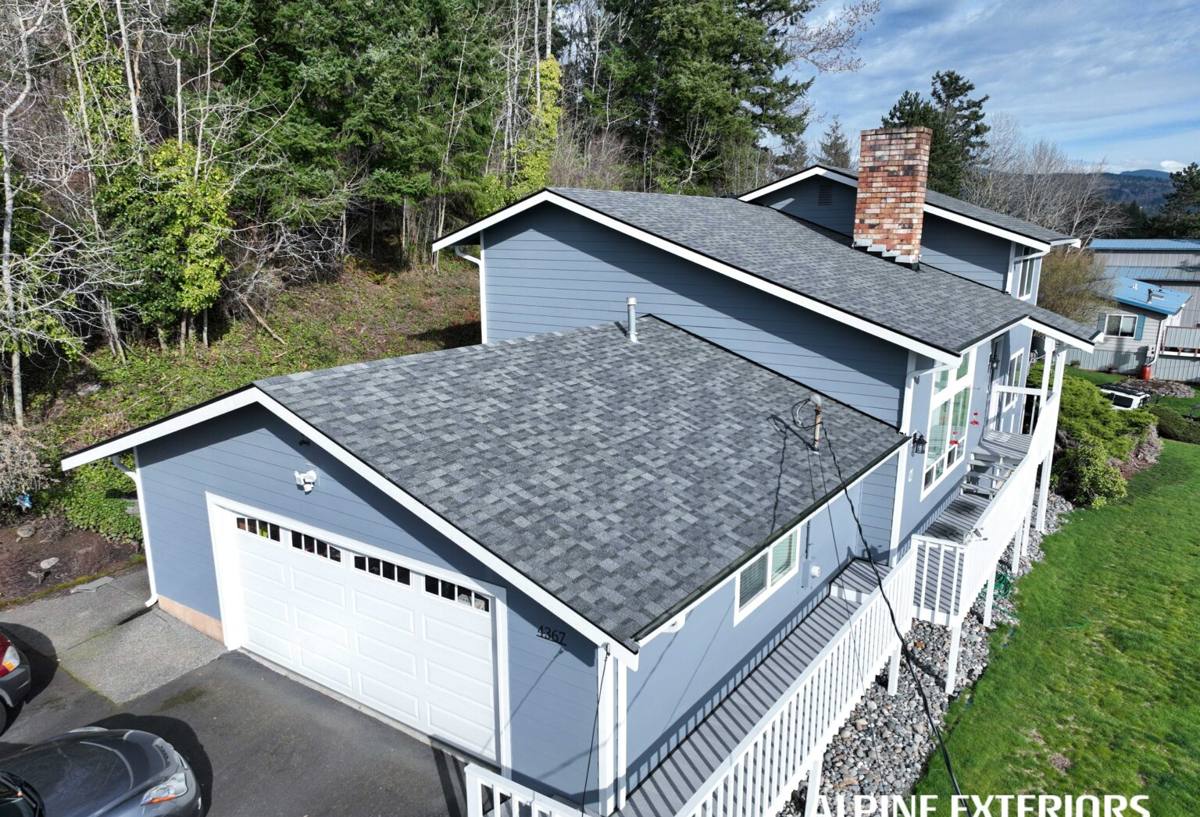
What Bellingham's Climate Actually Does to a Roof
Salt Air and Coastal Exposure
Homes closer to the water — and even some further inland, depending on wind patterns off the bay — deal with airborne salt that accelerates corrosion on exposed metal. That includes flashing, fasteners, gutter hardware, and any exposed roof vents. Standard fasteners and untreated metal components corrode faster in this environment than they would in a dry inland climate. It's not a reason to avoid metal roofing or metal flashing altogether — it's a reason to spec the right grade of material and the right fastener coating for a coastal-influenced zone in the first place.
Driving Rain and Sustained Wet Weather
Whatcom County doesn't get the short, heavy downpours you'd see in a thunderstorm climate. It gets long, steady, wind-driven rain that tests a roof's ability to shed water sideways as much as straight down. That's a different stress than pure volume. Underlayment quality, flashing laps, and how well valleys and penetrations are sealed matter more here than raw shingle durability alone. A roof that's technically "fine" on paper can still leak if the underlying water-management details weren't built for sustained, wind-pushed moisture.
Moss, Shade, and Slow-Drying Roofs
Bellingham's tree canopy is part of what makes the area beautiful, and it's also part of what keeps roofs damp longer after every rain. Shaded, north-facing slopes and roofs tucked under mature trees dry out slowly, which gives moss and algae time to establish. Once moss takes hold, it does more than look bad — it holds moisture against the roofing material, lifts shingle edges as it grows, and can work its way under flashing over time. Moss season here effectively runs most of the year, not just a few wet months.
Signs a Bellingham Roof Needs Attention
- Moss or dark streaking building up on north-facing slopes or shaded valleys
- Granules collecting in gutters or at downspout outlets
- Soft or spongy spots when walking the roof, especially near valleys or chimneys
- Daylight visible through the attic roof deck, or damp insulation below the roofline
- Curling, cupping, or cracked shingles, particularly on the side of the house facing prevailing wind and rain
- Rust staining around metal flashing, vents, or fasteners
- Interior ceiling stains that appear or worsen after a stretch of wind-driven rain
Any one of these on its own isn't necessarily an emergency. Several at once, or any sign of active water intrusion, is worth a straightforward inspection rather than a guess.
Roof Repair vs. Roof Replacement
Most Bellingham roofs don't fail all at once — they degrade unevenly, with one slope or one detail (a valley, a chimney flashing, a skylight curb) wearing out well before the rest of the roof. That means repair is often the right call, and we'll say so plainly when it is. Replacement makes sense when the underlying decking has taken on water damage, when the shingles are broadly past their service life rather than failing in one isolated spot, or when repeated repairs in different areas suggest the roof as a whole is at the end of its usable life.
| Factor | Repair Usually Makes Sense | Replacement Usually Makes Sense |
|---|---|---|
| Age of roof | Under roughly 15 years, isolated issue | Approaching or past manufacturer's expected lifespan |
| Extent of damage | Localized — one valley, one penetration, storm-damaged section | Widespread granule loss, curling, or moss across most slopes |
| Decking condition | Solid, no soft spots | Soft, delaminating, or water-stained decking found during inspection |
| Repair history | First or second repair on this roof | Recurring repairs in different spots over recent years |
| Underlayment/flashing | Still sound, just a surface or seal issue | Aging or failing broadly, not just at the repair site |
We'll walk the roof, tell you what we actually see, and give you the honest version — including when a repair will buy you several more good years versus when you'd be spending real money to delay an inevitable replacement.
Materials That Hold Up to Whatcom County Weather
Architectural asphalt shingles remain a solid, cost-effective choice for most Bellingham homes when paired with the right underlayment and ventilation. The material itself isn't the whole story — how it's installed for this specific climate is what determines whether it performs. We pay particular attention to ice-and-water shield placement at eaves and valleys, proper overlap on underlayment for wind-driven rain, and flashing details at every penetration, since those are the spots that fail first in this kind of weather.
Metal roofing is a strong option for homeowners who want a longer service life and better shedding of moss and debris, and it performs well here when the fasteners and flashing are specified for coastal exposure. Standing-seam profiles in particular resist the kind of granule loss and moss buildup that plague low-slope or heavily shaded asphalt roofs.
We're selective about which underlayment and flashing materials we use in this region — not because any particular product is bad in general, but because some are more forgiving than others when it comes to sustained moisture exposure and installation tolerance in wet working conditions. That's a judgment call based on what we see hold up, and what we see fail, on real roofs in this county.
Ventilation and Moss Management Matter As Much As the Shingles
A roof deck that can't breathe traps moisture from below, which shortens the life of the roofing material regardless of how good it is. Proper intake and exhaust ventilation keeps the attic space closer to outdoor temperature and humidity, which reduces condensation on the underside of the decking — a real issue in a climate this consistently damp. When we replace a roof, we look at the existing ventilation setup and correct it if it's undersized or blocked, rather than just laying new shingles over an attic that was never breathing properly to begin with.
On moss, prevention is cheaper than correction. Keeping tree limbs trimmed back from the roofline, clearing debris from valleys and gutters before it composts in place, and addressing moss while it's still a surface issue — rather than after it's lifted shingles — goes a long way. We can advise on realistic moss-prevention steps for a specific roof's shade and exposure pattern during an inspection.
Beyond the Roof: Siding, Windows, and Decks
Roofs don't fail in isolation from the rest of a home's exterior, and in a climate like Bellingham's, water problems often show up in more than one place at once. We also handle siding, window, and deck work, which matters because:
- Failing flashing at a roofline can drive moisture down into siding and trim, not just the attic
- Decks exposed to the same driving rain and shade patterns face similar wood-rot and moss issues as roofs
- Window flashing and roof flashing are often part of the same water-management system around a home, especially near dormers and second-story walls
Being able to look at the whole exterior envelope, rather than just the roof in isolation, means we catch related issues instead of fixing one symptom and leaving the underlying moisture path in place.
What to Expect Working With a Local Crew
A few things are worth knowing before you get quotes for roof work in Bellingham:
- A proper estimate includes a physical roof walk, not just a drive-by or satellite measurement
- Written estimates should spell out materials, underlayment type, and flashing scope — not just a lump-sum number
- Licensing and insurance should be current and verifiable, and a contractor should be willing to provide that information without hesitation
- Local contractors are more likely to know how a given neighborhood's homes were originally built and what problems tend to recur in that housing stock
- Timelines should account for Whatcom County's wet-weather windows — a contractor who won't discuss weather contingencies isn't planning realistically
We're a Blaine-based crew that works Whatcom County regularly, which means we're not driving in from out of the area to give an estimate and then disappearing if a warranty issue comes up later. That local presence is part of why we can speak plainly about what a given roof needs instead of defaulting to the most expensive recommendation.
Maintenance That Actually Extends a Bellingham Roof's Life
Given the climate here, a maintenance routine matters more than it might in a drier region. Keeping gutters and downspouts clear prevents water from backing up under the roof edge. Periodic moss treatment on shaded slopes prevents the kind of buildup that lifts shingles over time. Trimming back overhanging branches reduces both debris accumulation and the shade that keeps a roof damp. And a simple visual check after major windstorms — looking for lifted shingles, exposed nail heads, or displaced flashing — catches small problems while they're still small. None of this requires climbing on the roof yourself; a lot of it can be assessed from the ground or handled during a routine inspection.
If you're dealing with a leak, noticing moss taking hold, or just want an honest read on where your roof stands, we're happy to take a look. We offer free, no-pressure estimates for Bellingham and the surrounding Whatcom County area — fill out the form below and we'll get back to you to schedule a time.