 Blaine Roofing
 Building New in Semiahmoo Means Building for the Water
Semiahmoo sits out on the spit between Drayton Harbor and Semiahmoo Bay, which puts a new-construction home there about as close to salt water as anything in Whatcom County gets. That location is the whole appeal — and it's also the reason window installation on a Semiahmoo build needs more care than the same job ten miles inland. Onshore air carries salt spray year-round, humidity off the water stays high even on clear days, and the wet season here can run from October well into May. Windows go in during framing, before the house is fully closed up, so whatever gets sealed wrong at that stage stays wrong for the life of the building.
We work new-construction window jobs around Blaine and out on Semiahmoo regularly, which means we're not guessing at how exposed a given elevation is or what the site does in a January southwesterly. That local familiarity changes decisions on the ground — which walls get extra flashing redundancy, which sills need a steeper pitch, which fastener metals to avoid.
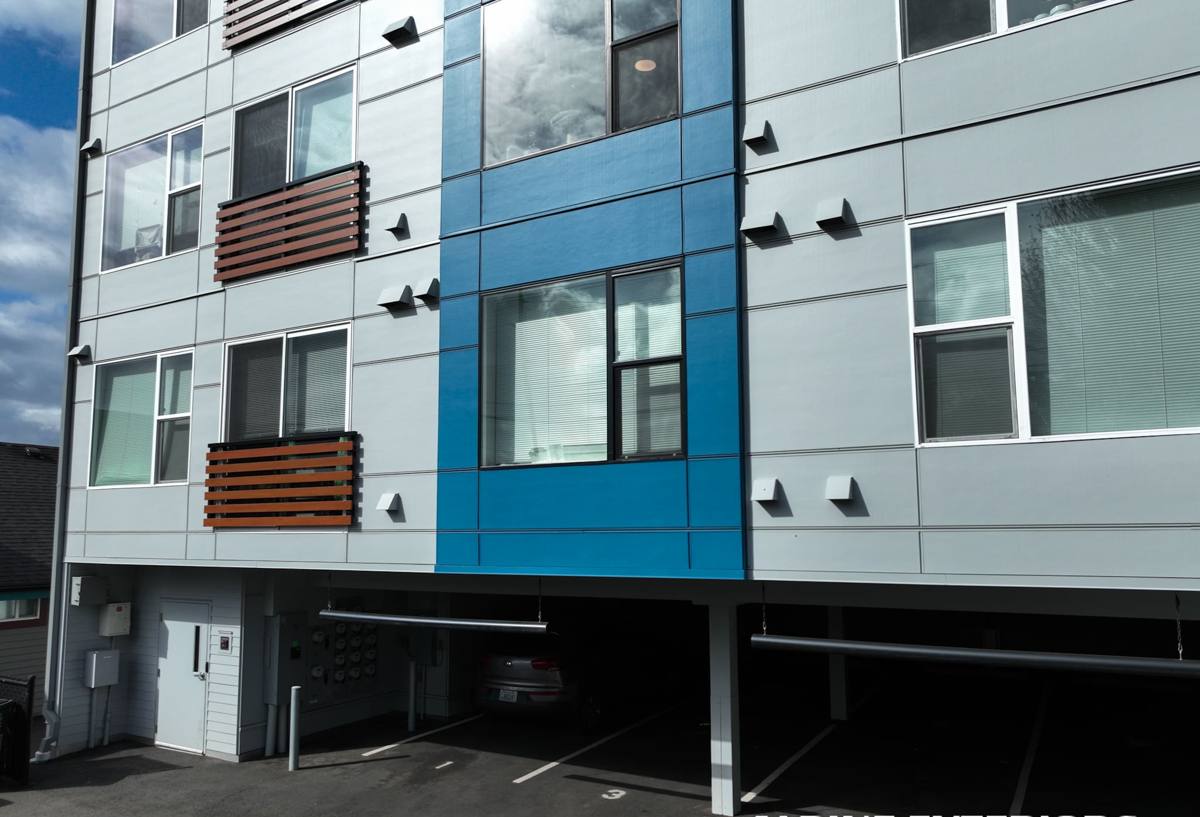
What "Correct" Actually Means on a New-Construction Install
New-construction windows aren't dropped into an existing wall like a replacement unit — they're built into the structure while it's still open. That means the window, the rough opening, the weather-resistive barrier (WRB), and the flashing all have to work as one connected system. Get the sequence wrong and you won't see it for a year or two, until water finds the gap during a hard winter storm.
Rough Opening & Flashing Sequence
A correct install follows a strict order: the rough opening gets checked for square and level, a sill pan goes in first to catch and direct any water that gets past the window itself, then the window is set, then the flashing tape laps over the nailing fin in the right shingle-style order — bottom, sides, top — so water always sheds outward and down, never backward into the wall. Skipping the sill pan or reversing a flashing lap is invisible from the outside and is one of the most common defects we find when we're called in to fix a leak in a home that's only a few years old.
Nail-Fin vs. Block-Frame Windows
Most Pacific Northwest new construction uses nail-fin windows, which fasten directly to the sheathing and integrate with the WRB. Block-frame (or "flush-fin") windows are more common on masonry or certain siding details and require a different flashing approach with a sub-sill and back dam. Which one is right depends on your wall assembly and siding choice — it's a decision made with the builder, not something a window crew should default on without asking.
Choosing a Window for a Salt-Air Site
Not every window line handles onshore salt exposure the same way. The trade-offs mostly come down to frame material and hardware, since the glass package itself is fairly standardized across manufacturers at a given performance tier.
| Frame Material | Salt-Air Behavior | Maintenance | Typical Cost Tier |
|---|---|---|---|
| Vinyl | Doesn't corrode; UV and thermal cycling matter more than salt | Low — occasional cleaning | Lower |
| Fiberglass | Very stable dimensionally, holds paint/finish well in coastal air | Low to moderate | Mid to upper |
| Aluminum | Can pit or corrode over time near salt water without a marine-grade finish | Moderate — finish needs monitoring | Mid |
| Wood-clad | Cladding protects the exterior face, but exposed end grain and hardware need attention | Higher — sealant and hardware checks | Upper |
Hardware is worth as much attention as the frame. Standard steel fasteners and hinges can start showing surface corrosion within a couple of seasons this close to the water; stainless or coated hardware is the better call on a Semiahmoo elevation that faces the bay directly. This is also a case where the fastener metal against the flashing metal matters — mixing the wrong metals against each other accelerates corrosion through galvanic reaction, something that's easy to overlook if a crew isn't used to building this close to salt water.
Our Process on Semiahmoo Builds
Coordinating with Your Builder or GC
New-construction windows are a scheduling-dependent trade — we're working inside someone else's framing timeline, not on our own schedule. Before your rough openings are even framed, we confirm sizes and units against the plans, place the order with enough lead time to avoid holding up dry-in, and coordinate directly with your builder or GC on when we're on site relative to the WRB installer and the siding crew.
Weatherproofing Before the Window Ever Goes In
We inspect the rough opening for square, level, and proper WRB lap before a window ever gets set. Sill pans go in on every opening — not just the ones facing the water — because wind on the spit doesn't always come from the obvious direction. Flashing tape is applied in the correct shingle order and pressed with a roller, not just laid down, since adhesion under a Whatcom County winter is what actually keeps water out, not the tape itself.
Final Fit, Flashing Check, and Punch List
Once the window is set, shimmed, and fastened, we check operation, confirm the flashing integration is complete before siding covers it, and walk the punch list with the builder. On a new build, this is the last point where a flashing mistake is easy and cheap to fix — once siding goes on, it isn't.
Mistakes We See on New Builds Near the Water
Most of the callbacks we get on newer Semiahmoo-area homes trace back to a handful of repeat issues:
- No sill pan, or a sill pan without a proper back dam, letting water track into the wall cavity
- Flashing tape lapped in the wrong order, so a seam faces uphill into the weather instead of shedding water down
- Caulk used as the primary seal instead of a backup to proper flashing — caulk fails first in salt air and UV
- Mismatched fastener and flashing metals causing early corrosion at the nailing fin
- Weep holes or drainage paths blocked by trim, paint, or landscaping mulch after the build wraps up
None of these show up on a walkthrough. They show up two or three winters later as a stain on drywall below a window, usually after the warranty window everyone was counting on has already closed.
Moss Season and Long-Term Window Performance
Whatcom County's long wet season doesn't just mean rain — it means sustained moisture sitting on north- and shade-facing surfaces for months, which is exactly what moss and algae need to take hold. On windows, that shows up as green growth in sill corners, on exterior trim, and in any spot where water pools instead of draining. A correctly installed window has enough pitch on the sill and clear weep paths so water moves off the glass and frame instead of sitting there. During the install we also pay attention to how the window interacts with the siding and trim above and below it, since a poorly flashed trim detail can dump extra water onto a sill that was never designed to handle it.
Once the home is finished, keeping weep holes and drainage tracks clear of moss, needles, and paint overspray is the single easiest thing an owner can do to keep a correctly installed window performing correctly for decades.
Timeline: Getting Windows Ready When Your Build Needs Them
New-construction windows are a lead-time item, not a same-week purchase. Depending on the manufacturer and the specifics of your order — sizes, grille patterns, glass upgrades — production and delivery can take anywhere from a few weeks to a couple of months. We build that into the schedule at the framing stage so your dry-in date doesn't slip waiting on windows, and we stay in direct contact with your builder as the timeline shifts, which it usually does on any real construction project.
Why a Local Blaine Crew Matters for a Semiahmoo Build
New-construction window work rewards local knowledge in ways a replacement job doesn't. We know which Semiahmoo elevations take the worst of a southwest storm off the bay, which parts of a build tend to sit wet longer into spring, and how City of Blaine and Whatcom County inspections typically run on a new build. Just as important, we're close enough to be back on site quickly if a flashing detail needs a second look before siding closes it up, or if your builder's schedule shifts on short notice. That kind of coordination is hard to get from a crew that has to drive in from outside the county and can't easily fit an extra site visit into the week.
What to Ask Before Hiring for a New-Construction Window Install
- Do you install a sill pan on every opening, not just the ones facing the weather?
- What's your flashing sequence, and will it be inspected before siding covers it?
- How do you handle fastener and flashing metal compatibility near salt water?
- Can you work directly with my builder's schedule, including short-notice changes?
- What's the lead time on the windows you're recommending for my project?
- Who do I call if an issue shows up after the home is finished, and how is that handled?
If you're building or framing out a home on Semiahmoo or elsewhere in the Blaine area and want windows installed right the first time, we're happy to walk the plans with you and put together a straightforward, no-pressure estimate — just fill out the form below.