 Blaine Roofing
 Semiahmoo's Waterfront Climate Is a Different Kind of Test for a Roof
Semiahmoo sits right on the water, and that changes what a roof has to deal with compared to a house a few miles inland in Blaine or elsewhere in Whatcom County. The salt air coming off Semiahmoo Bay and Drayton Harbor doesn't just smell different — it's chemically active. Airborne salt settles on every exposed metal surface on a house: flashing, fasteners, gutters, vents, and the roofing material itself. Combine that with driving rain off the water, near-constant onshore wind, and a moss season that can run most of the year in this climate, and you've got conditions that will find every weak point in a roofing system faster than a typical inland install.
We work roofs in this area regularly, and the pattern is consistent: roofs that were built or repaired without accounting for the salt-air exposure show corrosion and fastener failure years before they should. That's the gap metal roofing, done correctly, is meant to close.
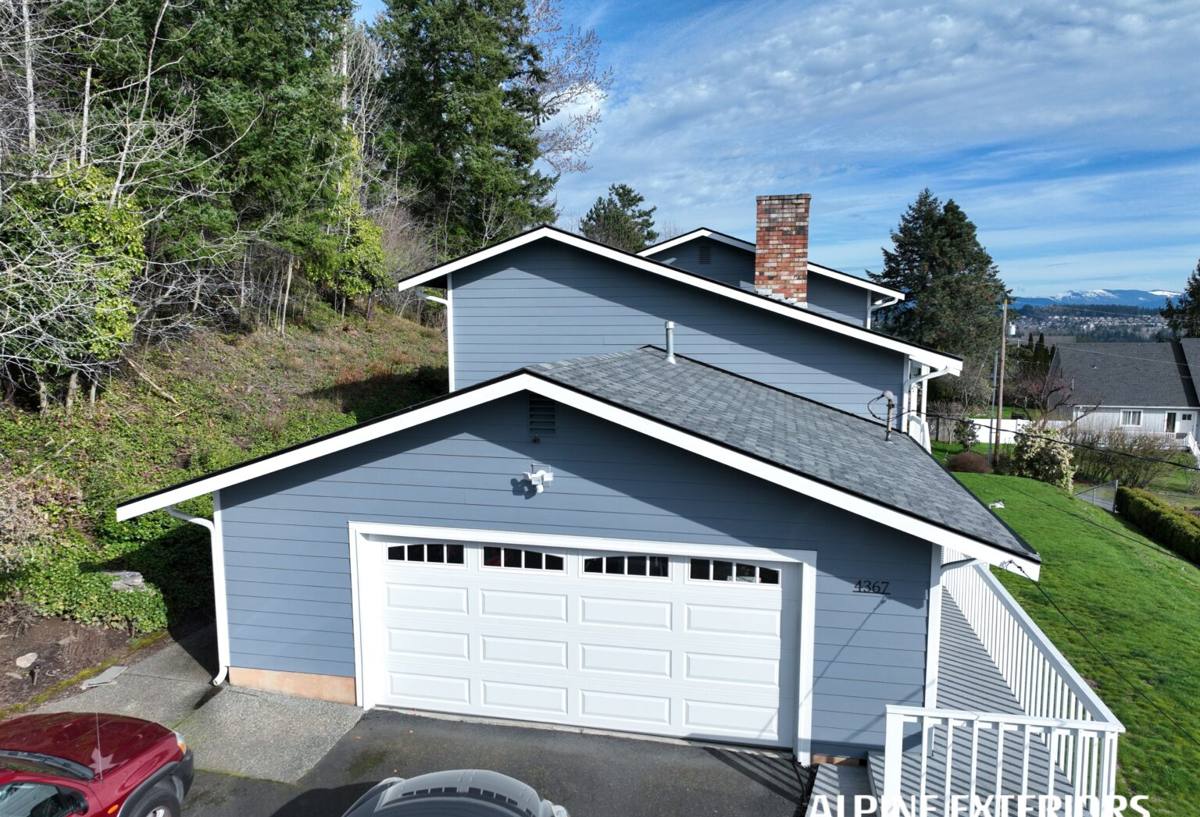
Why Metal Roofing Makes Sense for Semiahmoo Homes
Metal roofing isn't the right fit for every house or every budget, but for waterfront and near-waterfront properties in Semiahmoo, it solves several problems at once:
- Sheds wind-driven rain — Standing-seam and interlocking panel systems have far fewer horizontal seams than shingles, which matters when rain is coming in sideways off the water instead of falling straight down.
- Resists moss buildup better than porous surfaces — Moss needs organic material and moisture retention to root. A smooth metal surface gives it much less to grip, especially compared to asphalt shingle texture.
- Handles long-term UV and moisture cycling — Coastal Whatcom County doesn't get extreme heat, but it does get a lot of wet-dry cycling, and quality metal coatings are built for that kind of long, low-intensity exposure.
- Lower long-term maintenance — Once installed correctly, a metal roof needs less periodic upkeep than a shingle roof exposed to the same salt and moss pressure.
The catch is that "metal roofing" covers a wide range of products and installation quality. In a salt-air environment, the specifics — which alloy, which coating, which fasteners, which flashing details — matter more than they would on a typical inland roof.
Choosing the Right Metal System for a Salt-Air Environment
Not all metal roofing is built for coastal exposure. Some products that perform fine 15 miles inland will corrode noticeably faster within sight of Semiahmoo Bay. Here's how the common options compare for this specific environment:
| System | Salt-Air Performance | Typical Use Case |
|---|---|---|
| Standing seam steel (Galvalume or Kynar-coated) | Strong — concealed fasteners, minimal seam exposure | Primary roofs, full replacements |
| Exposed-fastener metal panel | Moderate — fastener heads are the weak point in salt air | Outbuildings, budget-conscious projects |
| Aluminum standing seam | Very strong — naturally corrosion-resistant, no zinc coating to wear through | Direct waterfront exposure, higher-budget installs |
| Uncoated or mill-finish steel panels | Weak in this environment — we don't install these near the water | Not recommended for Semiahmoo |
For most Semiahmoo homes, we recommend either a Kynar-coated (PVDF) standing seam steel system or aluminum standing seam. Both are engineered to hold up to salt exposure over decades rather than years. Exposed-fastener panel systems have their place — sheds, shops, some accessory structures — but on a primary residence that close to the water, the exposed screw heads become a maintenance liability that concealed-fastener systems avoid entirely.
Coatings Matter as Much as the Metal Itself
The base metal is only half the equation. The factory coating is what actually stands between the panel and salt-laden air day to day. A PVDF (Kynar 500-type) coating holds its color and protective properties far longer under coastal UV and salt exposure than lower-grade polyester coatings. It costs more up front, but on a Semiahmoo roof it's the difference between a finish that still looks and performs correctly after 20-plus years and one that chalks, fades, or starts breaking down well before that.
The Details That Actually Determine How Long a Metal Roof Lasts Here
A metal roof's long-term performance in a salt-air environment comes down to details that aren't visible once the job is done. This is where a lot of failures we get called out to inspect actually originate:
Fasteners
Fasteners need to be matched to the panel metal to avoid galvanic corrosion — mixing incompatible metals (for example, standard steel screws on an aluminum panel) sets up a reaction that corrodes the fastener from the inside out, often well before the panel itself shows any wear. We use fasteners rated for coastal/marine exposure and matched to the specific panel system.
Flashing and Penetrations
Every vent, chimney, and roof-to-wall transition is a potential entry point for wind-driven rain. Flashing needs to be formed and layered correctly — not just caulked — because sealant alone degrades faster in this climate than a properly lapped metal detail.
Underlayment
Beneath the metal, a high-temp synthetic or peel-and-stick underlayment provides a secondary water barrier. In a climate with this much sustained moisture, that backup layer is what protects the roof deck if wind ever pushes water past the panel seams.
Edge and Eave Details
Drip edges, gutter aprons, and eave trim take direct salt spray and runoff. These need to be the same corrosion-rated material as the field panels — cutting corners here with a mismatched or lower-grade metal is a common source of early rust streaking on otherwise good roofs.
Moss and Debris Management on a Metal Roof
Metal roofing resists moss far better than shingles, but "resists" isn't "immune." In Semiahmoo's tree cover and marine moisture, moss and organic debris can still establish in valleys, around penetrations, and anywhere debris collects and holds moisture against the panel. A few practical points:
- Keep gutters and valleys clear of needles and leaf debris — trapped organic matter is what gives moss a foothold even on metal.
- Overhanging branches should be trimmed back from the roofline where practical, reducing both debris load and shade that keeps panels damp longer.
- Zinc or copper strips at the ridge can help suppress moss growth on shaded sections over time, and are worth discussing for heavily treed lots.
- A periodic rinse-down (not pressure washing, which can damage seams and coatings) keeps salt residue and organic buildup from accumulating.
None of this is heavy maintenance compared to a shingle roof in the same conditions — it's the reason metal makes sense here in the first place — but it's not zero-maintenance either, and we're upfront with homeowners about that.
Our Installation Process for Semiahmoo Metal Roofs
We approach every metal roofing project in Semiahmoo the same structured way:
- On-site inspection — We assess the existing roof deck, current flashing conditions, exposure direction relative to the water, and any moss or moisture damage already present.
- System recommendation — Based on the home's exposure, budget, and roofline complexity, we recommend a panel type and coating rated for the actual conditions the roof will face, not a generic default.
- Deck preparation — Any damaged or soft decking is addressed before underlayment goes down. A metal roof installed over a compromised deck will fail from underneath regardless of the panel quality.
- Underlayment and flashing installation — Secondary water barrier and all flashing details are installed and inspected before panels go on.
- Panel installation — Panels are installed with fasteners matched to the metal, correct seam engagement, and attention to thermal expansion allowances, which matter more on longer runs.
- Final walkthrough — We review the completed roof with the homeowner, including what routine upkeep (if any) we recommend for the specific site conditions.
What a Metal Roofing Estimate Should Cover
Cost varies by roofline complexity, panel and coating choice, and current deck condition, so we don't quote blind. But homeowners comparing estimates in this area should expect a proposal to clearly cover:
| Cost Factor | Why It Matters in Semiahmoo |
|---|---|
| Panel material and coating grade | Determines corrosion resistance against salt air over the roof's life |
| Fastener type and rating | Mismatched fasteners are a leading cause of early coastal roof failure |
| Flashing and underlayment scope | Wind-driven rain exposes weak flashing details fast in this climate |
| Roof complexity (valleys, penetrations, pitch) | More seams and transitions mean more places water can find a way in |
| Deck condition and any needed repair | Existing moisture damage has to be fixed before new roofing goes on |
An estimate that skips over material specifics or flashing scope is one worth asking follow-up questions about.
Why It Matters to Hire a Crew That Already Works This Area
Semiahmoo isn't a typical inland Whatcom County roof. Wind direction off the water, salt exposure, and moss pressure all vary by how close a property sits to the shoreline and how it's oriented to prevailing weather. A crew that installs metal roofs here regularly already knows which details — fastener choice, flashing laps, edge metal — actually get tested by this environment, instead of learning that the hard way on a homeowner's roof. We're based in Blaine and work Semiahmoo and the surrounding waterfront properties as a normal part of our service area, not as an occasional out-of-town job.
If you're weighing metal roofing for a Semiahmoo home, we're happy to take a look at your specific roof, talk through what exposure it's actually dealing with, and put together a clear, no-pressure estimate. There's a form below to get that started.