 Blaine Roofing
 Exterior Care for a Waterfront Community
Sandy Point sits right up against the water in Whatcom County, and that location shapes everything about how a home ages here. Homes just a few miles inland in Blaine deal with a lot of the same Pacific Northwest weather, but a waterfront position adds a layer most inland properties don't have to think about as much: salt-laden air moving off the water and onto siding, trim, fasteners, and roofing materials day after day. Add in the long wet season and the moss growth that comes with it, and you've got a set of conditions that reward homes built and maintained with those specifics in mind.
We've worked on homes throughout Blaine and the surrounding Whatcom County waterfront, and Sandy Point comes with its own personality. This page walks through what we actually see out there, how our roofing, siding, window, and deck work accounts for it, and why having a crew that understands this stretch of coastline matters more than it might seem.
What the Climate Does to a Sandy Point Home
Salt Air and Metal Fasteners
Salt air is corrosive to unprotected or lower-grade metal. On a roof, that means nails, flashing, and fasteners that aren't rated for coastal exposure can start to corrode well before a comparable inland roof would show the same wear. The same goes for siding fasteners, gutter hardware, and any exposed metal trim. It's not dramatic — it's slow, and it's easy to miss until a fastener fails or a rust streak shows up on siding below a flashing point.
Driving Rain and Wind Exposure
Being close to open water also means more direct wind exposure than a sheltered inland lot. Wind-driven rain doesn't just fall straight down — it gets pushed sideways into wall assemblies, under poorly lapped siding, and around window and door openings that aren't properly flashed. Over time, that's where you get hidden moisture intrusion rather than an obvious leak. It shows up later as soft trim, staining on interior walls, or a musty smell in a wall cavity, long after the water actually got in.
Moss and the Long Wet Season
Whatcom County's wet season runs long, and shaded or north-facing roof slopes barely get a chance to dry out between storms. That's ideal growing conditions for moss and algae. Moss isn't just a cosmetic issue — as it grows, it lifts shingle edges, holds moisture against the roofing material, and can work its way under the shingle tabs themselves. Left unaddressed for a few seasons, what started as a maintenance item turns into premature granule loss and, eventually, leaks.
Roofing for Sandy Point Conditions
When we're roofing a home in this area — whether it's a full replacement, a repair, or a maintenance visit — we're thinking about corrosion resistance, wind uplift, and moisture management from the start, not adding it as an afterthought.
- Corrosion-resistant fasteners and flashing rated for coastal or high-moisture exposure, not standard-grade hardware that's fine inland but shortens its life near salt air.
- Proper flashing details at valleys, chimneys, skylights, and roof-to-wall transitions, since these are the spots wind-driven rain finds first.
- Ventilation that actually balances intake and exhaust, so the attic isn't trapping the extra moisture this climate already throws at the roof deck.
- Underlayment suited to the exposure, giving the roof a real second line of defense if wind or moss ever compromises the surface layer.
For roofs already showing moss, we'll talk through options honestly — sometimes a treatment and physical removal buys years of life, sometimes the shingles are past the point where moss is the real problem and it's a symptom of an aging roof underneath. We'd rather tell you which situation you're in than sell a treatment that's just delaying an honest conversation.
Siding, Windows, and Decks: The Rest of the Envelope
Siding
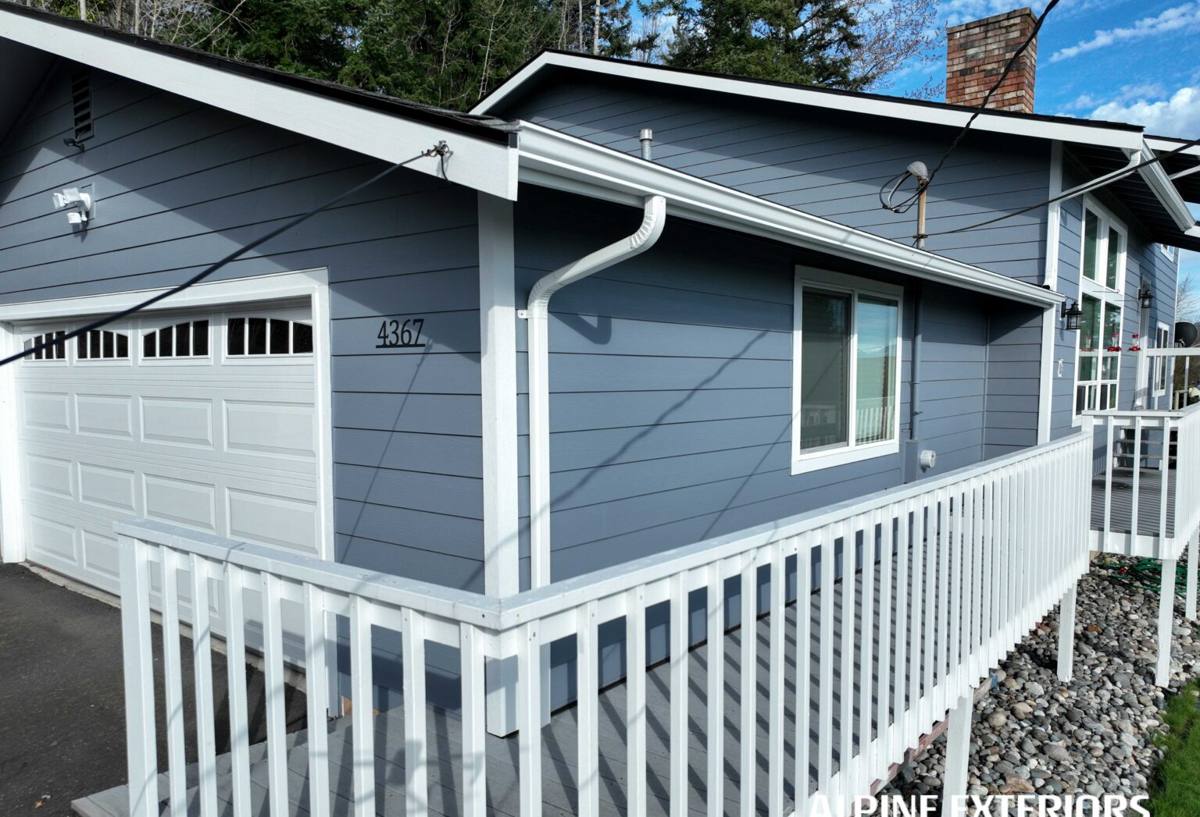
Siding on a waterfront home is doing constant work — shedding wind-driven rain, resisting salt exposure, and holding paint or finish longer than a sheltered wall would. Lap siding needs correct overlap and fastening for the wind exposure out there, and any seams, corners, and penetrations (hose bibs, vents, light fixtures) need to be sealed with materials that hold up to UV and salt air rather than drying out and cracking within a couple of seasons.
Windows
Windows are one of the most common places we find moisture problems on coastal homes — not usually because the window itself failed, but because the flashing and sealant around it did. When we install or replace windows, the flashing detail around the opening gets as much attention as the window unit itself. A quality window installed with poor flashing will still leak; a modest window installed with correct flashing usually won't.
Decks
Decks facing the water take a beating from sun, salt, and moisture cycling — wet, dry, wet again. Fasteners and connectors matter here just as much as they do on the roof, and the wood or composite decking itself needs a finish or material choice that's realistic about how much UV and salt exposure that side of the house actually gets.
Repair, Replace, or Maintain? A Cost-Factor Comparison
Homeowners in Sandy Point often ask us how to think about the decision between fixing something now versus planning a fuller replacement. There's no single right answer — it depends on the age of the material, how localized the damage is, and what's underneath. Here's a general framework:
| Situation | Repair usually makes sense when | Replacement usually makes sense when |
|---|---|---|
| Roof | Damage is localized (one section, one flashing point) and the roof is under 15 years old with sound decking | Multiple leak points, widespread moss damage, or the roof is nearing/past its expected service life |
| Siding | Isolated cracking, a few damaged boards, or sealant failure at penetrations | Widespread moisture staining, soft spots across multiple walls, or the siding material itself is failing |
| Windows | Failed seals on an otherwise sound, well-flashed window | Rot in the surrounding framing, chronic condensation, or flashing that was never correct to begin with |
| Decks | Surface boards worn or cupped but framing and connectors are solid | Structural framing shows rot or fastener corrosion, or the deck was never built for this exposure |
Whatever the answer turns out to be, it should come from an actual inspection, not a guess over the phone. We'll tell you straight if a repair will genuinely hold or if it's just putting off a bigger job.
A Practical Maintenance Checklist for the Coastal Season
A little seasonal attention goes a long way toward keeping salt air and moss from turning into bigger repairs. Here's what we'd suggest keeping an eye on:
- Check roof valleys, chimney flashing, and vent boots for moss buildup or lifted edges once a year, ideally before the wettest months set in.
- Rinse or gently treat visible moss growth on shade-prone roof slopes rather than letting it establish and spread.
- Inspect exposed metal fasteners and flashing (roof, gutters, siding trim) for early rust or corrosion.
- Look at caulking and sealant around windows, doors, and siding penetrations for cracking or gaps — this is often where moisture gets in first.
- Keep gutters clear so water isn't backing up under roof edges or siding during heavy rain.
- Check deck fasteners, connectors, and any ledger board attachment points for corrosion or movement.
- Walk the exterior after a major windstorm to check for lifted shingles, loose siding, or new gaps around trim.
Why a Local Crew Matters Here
A roofing or siding crew that mostly works inland projects isn't necessarily thinking about salt-rated fasteners, coastal wind loads, or how shaded roof slopes near the water hold moisture differently than a sun-exposed inland roof. That's not a knock on general contractors — it's just a different set of day-to-day conditions than what they usually see. Working throughout Blaine and Whatcom County means we're regularly on roofs and walls dealing with exactly this exposure, and we build our material choices and installation details around it rather than treating it as a special case.
It also means we're a known, reachable crew if something needs a follow-up look after a storm — not a company that did one job and moved on to another region.
Getting Started
If you're noticing moss buildup, a stubborn leak, siding that's holding moisture, or windows and decks that just feel like they're wearing faster than they should out on the water, it's worth having someone take an honest look before small issues turn into expensive ones. We offer free, no-pressure estimates for roofing, siding, window, and deck work for Sandy Point homeowners — use the form below to get a visit scheduled.