 Blaine Roofing
 Roofing Built for the Sumas Corner of Whatcom County
The Sumas area sits in a stretch of Whatcom County that gets a distinct mix of weather most manufacturers never designed their standard product lines around. You're close enough to the water to pick up salt-laden air on a west wind, far enough into the foothills to catch heavier rain shadows off the Cascades, and cool and damp enough for most of the year that moss and moisture problems on a roof are less a "maybe" and more a "when." Homes here need a roof system, not just shingles nailed to plywood — flashing, ventilation, underlayment, and gutter work all have to pull together or the shingles on top don't matter much.
Blaine Roofing Co works this corner of Whatcom County regularly, which means we're not guessing at what a Sumas roof is up against. We know what a north-facing slope that never sees direct sun looks like after eight years without attention, and we know what a roof looks like when it's been maintained right. That local pattern-recognition is worth more than any brochure.
What the Local Climate Actually Does to a Roof
Salt Air and Metal Fasteners
Proximity to Puget Sound and the Strait of Georgia means airborne salt reaches further inland than most homeowners assume, especially during winter storms with sustained onshore wind. Salt exposure accelerates corrosion on exposed metal — nail heads, flashing seams, gutter hangers, and any lower-grade fasteners. A roof that would hold up fine forty miles inland can show rust streaks and early fastener failure here if the wrong materials were used the first time around.
Driving Rain and Wind-Driven Water
This isn't gentle, straight-down Pacific Northwest drizzle. Storms coming off the water often bring rain at an angle, which means water gets pushed sideways under shingle tabs, around chimney flashing, and into any gap that a calmer climate could get away with ignoring. Roof valleys, step flashing along walls, and penetrations for vents and skylights are where driving rain finds the weak points first.
Moss, Algae, and a Long Wet Season
Whatcom County's wet season runs long, and shaded or north-facing roof planes can stay damp for weeks at a stretch. That's exactly the environment moss and algae need. Moss isn't just cosmetic — its root structure lifts shingle edges, holds moisture against the roof deck, and accelerates granule loss. Left unchecked for several seasons, a mossy roof ages faster than a clean one of the same material and age.
Signs a Sumas-Area Roof Needs Attention
- Moss or dark algae streaking on north-facing or heavily shaded slopes
- Granules collecting in gutters or at downspout outlets
- Curling, cupping, or lifted shingle edges, especially near valleys
- Rust staining around flashing, vents, or chimney bases
- Soft or spongy decking felt underfoot in the attic near eaves
- Daylight visible through the roof deck from inside the attic
- Water stains on interior ceilings, particularly after a windy rainstorm
- Sagging or uneven rooflines viewed from the street
Any one of these on its own might be minor. Two or three together usually means it's time for a real inspection rather than a wait-and-see approach.
Roof Repair vs. Full Replacement
Not every roof problem in Sumas needs a full tear-off. A localized leak around a single flashing point, a handful of storm-damaged shingles, or a clogged valley can often be repaired directly and get you several more years of service. Full replacement makes sense when the underlying issues are spread across the whole roof rather than isolated to one spot — widespread granule loss, decking that's soft in multiple areas, or a roof that's simply reached the end of its rated life for this climate.
| Factor | Repair Usually Makes Sense | Replacement Usually Makes Sense |
|---|---|---|
| Age of roof | Under 12-15 years | Past 20-25 years or manufacturer's rated life |
| Leak pattern | Single, isolated source | Multiple leaks in different areas |
| Decking condition | Solid, no soft spots | Soft, spongy, or visibly damaged in multiple spots |
| Moss/algae extent | Light, on one or two slopes | Heavy and widespread across the roof |
| Shingle wear | Localized curling or cracking | Granule loss and brittleness roof-wide |
| Storm damage | A handful of shingles or a flashing seam | Structural damage or damage across large sections |
An honest inspection is the only way to know which category your roof actually falls into, and we'll tell you straight if repair is the smarter money over replacement.
Materials That Hold Up in This Climate
We install and repair asphalt shingle roofing most often in the Sumas and Blaine area because it offers a good balance of cost, durability, and moisture performance when installed correctly with proper underlayment and ventilation. Higher-grade architectural shingles with algae-resistant granules are worth the upgrade here given how much moss and algae pressure this climate puts on a roof — the copper or zinc granules embedded in these products inhibit growth in a way standard shingles don't.
Metal roofing is another option we install for homeowners who want a longer service interval and better shedding of driving rain, particularly on steeper pitches. It costs more upfront but handles wind-driven moisture and moss resistance well when the panels and fasteners are matched to a marine-air environment — meaning coated, corrosion-resistant fasteners rather than standard-grade hardware that will show rust streaks within a few seasons this close to the water.
We're selective about lower-cost synthetic and composite products that haven't proven themselves over a full multi-decade cycle in wet marine climates. That's not a knock on any specific manufacturer — it's simply our standard: we'd rather install a product with a known, predictable moisture and aging profile for this region than a newer option where the long-term performance data in a climate like ours is still thin. If a client specifically wants one of those products, we'll walk through the trade-offs honestly rather than steer them away without explanation.
Ventilation and Underlayment: The Parts You Don't See
A roof's visible surface only tells half the story. Proper attic ventilation keeps moisture from condensing on the underside of the decking during our long damp stretches, which matters as much for roof longevity as the shingles themselves. Poor ventilation traps humid air, which can rot decking from the inside even while the shingles up top look fine.
Underlayment is the second line of defense, and it's the layer that actually stops driving rain from reaching the deck if wind ever lifts a shingle tab. In this climate we favor synthetic or self-adhering underlayment in vulnerable zones — valleys, eaves, and around penetrations — rather than the bare minimum. It costs a bit more in materials but it's cheap insurance against the kind of sideways rain this area gets several times a winter.
Gutters, Flashing, and Water Management
A roof doesn't work in isolation. Gutters that are undersized, clogged, or pulling away from the fascia send water right back up under the roof edge instead of away from the house. In a long wet season, that recurring moisture at the eaves is a common cause of rot that gets blamed on the roof when the gutter system is really at fault.
Flashing deserves the same attention. Chimney flashing, step flashing along dormers and walls, and valley flashing are where the vast majority of roof leaks actually originate — not out in the open field of shingles. When we're on a roof for repair or replacement, we check every flashing point rather than assuming it's fine because the shingles nearby look okay.
Beyond the Roof: Siding, Windows, and Decks
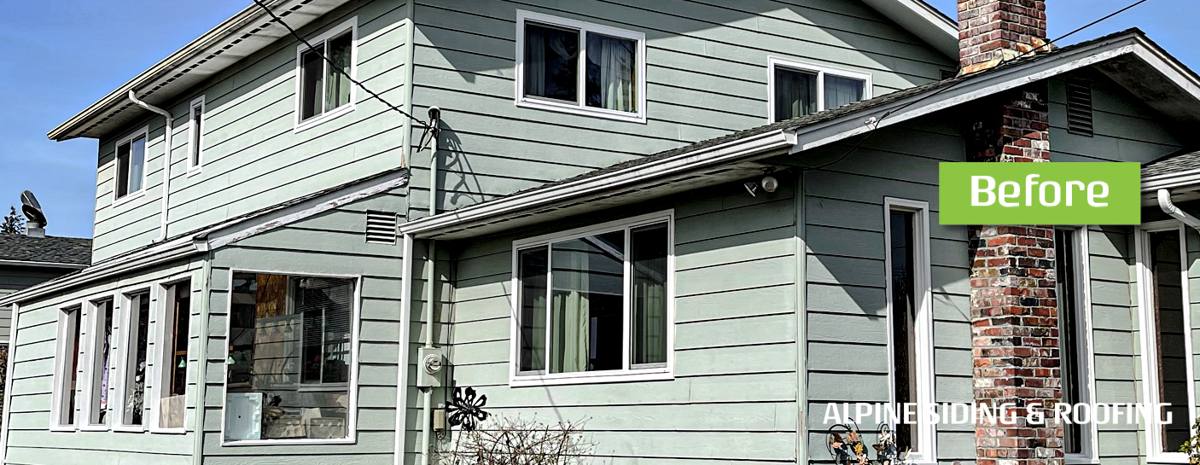
Roofing problems in this climate rarely stay isolated to the roof. Water that gets past a flashing point or an aging gutter system often finds its way into siding and trim next, and salt air affects exterior materials well beyond the roofline. Because we handle siding, roofing, windows, and decks as one crew, we can look at a property and flag issues connecting across systems — a leaking valley that's also staining the siding below it, or a deck ledger board showing the same moisture exposure as a north-facing roof slope. Addressing the whole exterior envelope together, rather than treating each component as a separate problem, tends to save homeowners money over time.
Why a Local Crew Matters Here
Whatcom County's roofing challenges aren't uniform across the region, and Sumas has its own microclimate quirks worth knowing before you start work. A crew that mostly works drier inland climates may not think twice about standard-grade fasteners or skip the extra underlayment in a valley — decisions that don't cause problems in a dry climate but cause real ones here within a few years. Working this area regularly means we've seen which shortcuts show up as callbacks two winters later, and we build around avoiding them from the start rather than learning it on your roof.
Local presence also means faster response when a storm causes damage and you need someone out to assess it, not a crew booked out of another county with a multi-week wait.
What to Expect From an Estimate
- A full visual inspection of the roof surface, flashing points, and attic ventilation
- An honest assessment of repair vs. replacement based on what we actually find
- Clear explanation of material options and why we'd recommend one over another for your specific roof and exposure
- A written estimate with no pressure to decide on the spot
- Straight answers about timeline, given seasonal demand and weather windows
Timing the Work Around Our Weather
Roofing work in this region is weather-dependent, and the driest, most predictable stretch typically runs from late spring through early fall. That's also the busiest booking season for every roofing crew in Whatcom County, so if you're seeing early warning signs — moss buildup, granule loss, a slow leak — it's worth scheduling an inspection before the wet season narrows the available work windows. Emergency repairs after a storm happen year-round, but planned replacement work goes smoother with some lead time.
If you're noticing moss, a leak, or just want an honest read on where your roof stands, we're happy to come take a look. Reach out for a free, no-pressure estimate using the form below.