 Blaine Roofing
 Roofing and Exterior Work Built for Point Roberts Conditions
Point Roberts sits in a spot most exterior contractors never have to think about: a small peninsula hanging off the bottom of Boundary Bay, surrounded by water on three sides, and separated from the rest of Whatcom County by a border crossing. That geography is part of what makes it a great place to live, and it's also exactly why roofs, siding, and trim out there wear differently than they do just a few miles inland in Blaine or Ferndale. Constant exposure to marine air, wind-driven rain off the Strait of Georgia, and a moss season that runs longer than most homeowners expect all add up over time.
Blaine Roofing Co has worked on homes throughout this part of Whatcom County long enough to know that a roof or siding system that holds up fine in a more sheltered inland location can fail early on a property that takes the full brunt of that bay-facing exposure. We build our recommendations around what the local climate actually does to a home, not a generic checklist.
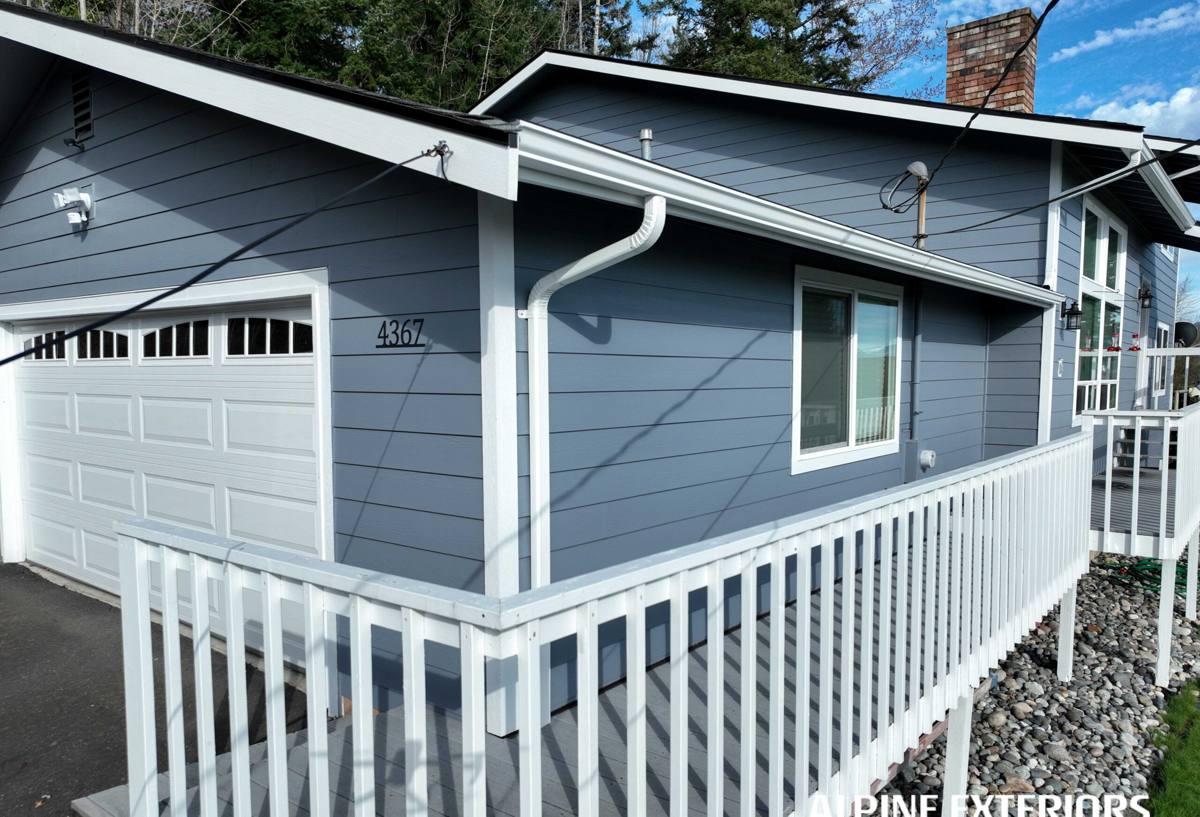
What Salt Air Actually Does to a Roof and Exterior
Homes near saltwater don't just get "a little more weather" — they get a specific set of problems that inland homes mostly avoid.
Fasteners and Metal Components
Exposed nail heads, flashing seams, gutter hangers, and any uncoated or lower-grade metal will corrode faster in salt-laden air than the same materials would a few miles inland. This is one of the most common early-failure points we see on Point Roberts roofs — not the field of the roof itself, but the small metal details that were installed with standard-grade fasteners instead of corrosion-resistant ones.
Siding and Trim
Salt air accelerates the breakdown of paint film and caulking, which means trim and siding joints on waterfront or near-waterfront properties need more frequent inspection than the same details on a home set back from the water. Once a caulk joint fails and lets moisture behind the siding, the salt-humid environment doesn't give that moisture much chance to dry out between rain events.
Windows
Window frames and hardware — especially older aluminum frames — are more prone to pitting and corrosion in this kind of air. Weep holes and drainage tracks that would self-clear in a drier inland climate can clog faster here, which lets water sit against the frame instead of draining away.
Driving Rain and Wind Exposure
Point Roberts catches wind and rain coming off open water with very little to break it up first. That matters for roofing in a few concrete ways:
- Wind-driven rain can push water up and under shingle tabs or shake courses at lower slopes than a manufacturer's standard testing assumes, which is why proper underlayment and ice-and-water membrane at eaves and valleys matter more here than on a sheltered inland roof.
- Roof edges, ridge caps, and any penetration (vents, chimneys, skylights) take more direct wind load, so flashing details and fastening patterns need to be done right the first time — repairs under wind-driven rain conditions are much harder to diagnose after the fact.
- Gutters and downspouts see heavier, wind-blown rain loads and need to be sized and pitched correctly, or they'll overflow at the exact corners where wind pushes water sideways instead of straight down.
None of this means a Point Roberts roof needs to be exotic. It means the ordinary details — underlayment coverage, flashing laps, fastener spacing — need to be done to spec rather than to the minimum, because this exposure doesn't forgive shortcuts the way a calmer site might.
Moss Season: Longer and More Aggressive Than Inland Whatcom County
Anyone who has lived on this part of the Washington coast knows moss is a fact of life, but shaded, moisture-retaining roofs near the water tend to see moss establish earlier in the fall and persist later into spring than roofs further inland. A few reasons:
- Persistent marine humidity keeps roof surfaces damp longer after rain events, even on days when it isn't actively raining.
- Tree cover and north-facing slopes on many Point Roberts lots keep certain roof sections in shade for large parts of the day, slowing drying time further.
- Once moss gets a foothold, it holds moisture against the roofing material continuously, which is what actually causes granule loss on asphalt shingles and accelerated wood decay on cedar — the moss itself is more of a symptom than the root problem.
We treat moss as a maintenance issue to manage on a schedule, not a one-time fix. A roof that gets moss removed and treated proactively every year or two will last meaningfully longer than one that only gets attention after moss has already worked its way under shingle edges.
Signs Moss Has Already Caused Damage (Not Just Cosmetic)
- Granules collecting in gutters or at downspout outlets
- Shingle edges lifting or curling in moss-covered areas
- Dark streaking or soft spots on cedar shakes
- Water stains on interior ceilings below persistently mossy roof sections
- Moss growth bridging from the roof onto siding or trim
How This Shapes Our Recommendations for Roofing Materials
We don't push one product for every home. What we do is walk through trade-offs honestly, based on how each option actually performs in a salt-air, high-moss environment.
| Roofing Material | How It Handles Salt Air & Moss | Maintenance Reality |
|---|---|---|
| Architectural asphalt shingle | Good corrosion resistance when installed with proper flashing metals; moss-resistant algae-blocking granule options are worth considering here | Moderate — benefits from periodic moss treatment and gutter checks |
| Cedar shake | Traditional look, but moisture retention from moss and marine humidity shortens usable life compared to drier inland sites | Higher — needs more frequent moss removal and periodic treatment to avoid rot |
| Metal roofing | Sheds moisture fast and resists moss far better than either shingle option; needs marine-grade fasteners and coatings near the water | Lower long-term, higher upfront cost |
| Standard 3-tab shingle | Least durable option for this exposure; lower cost but shorter realistic lifespan on a bay-facing roof | Higher relative to cost — more frequent repair likelihood |
For a lot of Point Roberts homes, the honest answer is that a well-installed architectural shingle system with marine-grade flashing and fasteners hits the best balance of cost and durability. Metal is worth a serious look on waterfront-exposed roofs or for homeowners planning to stay long term, since the lower moss retention and corrosion resistance pay off over the life of the roof. We'll walk through the real numbers for your specific roof rather than steering you toward whatever is easiest for us to install.
Siding, Windows, and Decks: The Rest of the Exterior
Siding
Fiber cement and properly detailed vinyl both hold up reasonably well against salt air, but the detail that matters most is the same one that matters on the roof: flashing and joint sealing done correctly at every seam, corner, and penetration. Wood siding needs a realistic maintenance conversation before installation, since repainting cycles tend to come faster this close to the water.
Windows
When we replace windows on Point Roberts properties, we pay close attention to frame material and hardware finish, since standard hardware can pit and stick faster in salt air than it would on an inland home. Proper flashing at the window opening matters just as much as the window unit itself — a good window installed with poor flashing will leak eventually regardless of brand.
Decks
Decks facing the water take a beating from both UV and moisture cycling. Fastener corrosion is again a common early failure point, along with ledger board attachment areas where water tends to collect against the house. Composite decking reduces some of the maintenance burden compared to wood, but the substructure and flashing behind the ledger board matter more for long-term performance than the decking material on top.
Why a Local Crew Matters for Point Roberts Specifically
Point Roberts is geographically part of Whatcom County but physically cut off from the rest of Washington by Canadian territory, which means access, scheduling, and material delivery all take a bit more planning than a typical job in Blaine or Ferndale. A crew that hasn't worked out there before can underestimate the logistics — and more importantly, may not recognize the difference between a roof problem caused by normal wear and one caused by the specific salt-air and moss conditions of that peninsula.
We build inspections and estimates around what we actually see on a given roof or exterior, not assumptions carried over from inland jobs. That includes checking fastener condition, flashing metal type, moss coverage patterns by roof aspect, and drainage performance during the inspection itself whenever conditions allow.
A Practical Maintenance Checklist for Point Roberts Homeowners
- Inspect roof surfaces for moss buildup at least once a year, focusing on shaded and north-facing sections
- Clean and check gutters and downspouts twice a year given the wind-driven rain load
- Have flashing around chimneys, vents, and skylights checked periodically for corrosion or lifted seams
- Check exterior caulk joints around windows and siding penetrations annually — salt air breaks down sealants faster than inland exposure
- Look for granule accumulation in gutters as an early sign of shingle wear
- Address moss growth before it spreads from roof to siding or fascia boards
- Have deck ledger boards and fastener condition checked yearly, especially on waterfront-facing decks
Getting an Honest Assessment of Your Point Roberts Property
Whether you're dealing with visible moss buildup, a roof that's due for replacement, siding that's showing its age, or you just want a clear picture of where things stand before a problem develops, we're happy to take a look. We'll tell you plainly what we find, what actually needs attention now versus what can wait, and what the realistic options are for your specific home and its exposure. If you'd like a free, no-pressure estimate for roofing, siding, windows, or deck work on your Point Roberts property, use the form below to get in touch.