 Blaine Roofing
 Building a Deck That Actually Belongs in Point Roberts
Point Roberts sits in a strange spot — a small American peninsula hanging off the bottom of British Columbia, surrounded on three sides by the Strait of Georgia and the Boundary Bay waters. That geography is part of what makes it a beautiful place to have an outdoor deck. It's also exactly why so many decks out there fail early. Homes in Point Roberts take a level of marine exposure that most inland Whatcom County properties never see: salt-laden air off the water, wind-driven rain that gets pushed sideways into fastener heads and end grain, and a shoulder-season moss cycle that starts earlier and lasts longer than it does even a few miles inland in Blaine. A deck built to a generic spec sheet will show its age in three or four years out there. A deck built for the actual conditions can go decades.
We work Point Roberts regularly as part of our Blaine service area, and we've seen the pattern enough times to know what to build for. This page covers what that means in practice — the materials, the details, and the process — not a sales pitch, just the honest version of what a deck needs to hold up on that peninsula.
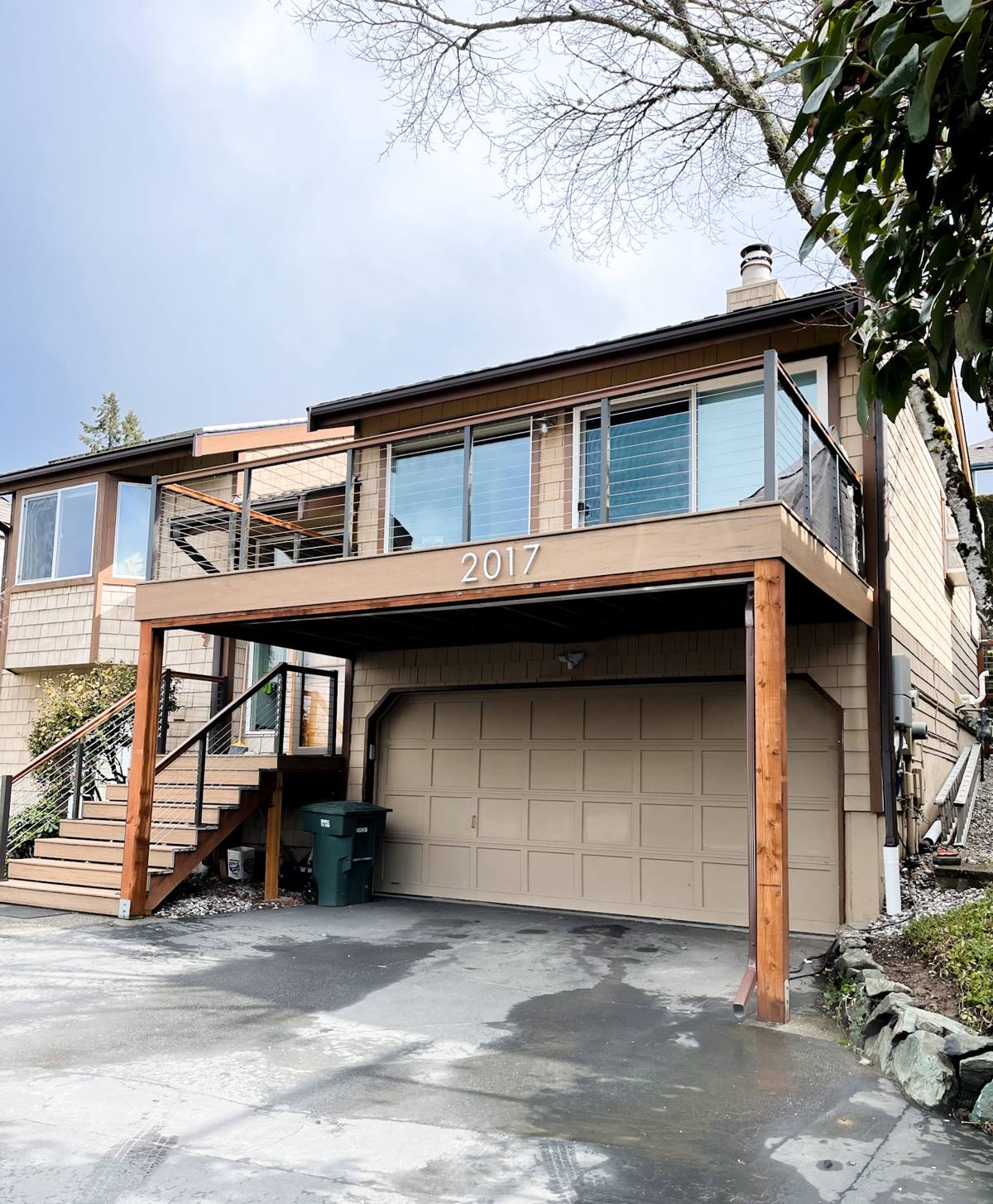
What Point Roberts' Climate Does to a Deck
Salt Air and Metal Fasteners
Salt-laden coastal air accelerates corrosion on anything metal — screws, joist hangers, bolts, and structural connectors. On a deck, that's not cosmetic. Corroded hardware is a structural failure waiting to happen, and it's usually hidden under the decking where nobody looks until something gives. This is the single biggest difference between building a deck in Point Roberts versus building one on a lot a few miles inland with less direct water exposure.
Driving Rain and End Grain
Point Roberts catches weather off open water, and that means rain doesn't always fall straight down — it gets pushed. Wind-driven rain finds its way into joints, screw holes, and the cut ends of boards (end grain), which absorb water far faster than a flat face. Decking and framing that aren't detailed to shed that water, rather than trap it, start rotting or delaminating from the inside before it's visible on the surface.
The Extended Moss and Algae Season
Whatcom County's damp, mild winters already favor moss and algae growth on any horizontal wood surface. On Point Roberts, the extra humidity off the water stretches that season longer — surfaces stay damp more days out of the year. Moss holds moisture against the deck boards, which accelerates rot on wood decking and can leave composite decking stained and slick if it isn't detailed and maintained correctly.
What a Correctly Built Deck Needs Out There
- Stainless or high-grade coated fasteners throughout — not just at the visible surface, but in every hanger, bolt, and structural connector, since hidden hardware failure is the biggest risk in this exposure.
- Proper flashing at the ledger board where the deck attaches to the house, so water is directed away from the band joist and sheathing instead of into it.
- Gapped, ventilated decking that allows airflow underneath and between boards so surfaces actually dry out between rain events instead of staying damp.
- Sealed or capped end grain on any cut boards, since raw end grain is the fastest path for water into the wood.
- A drainage-conscious substructure — joists and beams pitched or detailed so water sheds off the framing rather than pooling on ledges and joist tops.
- Material choice matched to maintenance reality — some owners want a low-maintenance deck and some are fine staying on top of a wood deck's upkeep; both are valid, but the deck has to be built assuming the owner's actual maintenance habits, not an ideal.
Decking Material Options for Marine Exposure
There's no single "correct" decking material for Point Roberts — it depends on how much upkeep you want to do and what look you're after. Here's how the common options actually behave in this climate:
| Material | How It Handles Salt Air & Moisture | Maintenance Reality |
|---|---|---|
| Pressure-treated wood | Handles moisture well when properly detailed and fastened with corrosion-resistant hardware; end grain and fastener corrosion are the weak points | Needs periodic cleaning and re-sealing to stay ahead of moss and graying |
| Cedar | Naturally rot- and insect-resistant, but still needs correct ventilation and fastening to perform well in salt air | Higher upkeep — regular cleaning, oiling or sealing to prevent silvering and moss buildup |
| Composite decking | Doesn't rot, but can trap moisture against the surface if not gapped correctly, and can stain or get slick with algae faster in a humid marine climate | Lower overall maintenance, but still needs periodic washing to stay ahead of moss/algae in this specific climate |
| PVC/vinyl decking | Fully moisture-immune surface material, performs consistently in salt air | Lowest maintenance of the group, but structure underneath still needs the same corrosion-resistant hardware and drainage detailing |
Whichever surface material you choose, the framing and fastening underneath matter more to long-term performance than the decking brand printed on the box. We'll walk through the honest trade-offs for your specific project rather than pushing one product.
Structural Details That Get Skipped — and Shouldn't
Joist Hanger Corrosion
Standard galvanized joist hangers can start showing corrosion within a few years in direct coastal exposure. On decks we build in this area, we spec hardware rated for the exposure level rather than defaulting to whatever's cheapest at the yard. It costs more up front and it's the difference between a deck that needs structural repair in year six and one that doesn't.
Ledger Board Flashing
The ledger board — where the deck ties into the house — is the single most common point of hidden rot on any deck, anywhere. In a driving-rain climate like Point Roberts, a poorly flashed ledger doesn't just risk the deck; it risks water intrusion into the house's band joist and framing behind it. This is a detail that takes an extra hour to do right and can cost thousands to fix later if it's skipped.
Post Bases and Ground Contact
Deck posts that sit in or near standing water, or that lack a proper base connector keeping wood off concrete, rot from the bottom up — often invisibly, since the damage starts below grade or under a post base cap. Correct post bases keep wood separated from moisture sources and give the structure a way to drain and dry.
Our Process for Point Roberts Deck Projects
- On-site assessment. We look at sun/wind exposure, existing drainage patterns on the lot, and how the deck ties into the house before recommending materials.
- Material and design conversation. We go over the honest trade-offs between wood, composite, and PVC decking for your specific exposure and maintenance preference — no upsell, just the real comparison.
- Permitting. Deck projects typically require a permit; we handle that coordination as part of the job so it's not left on the homeowner's plate.
- Build with corrosion-resistant hardware and proper flashing details at every connection point that matters, not just the ones that show.
- Final walkthrough covering how the specific materials on your deck should be maintained given Point Roberts' climate — realistic cleaning intervals, what to watch for, and what's normal wear versus a problem.
Maintenance Checklist for Point Roberts Decks
- Sweep debris and standing leaves off the deck surface regularly — trapped organic matter holds moisture and feeds moss.
- Clean moss and algae off the surface at least once or twice a year, more often on shaded or north-facing sections.
- Check fastener heads and visible hardware periodically for early corrosion staining, especially after the first couple of winters.
- Keep gutters and downspouts near the deck clear so roof runoff isn't dumping extra water onto or under the structure.
- Re-seal or re-stain wood decking on the schedule appropriate to the product — don't let coatings fail and expose bare wood to the wet season.
- Look underneath the deck once a year if access allows — hidden framing and hardware issues start here, not on the visible surface.
Why Local Experience on This Peninsula Matters
Point Roberts' exposure isn't identical to Blaine's, and it isn't identical to inland Whatcom County either. A crew that hasn't worked that specific stretch of coastline can under-spec hardware, skip ventilation details that matter more there than elsewhere, or recommend a decking material without accounting for how much faster moss and algae take hold on that peninsula compared to a few miles inland. We build decks across Whatcom County, and Point Roberts gets treated as its own case — the marine exposure earns it.
If you're planning a new deck or replacing one that didn't hold up, we're happy to take a look and give you a straightforward, no-pressure estimate — just fill out the form below.