 Blaine Roofing
 Siding for a Peninsula That Takes More Than Its Share of Weather
Point Roberts is a strange piece of geography even by Whatcom County standards: an American community sitting on a peninsula south of the Canadian border, surrounded by water on three sides, reached by road only by driving up through Canada first. That isolation shapes a lot about how homes get built and maintained out there, but the exterior of a house doesn't get any special treatment from the weather just because the community is hard to reach. If anything, a peninsula this exposed to open water takes a harder, steadier beating from salt air and wind-driven rain than most inland Whatcom County towns ever see.
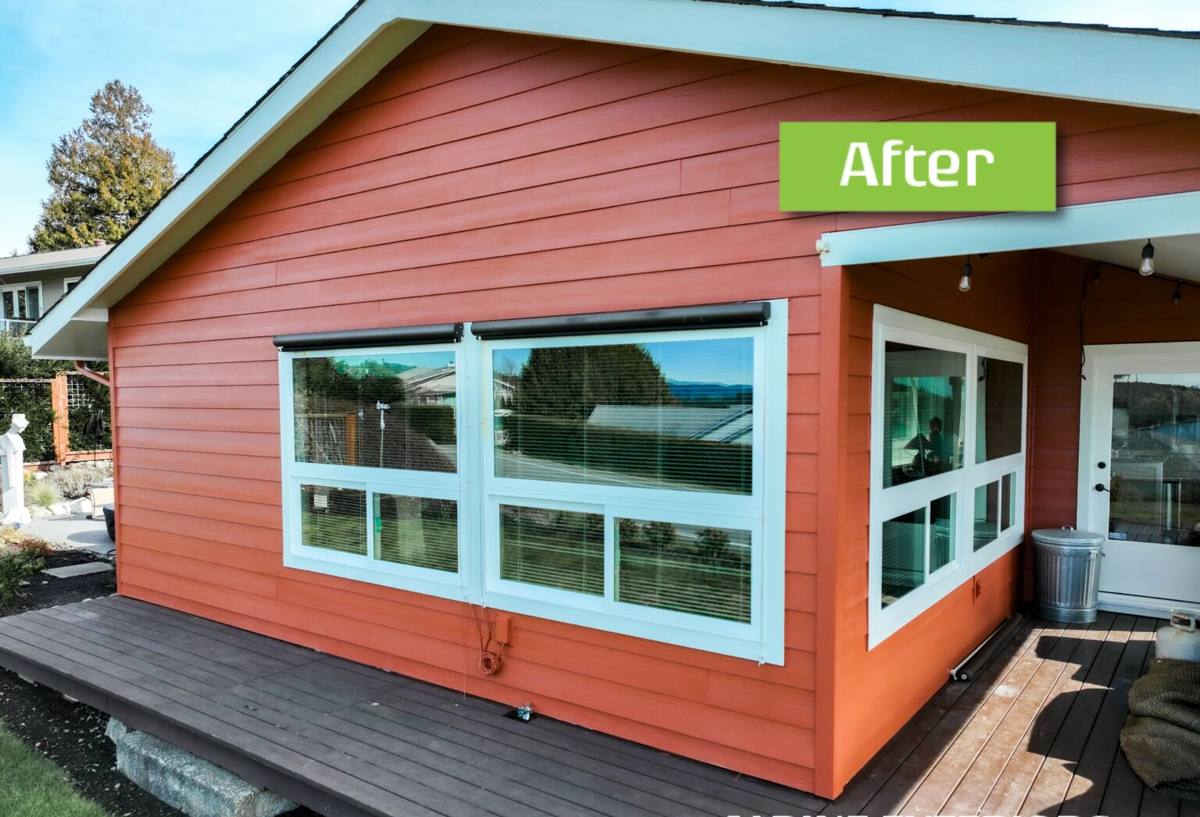
We install siding across Whatcom County, and Point Roberts is regular territory for our crew, not a special trip we make once and hope goes well. On siding specifically, we install James Hardie fiber cement exclusively, and this page is about why that product and a correct installation matter more here than almost anywhere else we work — plus what our process looks like for a home in a community that most contractors treat as too much trouble to bother with.
What Point Roberts' Climate Does to a House
Salt Air on All Sides
Because the peninsula has water on three sides instead of one, there's no real "inland" pocket in Point Roberts the way there is in towns set back from the coast. Salt-laden air reaches nearly every home in the community to some degree, and that steady salt exposure accelerates corrosion on fasteners, flashing, and any exposed metal trim faster than a drier or more sheltered site would. Paint and lower-grade coatings also break down faster under sustained salt exposure, which is exactly where cheaper siding systems tend to show their age first.
Driving Rain Off Open Water
A peninsula this exposed doesn't get much shelter from wind coming off the water in any direction. Storms push rain sideways into wall assemblies, window flashing, and roof-to-wall transitions rather than letting it fall straight down and run off, and that sideways load finds gaps in a mediocre installation that straight-down rain never would. Point Roberts sees this kind of wind-driven exposure more consistently than most of the county because there's simply less land mass around it to break the wind up before it hits a house.
A Long Moss and Mildew Season
Mild, damp conditions for most of the year add up to a moss and mildew season that runs long on shaded and north-facing walls, and Point Roberts' tree cover and marine humidity keep that moisture around longer than a drier inland site would. Any siding material with even a little surface porosity becomes a growth surface over time in those conditions, which is one more reason material choice matters as much as the installation itself.
Why James Hardie Fiber Cement Fits This Peninsula
We install one siding system, and the reasons come directly from what holds up and what doesn't in coastal, high-moisture, high-salt environments like this one — not from a supplier relationship or a marketing angle.
- Non-combustible fiber cement core: Hardie siding doesn't feed a fire the way wood-based products can, which matters for both safety and insurance considerations on any home, waterfront or not.
- Factory-applied ColorPlus finish: The color coat is baked on under controlled factory conditions rather than field-applied, so it resists fading, chalking, and salt-driven wear far longer than a site-painted finish.
- Climate-engineered HZ5 formulation: Hardie's HZ5 product line is engineered for regions with sustained moisture exposure and freeze-thaw cycling, which describes a wind-exposed peninsula like Point Roberts about as well as any spec sheet can.
- Dimensional stability: Fiber cement doesn't swell, cup, or warp the way engineered wood siding can after years of repeated wetting and drying off open water.
- Strong transferable warranty: Hardie backs correctly installed siding with one of the stronger warranty structures in the industry, which carries real value on a property that may change hands someday.
What We Won't Install, and Why
We don't install LP SmartSide, vinyl siding, Cemplank, Allura, primed spruce, or cedar. Every one of those products has a legitimate place in the market and homeowners who are satisfied with them in the right setting. Our reasoning is specific to the environment we work in, not a blanket judgment on any manufacturer.
Engineered wood products like LP SmartSide use a wood-strand substrate that, however well treated, is more sensitive to sustained moisture exposure at cut edges and fastener penetrations than fiber cement is. Vinyl siding is affordable and low-maintenance in mild climates, but it can warp under heat, flex and clatter in sustained wind, and offers no real fire resistance. Cedar is genuinely handsome but requires ongoing refinishing to hold up against salt air and damp shade, and primed spruce trim needs field-applied paint that has to be maintained on a schedule most homeowners don't keep up with once the novelty wears off. On a peninsula this exposed, those maintenance burdens and moisture sensitivities show up sooner and cost more to ignore than they would somewhere drier and more sheltered. We'd rather install one system correctly and stand behind it than offer a lineup of alternatives that quietly shift risk back onto the homeowner.
What Correct Installation Actually Involves
Hardie siding only delivers on its warranty and its performance when it goes on according to spec, and on an exposed peninsula the installation details carry more weight than they would in a calmer climate.
- Rain screen gap behind the siding: A small drainage cavity lets any moisture that gets past the exterior surface drain and evaporate instead of sitting against the sheathing.
- Correct fastener type and spacing: Hardie specifies corrosion-resistant fasteners and precise spacing for a reason; loose spacing or the wrong fastener is one of the more common causes of premature siding failure we find on tear-offs.
- Properly lapped house wrap and flashing: Every seam, window head, and penetration needs to shed water downward and outward, which matters most on walls that take wind-driven rain directly.
- Sealed butt joints and trim transitions: Open or poorly sealed joints are the first place salt-laden moisture works its way behind the siding.
- Manufacturer-spec caulking and paint touch-up at cut edges: Field-cut ends need to be sealed per Hardie's instructions, not left raw, or moisture finds the one weak point in an otherwise solid installation.
None of this is unusual or exotic. It's the manufacturer's published installation spec, followed consistently on every wall rather than shortcut on the parts that are hardest to see once the siding is up.
Why a Crew That Already Works Point Roberts Matters
Point Roberts' geography creates a real, practical problem that has nothing to do with siding quality: getting a crew, equipment, and materials out there at all. Because the peninsula sits south of the border and is reached by road through Canada, a contractor who doesn't already build that trip into their regular routine tends to either avoid the community altogether or treat a job there as an inconvenience to rush through. Neither of those outcomes serves a homeowner well when the whole point of the job is a siding system that has to perform for decades.
We already schedule Point Roberts work as part of our regular route through Whatcom County, which means material staging, crew scheduling, and border logistics aren't a one-off problem we're solving for the first time on your project. It also means we've seen how the specific combination of salt air, open-water wind, and long shaded moss season plays out on homes in this exact community, not just in Whatcom County generally. That's a meaningful difference from a contractor who quotes the job sight unseen or subs it out to whoever's willing to make the drive.
Our Process
We walk every Point Roberts property in person before quoting it. A siding estimate that skips that step is guessing, and on a peninsula where every home takes a slightly different amount of direct wind and water exposure depending on its position and tree cover, that walk-through is where the real scope of a job gets set.
- On-site assessment: We check existing siding condition, look for signs of moisture already behind the wall assembly, and evaluate exposure on each elevation of the house.
- Tear-off vs. overlay decision: Where existing siding and sheathing are sound, overlay can be reasonable; where we find rot, soft sheathing, or trapped moisture, tear-off is the only honest option, and we'll show you what we found.
- Material and color selection: We walk through Hardie's plank profiles, panel options, and ColorPlus color range so the final look fits the home rather than defaulting to whatever's in stock.
- Installation to manufacturer spec: Rain screen, fastening, flashing, and joint sealing all follow Hardie's published requirements, not a shortcut version of them.
- Final walkthrough: We go over the completed work with you before calling the job done, not after collecting final payment.
Cost Factors for a Point Roberts Siding Project
| Factor | What Drives It | Why It Matters Here |
|---|---|---|
| Home size and elevation count | Total square footage and number of distinct wall faces | More exposed elevations facing open water increase material and detailing needs |
| Tear-off vs. overlay | Condition of existing siding and sheathing underneath | Years of salt air and driving rain make hidden moisture damage more likely than in sheltered towns |
| Trim and detail complexity | Number of corners, windows, and trim transitions | Every seam is a potential entry point for wind-driven moisture |
| Material and color selection | Plank profile, panel style, and ColorPlus color chosen | Factory-finished color holds up longer against salt-air fading than field-applied paint |
| Site logistics | Material delivery and crew scheduling for the peninsula | Built into our regular route rather than a special one-off trip |
These are general cost drivers, not a quote. Two homes on the same block in Point Roberts can need very different scopes of work once we're actually pulling old siding or checking sheathing condition, which is exactly why we price these jobs after a walk-through rather than over the phone.
Signs a Point Roberts Home May Need New Siding
- Visible cracking, warping, or buckling on any wall face, especially ones facing open water
- Paint or finish that's chalking, peeling, or fading unevenly compared to the rest of the house
- Soft spots or spongy areas when you press on the siding near the bottom of walls or below windows
- Moss or dark staining that keeps returning to the same shaded or north-facing sections
- Rising energy bills that suggest the wall assembly isn't holding heat the way it used to
- Visible gaps at trim, corners, or butt joints where sealant has shrunk or failed
Any one of these on its own might be minor. Several showing up together, especially on the sides of the house that take the most wind and water, usually means the wall assembly has been taking on moisture for a while.
Timing a Project Around Local Weather and Access
Whatcom County's wettest, windiest stretch generally runs from late fall through winter, and Point Roberts' open exposure makes that stretch harder on both the house and the work itself than it is in more sheltered towns. Spring and summer typically offer the most stable, driest conditions for installing fiber cement siding, house wrap, and flashing, all of which perform best when they can be put on and allowed to set up without fighting active storms. That said, a home already showing signs of moisture intrusion is worth addressing on its own timeline rather than waiting for the ideal season, since damage behind the siding doesn't pause for good weather.
If you're weighing a siding project for a Point Roberts home, we're glad to walk the property, look at what's actually going on with the existing siding, and put together a straightforward, no-pressure estimate. Use the form below to get started.