 Blaine Roofing
 Decks in Point Roberts: A Different Kind of Build
Point Roberts sits on its own small peninsula, physically cut off from the rest of Washington by a stretch of Canadian land — the only way in by road is through British Columbia. That geography shapes almost everything about building a deck here, from how materials arrive on site to how the finished structure holds up year after year. For homeowners planning a custom deck, it means working with a crew that already understands the logistics and the climate, not one figuring it out for the first time on your project.
An Exclave With Its Own Weather Rhythm
Point Roberts is part of Whatcom County and shares Blaine's general Pacific Northwest weather pattern, but its exposure on a narrow peninsula surrounded by water gives it a microclimate of its own. Wind off the water tends to hit harder and more directly, salt spray carries further inland than it does just a few miles east, and the marine layer can hold moisture close to the ground well into the afternoon. A deck built to a generic coastal standard often isn't actually built for this standard.
Getting Materials and Crews to the Site
Every delivery and every work crew crosses an international border to reach Point Roberts. That's not a complaint — it's a planning detail. Material orders need to be consolidated and timed so a truck isn't making an unnecessary second crossing for something that should have been on the first load, and crew schedules need to account for the trip both ways. A crew that has done this before builds it into the project timeline instead of discovering it mid-build.
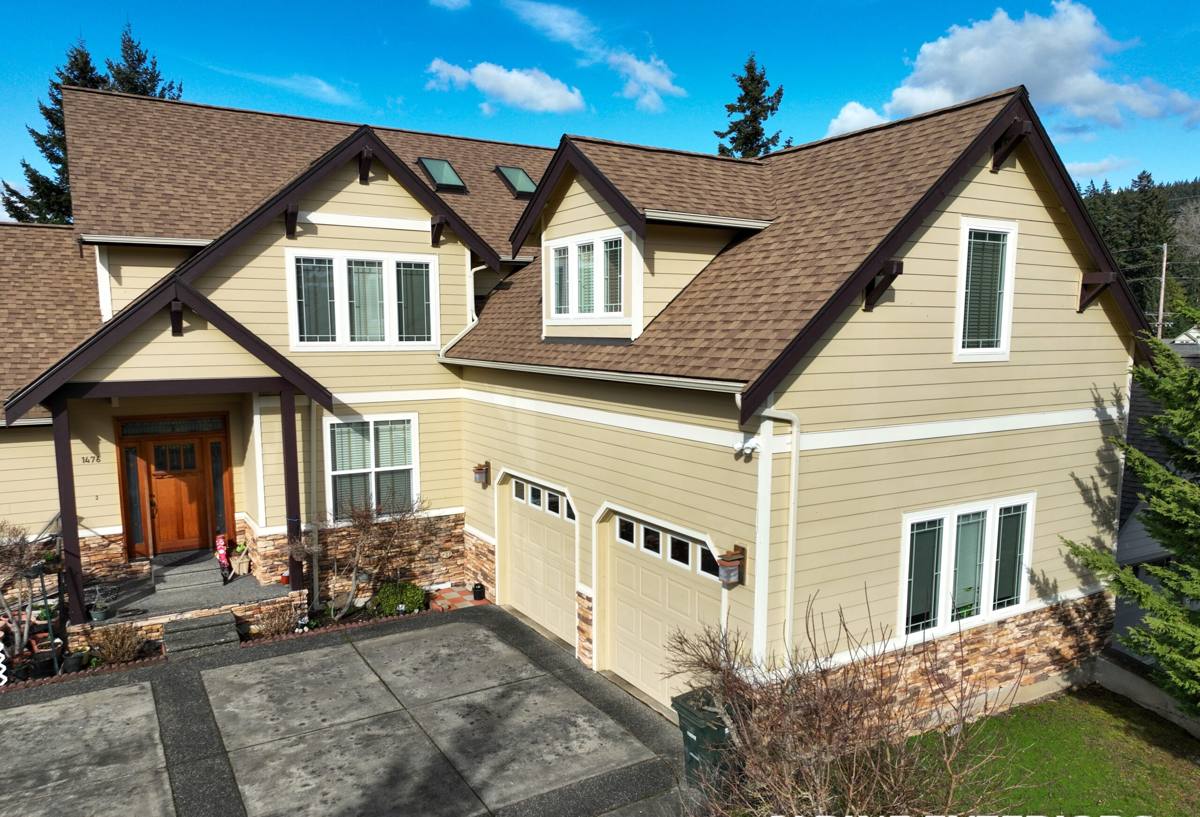
What Salt Air, Rain, and Moss Actually Do to a Deck
The regional climate isn't just background noise on a project like this — it's the reason certain materials and details matter more here than they would somewhere inland.
Salt Air and Hardware Corrosion
Salt-laden air speeds up corrosion in fasteners, joist hangers, and any exposed metal connector. Hardware rated for general outdoor use inland can start showing rust streaks within a couple of seasons this close to the water. The problem is that a corroding fastener loses holding strength well before it looks obviously bad on the surface, which is part of why so many deck failures start underneath rather than where you can see them.
Driving Rain and Moisture Intrusion
Wind-driven rain doesn't just fall straight down onto a deck — it gets pushed sideways, under railings, into ledger connections, and behind fascia boards. Over time, water that isn't shed correctly finds its way into end grain, fastener holes, and the ledger-to-house connection, which is consistently the most common source of rot and structural failure on older decks in this part of Whatcom County.
Moss Season and Organic Growth
Blaine and Point Roberts both see a long stretch of the year — roughly fall through spring — where shaded, damp surfaces stay wet long enough for moss and algae to take hold. On a deck, that shows up as slick, discolored boards and moisture trapped against the surface for weeks at a stretch. Wood decking without adequate airflow underneath is especially prone to it, and a slippery deck surface is also a real safety issue, not just a cosmetic one.
Choosing a Decking Material for This Environment
There's no single "right" material for every homeowner — budget, how much maintenance you're willing to do, and how the deck will be used all factor into the decision. But in a salt-air, high-moss environment, some materials handle the conditions with a lot less ongoing upkeep than others.
| Material | Upfront Cost | Maintenance | Moss & Moisture Resistance |
|---|---|---|---|
| Pressure-Treated Pine | Lowest | Annual cleaning and periodic sealing | Fair — needs regular upkeep to resist rot and staining |
| Cedar | Moderate | Regular sealing to maintain color and resist moisture | Good natural decay resistance, but the surface still needs ongoing care |
| Composite | Higher | Occasional washing, no staining or sealing required | Very good — resists rot and doesn't need refinishing |
| PVC | Highest | Minimal — mostly rinsing | Excellent — fully resists moisture absorption |
We walk homeowners through these trade-offs honestly. A well-maintained cedar deck can look better than a neglected composite one, and a budget-conscious pressure-treated deck can last a long time if the maintenance actually happens. Our job is to make sure you know what you're signing up for before you choose, not to steer you toward the most expensive option.
What Holds a Deck Together Matters More Than What You See
The decking surface gets all the attention, but the structure underneath is what actually determines whether a deck lasts fifteen years or forty.
Ledger Board Flashing
Where a deck attaches to the house is the single most common failure point on older Pacific Northwest decks. Proper flashing directs water away from that connection instead of letting it soak into the ledger board and the wall framing behind it. This detail is invisible once the deck is finished, which is exactly why it's worth asking about before construction starts.
Fasteners and Connectors Rated for Coastal Exposure
Given the salt air this close to the water, we favor stainless steel or heavy hot-dip galvanized hardware over standard coated fasteners for structural connections. It costs more up front and makes almost no visible difference on day one — the difference shows up ten years later, when the hardware underneath hasn't corroded.
Footings and Drainage
Footings need to be set to the depth required under Whatcom County's building code, and the ground around them needs to actually drain instead of holding water against the post base. On sites with heavier clay soil or low spots, that sometimes means adjusting grading or adding drainage as part of the deck build, not as an afterthought.
Design Choices That Make Sense for a Point Roberts Property
Beyond structure and material, a handful of design decisions make a real difference in how a deck performs against this climate over time. Orienting the deck and any overhead structure with prevailing wind and rain direction in mind reduces how much water gets driven onto the surface and into railings. Railing style is also a trade-off worth thinking through — open cable or glass rail preserves a view but offers less wind break, while a more solid railing cuts wind exposure at the cost of some sightline. Board spacing and any skirting around the base of the deck should still allow airflow underneath; a fully enclosed skirt looks tidy but traps moisture and accelerates moss growth in the shaded space below.
How We Approach a Point Roberts Deck Project
The process itself isn't complicated, but the details matter more here because of the location.
- Site visit and assessment — checking existing structure if this is a replacement, sun and wind exposure, drainage, and access for equipment
- Design and material discussion — going over the trade-offs above based on your budget and how you'll use the space
- Permitting — pulled through Whatcom County, since Point Roberts is unincorporated county land
- Scheduling — coordinating material delivery and crew time around the border crossing so the project isn't held up mid-build
- Construction — framing, flashing, and structural work done first and inspected before decking goes down
- Final walkthrough — going over the finished deck and what maintenance it needs going forward
Keeping a New Deck Ahead of Moss Season
A well-built deck still needs some basic seasonal attention, especially heading into the wetter months. A little consistency here goes a lot further than an occasional deep clean.
- Clear leaves and debris out of board gaps before fall rains start
- Rinse the deck surface periodically through the wet months to keep organic buildup from taking hold
- Check ledger flashing and visible fastener heads once a year for rust streaks or gaps
- Keep nearby trees and shrubs trimmed back to let in sunlight and airflow
- Reseal or refinish wood decking on the schedule the material actually needs, not just when it looks bad
- Make sure gutters and downspouts aren't draining directly onto the deck surface
What Affects the Cost of a Custom Deck Here
Every project is different, but the same handful of factors drive most of the cost difference between a simple deck and a more involved one.
| Cost Factor | Why It Matters |
|---|---|
| Size and shape | More square footage and custom angles mean more material and labor |
| Decking material | Ranges from budget pressure-treated lumber to premium PVC composite |
| Height and stairs | Elevated decks need heavier framing, taller railings, and stair structures |
| Site conditions | Drainage work, old structure removal, and site access all add labor time |
| Railing style | Wood, cable, and glass railing systems vary widely in material cost |
We give straightforward numbers based on your specific site and choices rather than a generic per-square-foot rule of thumb, since so much of the real cost on a Point Roberts project depends on the details above.
Why It Matters to Hire a Crew That Already Works in Point Roberts
A deck builder who hasn't worked in Point Roberts before will learn the border logistics, the permit process, and the specific demands of salt air and moss season on your project — on your dime, in delays. A crew that's already done it treats those things as routine. We're based in Blaine, close enough to be genuinely accountable if something needs attention after the job is done, and familiar enough with Whatcom County's permitting process for unincorporated areas that it doesn't add friction to your timeline. That combination — proximity plus experience with this specific location — is worth more than it might seem on paper once the project is actually underway.
If you're planning a new deck or replacing one that's showing its age, we're happy to take a look and talk through what makes sense for your property. Reach out for a free, no-pressure estimate using the form below.