 Blaine Roofing
 The Point Roberts Roof Environment
Point Roberts sits on a peninsula with water on three sides, which means homes here take a harder hit from the weather than most inland properties in Whatcom County. Wind off the Strait of Georgia and Boundary Bay carries salt spray onto roofs year-round, and that salt-laden air accelerates corrosion on anything metal that isn't properly rated for coastal exposure. Add in wind-driven rain that comes in sideways during fall and winter storms, and a roof here has to shed water fast, not just keep it out on a calm day.
Then there's moss. Point Roberts' tree cover and the Pacific Northwest's long wet, mild winters give moss and lichen a steady supply of shade and moisture for most of the year. On roofing materials with any texture for spores to grab onto, that moss takes hold, holds water against the roof surface, and works its way into laps and fastener points over time. A roof built for this peninsula needs to handle all three of these things at once — salt, wind-driven rain, and a moss season that doesn't really end.
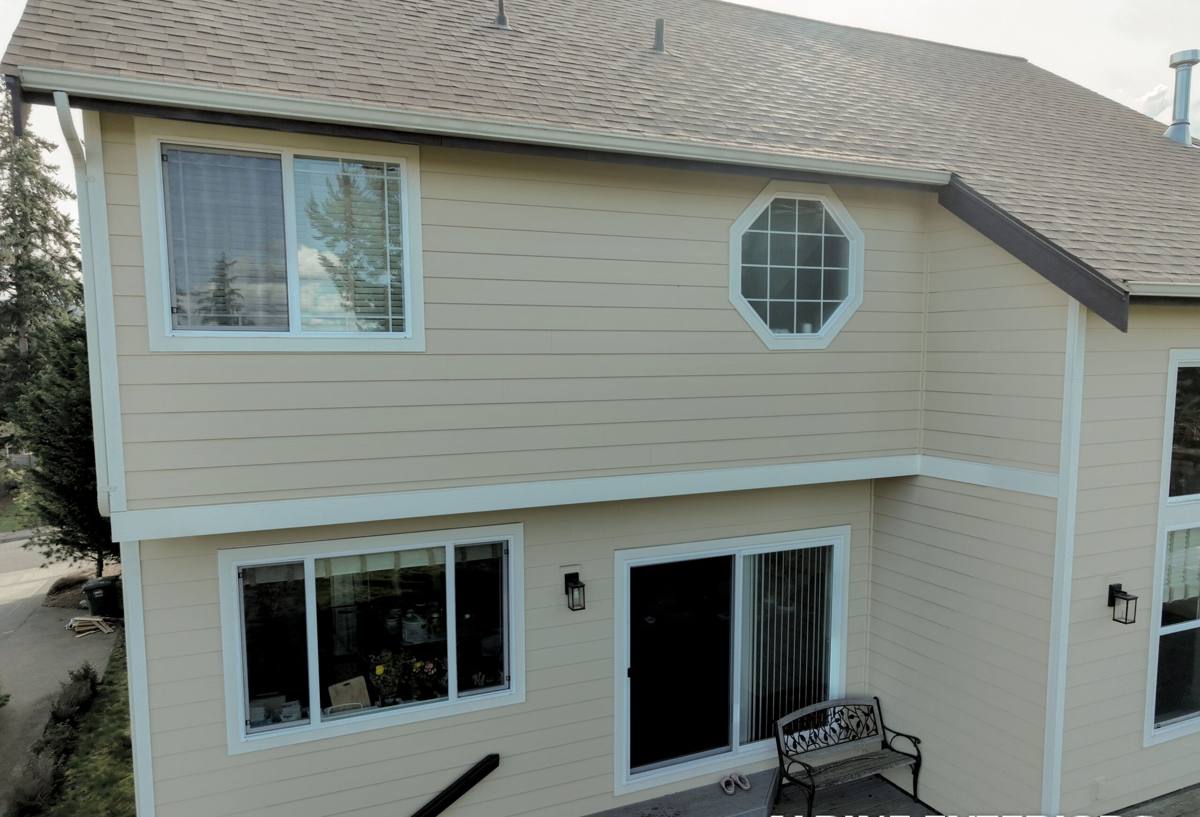
Why Metal Roofing Makes Sense in Point Roberts
Metal roofing isn't the right fit for every home or budget, but for the conditions on this peninsula it solves several problems at once. It sheds water quickly even on lower-pitch sections, it has almost no texture for moss and lichen to grip compared to asphalt shingles, and coastal-rated finishes are built specifically to resist salt corrosion. It also holds up to wind uplift better than shingle roofing when it's installed correctly, which matters on a property with open water exposure on multiple sides.
The other practical reason metal makes sense here is trip frequency. Point Roberts isn't a quick in-and-out for most contractors, so a roofing material that needs fewer service calls over its life — rather than the periodic shingle replacement and moss treatments a composition roof needs — is worth the tradeoff for a lot of homeowners on the peninsula.
Standing Seam vs. Exposed-Fastener Panels
Not all metal roofing is installed the same way, and the fastening method matters a lot in a salt-air, high-moss environment. Here's how the two most common panel systems compare for this location:
| Factor | Standing Seam | Exposed-Fastener |
|---|---|---|
| Fastener exposure | Concealed clips, no punctures through the panel face | Screws driven through the panel face |
| Moss and moisture behavior | Fewer horizontal laps for debris and moisture to collect on | More seams and exposed screw heads where grime and moss can build up |
| Long-term maintenance | Minimal; no fastener gaskets to inspect or replace | Gaskets under screw heads dry out and need periodic checking |
| Typical upfront cost | Higher | Lower |
| Best fit | Full water- and wind-exposed roof faces, primary residences | Secondary structures, outbuildings, budget-driven projects |
For a home with direct water exposure, we generally steer clients toward standing seam. The lack of exposed fasteners is a real advantage when salt air is working on every metal surface year-round, and it's one less thing that needs attention as the roof ages.
What a Correct Metal Roof Installation Requires Here
Metal roofing is unforgiving of shortcuts in a coastal climate. A panel system that would perform fine in a drier inland setting can corrode prematurely or leak within a few years if it's put together wrong on a peninsula property.
Fastener and Flashing Choices Near Salt Air
Mixing incompatible metals is one of the most common mistakes we see corrected on older installs. Steel fasteners against aluminum panels, or the wrong flashing metal at a valley or chimney, sets up galvanic corrosion — a reaction between dissimilar metals that eats away at one of them, often faster than the salt air alone would. Every fastener, clip, and flashing piece needs to match the panel metal, and all of it needs to be rated for coastal exposure, not just general use. Flashing at valleys, chimneys, skylights, and roof-to-wall intersections deserves particular attention, since these are the spots where wind-driven rain gets pushed hardest and where most metal roof leaks actually start.
Underlayment and Moisture Management
Metal panels expand and contract with temperature more than shingles do, and they don't breathe the same way. That means the underlayment underneath has to do more work — a synthetic underlayment across the field, with self-adhered membrane at eaves, valleys, and any low-slope transitions where water lingers longest. Proper ventilation underneath the panels also matters here; without it, condensation can form on the underside of the metal in our damp winters, which causes problems that have nothing to do with the roof surface itself.
Moss and Debris Management on a Metal Roof
Metal roofing resists moss far better than shingles, but "resists" isn't "immune." Shaded valleys, north-facing slopes, and areas under overhanging trees can still collect enough organic debris to hold moisture against the panel over time, especially where two roof planes meet. The fixes are straightforward and mostly preventive: keeping valleys and gutters clear of needles and leaves, trimming back branches that overhang the roofline, and in some cases installing zinc or copper strips near the ridge, which release trace amounts of metal ions in rainwater runoff that discourage moss growth downstream. A well-designed standing seam layout with minimal horizontal laps already reduces how much debris the roof can trap in the first place, which is part of why panel choice and layout matter as much as the material itself.
Cost Factors for a Point Roberts Metal Roofing Project
Every roof is priced on its own specifics, but a few factors consistently move the number up or down on peninsula properties:
| Factor | How It Affects Cost |
|---|---|
| Roof pitch and complexity | Steeper roofs and multiple planes, dormers, or valleys take more labor and material cutting |
| Tear-off vs. overlay | Removing an existing roof adds cost but is usually the right call under a metal system for long-term performance |
| Penetrations | Chimneys, skylights, and vents each need custom flashing, which adds material and labor time |
| Panel material | Steel is generally more affordable; aluminum resists salt corrosion especially well and costs more |
| Access and logistics | Getting crews and material to Point Roberts efficiently affects scheduling and, in some cases, project cost |
That last line is worth explaining, since it's specific to this location.
Getting Materials and Crews to Point Roberts
Point Roberts is a U.S. community that's only reachable by road through Canada — there's no direct land route from the rest of Whatcom County without crossing the border twice. That's not a small detail for a roofing project. It affects how we schedule the crew's day, how we time material deliveries, and how we plan around border wait times so the job isn't sitting half-finished while everyone waits in a crossing line.
Because of that, we plan Point Roberts projects differently than a job in Blaine proper. We size material orders so the crew can do the tear-off and dry-in in one continuous push rather than making multiple partial trips, and we build border crossing time into the schedule up front instead of treating it as a surprise delay. Homeowners on the peninsula get a straight answer on timeline because we've already accounted for what it actually takes to get a full crew and a truckload of panels out there and back.
Why Hiring a Crew That Already Works Point Roberts Matters
A contractor who doesn't regularly work this peninsula is starting from zero on every one of the factors above — the border crossing logistics, the specific wind and salt exposure of a three-sides-water peninsula versus a more typical inland Whatcom County lot, and which fastener and flashing combinations actually hold up out here long-term. That unfamiliarity tends to show up as underestimated timelines, corrosion problems a few years down the road from mismatched materials, or a crew that simply doesn't want to take the job once they understand what getting there involves.
We already build Point Roberts into how we schedule and quote work, which means the estimate you get reflects what the job actually takes, not a guess based on a mainland Blaine job with the peninsula tacked on.
Signs Your Point Roberts Roof May Need Attention
A few warning signs tend to show up earlier on metal roofing in a coastal environment than they would inland. Worth a look if you notice any of the following:
- Rust streaking at fastener heads, seams, or panel edges
- Panels that have started to lift, buckle, or show worsening oil-canning
- Moss or lichen that keeps coming back in the same spot even after cleaning
- Leaks or staining around chimneys, skylights, or vent penetrations
- Chalking, fading, or peeling of the panel finish beyond normal weathering
- Loose or missing fasteners, especially on wind-exposed roof faces
Any one of these is worth a closer inspection before it turns into water damage underneath the roof deck.
Keeping a New Metal Roof Performing Long-Term
Once a metal roof is properly installed, upkeep in this climate is fairly light but shouldn't be skipped. An annual check of valleys and gutters for debris buildup, trimming back tree growth that's started to overhang the roofline, and a visual check of fasteners and flashing after major storms will catch most issues while they're still minor. Homes with the most direct exposure to open water may also benefit from an occasional rinse to clear accumulated salt residue from the panel surface, particularly on north- and west-facing slopes that catch the brunt of the prevailing weather.
If you're weighing options for a roof on the peninsula, we're happy to take a look and walk you through what your home specifically needs — no pressure, no obligation. Use the form below to request a free estimate.