 Blaine Roofing
 Why Point Roberts Homes Take a Different Kind of Beating
Point Roberts sits on its own peninsula, surrounded on three sides by water and exposed to weather moving straight off the Salish Sea. That exposure shapes how windows age here in ways that don't apply to a home a few miles inland in Blaine or Ferndale. Salt-laden air corrodes hardware and fasteners faster than in drier inland air. Wind-driven rain gets pushed sideways into window assemblies during winter storms, testing every seal and flashing detail. And the long gray stretch from fall through spring keeps north-facing walls and shaded trim damp long enough for moss and mildew to take hold.
None of this means Point Roberts homes need exotic materials or gimmicks. It means the basics — flashing, drainage, sealant choice, glazing spec — have to be done correctly and matched to a marine climate, not a generic one. A window that performs fine in a dry, sheltered location can fail early here if it was installed to a lower standard.
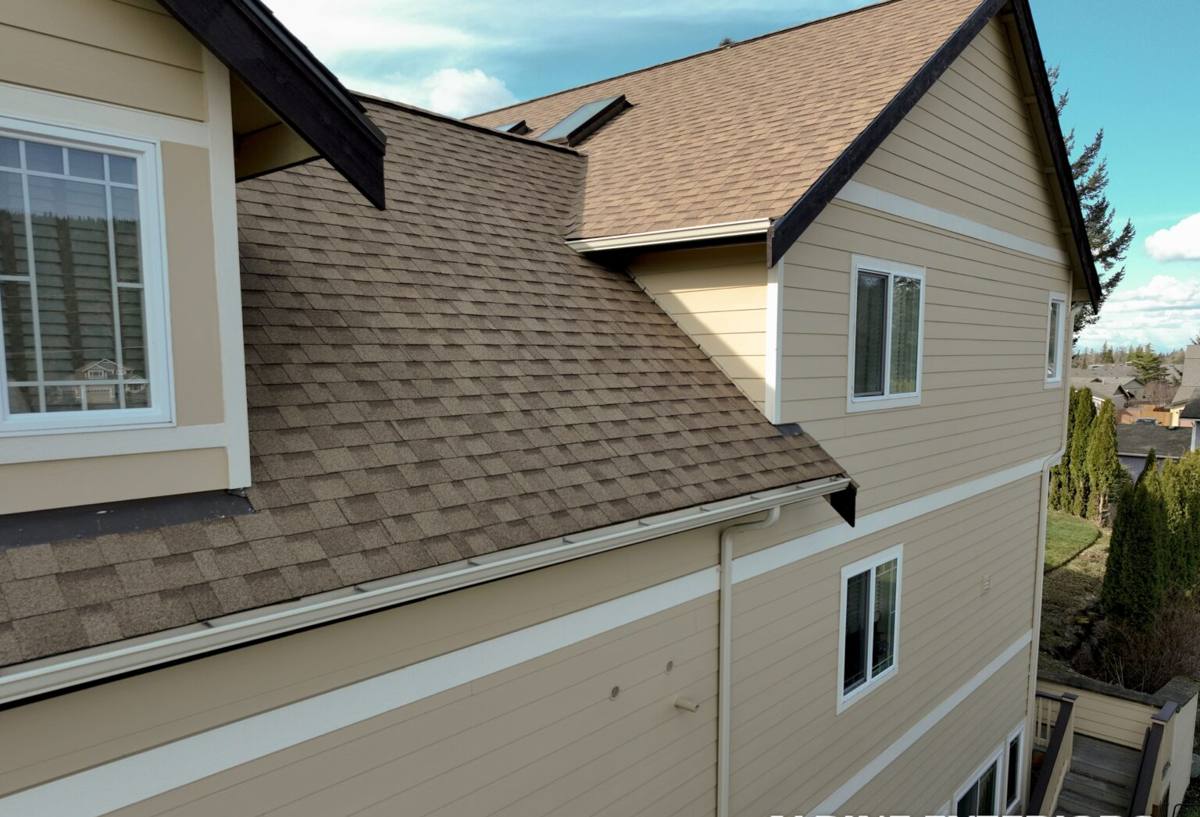
What "Correct" Window Installation Actually Involves
A lot of window problems we get called out to fix in Whatcom County aren't product failures — they're installation shortcuts. The window itself is usually fine. The flashing, the sill pan, or the sealant joint around it is where water got in.
The details that matter most in this climate
- Sloped sill pans that direct any water intrusion back outside instead of letting it pool against the framing
- Proper flashing tape sequencing — installed shingle-style so each layer overlaps the one below it, matching how water actually runs down a wall
- Correct sealant selection for a wall that gets driving rain and salt exposure, not a generic caulk that hardens and cracks within a couple of seasons
- Weep paths kept clear so any water that does get behind the exterior cladding has somewhere to drain
- Backer rod and sealant joints sized correctly so the sealant can flex with seasonal movement instead of tearing
Skip any one of these and a window can look fine for a year or two before staining, soft trim, or interior sill damage shows up. By then the fix usually involves opening the wall back up, which costs far more than doing it right the first time.
Choosing Window Material and Glazing for This Location
There isn't one "best" window material for every home — the right choice depends on the home's exposure, your budget, and how much maintenance you want to take on.
Vinyl
Vinyl frames handle salt air well because they don't corrode, and they're the most budget-friendly option. The trade-off is less design flexibility for custom shapes and, on lower-grade products, a shorter service life in harsh sun and wind exposure.
Fiberglass
Fiberglass expands and contracts at close to the same rate as glass, which keeps seals tighter over time and makes it a strong fit for a climate with big seasonal temperature and moisture swings. It costs more than vinyl but generally needs less attention over the years.
Wood and wood-clad
Wood interiors with an aluminum or fiberglass exterior cladding give you a traditional look with better weather resistance than bare wood. We're straightforward with clients about the trade-off: any wood component still needs periodic inspection and maintenance, and in a direct salt-air, high-rain exposure it's not our first recommendation unless the home's architecture calls for it specifically.
Glazing
Dual-pane, Low-E glass with an argon or krypton gas fill is the standard baseline for this climate — it manages heat loss and condensation far better than older single or basic dual-pane glass. For homes with heavier wind exposure or street noise, triple-pane is worth pricing out, with the trade-off being added weight and cost.
Our Process, Start to Finish
- On-site assessment. We inspect existing window openings, framing condition, and any signs of past water intrusion before quoting anything.
- Measurement and product selection. Every opening is measured individually — older homes are rarely perfectly square, and custom sizing avoids gaps that get packed with foam and hope.
- Written estimate. You get a clear scope of work and pricing before any material is ordered.
- Scheduling with lead time built in. Custom windows are ordered to spec, and Point Roberts' logistics add extra planning — more on that below.
- Removal and inspection. When we pull the old window, we check the framing and sheathing underneath for hidden rot or moisture damage before anything new goes in.
- Installation with full flashing detail. Sill pan, flashing tape, backer rod, sealant, and shims are installed to spec, not eyeballed.
- Interior and exterior finish work. Trim, casing, and any siding tie-in are completed and cleaned up.
- Final walkthrough. We check operation, weatherstripping, and seal quality with you before calling the job done.
Common Problems We Find in Point Roberts Homes
Because so many homes here sit close to the water with direct wind exposure, certain issues show up more often than they would inland:
- Corroded or seized hardware on older aluminum-frame windows from decades of salt exposure
- Soft or discolored sill trim where sealant failed and water tracked down into the wall
- Foggy glass between panes, meaning the seal has failed and the gas fill has escaped
- Moss and algae buildup on north- and west-facing trim that traps moisture against the frame
- Drafts around older single-pane or early dual-pane units that were never a great match for this exposure to begin with
Any of these is worth a look even if the window still "works" day to day — a failing seal or damaged sill left alone tends to turn into a bigger repair.
Material Comparison at a Glance
| Material | Salt-Air Durability | Maintenance | Relative Cost |
|---|---|---|---|
| Vinyl | Good — won't corrode | Low | $ |
| Fiberglass | Very good — stable in temperature swings | Low | $$ |
| Wood-clad | Good exterior, but core needs protection | Moderate | $$$ |
| Bare wood | Requires diligent upkeep in this exposure | High | $$–$$$ |
Pricing ranges vary widely by size, glazing package, and number of openings, so treat the table above as a general comparison, not a quote. We'll give you real numbers once we've seen the openings.
Permits, Codes, and the Realities of Working in Point Roberts
Window replacement in Whatcom County generally needs to meet current Washington State Energy Code requirements for glazing performance, and structural or egress changes may require a permit through the county. We handle that conversation with you up front so there are no surprises mid-project.
What makes Point Roberts genuinely different logistically is its geography: it's a U.S. exclave, reachable by land only through Canada. That affects how a job gets scheduled. Materials, crews, and equipment all have to cross the border to get there, which means lead times need extra padding compared to a job in Blaine proper, and a delivery delay isn't something you can just shrug off and reroute around locally. A contractor who's used to working in Point Roberts plans for that reality from the start — ordering earlier, batching trips efficiently, and setting expectations that account for it, instead of promising a timeline that ignores it.
Questions worth asking any contractor before you sign
| Question | Why It Matters |
|---|---|
| Are you licensed and bonded in Washington State? | Confirms legal standing and gives you recourse if something goes wrong |
| Have you worked in Point Roberts before? | Border logistics and lead times catch out contractors who haven't |
| What's your flashing and sealant process? | This is where most window failures actually originate |
| What warranty covers labor, not just the product? | Manufacturer warranties don't cover installation errors |
Protecting Your Windows After Installation
A correctly installed window is built to need very little from you, but a bit of seasonal attention goes a long way in this climate.
- Rinse salt residue off frames and hardware a couple of times a year, especially on wind-facing walls
- Check exterior caulk lines annually for cracking or separation and have gaps resealed before water finds its way in
- Clear moss and debris from sills and tracks, particularly on shaded north-facing windows where growth is heaviest
- Operate and lubricate hardware periodically so mechanisms don't seize from salt exposure
- Watch for condensation between panes — that's a sign a seal has failed, not something that will resolve on its own
Why It Matters That We Already Work in Point Roberts
Every trip out to Point Roberts involves crossing into Canada and back, which means a contractor working there has to plan differently than one working a job five minutes from their shop. Trips get batched, materials get ordered with extra lead time, and schedules build in a margin the border can eat into. A crew that's done this before doesn't learn those lessons on your project — they've already built the process around them, so your installation date holds and your materials show up when they're supposed to.
Beyond logistics, familiarity with the local exposure matters just as much. Knowing which walls take the worst of the wind-driven rain, how quickly moss sets in on shaded trim, and what salt air does to hardware over a few winters shapes the product and installation choices we recommend — not guesswork, but pattern recognition from working this specific stretch of coastline.
If you're weighing a window replacement or a custom install for a Point Roberts home, we're glad to walk the property, look at what you're working with, and give you a straight answer on what it needs. Reach out for a free, no-pressure estimate using the form below.