 Blaine Roofing
 Siding Repair in Sumas: What Local Homes Are Up Against
Sumas sits at the edge of Whatcom County where marine air off the Salish Sea meets the wetter, cooler weather pushing in from the foothills. Homes here deal with a specific combination of stressors: salt-tinged air that corrodes fasteners and trim faster than it should, driving rain that gets pushed sideways into wall assemblies during winter storms, and a moss season that can stretch from October well into spring. None of these things destroy siding overnight. They wear it down slowly, in the gaps and seams and low spots that a homeowner rarely looks at closely until something starts to look wrong from the street.
We work on siding repair calls throughout Blaine and out toward Sumas regularly enough to know the failure patterns aren't random. They cluster around the same few weak points on nearly every home, and once you know what to look for, most of it is preventable with the right repair done correctly the first time.
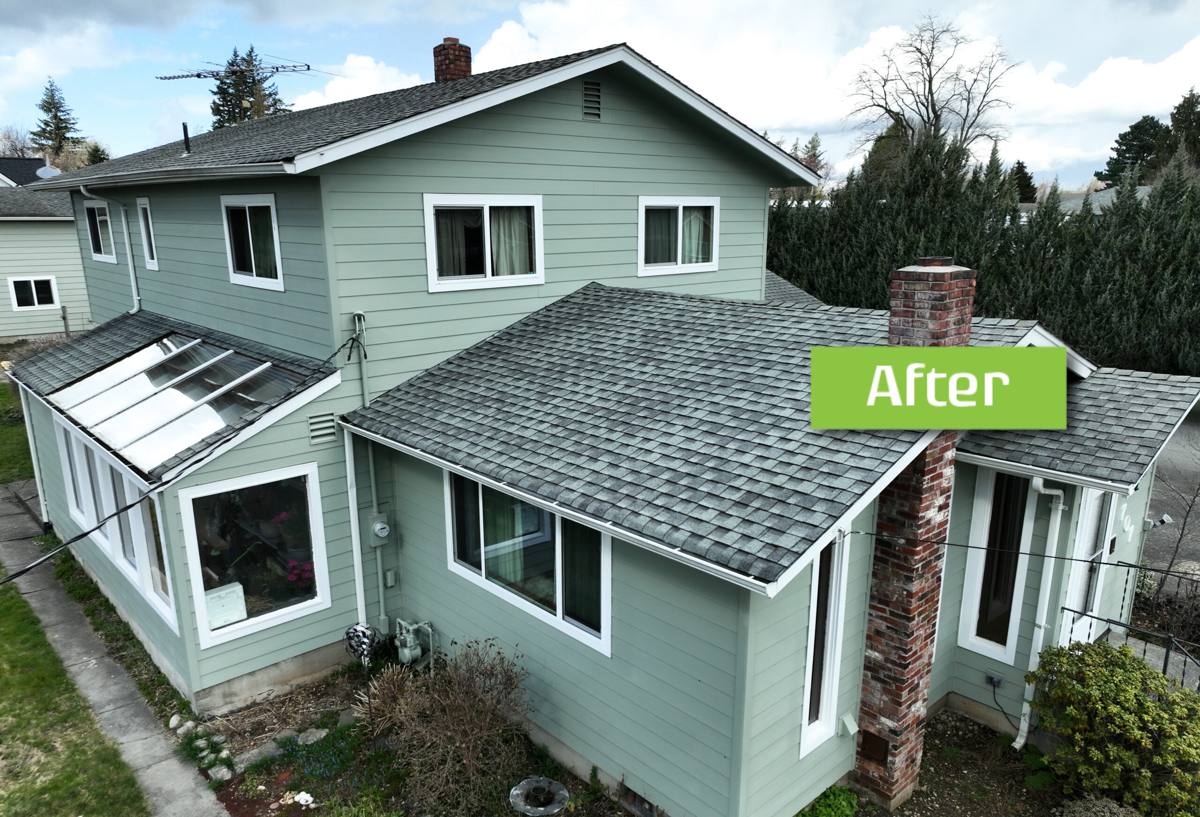
Signs Your Siding Needs Repair, Not Replacement
Most siding problems we're called out for in this area are localized, not whole-house failures. That's good news — it usually means a repair, not a full re-side. Here's what typically brings homeowners to pick up the phone:
- Soft or spongy spots when you press on the siding, especially near the bottom courses or under windows
- Visible cracking, splitting, or buckling in individual boards or panels
- Dark staining or streaking that doesn't wash off, often a sign of trapped moisture behind the surface
- Moss or algae building up thick enough that it's holding moisture against the wall rather than just sitting on the surface
- Gaps opening up at seams, corners, or where siding meets trim, window frames, or the foundation
- Nail pops, loose panels, or sections that have visibly shifted after a windstorm
- Peeling or bubbling paint that keeps coming back in the same spots even after repainting
Any one of these on its own is usually a straightforward fix. What we watch for is clustering — several of these signs concentrated in one area, which often points to a moisture problem behind the siding rather than a surface issue you can patch and move on from.
What a Correct Siding Repair Actually Involves
A siding repair that actually holds up in this climate is not just popping off a damaged board and nailing on a new one. Done right, it's a small investigation followed by a targeted fix:
Step one: find out why it failed
Replacing a rotted or cracked board without figuring out why that spot failed just guarantees the same repair again in a few years. We pull the damaged material and look at what's underneath — the house wrap, the flashing, the fastening pattern. If water was getting behind the siding through a bad seam, a missing kick-out flashing, or a caulked joint that should have been flashed instead, that's the part that actually needs fixing.
Step two: address the water path, not just the symptom
This is the step that gets skipped by rush jobs and it's the reason the same spot on a house rots out twice. Proper flashing details, correct lap orientation, and drainage gaps behind the siding matter more to long-term durability than the siding material itself.
Step three: match and install the replacement material
Whether that's a fiber cement plank, a section of trim, or a full panel, the replacement has to match the existing reveal, profile, and fastening pattern so it performs the same as the surrounding siding — not just look similar from the curb.
Step four: seal and finish correctly
Caulking the wrong joints, or caulking joints that should breathe instead of seal, is one of the most common mistakes we see from prior repairs. Fiber cement systems are engineered with specific joints meant to move and drain — sealing them shut traps moisture instead of letting it escape.
Common Siding Materials We Find on Sumas Homes
Repair work looks different depending on what's already on the wall. Here's how the materials we most often encounter tend to behave when they need repair:
| Material | How It Typically Fails | Repair Difficulty |
|---|---|---|
| Vinyl siding | Cracking in cold snaps, warping near heat sources, brittle after years of UV exposure | Easy to swap panels, but exact color/profile matches get harder to find as products age out |
| LP SmartSide / OSB-based siding | Edge swelling and delamination where moisture gets into the engineered wood core, especially at butt joints | Moderate to difficult — swelling often signals moisture already spread past the visible damage |
| Cedar siding | Cupping, splitting, and rot where finish coatings have worn thin or failed at end grain | Labor-intensive — often needs refinishing of surrounding boards to blend the repair |
| James Hardie fiber cement | Rare structural failure; most issues trace back to installation details (caulked joints, missing flashing) rather than the material itself | Straightforward when using matched ColorPlus product and correct joint details |
We install James Hardie fiber cement exclusively for full siding jobs, and it's also our first recommendation when we're repairing sections of a home that already has it — the ColorPlus factory finish means a well-matched replacement plank can blend in without a repaint. On homes with other materials, we'll repair what's there when a repair genuinely makes sense, and we'll always tell you honestly when a material is nearing the point where patching stops being worth it.
Our Siding Repair Process
We keep this simple and don't oversell work that isn't needed:
- On-site assessment. We look at the damaged area and probe the surrounding siding, trim, and any accessible wall assembly to understand the scope, not just the symptom.
- Honest scope and estimate. You get a clear explanation of what's failing, why, and what it'll take to fix it right — including if we think a section is better replaced than patched.
- Material sourcing and matching. For fiber cement repairs, we source matched ColorPlus product where possible so the patch doesn't stand out.
- Removal and inspection of the substrate. Damaged material comes off, and we check the house wrap, flashing, and framing underneath before anything goes back up.
- Correction of the underlying issue. Flashing gets fixed, drainage gaps get restored, fastening gets corrected — this is the part that prevents a repeat call.
- Reinstallation to spec. New material goes in following manufacturer installation guidelines for joint spacing, fastening, and clearances.
- Final walkthrough. We show you what was found and what was done before we consider the job finished.
Repair vs. Replace: How We Help You Decide
Not every damaged section is worth repairing, and not every home needs a full re-side just because one wall looks rough. We weigh a few factors honestly with you:
| Factor | Leans Toward Repair | Leans Toward Replacement |
|---|---|---|
| Extent of damage | Isolated to one or two areas | Spread across multiple walls or elevations |
| Cause of failure | A single flashing or joint issue, now identified | Systemic moisture intrusion or widespread material fatigue |
| Age of existing siding | Siding is well within its expected service life | Siding is near or past the age where the material typically starts failing broadly |
| Material condition | Surrounding siding is sound and matchable | Material is discontinued, badly faded, or failing in the same way elsewhere |
| Underlying structure | Sheathing and framing are dry and intact | Rot or moisture damage has reached the wall structure itself |
When a home has vinyl, LP SmartSide, or aging cedar that's failing broadly rather than in one spot, we'll say so plainly and talk through what a full re-side with James Hardie fiber cement would look like — not because we're pushing a product, but because patching a material that's failing systemically usually costs more over a few years than doing it right once.
Why James Hardie Is What We Use for Patches and Matching
When a home already has Hardie siding, repairs are genuinely easier to get right. The ColorPlus finish is factory-baked, not field-applied, so a correctly matched replacement plank holds its color the same way the rest of the wall does instead of aging differently. The material itself is non-combustible fiber cement engineered for the wet, coastal-influenced climate we work in around Whatcom County, so it resists the moisture absorption and swelling that drives a lot of repair calls on other materials. And because Hardie backs its product with a strong transferable warranty, repairs done to spec don't create gaps in that coverage.
We won't tell you every home in Sumas needs to be re-sided in fiber cement — plenty of repair calls are legitimately small, contained fixes on whatever material is already up. But when a homeowner is deciding what to replace a failing section with, or planning ahead for a future re-side, we're straightforward about why Hardie is the only product we install for full jobs and the product we reach for first when a repair calls for new material.
Choosing a Siding Repair Contractor in Sumas
Siding repair is easy to do poorly and hard to verify from the ground once it's painted over. A few things worth checking before you hire anyone for repair work in this area:
- Ask what they found caused the damage, not just what they plan to replace — a contractor who can't explain the cause probably won't fix it
- Confirm they'll inspect and correct flashing and moisture barriers, not just swap the visible board
- Ask how they'll match existing material — color, profile, and reveal — especially on fiber cement with factory finishes
- Get the scope in writing before work starts, including what happens if they find more damage once they open the wall up
- Ask about their experience with the specific material on your home, since repair technique differs meaningfully between vinyl, engineered wood, cedar, and fiber cement
- Look for a crew that's worked in Whatcom County's coastal climate specifically — moisture management here is different from drier inland regions
A crew that already works Sumas and the greater Blaine area regularly has seen how these specific weather patterns play out on real homes over multiple seasons, which matters more here than it does in a milder or drier climate.
Maintenance Tips Between Repairs
A good repair lasts a lot longer with a little seasonal attention:
- Rinse moss and algae growth off siding surfaces before it builds up thick enough to hold moisture against the wall
- Keep gutters clear so overflow isn't running down the siding face during heavy rain
- Trim back vegetation and shrubs so siding gets airflow and sunlight to dry out between wet spells
- Walk the exterior once or twice a year and press-test any spots that look discolored or soft
- Re-caulk only the joints designed to be sealed — leave drainage and expansion joints open
If you're seeing soft spots, staining, or storm damage on your siding, we're happy to take a look and give you a straight answer on what it needs. Reach out for a free, no-pressure estimate — there's a form below to get started.