 Blaine Roofing
 Why Blaine Harbor Roofs Wear Differently Than Roofs Inland
Houses within a mile or two of the water in Blaine deal with a roofing environment that homes even a short drive inland don't face. The harbor sends a steady drift of salt-laden air across roofs year-round, wind off the water drives rain sideways under shingle tabs and flashing laps that would stay dry on a calmer site, and the long, mild, wet Whatcom County winters give moss and lichen months at a time to take hold. None of this means a Blaine Harbor roof is doomed to fail early — it means the repair work has to account for exposure that a generic patch job usually ignores.
We work on roofs in this stretch of Blaine regularly, so a Blaine Harbor repair call isn't a first look at what salt air and coastal wind do to a roof system. That matters more than it sounds like it should, because the failure patterns here are specific: fastener corrosion shows up faster, flashing seals fail at different points, and moss establishes itself in places that stay shaded and damp longer near the water.
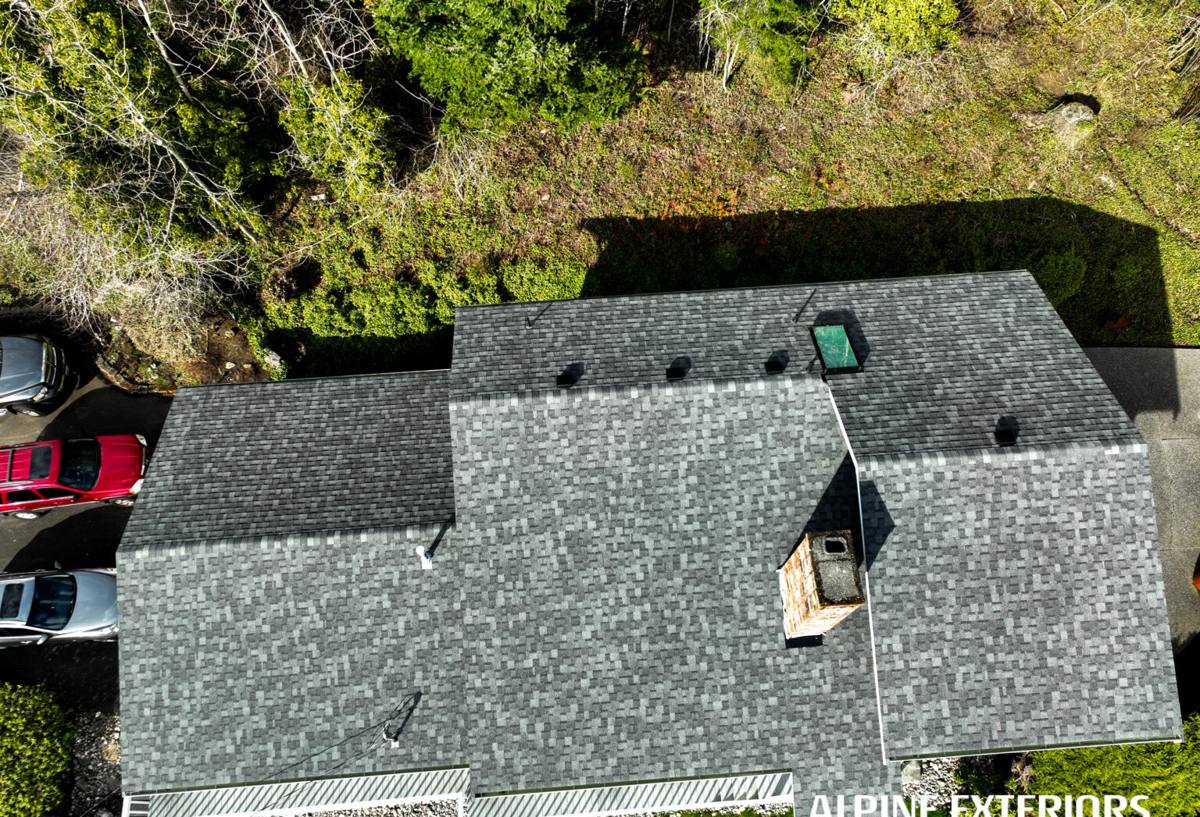
What Salt Air, Driving Rain, and Moss Actually Do to a Roof
Salt Air and Metal Fatigue
Salt in the air accelerates corrosion on anything metal — nail heads, flashing, drip edge, vent boots with metal collars, and gutter hardware. A standard galvanized fastener that would last decades inland can start showing rust streaks and pitting years sooner this close to the harbor. Once a fastener corrodes, its grip weakens and the seal around it opens up, which is one of the most common quiet leak sources we find on repair calls in this area.
Wind-Driven Rain
Rain that comes in at an angle behaves differently than rain falling straight down. It gets pushed up and under shingle edges, into valleys, and around penetrations that would otherwise shed water cleanly. Roofs facing open water or sitting on slightly elevated lots catch more of this, and it's a major reason why flashing detail — not just shingle condition — decides whether a roof stays dry.
Moss and the Long Wet Season
Whatcom County's mild, wet stretch runs long, and shaded north-facing slopes near the harbor rarely get enough sun to dry out between rains. Moss and lichen root into shingle granules, hold moisture against the roof deck, and lift shingle edges as they grow — all of which shortens the life of an otherwise sound roof if it's left unchecked.
Signs a Blaine Harbor Roof Needs Repair
- Water stains on interior ceilings or upper walls, especially after a windy rain rather than a calm one
- Granules collecting in gutters or at downspout outlets
- Visible moss or dark streaking concentrated on shaded or north-facing slopes
- Rust staining around nail heads, vent boots, or flashing edges
- Curling, cracking, or lifted shingle tabs, particularly near ridges and edges exposed to wind
- Soft spots or slight sagging in the roof deck when walked or viewed from a ladder
- Daylight visible through the attic at roof penetrations or ridge lines
Any one of these on its own might just need a targeted fix. Several at once, or a leak that's been ignored for more than a season, usually means water has already reached the decking underneath — which changes the scope of the repair.
What a Correct Harbor-Area Repair Involves
A repair done right in this environment isn't just swapping a shingle or dabbing sealant on a leak. It means matching materials and technique to the exposure the roof actually gets.
Fasteners and Flashing
Near the harbor, we favor corrosion-resistant fasteners and flashing over standard galvanized where the roof's exposure calls for it. It costs a little more up front, but replacing corroded nails and flashing every few years costs more in the long run — and repeated fastener failure is one of the most preventable causes of recurring leaks on coastal roofs.
Underlayment and Sealants
In areas that see sustained wind-driven rain, we pay close attention to underlayment laps and use sealants rated for the moisture and UV cycling this climate puts them through. A sealant that's fine on a sheltered inland roof can dry out and crack faster under the freeze-thaw and salt-air combination near the water.
Deck Condition
Any repair that involves opening up the roof includes checking the decking underneath for soft spots or rot before new material goes back on. Patching over compromised decking is the single most common reason a "fixed" leak comes back within a year.
Our Repair Process
- Inspection. We get on the roof (weather permitting) and in the attic if accessible, tracing the leak or damage back to its actual source rather than just the spot where water showed up inside.
- Honest assessment. We tell you plainly whether this is a targeted repair, a larger repair, or a case where repair money would be better put toward a replacement — and why.
- Written scope and estimate. You get a clear explanation of what's being fixed, the materials involved, and the cost before any work starts.
- The repair. Matched materials, correct flashing and fastener details for this exposure, and decking replaced if it's compromised.
- Cleanup and check. Debris cleared, gutters checked for blockage from the work, and a final look to confirm the fix addresses the actual cause.
Repair vs. Replacement: What Actually Drives the Decision
| Factor | Leans Toward Repair | Leans Toward Replacement |
|---|---|---|
| Age of roof | Roof is well within its expected service life | Roof is near or past the manufacturer's expected lifespan |
| Extent of damage | Isolated to one area, flashing point, or slope | Widespread across multiple slopes or recurring in different spots |
| Decking condition | Solid, no rot found on inspection | Soft, delaminated, or rotted decking found in multiple areas |
| Fastener/flashing corrosion | Localized, easily replaced | Widespread corrosion across the roof's metal components |
| Moss/moisture history | First occurrence, addressed early | Long-term moss damage with granule loss and shingle lifting |
We won't sell a full replacement when a repair genuinely solves the problem, and we won't recommend a patch we know won't hold. The table above reflects the same factors we walk through with you on-site.
Managing Moss Between Repairs
Moss control isn't a one-time fix — it's ongoing maintenance that protects whatever repair work has just been done. A few practices go a long way on Blaine Harbor roofs:
- Keep gutters and valleys clear so water doesn't pool and give moss a foothold
- Trim back overhanging branches to reduce shade and let shaded slopes dry out faster
- Have moss physically removed rather than just treated, since dead moss still holds moisture against the roof
- Consider zinc or copper strips near the ridge on chronically moss-prone slopes, which help suppress regrowth over time
- Schedule a moss check every year or two on north-facing or heavily shaded sections
Why a Crew That Already Works Blaine Harbor Matters
A repair contractor who works this specific stretch of coastline regularly already knows which fastener and flashing choices hold up here, which slopes in this area tend to hold moss longest, and how wind-driven rain off the water behaves against a roof compared to a roof a few miles inland. That's the difference between a repair that's cosmetically finished and one that's actually built for the conditions it has to survive. It also means faster response — when a storm off the water causes damage, you're not waiting on a crew that has to drive in from well outside Whatcom County and figure out the local exposure on the fly.
Before You Call: A Quick Homeowner Checklist
- Note when the leak or damage first appeared — during a windstorm, steady rain, or gradually over time
- Check the attic (if safely accessible) for staining, damp insulation, or daylight at penetrations
- Look at gutters for granule buildup, which signals shingle wear
- Note which slopes show moss or dark streaking, and whether they're shaded most of the day
- Avoid walking on the roof yourself, especially if it's wet — moss and salt spray both make surfaces slicker than they look
If you're seeing any of these signs on a home near Blaine Harbor, it's worth having someone look before the next round of driving rain finds the weak spot for you. We're happy to come out, take an honest look, and walk you through what we find — no pressure either way. Use the form below to request a free estimate.