 Blaine Roofing
 Why Metal Roofing Fits Cherry Point Homes
Cherry Point sits on the water in northern Whatcom County, close enough to the Strait of Georgia that salt-laden air, wind-driven rain, and heavy winter moisture are just part of owning a home here. Roofs in this stretch of coastline take a different kind of beating than roofs ten or fifteen miles inland, and the material choice matters more than most homeowners realize until they're dealing with premature granule loss, moss damage, or corroded fasteners a decade before they expected to think about roofing again.
Metal roofing has become a common answer for homes in this area for a simple reason: it holds up to the specific combination of conditions Cherry Point sees year after year. It sheds the near-constant rain fast, it doesn't give moss the foothold that asphalt shingles do, and with the right coating system it resists the corrosion that salt air accelerates. That doesn't mean every metal roof performs the same way out here — the panel type, the coating, and how the job is installed all decide whether a metal roof lasts twenty-five years or needs attention in eight.
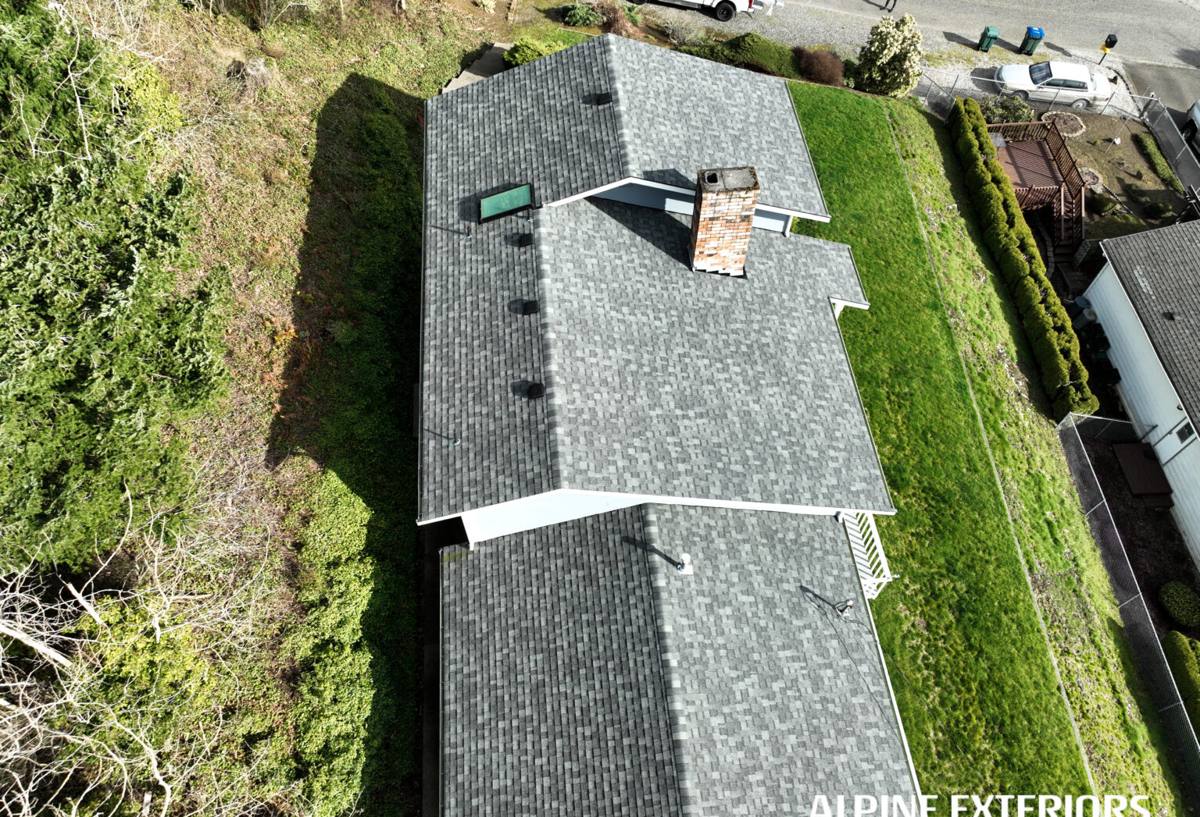
Salt Air and Corrosion: What Coastal Exposure Does to a Roof
Homes near the water deal with airborne salt that settles on every exterior surface, roofs included. Over time, salt exposure speeds up corrosion on metal that isn't properly coated or protected, and it accelerates the breakdown of fasteners, flashing, and any exposed cut edges where bare metal is left uncovered. This is true of any metal roofing system, but it's especially important to plan for on a property this close to the shoreline.
The practical response isn't to avoid metal roofing — it's to be deliberate about which metal, which coating, and which fastener hardware go on the roof. Aluminum and coated steel behave differently in salt air, and the finish system (the paint or coating applied over the base metal) does most of the real work protecting against corrosion. We factor coastal exposure into the material recommendation for every Cherry Point job rather than defaulting to whatever's standard inland.
Fasteners and Flashing Matter as Much as the Panels
A metal roof is only as corrosion-resistant as its weakest component. Mismatched fasteners — the wrong metal screwed into the wrong panel — set up a reaction called galvanic corrosion that can eat through hardware years before the panels themselves show any wear. Flashing at valleys, chimneys, and roof-to-wall transitions needs the same coating consideration as the field panels, because these are the spots most exposed to standing water and wind-driven rain.
Rain, Moss, and Roof Drainage in a Long Wet Season
Whatcom County's wet season runs long, and Cherry Point's exposure to driving rain off the water means roofs here deal with more sustained moisture than roofs even a short distance inland. That moisture is what drives moss growth, and moss is more than a cosmetic problem — it holds water against the roof surface, works into seams and laps, and on shingle roofs it can lift material enough to create leak paths.
Metal roofing changes this equation. A properly installed metal roof has a slick, low-friction surface that doesn't hold moisture or organic debris the way shingle granules do, and it sheds rain fast enough that moss has a much harder time establishing itself. It's not a guarantee that a metal roof will never need moss treatment, especially in heavily shaded yards, but it removes the biggest reason moss thrives in the first place: a surface that stays damp.
Drainage detailing is just as important as the panel choice. On a roof exposed to this much rain, ridge caps, valleys, and eave transitions have to be built to move water off fast and keep it from backing up under laps during wind-driven storms. This is where installation quality separates a metal roof that performs for decades from one that develops leaks at the details within a few years.
Choosing a Metal Roofing System for This Location
Not every metal roofing product is built the same way, and the right choice for a Cherry Point home depends on budget, roof style, and how much the coastal exposure needs to be prioritized.
| System | Typical Fit | Coastal Considerations |
|---|---|---|
| Standing seam steel | Most residential roofs, especially where a clean, modern look is wanted | Concealed fasteners reduce exposed hardware; coating quality is the key variable in salt air |
| Standing seam aluminum | Homes very close to the water or with a history of corrosion issues | Naturally corrosion-resistant, often the better long-term choice for high salt exposure |
| Exposed-fastener metal panels | Budget-conscious projects, outbuildings, shops | More exposed hardware to maintain; needs correct fastener metal and regular inspection |
| Stone-coated steel | Homes wanting a shingle or shake profile with metal's durability | Good moisture and wind performance; coating and edge detailing still matter near the coast |
We walk homeowners through these trade-offs honestly rather than steering everyone toward the same product. A shop roof and a primary residence a few hundred feet from the water don't need the same system, and the estimate reflects that.
What a Correct Installation Involves
Metal roofing is unforgiving of shortcuts in a way that shingle roofing sometimes isn't. A poorly installed metal roof can look fine for a season or two and then fail at the details — the same places where a coastal storm will find it.
Underlayment and Deck Preparation
A synthetic, high-temperature underlayment goes down first, with extra attention to ice-and-water membrane at eaves, valleys, and any low-slope transitions where wind-driven rain is most likely to push water backward under the panels. The deck itself gets inspected and repaired before anything goes on top of it — installing new roofing over a compromised deck just hides the problem.
Panel Layout and Fastening
Panels are laid out to minimize seams in high-exposure areas and fastened according to the manufacturer's wind-load specifications, which matter more here than on a sheltered inland lot. Fastener spacing, torque, and metal compatibility are all checked — not eyeballed.
Flashing, Trim, and Penetrations
Every penetration — vents, chimneys, skylights — gets flashed with material matched to the panel system and sealed in a way that accounts for thermal movement, since metal expands and contracts more than shingles across our temperature swings. Ridge caps and trim are set to shed water in the direction storms actually come from at this location, not just installed to a generic standard.
Ventilation
Proper attic ventilation keeps condensation from forming on the underside of the metal panels, which is a common cause of hidden deck damage on metal roofs that look perfectly fine from the outside.
Our Process, Start to Finish
- On-site inspection: We look at the existing roof, deck condition, ventilation, and how exposed the roof is to prevailing wind and rain off the water.
- Honest system recommendation: We explain panel and coating options in plain terms, including trade-offs in cost, maintenance, and coastal durability — no upselling to a product the home doesn't need.
- Written estimate: A clear scope covering tear-off (if needed), deck repairs, underlayment, panel system, flashing, and cleanup.
- Installation: Deck prep, underlayment, panels, flashing, and trim installed to manufacturer specs with attention to the coastal detailing covered above.
- Final walkthrough and cleanup: We review the finished roof with the homeowner and make sure the property is left clean, including magnetic sweep for stray fasteners.
What Drives the Cost of a Metal Roof Here
| Factor | Why It Matters in Cherry Point |
|---|---|
| Panel material (steel vs. aluminum) | Aluminum costs more up front but resists coastal corrosion better long-term |
| Coating system | Higher-grade coatings cost more but hold up longer against salt exposure |
| Roof complexity | Valleys, dormers, and multiple roof planes increase flashing work and labor |
| Deck condition | Rot or damage from prior moss and moisture issues adds repair costs before install |
| Fastener type | Concealed-fastener systems cost more but reduce long-term maintenance near the water |
Broadly, metal roofing costs more up front than asphalt shingles, but the gap narrows over the life of the roof once you factor in shingle replacement cycles and the moss and moisture issues common on this stretch of coastline. Every roof is different, and the only way to get real numbers is a look at the actual property.
Maintenance Checklist for Cherry Point Metal Roofs
Metal roofing needs far less upkeep than shingles, but "low maintenance" isn't "no maintenance," especially this close to the water. A few things worth checking once or twice a year:
- Clear debris and organic buildup from valleys and around penetrations before it holds moisture
- Check exposed fasteners (on exposed-fastener systems) for loosening or early corrosion
- Inspect flashing at chimneys, vents, and wall transitions for gaps after major windstorms
- Look for moss or algae starting in shaded sections, even though metal resists it better than shingles
- Confirm gutters and downspouts are clear so water isn't backing up at the eaves
- After any wind event strong enough to move debris, do a visual check for lifted panels or trim
Why a Crew That Already Works Cherry Point Matters
A roofing crew that mostly works inland projects doesn't always account for how much harder salt air and driving coastal rain work on a roof compared to a sheltered lot a few miles away. We work roofs along this part of the Whatcom County coastline regularly, which means the fastener choices, coating recommendations, and flashing details on a Cherry Point job come from what actually holds up here — not a generic install spec written for a different climate. That local experience shows up in decisions homeowners never see directly: which coating grade we won't compromise on for a waterfront property, where we add extra sealant at penetrations, and how we sequence work around the area's weather windows.
Get a Free, No-Pressure Estimate
If you're weighing a metal roof for a Cherry Point home, we're glad to take a look and walk you through what actually makes sense for your property — no pressure, no upsell. Fill out the form below and we'll set up a time to come out and talk through it in person.