 Blaine Roofing
 New Roof Installation Built for Sumas, Not a Catalog Photo
Sumas sits in the Nooksack River valley, a few miles inland from Blaine and hard against the Canadian border. It doesn't get the same direct salt spray as homes right on the water, but it has its own set of problems: low-lying, humid air that sits in the valley overnight, heavy tree cover on a lot of older properties, and winter storms that funnel driving rain and wind straight up from the coast. Add in a genuinely long moss season — often eight or nine months of the year when conditions favor growth — and you get roofs that fail from moisture long before the shingles themselves wear out.
A new roof installation here isn't just "put new shingles where the old ones were." It's an opportunity to correct the ventilation, flashing, and underlayment choices that likely shortened the life of the roof you're replacing. We approach every Sumas job that way.
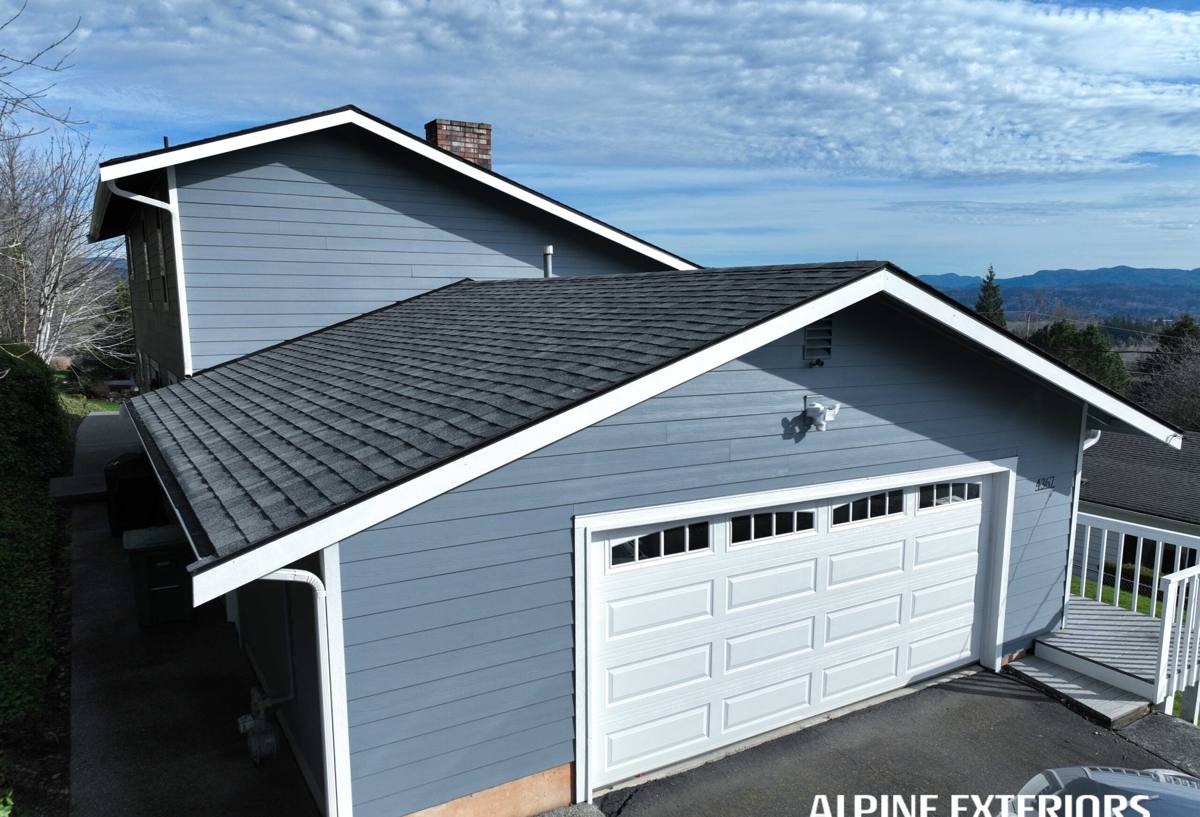
What Whatcom County Weather Actually Does to a Roof
Understanding the failure pattern is the whole point of doing the job right the second time around. In this part of the county, the damage almost never comes from one dramatic event. It's cumulative:
- Standing moisture: Shaded, tree-covered lots common around Sumas keep roof surfaces damp longer after rain, which is exactly what moss and moss-related wood rot need to take hold.
- Wind-driven rain: Pacific storms push rain sideways, not straight down, which means it finds its way under poorly lapped shingles, undersized flashing, and old nail penetrations that have worked loose.
- Freeze-thaw cycling: The valley runs a few degrees cooler than the coast in winter. Repeated freezing and thawing of trapped moisture in an underlayment or decking that's already saturated accelerates rot from the inside out.
- Salt-laden air near the water: For Sumas properties with metal roofing, flashing, or fasteners, even the reduced salt exposure this far inland can still accelerate corrosion on the wrong-grade hardware over a couple of decades.
None of this is exotic. It's ordinary Pacific Northwest weather doing ordinary damage to a roof that wasn't detailed for it.
What a Correct New Roof Installation Involves
Tear-Off and Deck Inspection
We don't install new roofing over old material, and we don't skip the deck inspection to save a day. Once the old roofing is off, we check the sheathing for soft spots, delamination, and rot — especially around valleys, chimneys, and anywhere moss has been sitting against the surface for years. Any compromised decking gets replaced before anything new goes down. Installing new shingles over a weak deck just hides the problem for a season or two.
Underlayment and Ice/Water Protection
Given how much moisture this area sees, we don't treat underlayment as a formality. Self-adhered ice-and-water barrier goes in at eaves, valleys, and around every penetration — the spots where wind-driven rain is most likely to get pushed backward under the roofing material. A synthetic underlayment covers the field for a consistent, tear-resistant moisture barrier underneath the primary roofing.
Flashing
Flashing failure is the single most common cause of "mystery leaks" we get called out to diagnose on roofs that are otherwise in decent shape. Step flashing at walls, proper counter-flashing at chimneys, and correctly lapped valley metal all matter more than the shingle brand on the box. We install new flashing on every replacement — reusing old flashing is a shortcut, not a savings.
Ventilation
A roof that can't breathe traps moisture in the attic, which condenses, soaks the underside of the decking, and feeds exactly the kind of rot and mold that a good roof is supposed to prevent. We balance intake (soffit) and exhaust (ridge or box vents) so the attic actually moves air instead of just having vents installed for show.
Choosing a Roofing System for Sumas Conditions
There's no single "best" roofing material — there's the right material for your home's exposure, roof pitch, and budget. Here's how the common options actually perform under the conditions Sumas sees:
| Material | Moss/Moisture Resistance | Wind Performance | Typical Lifespan | Maintenance Burden |
|---|---|---|---|---|
| Architectural asphalt shingle | Good with proper ventilation + periodic cleaning | Strong when installed with correct nailing pattern | 25–30 years | Low to moderate |
| Standing seam metal | Excellent — moss struggles to grip smooth metal | Very strong | 40–50+ years | Low |
| Cedar shake | Poor without diligent upkeep — moss favors the texture and grain | Moderate, depends on installation | 20–30 years with maintenance | High |
| Composite/synthetic shake | Good — resists moisture absorption unlike real wood | Strong | 30–50 years | Low to moderate |
We'll walk you through which of these actually fits your roof's pitch, your home's style, and what you're comfortable maintaining. We're honest about trade-offs — cedar shake looks great, but it demands real upkeep in a climate this wet, and that's a maintenance commitment worth going in with eyes open, not a defect in the product itself.
Our Process, Start to Finish
- On-site inspection: We walk the roof, check the attic from the inside, and look at the decking condition before quoting anything.
- Written estimate: A clear scope of work — materials, ventilation plan, flashing detail, and price — with no vague allowances that turn into surprise add-ons later.
- Material selection: We help you weigh shingle, metal, or composite options against your budget and how long you plan to stay in the home.
- Scheduling around weather: Roofing in Whatcom County means working around rain windows. We plan tear-off in stages so your home is never left exposed overnight to an open deck.
- Installation: Tear-off, deck repair as needed, ice-and-water barrier, underlayment, flashing, ventilation, and final roofing material, in that order — no skipped steps.
- Final walkthrough: We review the finished roof with you, including the ventilation setup and any maintenance recommendations specific to your property's shade and exposure.
Moss and Moisture: Prevention Built In, Not Bolted On
Given how long the moss season runs here, we don't treat moss prevention as an afterthought sold separately from the installation. Where a roof's design allows it, we can install zinc or copper strips near the ridge — rain washing over these metals releases trace amounts that inhibit moss growth down the slope. It's a passive system with no moving parts and nothing to maintain. We'll also point out any spots on your property — heavy tree cover, low-slope sections, north-facing planes — that will need occasional attention regardless of the roofing material, so you know what to expect rather than being surprised by it in year three.
Signs a Sumas Roof Needs Replacement, Not Another Repair
Repairs make sense when the damage is isolated. A full replacement makes sense when the underlying materials are worn out broadly, even if only part of the roof is actively leaking. Look for:
- Shingles that are cupping, cracking, or losing granules across large sections, not just one spot
- Soft or spongy decking felt when walking the roof or noticed from the attic
- Daylight visible through the roof deck from inside the attic
- Moss or algae growth that returns quickly after cleaning, suggesting the underlying material is holding moisture
- Flashing that's rusted, lifted, or was never properly stepped in the first place
- Multiple past repairs in different areas within a few years of each other
- A roof approaching or past the manufacturer's expected service life for its material
If you're only seeing one or two of these, a repair may still be the right call — we'll tell you that honestly rather than push a full replacement you don't need yet.
Why a Crew That Already Works Sumas Matters
Roofing crews that mostly work drier, more sheltered inland areas sometimes under-detail flashing and ventilation because it's never bitten them. In a river valley with this much sustained moisture and shade, those shortcuts show up as leaks and moss within a few years, not a few decades. Working this area regularly means we know which roof planes on a given lot are going to stay damp longest, which properties need extra attention to soffit intake because of surrounding tree cover, and how to sequence a tear-off around valley weather without leaving a deck exposed. That local pattern recognition is worth more than any single material choice.
Permits, Timelines, and What to Expect
Most residential roof replacements in Whatcom County require a permit, and we handle that process as part of the job rather than leaving it to you. Depending on the size and pitch of the roof, weather windows, and material availability, a typical single-family installation runs a few days to about a week of on-site work. We'll give you a realistic timeline up front based on your specific roof, not a generic estimate that assumes ideal conditions.
If your roof in Sumas is showing its age, or you just want a straight answer about whether it's time to replace it, we're glad to take a look. Fill out the form below for a free, no-pressure estimate — we'll tell you what we actually see, not what's easiest to sell.