 Blaine Roofing
 Storm Damage Roof Repair Built for Sumas Conditions
Sumas sits inland in the Nooksack River valley, tucked against the foothills of Sumas Mountain, and that setting gives it its own weather personality within Whatcom County. Storms that roll off the Pacific don't just pass through — they get funneled and compressed by the terrain, dropping heavy, sustained rain and gusting wind that finds every weak point in a roof system. Homes here deal with a different combination of stresses than the coastal properties we also service in Blaine: less direct salt exposure, but more standing moisture, more shade from surrounding trees, and a moss season that runs longer than most homeowners realize.
Storm damage repair sounds like a simple category, but doing it correctly in this environment means understanding how wind-driven rain, valley humidity, and moss growth interact with your specific roofing material. A patch that would hold up fine in a drier climate can fail here within a season if it doesn't account for how water actually moves across a Whatcom County roof in a real storm.
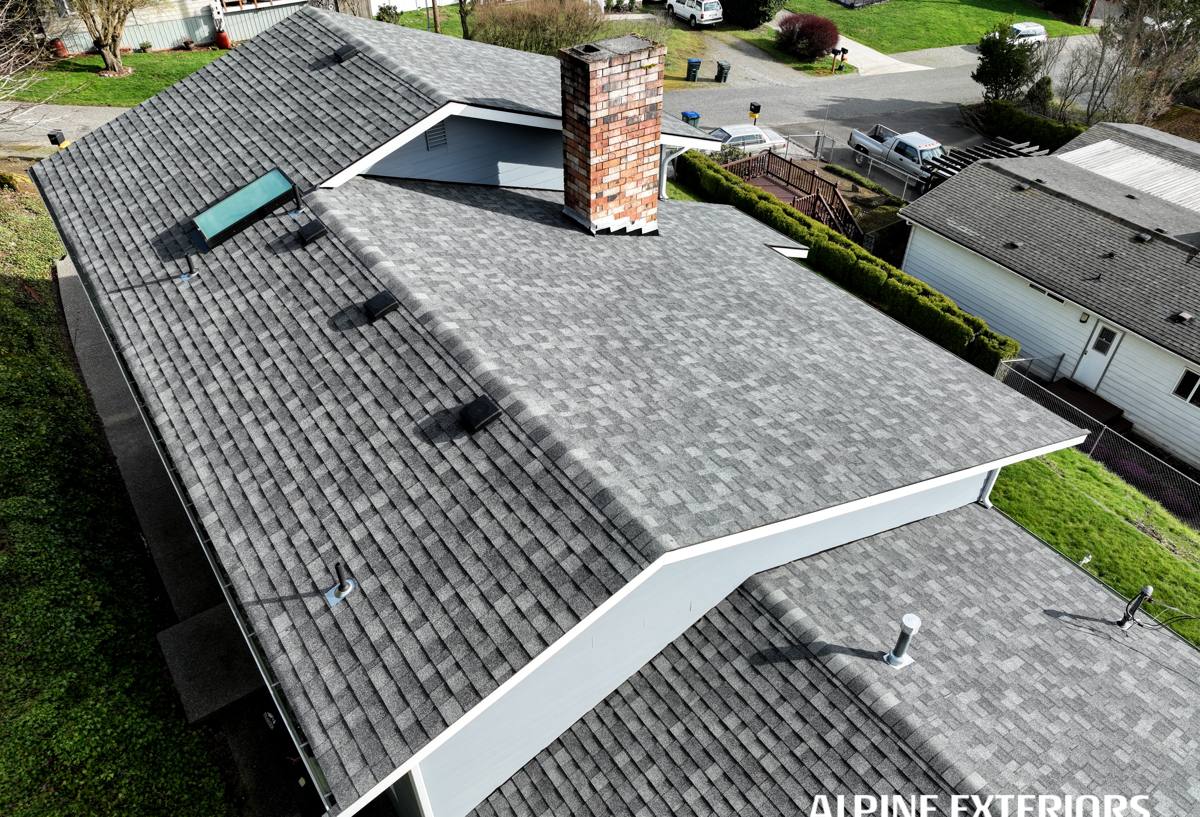
How Local Weather Actually Damages a Roof
Wind-Driven Rain
Straight-down rain is rarely the problem. It's rain pushed sideways by gusts that gets up under shingle tabs, through nail heads that have backed out slightly, and into any flashing joint that isn't sealed tight. Over enough storm cycles, this driven rain works past materials that were never designed to shed water moving horizontally instead of down.
Valley Humidity and a Long Moss Season
Being set back from the immediate coast, Sumas holds onto moisture longer after a storm passes. Combined with tree cover common on many valley lots, roofs here can stay damp for days at a time. That's exactly the condition moss needs to establish. Once moss gets a foothold on a roof, it lifts shingle edges, holds water against the surface, and turns minor storm damage into ongoing rot underneath — which is why moss season in this part of the county effectively runs from fall through spring, not just a few weeks.
Salt Air, in a Different Form
Sumas isn't waterfront the way Blaine is, but storms that carry marine air inland still bring trace salt and moisture that settles on metal flashing, fasteners, and gutter systems throughout the county. It's a slower form of corrosion than what we see on coastal roofs, but it's a real factor over the life of a roof, especially on older metal components that were installed before galvanized or coated fasteners were standard practice.
What Actually Counts as Storm Damage
Homeowners often assume storm damage means missing shingles or a visible hole. In practice, most of the storm damage we find in Sumas is less dramatic and easier to miss:
- Shingles that are cracked, curled, or creased but still in place
- Granule loss that's stripped a shingle's UV and weather protection without removing the shingle itself
- Flashing around chimneys, skylights, and roof-to-wall junctions that's been bent, lifted, or pulled loose by wind
- Nail pops where fasteners have backed out just enough to break the seal
- Soft or spongy decking discovered only once a shingle is lifted for inspection
- Gutter and downspout damage that redirects water back under the roof edge instead of away from the house
- Moss colonies that took hold after a storm left a section of roof wet for an extended stretch
None of these show up clearly from the ground. That's part of why storm damage in this area so often gets discovered months later, as a stain on a ceiling or a soft spot near a fascia board, instead of right after the storm that caused it.
What a Correct Repair Actually Involves
Inspection Before Anything Gets Fixed
A repair is only as good as the inspection behind it. We walk the roof, not just look at it from the ground or a photo, because wind and moss damage is often only visible up close. We check the decking underneath any suspect area, not just the shingle surface, since a shingle can look fine while the wood beneath it has already started to soften.
Matching Materials, Not Just Covering the Hole
A storm repair needs to match the existing roof's material, age, and exposure — a mismatched patch stands out, ages differently, and can create a new water path at the seam. On an older roof, that sometimes means being honest with a homeowner that a small area is beyond a clean patch and needs a slightly larger section replaced to tie in correctly.
Flashing and Underlayment: the Parts You Don't See
Most storm-repair failures we get called back to inspect trace to flashing or underlayment that wasn't addressed the first time — someone replaced the visible shingles and left the damaged flashing or torn underlayment underneath untouched. In this valley climate, that's the difference between a repair that lasts and one that leaks again in the next heavy storm.
Our Repair Process, Step by Step
- On-site assessment. We inspect the full roof, not just the area you're worried about, since storm damage rarely stays confined to one spot.
- Documentation. We record what we find with clear notes and photos, useful whether you're paying out of pocket or filing an insurance claim.
- Written scope and estimate. You get a plain-English breakdown of what needs to be repaired, what materials will be used, and why — no vague line items.
- Repair. We replace damaged decking where needed, correct flashing, install matching materials, and re-seal all penetrations before closing the roof back up.
- Final check. We walk the completed repair and confirm water is shedding correctly at every seam and transition before we consider the job done.
Repair vs. Replacement: Cost Factors to Weigh
Not every storm-damaged roof needs full replacement, but not every roof should be patched either. These are the factors that actually decide which makes sense:
| Factor | Favors Repair | Favors Replacement |
|---|---|---|
| Age of roof | Under half of expected lifespan | Nearing or past expected lifespan |
| Extent of damage | Isolated to one or two areas | Spread across multiple slopes |
| Decking condition | Solid, dry wood under damaged shingles | Soft, stained, or rotted decking found |
| Moss history | First noticeable growth, caught early | Repeated moss cycles with underlying rot |
| Material availability | Close match to existing shingles available | Original material discontinued or badly faded |
General repair costs for a typical storm-related patch fall in a modest range for most homes, while a section replacement or full re-roof runs considerably higher — we'll walk you through exactly where your roof falls on that spectrum during the inspection instead of guessing over the phone.
Working With Insurance on a Storm Claim
Many storm repairs in this area are filed as insurance claims, and having the right documentation from the start makes that process go smoother. Before you call your adjuster, it helps to have:
- Clear photos or notes of the damage, ideally dated close to the storm event
- A written inspection report describing the specific damage found, not just a general description
- An itemized repair estimate that separates material and labor
- Any record of prior roof maintenance, which can support that the damage is storm-related rather than age or neglect
- A timeline noting the storm date if it's identifiable, since adjusters often ask for it
We provide documentation homeowners can hand directly to their insurance company, and we're upfront if we think damage is more likely wear-related than storm-related — that honesty protects you if the claim gets a second look.
Why a Crew That Already Works Sumas Matters
Roofing crews that only pass through the area occasionally don't have a feel for how this specific valley handles a storm — where moss tends to establish first, which roof orientations take the worst of the wind, or how long a roof stays wet after a heavy system moves through. A crew based nearby and already doing regular work in Sumas has seen the same storm patterns hit multiple roofs across multiple seasons, which means less guessing and fewer surprises once a repair is underway. It also means someone is available to come back and stand behind the work without a long drive being the reason a callback gets delayed.
Maintenance That Keeps the Next Storm From Winning
Storm damage repair holds up longest on a roof that's otherwise maintained. Between storms, a few habits go a long way in this climate:
- Clear moss and debris from valleys and gutters before fall storm season builds up
- Trim back branches that keep sections of roof shaded and slow to dry
- Check flashing around chimneys and skylights annually, since these are the first points to fail
- Have a professional inspection after any severe wind event, even if no damage is visible from the ground
- Address small issues — a lifted shingle, a loose gutter bracket — before the next storm turns them into bigger ones
If a recent storm has you wondering about the condition of your roof, we're happy to take a look. Fill out the form below for a free, no-pressure estimate from a crew that already knows what Sumas storms do to a roof.