 Blaine Roofing
 Grandview sits close enough to the water that its roofs take a different kind of beating than roofs ten miles inland. Wind off the Strait of Georgia drives rain sideways into eaves and dormers, salt air accelerates corrosion on fasteners and flashing, and the long wet season keeps moss and moisture working at every seam for months at a time. When a storm passes through, the damage it leaves behind on a Grandview roof often isn't the dramatic kind you'd spot from the street — it's a lifted shingle tab, a bent flashing edge, or a soaked patch of underlayment that won't show itself as a ceiling stain until weeks later.
This page covers what storm damage roof repair actually involves for homes in the Grandview area of Blaine, why the local climate changes how that repair should be done, and what to expect if you call us after a wind or rain event.
Why Storm Damage Looks Different in Grandview
Grandview's exposure to open water and prevailing weather off the Strait means roofs here see a combination of stresses that inland Whatcom County homes don't deal with as often:
- Wind-driven rain gets pushed under shingle tabs and around flashing laps that would stay dry in a straight-down rain, especially on roof faces oriented toward the water.
- Salt-laden air speeds up corrosion on exposed nail heads, metal flashing, and older fastener systems — a slow process, but one that turns small storm damage into bigger leaks faster than it would elsewhere.
- Sustained gusts during winter storms can work at the edges of shingles and ridge caps, loosening adhesive seals that were never designed to be flexed over and over.
- Standing moisture after a storm has more time to do damage here, because our wet season is long and a roof that gets soaked in November may not fully dry out until spring.
None of this means Grandview roofs are poorly built — it means they need repairs that account for salt air and driving rain specifically, not a generic patch job.
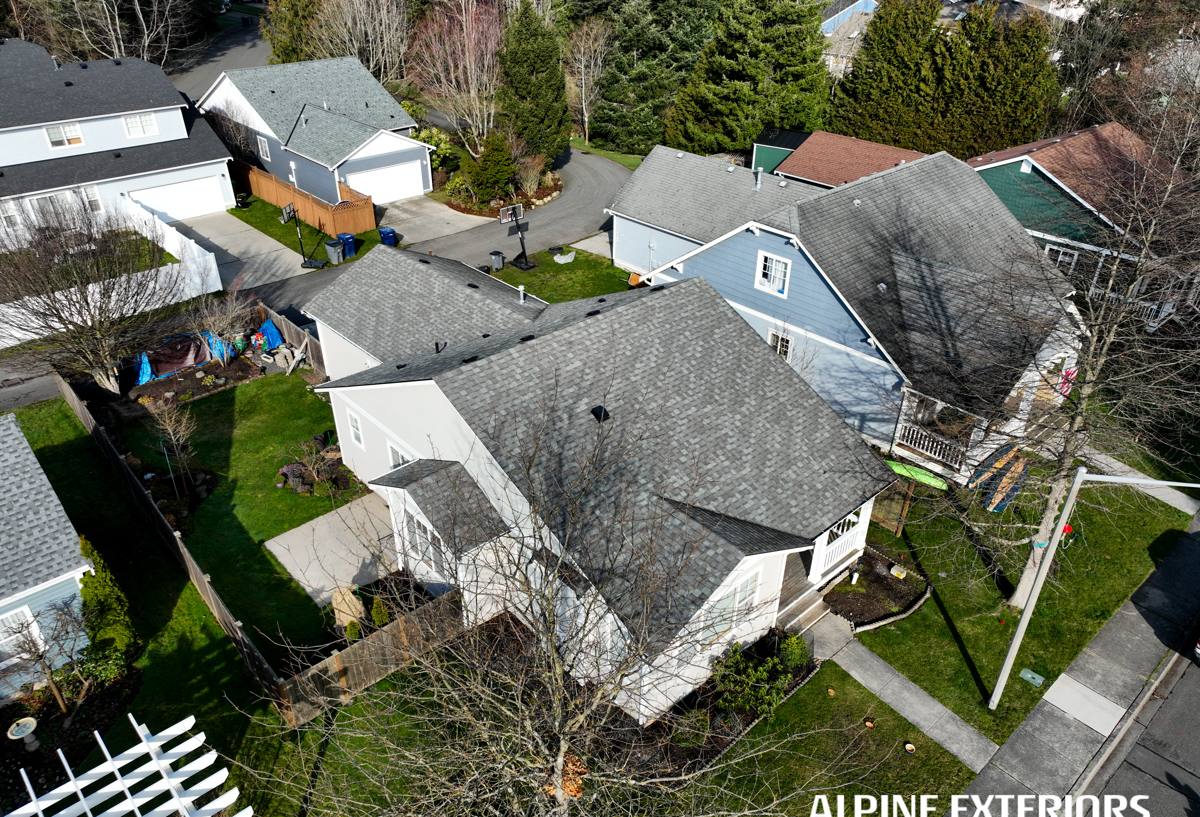
What Counts as Storm Damage
Storm damage isn't always a hole in the roof. On the roofs we look at in this part of Blaine, the most common findings after a wind or rain event are:
Visible, Obvious Damage
- Shingles torn loose, cracked, or missing entirely
- Flashing bent, lifted, or pulled away from a chimney, wall, or vent
- Gutters torn off their hangers or pulled away from the fascia
- Visible punctures or debris impact from falling branches
Damage That Hides
- Shingle tabs with broken or weakened adhesive seals that look fine from the ground but lift in the next windstorm
- Nail heads backed out or corroding under a shingle edge, letting water track sideways
- Underlayment that got wet through a small gap and is holding moisture against the roof deck
- Ridge cap shingles cracked at the fold from repeated flexing
The hidden category is the reason we recommend a roof check after any significant wind event, even if nothing looks wrong from the driveway. In a climate with as much year-round moisture as Blaine's, a small unseen opening has a long window of time to cause real damage before anyone notices a stain inside.
What a Correct Storm Repair Involves
A storm repair that holds up in Grandview's climate isn't just about replacing what's visibly broken. It has to address the underlying reason the damage happened and make sure the repair is sealed against the same conditions that caused it.
1. Full Inspection, Not a Spot Check
We look at the whole roof plane, not just the area someone pointed to. Wind damage rarely stays confined to one spot — if one section of shingles lost their seal, nearby areas exposed to the same gust direction are often close behind.
2. Matching the Repair to the Existing Roof
Shingle color, profile, and age all matter. A patch that doesn't match won't just look wrong — a poor match in shingle type can also create a slightly different water-shedding pattern at the seam, which is exactly where a future leak starts.
3. Flashing and Fastener Attention
Because salt air accelerates fastener corrosion here, we check flashing and exposed nail heads in the repair area even if they weren't the primary cause of the storm damage. Replacing a shingle over compromised flashing just delays the next leak.
4. Underlayment and Deck Check
If water got past the shingle layer, we check whether the underlayment and roof deck underneath absorbed moisture. Wet decking that's covered back over without drying or addressing it can lead to soft spots and mold growth that costs far more to fix later.
5. Re-sealing to Wind-Driven Rain Standards
Because Grandview roofs face more sideways rain than a typical inland roof, we pay particular attention to how the repaired shingles and flashing are sealed against wind-driven water, not just standard vertical runoff.
Our Process for Grandview Storm Calls
| Step | What Happens |
|---|---|
| 1. Contact | You describe what you noticed — a leak, missing shingles, storm event — and we schedule a look. |
| 2. Inspection | We walk the roof (or use a lift/drone where needed) and document the full extent of damage, not just the obvious spot. |
| 3. Assessment | We explain what we found in plain terms: what's damaged, what's at risk, and what repair options make sense. |
| 4. Written Estimate | You get a clear scope of work and cost before anything is repaired — no surprise add-ons mid-job. |
| 5. Repair | We complete the work with materials matched to your existing roof and sealed for local wind and rain exposure. |
| 6. Follow-Up | We confirm the repair is holding and flag anything else worth watching, especially heading into the wet season. |
Insurance Claims and Documentation
Many storm repairs in this area go through homeowners insurance. We document damage clearly with photos and a written scope so you have what you need for a claim, and we can walk you through what's typically covered versus what falls under normal wear and moss-related maintenance, which insurers usually treat differently than storm damage. We don't handle the claim itself — that's between you and your insurer — but we make sure the roof-side documentation is solid.
Cost Factors for Storm Repair
Every roof and every storm event is different, so we don't quote a number without seeing the roof. That said, the factors that most commonly move the price up or down are:
| Factor | Why It Matters |
|---|---|
| Extent of shingle damage | A handful of tabs versus a full slope changes both material and labor time. |
| Underlying deck condition | Wet or soft decking under the damaged area adds repair scope beyond the shingles themselves. |
| Flashing involvement | Chimney, wall, or valley flashing repairs take more time than open-field shingle replacement. |
| Roof pitch and access | Steeper roofs or limited access points affect labor and equipment needs. |
| Age and type of existing roofing | Older roofs may need broader work to blend a repair without mismatched wear patterns. |
Why Moss Season Complicates Storm Damage Here
Blaine's long moss season doesn't cause storm damage directly, but it makes existing damage worse and harder to catch. Moss holds moisture against shingles and flashing far longer than bare roofing would, so a storm-damaged area that would dry out in a drier climate instead stays wet for weeks. That extended moisture exposure is what turns a simple shingle repair into a decking or underlayment repair if it sits too long. If your roof already has moss growth and you get storm damage in the same season, treating it as a "wait until spring" problem usually costs more than addressing it promptly.
Signs You Should Have Your Grandview Roof Checked After a Storm
- Missing or visibly lifted shingles anywhere on the roof
- Granules collecting in gutters or downspouts after a windstorm
- New water stains on ceilings or upper walls, even faint ones
- Flashing that looks bent, gapped, or pulled away around chimneys, vents, or wall intersections
- Gutters or downspouts damaged or detached
- Debris impact marks from tree limbs or wind-carried material
- A musty smell in an attic or upper closet that wasn't there before
If you notice any of these after a storm, it's worth having someone look sooner rather than later — in this climate, the gap between "small repair" and "bigger project" is often just a few more weeks of standing moisture.
Why Local Experience Matters for This Repair
A roofer who works Grandview and the surrounding Blaine area regularly knows which roof orientations catch the worst of the wind off the water, how fast salt air ages exposed metal and fasteners in this specific area, and what a moss-related weak spot looks like versus genuine storm impact. That local pattern recognition is what keeps a repair from becoming a repeat visit next winter. We're a Whatcom County crew that works this coastline's roofs through every storm season, and we bring that experience to every repair, not just a generic patch-and-go approach.
If your Grandview home has storm damage — or you just want a roof checked after a rough weather stretch — we're happy to take a look. Use the form below to request a free, no-pressure estimate, and we'll walk you through exactly what we find.