 Blaine Roofing
 Why Sumas-Area Roofs Wear Differently Than Roofs Inland
Homes in the Sumas area, close to Blaine and the Canadian border in Whatcom County, deal with a specific combination of weather that inland Washington roofs simply don't see as often. You've got salt-tinged air moving in off the water, long stretches of driving rain that don't let up for days, and a moss season that can run from fall through spring. None of these alone is unusual for the Pacific Northwest. Together, and repeated year after year, they create wear patterns that a generic roof inspection can miss if the person doing the inspection isn't used to seeing them.
Salt air accelerates corrosion on exposed metal — flashing, fasteners, gutter hardware, and vent caps age faster here than they would forty miles inland. Driving rain doesn't just fall straight down; wind-driven rain gets pushed sideways and upward under laps and around penetrations that would stay dry in a calmer climate. And moss doesn't just sit on the surface looking bad — it holds moisture against the shingle or shake surface for months at a time, which is what actually causes the granule loss, wood rot, and lifted edges that turn into leaks.
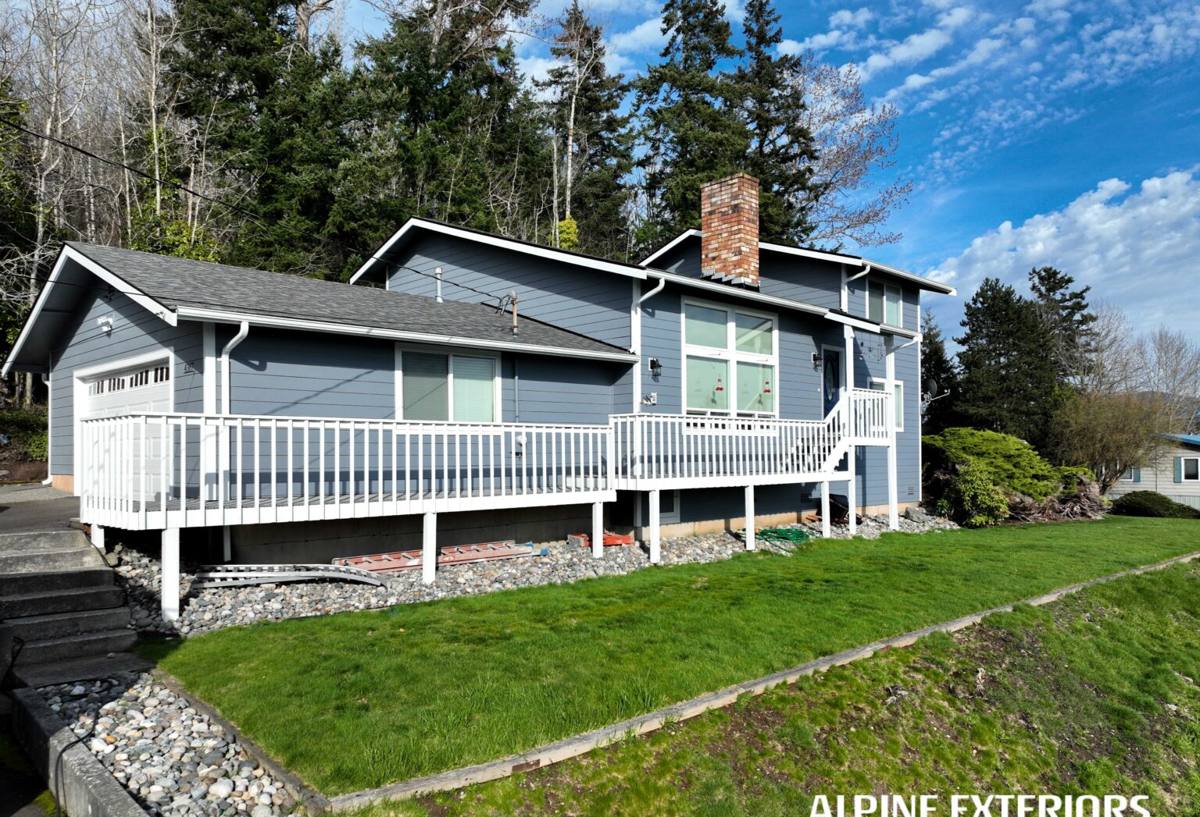
Signs a Sumas-Area Roof Needs Repair Now
Most roof repairs we get called out for started as something small that got ignored through one wet season too many. Catching these early is the difference between a repair bill and a replacement bill.
- Moss buildup at the ridge, valleys, or north-facing slopes that's thick enough to hold a footprint
- Granules collecting in gutters or at downspout outlets
- Dark streaking or soft spots on the ceiling below roof valleys or chimneys
- Curling, cupping, or lifted shingle edges, especially on slopes that face prevailing wind
- Rust staining below metal flashing or exposed fasteners
- Daylight visible through the attic roof deck at any point
- Gutters pulling away from the fascia or overflowing during heavy rain
- Missing or cracked pipe boot collars around plumbing vents
If you're seeing two or more of these, it's worth having someone look at the whole roof rather than patching the one spot you can see from the ground. Water rarely enters where it shows up inside — it travels along the deck or rafters first.
Why Moss Is More Than a Cosmetic Problem Here
Moss thrives in exactly the conditions Sumas gets a lot of: shade, moisture, and mild temperatures that never dry things out fully. Once moss establishes itself on a roof, its root structure works into the shingle surface and lifts tabs slightly at the edges. That small lift is enough for wind-driven rain to work underneath during a storm. Left long enough, moss also holds enough standing moisture to rot the wood decking underneath, which is a repair that costs far more than clearing moss ever would have.
What a Correct Roof Repair Actually Involves
A repair that actually solves the problem, rather than just covering it, follows a specific sequence. Skipping steps is how a "repaired" roof leaks again the next winter.
- Full-roof inspection, not just the reported spot. Leaks travel, and the entry point is often several feet from where water shows up inside.
- Deck check. Any area that's been wet for a while gets checked for soft or rotted plywood before new material goes down over it.
- Removal of the damaged section back to solid, dry material — not just a patch laid over the problem.
- Flashing and underlayment replacement at valleys, chimneys, and penetrations, since these are the most common actual failure points, not the field shingles themselves.
- Matching materials as closely as possible so the repair doesn't stand out or create a new weak seam.
- Moss and debris clearing across the rest of the roof so the repair isn't surrounded by the same conditions that caused the original damage.
- Water test or close review of the repaired area before calling the job done.
Common Repair Types We Handle Around Sumas
| Issue | Typical Cause Here | What the Fix Involves |
|---|---|---|
| Valley leaks | Driving rain forced under aged valley flashing | Strip valley, replace flashing and underlayment, reset shingles |
| Chimney or vent leaks | Flashing seams opened by wind and rain cycling | Remove and reflash penetration, seal transitions properly |
| Soft or rotted decking | Long-term moisture from moss or a slow leak | Cut out and replace affected plywood before re-covering |
| Rusted fasteners or flashing | Salt air corrosion near the coast | Replace with corrosion-resistant fasteners and flashing |
| Lifted or missing shingles | Wind combined with moss-lifted edges | Replace affected shingles, secure adjacent courses |
| Gutter and fascia damage | Overflow from moss-clogged gutters during heavy rain | Clear, repair or replace damaged fascia, reseat gutters |
Our Process, Start to Finish
We keep the process straightforward because homeowners dealing with an active leak don't need extra steps between them and a dry roof.
1. Estimate and Inspection
We come out, look at the roof in person — ground level and on the roof when conditions allow — and walk you through what we find. You get a written scope and price before any work starts.
2. Scheduling Around the Weather
Repairs need a reasonably dry window to be done right, so we plan around the forecast rather than rushing a patch in the rain that won't hold. If there's an active leak, we can typically get a temporary cover in place faster than a full repair to stop interior damage in the meantime.
3. The Repair Itself
Most single-area repairs (a valley, a vent boot, a section of shingles) are a one-day job. Jobs involving deck replacement or multiple problem areas take longer, and we'll tell you that upfront, not after we've started.
4. Cleanup and Walkthrough
We clear debris, check gutters and downspouts near the work area, and walk the repair with you before we consider the job finished.
Repair vs. Replacement: What Actually Drives the Decision
Not every damaged roof needs to come off. The honest answer depends on a few factors, and we'll tell you straight if a repair is the right call or if you're better off putting that money toward a replacement instead.
| Factor | Favors Repair | Favors Replacement |
|---|---|---|
| Age of roofing material | Under roughly 15 years, in otherwise good condition | Nearing or past manufacturer-rated lifespan |
| Extent of damage | Isolated to one or two areas | Widespread across multiple slopes |
| Decking condition | Solid, dry decking under the damage | Rot found in multiple locations |
| Moss history | First significant moss issue, caught early | Repeated moss damage over several seasons |
| Budget timeline | Needs a fix now, replacement planned later | Repair costs are approaching a meaningful share of replacement cost |
As a general range, most localized repairs run a few hundred to a couple thousand dollars depending on scope, while anything involving significant deck replacement climbs from there. We'll give you real numbers for your roof rather than a ballpark that doesn't mean anything.
Why a Crew That Already Works Sumas Matters
A repair crew that's worked roofs in and around Sumas and Blaine knows which slopes tend to hold moss the longest, which flashing details fail first under wind-driven rain off the water, and how salt air affects fastener and metal choices over time. That's not something you get from a general handyman crew that mostly works dry, inland jobs and treats every roof the same way. It shows up in small decisions — which fasteners to use, how much flashing overlap to leave, whether a section needs moss treatment now or can wait — that add up to a repair that actually lasts through the next wet season instead of needing a second visit.
It also means faster, more accurate estimates. We're not guessing at how Whatcom County weather affects a roof; we're working from what we've actually seen on roofs nearby.
Keeping a Repaired Roof From Needing Repair Again
A repair holds up better long-term when it's paired with basic maintenance, especially given how much moss season and coastal rain contribute to damage here.
- Clear moss buildup before it thickens, ideally before the wettest months set in
- Keep gutters and downspouts clear so water isn't backing up under the roof edge
- Trim back overhanging branches that keep shaded areas of the roof damp longer
- Have the roof looked at after any major windstorm, even if nothing looks obviously wrong from the ground
- Address small leaks immediately rather than waiting for a bigger, more obvious problem
Get a Straight Answer on Your Roof
If you're dealing with a leak, moss buildup, or storm damage on a roof in the Sumas area, we'll come take an honest look and tell you what it actually needs — a targeted repair, a bigger fix, or just some maintenance to head off a problem before it starts. Reach out for a free, no-pressure estimate using the form below.