 Blaine Roofing
 Siding Replacement for Nooksack: A Climate That Doesn't Forgive Shortcuts
Nooksack sits inland in the flatter farm country of northern Whatcom County, along the Nooksack River valley not far from Sumas and Everson. It isn't a waterfront town the way Blaine is, but it sits inside the same marine-influenced weather system that shapes exterior work across this whole corner of Washington. Salt-tinged air off the Sound moves inland with the prevailing weather, storms push rain sideways rather than straight down, and mild temperatures give moss and mildew a long season to work on anything that stays shaded or damp. Siding on a Nooksack home takes that same steady pressure a Blaine home does, just delivered by a slightly different route.
Siding replacement is a bigger decision than most homeowners realize going in. It's not just swapping old panels for new ones — it's an opportunity to fix whatever's been happening behind the old siding, correct any past installation shortcuts, and put a wall assembly in place that's actually built for this valley's weather rather than a generic install that happens to be located here. This page covers what that looks like specifically for a siding replacement project in the Nooksack area.
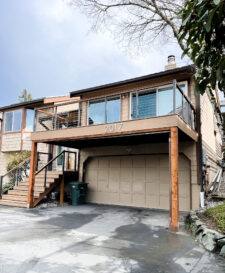
What This Corner of Whatcom County Does to a Wall
Marine Air Reaching the Valley
Nooksack doesn't take direct salt spray the way a home right on Semiahmoo Bay or Drayton Harbor does, but the marine air moving in off the Sound reaches well up the Nooksack River valley, carrying enough moisture and salt content to accelerate corrosion on exposed fasteners and wear down lower-grade paint and coatings over time. It's a slower, steadier version of the same exposure coastal Blaine deals with more directly — easy to underestimate because the effects show up gradually rather than all at once.
Wind-Driven Rain
Storm systems moving through this part of the county rarely drop rain straight down. Wind pushes it sideways into wall assemblies, trim joints, and anywhere flashing is doing less than it should. That sideways load is a harder test of an installation than of the siding material itself — a wall with sloppy flashing and open joints will let water in eventually, while the same siding installed with correct flashing and sealed transitions generally won't. Most of the moisture damage we find on tear-offs in this area traces back to an installation detail, not the siding product that was used.
A Long Moss Season
Mild, wet conditions give moss and mildew a growing season that can run most of the year on shaded or north-facing walls. Nooksack's mix of tree cover and farmland means plenty of homes have at least one wall that rarely sees direct sun for long stretches, and that's usually the first place moss and dark staining show up. Any siding material with surface porosity gives moss something to grip; how a material and its finish handle that matters as much as how it handles rain.
Signs a Nooksack Home Needs Siding Replaced
Not every siding problem calls for full replacement — some issues are legitimately repairable. But a handful of signs usually mean the siding has reached the point where patching is just delaying the inevitable:
- Soft, spongy, or crumbling siding, especially low on the wall or around window and door trim
- Persistent moss or dark staining that returns quickly after cleaning, on more than an isolated spot
- Visible warping, cupping, or bowing across panel sections
- Cracked or delaminating panels, particularly on older wood-based or engineered wood products
- Paint that's peeling or bubbling in patterns that follow moisture rather than sun exposure
- Rising energy bills alongside drafts near exterior walls, suggesting the wall assembly behind the siding has failed
- Visible gaps, rot, or insect activity at trim, corners, or butt joints
One or two of these on their own might mean a repair. Several together, especially paired with siding that's approaching or past its expected service life, usually means it's time to talk about full replacement rather than another round of patching.
What a Correct Siding Replacement Actually Involves
Tear-Off and Substrate Check
Old siding has to come off before anyone can see what's really going on underneath, and that's often where a replacement project changes scope. Wall sheathing that's been absorbing moisture for years can be soft, delaminated, or already growing mold, and none of that shows from the outside. A proper replacement includes inspecting the sheathing and framing once the old siding is off, and repairing or replacing anything compromised before new siding goes up — skipping that step just seals existing damage behind a new surface.
Moisture Barrier and Rain Screen
A correctly lapped weather-resistant barrier goes over the sheathing before siding installation, directing any moisture that gets past the outer surface downward and out rather than letting it sit against the wall. In a climate that sees this much wind-driven rain, a rain screen gap — a small drainage cavity behind the siding — gives that moisture somewhere to drain and evaporate instead of trapping it against the sheathing. It's a detail that doesn't show once the job is done, which is exactly why it's worth confirming before, not after.
Fastening and Flashing
Fastener type, spacing, and placement all follow the manufacturer's spec for a reason, and shortcuts here are one of the more common causes of early siding failure on the tear-offs we see. Every seam, corner, and penetration — windows, doors, vents, hose bibs — needs flashing that actually sheds water downward rather than just covering the gap. Butt joints and trim transitions need to be sealed correctly, since those are the first places wind-driven moisture finds its way behind the siding on a poorly executed job.
Why We Install Only James Hardie Fiber Cement Siding
We install James Hardie fiber cement siding exclusively. We don't install LP SmartSide, vinyl, Cemplank, Allura, primed spruce, or cedar, and that's a professional standard rather than a sales position. Each of those products has legitimate strengths and homeowners who are satisfied with them — but in a valley that gets this much sustained moisture and marine-influenced air, a handful of things about Hardie made it the one system we're willing to fully stand behind:
- Non-combustible core: fiber cement doesn't feed a fire the way wood-based siding products can.
- Factory-applied ColorPlus finish: baked on under controlled conditions rather than field-applied, so it resists fading and moisture better over time than site-painted alternatives.
- Climate-engineered HZ product lines: formulated specifically for regions with sustained moisture exposure and freeze-thaw cycling, which describes a Whatcom County winter accurately.
- Dimensional stability: fiber cement doesn't swell, cup, or warp the way some engineered wood and wood-composite products can after repeated wet-weather cycles.
- Strong transferable warranty: backed by the manufacturer, provided the installation follows their published spec — which is part of why we won't cut corners on the installation details above.
None of this means the alternatives are worthless products. It means that after years of tear-offs and service calls in high-moisture towns like this one, we made a call to install one system correctly rather than offer a lower-cost option that quietly shifts maintenance risk onto the homeowner a few years down the road.
Cost Factors for a Nooksack Siding Replacement
| Factor | Why It Matters | Regional Consideration |
|---|---|---|
| Home size and wall complexity | More square footage and more corners, dormers, and trim details mean more labor and material | Older farmhouses and additions in this area often have irregular wall lines that add cutting and trim work |
| Tear-off vs. overlay | Full tear-off costs more upfront but is the only way to inspect and repair the sheathing underneath | Given the moisture exposure here, we generally recommend tear-off over overlay on full replacements |
| Substrate repair | Rotted or delaminated sheathing found during tear-off adds cost but has to be addressed | More likely on older homes or any wall that's shown moss, staining, or softness for years |
| Trim and detail work | Window and door trim, corner boards, and fascia detailing add labor time | Farmhouse and traditional trim styles common in this area add finish-carpentry time |
| Siding profile and color | Lap width, shake-style panels, and ColorPlus color selection affect material cost | Darker ColorPlus colors and premium profiles cost more but hold their finish longer against this climate |
These are general cost drivers, not a quote. Two homes of similar size can need very different scopes once the old siding comes off and the sheathing condition becomes clear, which is why we walk every property in person before putting a real number on the work.
How Our Process Works
We start with a site visit to look at the existing siding's condition, check for signs of moisture behind it where visible, and get a sense of the home's sun exposure, tree cover, and wall orientation — all of which affect how the new siding will need to perform. From there we walk through Hardie's profile and ColorPlus color options against the homeowner's budget and the style of the house.
Once the project is scheduled, tear-off comes first, followed by a substrate inspection and any sheathing repair needed before anything new goes up. Installation follows Hardie's spec on fastening, flashing, and rain screen detailing, not a shortcut version of it. We finish with a walkthrough covering what the new siding actually needs going forward — which, done right, is minimal, but not nothing.
Timing a Siding Replacement Around the Region's Wet Season
Whatcom County's wettest, windiest stretch generally runs from late fall through winter, and that's the harder window for siding installation across this whole area, Nooksack included — fiber cement and moisture barriers both perform better when they can be installed and allowed to set up under drier conditions. Spring and summer are typically the most reliable months for scheduling a full replacement. That said, siding that's already letting moisture into the wall assembly doesn't benefit from waiting for the ideal season — active damage is worth addressing on its own timeline.
Why It Matters That We Already Work This Area
A crew that mostly works closer to the water can still install siding competently, but a Nooksack job has its own variables — inland valley moisture patterns, farm-country wall styles and older homes with their own quirks, and marine air that reaches this far up the valley in a way that's easy to underestimate if you're not used to seeing it. Working this part of Whatcom County regularly means we're not guessing at those conditions on your project. We've seen which fastening and flashing details actually matter on homes out this way, and which corners get cut on jobs that come back to us as service calls a few years later.
That familiarity shows up in smaller judgment calls too — recognizing which wall on a given home is going to stay wet longest, or being straightforward about what a Nooksack home's siding realistically needs versus what's just an upsell.
Get a Straight Answer About Your Siding
Whether your current siding is showing clear signs of failure or you just want an honest read on its condition, we're glad to walk the property with you and lay out the options plainly. Reach out below for a free, no-pressure estimate.