 Blaine Roofing
 Why California Creek Roofs Wear on Their Own Timeline
Ask a roofer who works the whole county and they'll tell you: a roof in California Creek doesn't age the same way a roof twenty miles inland does. This pocket of Whatcom County sits close enough to Drayton Harbor and Semiahmoo Bay to catch salt-laden air off the water, and it's shaded by enough fir and cedar cover that moisture lingers longer than it should on north-facing slopes. Add the region's habit of long, soaking rain events rather than short thunderstorms, and you get a roofing environment that's genuinely tougher on materials and fasteners than a standard manufacturer's warranty was written for.
None of that means a California Creek roof is doomed to fail early. It means the replacement has to account for local conditions from the tear-off up, not just swap old shingles for new ones and call it done. This page covers what that actually looks like.
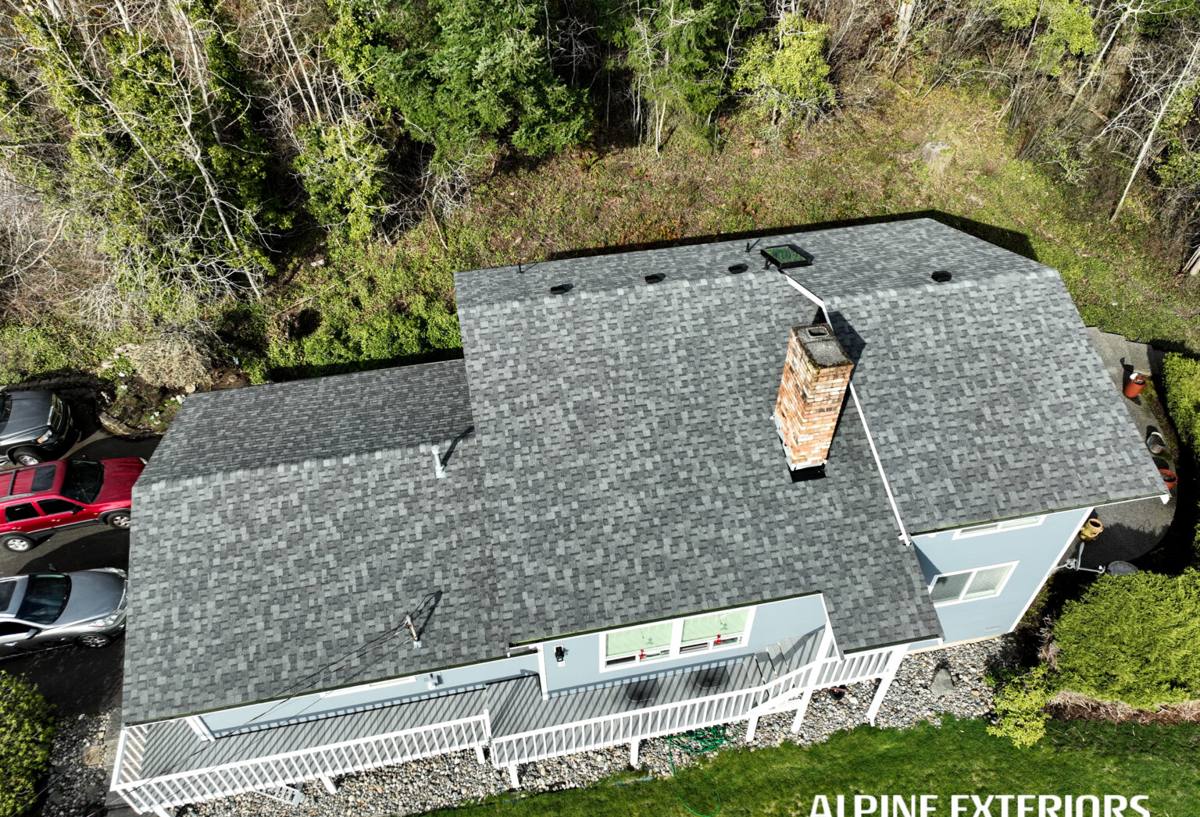
The Three Forces at Work: Salt Air, Driving Rain, and Moss
Salt Air and Metal Fatigue
Airborne salt from Boundary Bay and Semiahmoo doesn't need to be strong to do damage — it just needs time. Over years, it accelerates corrosion on exposed fasteners, flashing, and any metal roofing components that aren't rated for coastal exposure. This is one of the most overlooked failure points on older roofs in this area: the shingles can still look serviceable while the nails, drip edge, or valley flashing underneath them are quietly corroding.
Wind-Driven Rain and Flashing
Whatcom County's weather doesn't just fall straight down. Storms coming off the Strait of Georgia and the Salish Sea regularly push rain sideways, which means water gets tested against every seam, valley, and penetration on a roof — not just the open field of shingles. A roof that would perform fine in a calmer climate can leak in California Creek simply because a flashing detail wasn't built for wind-driven rain in the first place.
Moss, Shade, and Moisture Retention
Between the tree cover common on lots in and around California Creek and Western Washington's long wet season, moss isn't an occasional nuisance here — it's close to a year-round condition on shaded roof sections. Moss holds moisture against the roofing material, works its way under shingle tabs, and can lift edges enough to let wind-driven rain in behind them. A roof replacement in this area has to plan for moss from day one, not treat it as an afterthought once it shows up.
Signs a Roof Has Reached Replacement Age
Not every roofing problem calls for a full replacement, and a straight shooter will tell you when a repair is the right call. But there are signs that point past patching, especially on homes exposed to the conditions above:
- Granule loss heavy enough to expose the shingle mat, especially on the south and west-facing slopes that take the brunt of sun and driving rain
- Moss that has spread across whole sections rather than isolated patches, or moss that returns within a season of cleaning
- Curling, cupping, or cracked shingles clustered in one area rather than scattered individually
- Rusted or corroded flashing, valleys, or exposed fasteners
- Soft spots in the decking found during an inspection, or daylight visible through the attic sheathing
- Multiple past repairs in different areas — a sign the roof is failing broadly, not just at one weak point
- A roof at or beyond the expected service life of its material, especially if it's never had ventilation upgrades
If your roof shows one or two of these, a repair may buy real time. If it shows several at once, replacement is usually the more honest recommendation — and the more cost-effective one over a five-to-ten-year horizon.
What a Correct Roof Replacement Actually Involves
A roof replacement is only as good as what happens under the new material. In a climate like this one, several steps matter more than they would elsewhere.
Tear-Off and Deck Inspection
We remove the old roofing down to the deck rather than layering over it. That's the only way to actually see the condition of the sheathing — rot, soft spots, or old moisture damage don't show up until the old material is off. Any damaged decking gets replaced before anything new goes down; installing new roofing over a compromised deck just guarantees a shorter lifespan for the new roof.
Underlayment and Water Barrier
Given how much wind-driven rain this area sees, underlayment choice matters more here than in drier climates. Synthetic underlayment with self-sealing ice-and-water barrier at eaves, valleys, and penetrations gives the roof a second line of defense if wind ever forces water past the primary roofing surface — which, on this coastline, it eventually will.
Flashing Details
Valleys, chimneys, skylights, and wall intersections are where most roof leaks actually start, not in the open field of shingles. We install corrosion-resistant flashing sized and detailed for wind-driven rain, not just the manufacturer's minimum spec. This is also where salt-air exposure gets addressed directly, using metal rated to hold up near coastal air rather than standard inland-grade material.
Ventilation
Proper intake and exhaust ventilation keeps the underside of the deck dry and regulates attic temperature, which does double duty here: it reduces the moisture buildup that feeds moss and rot, and it protects the shingle warranty, since most manufacturers require adequate ventilation to honor coverage. A lot of older California Creek homes are under-ventilated by today's standards, and a replacement is the right time to fix that.
Choosing Materials for a Salt-Air, High-Moss Climate
There's no single "best" roofing material for every home — the right choice depends on the roof's exposure, budget, and how much shade and moss pressure a given slope sees. Here's an honest comparison of the main options homeowners in this area consider.
| Material | Typical Lifespan | Salt-Air / Moss Considerations | Relative Cost |
|---|---|---|---|
| Architectural asphalt shingle | 25–30 years | Algae-resistant (AR) shingles help slow moss and dark streaking on shaded slopes; standard fasteners should be corrosion-resistant near the water | $ – Moderate |
| Standing seam metal | 40–50+ years | Sheds moss and moisture well due to smooth surface; must use marine- or coastal-grade metal and fasteners to resist salt corrosion | $$$ – Higher upfront |
| Synthetic/composite shingle | 30–50 years | Resists moisture absorption better than wood alternatives; good moss resistance, consistent warranty structure | $$ – Mid to higher |
| Cedar shake | 20–30 years with upkeep | Attractive but absorbs and holds moisture, which accelerates moss growth and rot risk in this climate without diligent maintenance | $$ – Mid, higher upkeep cost over time |
Our standard recommendation for most California Creek homes is a quality architectural asphalt shingle with algae-resistant granules and corrosion-resistant fasteners, or standing seam metal for homeowners planning to stay long-term and wanting to minimize moss maintenance altogether. We're generally cautious about cedar shake in heavily shaded, moss-prone spots — not because it can't be a good-looking roof, but because it demands a maintenance commitment that a lot of homeowners underestimate given how much moisture this area holds onto through the wet season.
Our Replacement Process, Start to Finish
We keep the process straightforward and communicate at each step, since a roof replacement is disruptive enough without surprises added on top.
- On-site inspection and estimate — we walk the roof, check the attic for ventilation and moisture issues, and give a written estimate with material options explained plainly
- Material selection — we walk through the tradeoffs above so the decision fits your budget and how long you plan to stay in the home
- Scheduling around weather — we plan installs around dry weather windows, which matters more here than in drier climates further inland
- Tear-off and deck repair — full removal of old material, replacement of any damaged sheathing, and disposal handled on our end
- Underlayment, flashing, and ventilation install — the parts of the job that determine whether the roof actually performs in this climate
- Final walkthrough — we review the completed roof with you and go over warranty coverage before we consider the job done
Why a Crew That Already Works California Creek Matters
Roofing crews that mostly work drier, inland areas can do fine work — but they're not always thinking about salt-air fastener corrosion or moss-driven moisture retention as a baseline concern, because it isn't one where they usually work. A crew that regularly works this specific stretch of Whatcom County already knows which slopes on a typical California Creek lot hold moss the longest, which flashing details tend to fail first under wind-driven rain, and which materials are worth the upcharge here versus which upgrades are unnecessary for this exposure. That local pattern recognition shows up in fewer callbacks and a roof that's actually built for the conditions it has to survive, not just the conditions on a generic spec sheet.
A Homeowner's Pre-Replacement Checklist
Before you get quotes, it helps to walk your own property with a few questions in mind:
- Which slopes get the least sun and hold moss longest — those may need different material or ventilation treatment
- Are there visible rust streaks below any metal flashing, valleys, or vents
- Is the attic noticeably humid, or is there visible mold/staining on the underside of the decking
- How old is the current roof, and does that align with the material's expected lifespan
- Have you had repeated leaks in the same spot, especially around chimneys, skylights, or valleys
- Does the current roof have any ridge or soffit ventilation at all
Bringing these observations to an estimate helps us give you a more accurate, useful assessment on the first visit.
If your roof is showing its age or you'd just like an honest read on how much life it has left, we're happy to take a look. Use the form below to request a free, no-pressure estimate for your California Creek property.