 Blaine Roofing
 Why Sandy Point Puts Windows Through More Than Most Homes
Sandy Point sits right up against the water, and that exposure changes what a window has to deal with day to day. Salt-laden air drifts in off the Strait and settles on everything, including window hardware, weatherstripping, and frame seams. Add in wind-driven rain that hits window faces at an angle instead of falling straight down, and you've got water finding its way into gaps that would stay dry on a more sheltered lot a few miles inland. Then comes the long stretch of damp, low-light months every Whatcom County winter brings, when moss and algae get a foothold on anything that stays wet and shaded — sills, tracks, and the bottom rails of older wood-frame windows.
None of this means windows in Sandy Point are doomed to fail early. It means the product choice and the installation details matter more here than they would in a drier, more protected part of Blaine. A window that's rated fine for general Pacific Northwest use can still underperform on a waterfront lot if it wasn't chosen or installed with that exposure in mind.
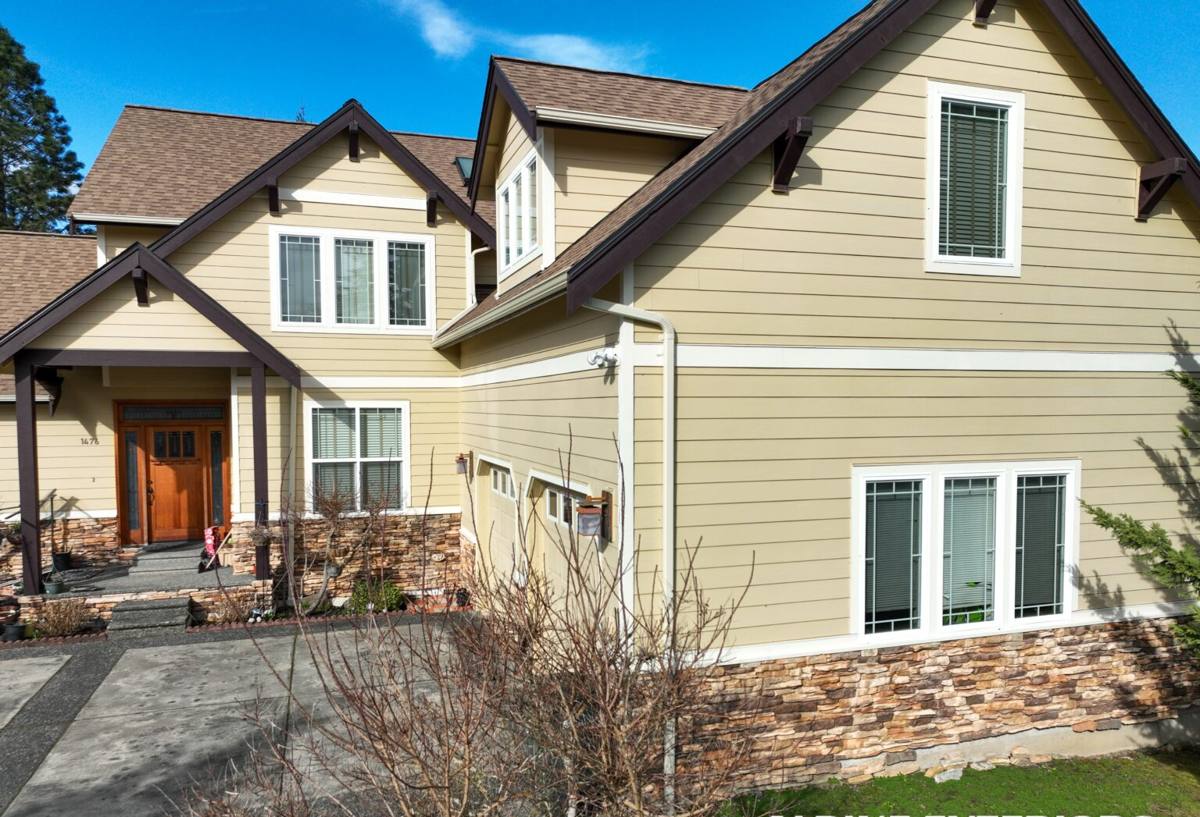
What "Energy-Efficient" Actually Means for This Climate
Energy efficiency isn't one number — it's a combination of ratings that matter differently depending on where the window sits and what direction it faces.
The ratings worth understanding
- U-factor — how well the window resists heat loss. Lower is better. This is the one that matters most in our climate, since we're heating far more months than we're cooling.
- SHGC (Solar Heat Gain Coefficient) — how much solar heat passes through the glass. Less critical here than in sunnier regions, but still worth tuning on west- and water-facing openings that catch strong afternoon glare off the water.
- Air infiltration rating — how much air leaks through the sash and frame under wind pressure. On an exposed waterfront lot with regular gusts off the water, this rating deserves real attention, not just a passing glance.
- Condensation resistance — how well the window keeps interior moisture from beading up on cold glass and frames. Homes near the water tend to run more humid, so this matters more here than in a typical inland Blaine home.
A window package built around this climate — coastal, wet, moderate temperature swings — looks different from what's optimal in, say, eastern Washington. We size and spec each opening rather than defaulting to one "energy-efficient" product across the whole house.
Frame Material: The Decision That Matters Most Near Salt Water
More than any other single choice, frame material determines how a window holds up in a salt-air environment. Here's how the common options compare for a Sandy Point property specifically.
| Material | Salt air behavior | Maintenance | Our take |
|---|---|---|---|
| Vinyl | Resists corrosion well; no metal components to pit or oxidize | Low — occasional rinse to clear salt film | Solid, budget-friendly default for most Sandy Point homes |
| Fiberglass | Excellent — dimensionally stable, doesn't expand/contract with temperature swings, no corrosion risk | Low | Best overall performer for direct waterfront exposure; higher upfront cost |
| Aluminum-clad wood | Cladding protects the wood, but any breach in the seal lets moisture reach wood underneath | Moderate — seams and joints need periodic inspection | Good where the look matters, but installation quality is non-negotiable here |
| Bare aluminum | Prone to pitting and corrosion in salt air over time; hardware often corrodes faster than the frame | Higher — hardware and finish need regular attention | We generally steer clients away from this for direct waterfront exposure — not because it's a bad product everywhere, just a poor match for this specific environment |
We're not tied to one brand or material — the right call depends on your home's exposure, your budget, and how it's built. What we won't do is sell a frame material that we know struggles in salt air just because it's cheaper up front. That's a trade-off we lay out plainly, not a decision we make for you quietly.
Glass packages
Double-pane, low-E glass with argon fill is the standard baseline for this climate and covers most Sandy Point homes well. Triple-pane adds meaningful sound dampening and a slightly better U-factor, which some owners value on rooms facing wind or road noise, but it's a heavier, pricier upgrade that isn't necessary on every opening. We'll tell you honestly where triple-pane earns its cost and where double-pane low-E is the smarter spend.
Signs Your Current Windows Are Losing the Fight
Coastal wear doesn't always show up as an obvious leak. More often it's gradual, and homeowners chalk it up to "just an old window" long before it's actually failed. Watch for:
- Condensation or fog trapped between panes — the seal has failed and the insulating gas is gone
- Visible corrosion or white powdery buildup on aluminum frames or hardware
- Moss or dark green growth collecting in the sill track or bottom corners
- Drafts you can feel with a hand near the frame edge on a windy day
- Difficulty opening, closing, or locking — swelling or warping from repeated moisture exposure
- Paint or finish that's bubbling, peeling, or chalking faster than it should
- A noticeable jump in heating costs without any other explanation
Any one of these is worth a look. Several at once usually means the windows are past the point where caulk and weatherstripping will fix the underlying problem.
What a Correct Installation Actually Involves
The window itself only does half the job — the other half is how it's installed. This is where a lot of the early failures we see on waterfront homes actually originate, not in the product.
The details that matter here specifically
- Flashing sequenced correctly so any water that does get past the exterior finish drains out and away from the framing, not into it
- Sill pans under the rough opening as a backup drainage layer — cheap insurance against wind-driven rain
- Proper shimming and squaring so the sash operates smoothly and seals evenly around the whole perimeter, not just top and bottom
- Continuous air sealing between the window frame and the rough opening, using materials rated for exterior use, not just spray foam alone
- Compatible flashing tape and sealants that will actually bond and hold in a damp, salt-exposed environment over the years, not just at install
Skip any one of these steps and you can end up with a window that's rated well on paper but leaks, drafts, or rots the surrounding framing within a few seasons — especially on a lot that takes rain sideways off the water.
Our Process
- On-site assessment — we look at each opening's exposure, current condition, and how water and wind actually hit that specific wall
- Product recommendation — frame material, glass package, and options matched to that opening and your budget, explained plainly
- Precise measurement — every window is measured for its actual opening, not estimated off a floor plan
- Removal and inspection — old windows come out carefully, and we check the framing underneath for hidden moisture damage before anything new goes in
- Installation — flashed, shimmed, sealed, and insulated to hold up against coastal wind and rain, not just to look finished
- Final check and cleanup — every window operates smoothly, seals evenly, and the site is left clean
If we find rot or water damage in the framing during removal, we'll show you before we cover it back up — that's not an upsell tactic, it's the only honest way to do this job near the water.
Living With Windows Through a Coastal Winter and Moss Season
Even a well-installed, well-chosen window needs a little upkeep in this environment. A few habits go a long way:
- Rinse frames and tracks periodically to clear salt film before it builds up on hardware
- Keep sill tracks clear of leaves and debris so water drains instead of pooling and growing moss
- Check weatherstripping each fall before the wet season sets in — it's cheap to replace and expensive to ignore
- Wipe down interior glass if you notice condensation forming regularly, and mention it to us — persistent condensation can point to a ventilation or seal issue worth checking
None of this is heavy maintenance, but skipping it in a salt-air environment shortens a window's working life faster than it would inland.
Why It Matters That We Already Work This Neighborhood
Sandy Point isn't a typical subdivision — it's a mix of older beach cottages, additions, and full-time homes packed into a compact, wind-exposed stretch of Whatcom County shoreline. A crew that mainly works inland Blaine or general contractor projects doesn't always account for how much harder salt air and driving rain are on a window assembly, or how differently framing behaves on a house that's taken decades of coastal weather. We've done this work up and down the Blaine area long enough to know which frame materials hold up out here, which installation shortcuts come back to bite a homeowner in a few years, and what a window actually needs to survive a Whatcom County waterfront winter. That's not a sales pitch — it's the difference between a window that lasts fifteen years and one that needs attention again in five.
If your windows are drafty, fogged, corroding, or just older than you'd like to think about, we're happy to take a look and give you a straight assessment — no pressure, no upsell. Reach out for a free estimate using the form below, and we'll walk your home's specific exposure with you before recommending anything.