 Blaine Roofing
 Why Peace Arch Roofs Age Differently
Homes near the Peace Arch border area sit close enough to Semiahmoo Bay and the Strait of Georgia that salt-laden air is a daily fact of life, not an occasional storm event. Add Whatcom County's long wet season, persistent shade from mature trees on many lots, and the moss growth that follows, and you get a roofing environment that's harder on materials than most of the country ever sees. A roof that would last 25 years in a dry inland climate can show real wear well before that out here if it wasn't built for these conditions in the first place.
Salt air accelerates corrosion on exposed metal — nails, flashing, vents, and fasteners — long before the shingles themselves fail. Driving rain, especially when it comes in sideways off the water during winter storms, finds every weak seam, undersized flashing detail, and poorly lapped underlayment. And moss doesn't just look bad; its root structure lifts shingle edges and holds moisture against the roof deck for months at a time, which is exactly what wood sheathing doesn't want. A new roof installation in this neighborhood has to account for all three of these stresses at once, not just one of them.
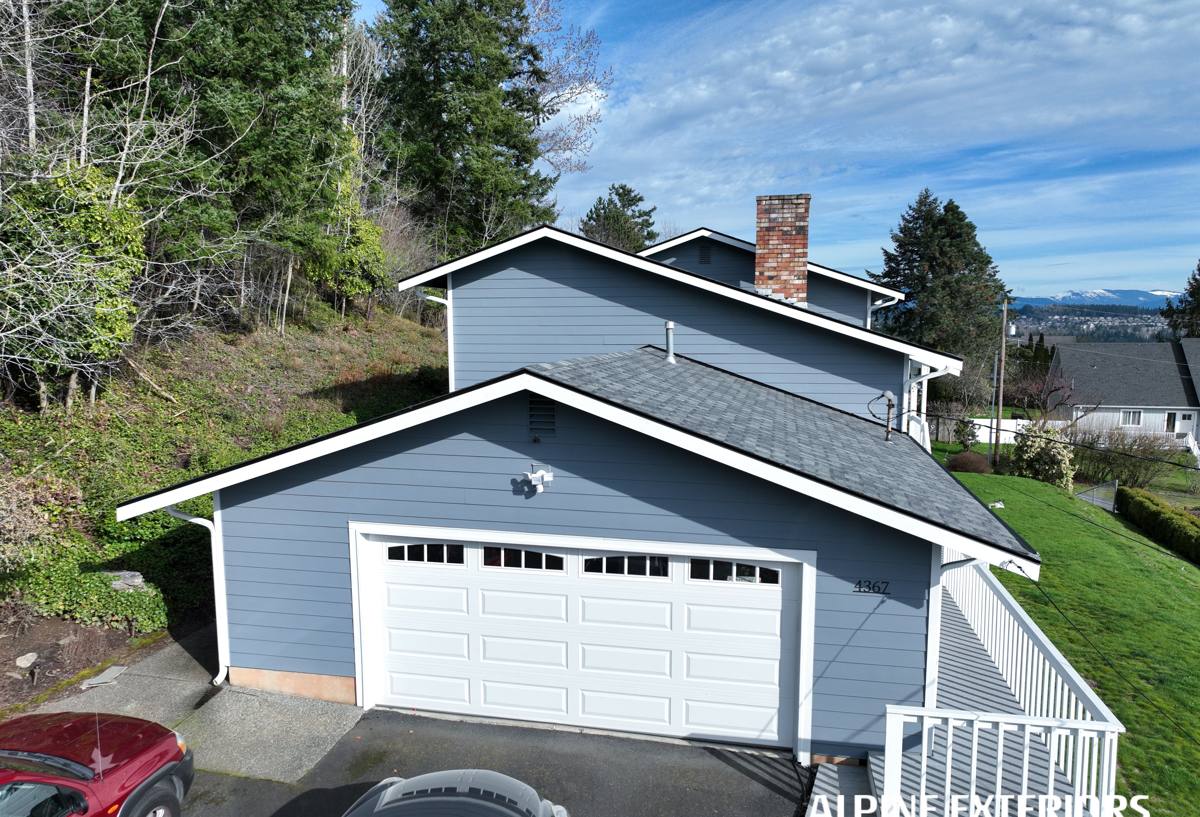
Signs a Peace Arch Roof Needs Full Replacement
Not every roofing problem calls for a full tear-off. But there's a point where patching stops making financial sense and a new installation becomes the smarter move. Common indicators we see on homes in this area include:
- Granule loss heavy enough that you can see bare asphalt on multiple slopes, not just one weathered section
- Moss colonies that have been scraped or treated more than once without the underlying shingles recovering
- Soft spots or slight sagging when walked, which usually points to deck damage under the covering
- Flashing around chimneys, skylights, or valleys that's rusted, lifted, or was never properly step-flashed to begin with
- A roof already at or past 20-25 years old, since materials installed decades ago often lack the underlayment and ventilation standards used today
- Interior signs — attic moisture, water stains on ceilings, or musty smells — even if the exterior still looks passable from the ground
If your roof is showing two or more of these, a repair is likely to be a short-term fix on a system that's already compromised underneath.
What a Correct New Roof Installation Actually Involves
It Starts Below the Shingles
The visible roofing material gets all the attention, but in this climate the layers underneath do most of the work protecting your home. A synthetic or high-quality felt underlayment, properly lapped and sealed, is what keeps wind-driven rain from finding its way to the deck when a shingle edge gets pushed up in a storm. Ice-and-water shield belongs at eaves, valleys, and around every penetration — not just because of ice, but because these are the spots where standing water and wind-driven rain concentrate.
Ventilation Isn't Optional
A roof deck that can't breathe traps moisture, and trapped moisture is what feeds rot and encourages moss to take hold faster on the surface above it. Balanced intake and exhaust ventilation — soffit vents paired with ridge or box vents sized correctly for the attic volume — keeps the deck drier year-round and extends the life of everything installed on top of it.
Flashing Details Matter More Here
Most roof leaks don't happen through the field of the shingles — they happen at transitions: chimneys, skylights, sidewall intersections, and valleys. Salt air corrodes cheap or thin flashing metal faster than people expect, so we use flashing material and fastener grades chosen to hold up near the water, not generic hardware-store stock.
Choosing the Right Material for This Neighborhood
There's no single "best" roofing material for every home — the right choice depends on your roof's exposure, slope, tree cover, and budget. Here's how the common options stack up for a coastal Whatcom County property:
| Material | Salt Air Performance | Moss Resistance | Typical Lifespan |
|---|---|---|---|
| Architectural asphalt shingle | Good, with corrosion-resistant fasteners and flashing | Moderate — benefits from zinc/copper strips | 25-30 years |
| Standing seam metal | Excellent when properly coated/finished | Very good — sheds moisture quickly | 40-50+ years |
| Composite/synthetic shake | Good | Good — non-organic surface | 30-50 years |
| Cedar shake | Fair — needs regular maintenance near salt exposure | Requires active upkeep to resist moss/rot | 20-30 years with upkeep |
For shaded lots with heavy moss history, we often recommend adding zinc or copper strips near the ridge on asphalt or composite roofs — as rain washes over them, trace metal ions inhibit new moss growth on the slopes below, cutting down on how often the roof needs cleaning.
Our Installation Process, Step by Step
- On-site inspection and estimate. We look at the existing roof, deck condition, ventilation, and any problem areas before quoting — not from a photo or a phone call alone.
- Tear-off and deck assessment. Old material comes off completely so we can inspect the sheathing underneath. Any soft or water-damaged decking gets identified and replaced before anything new goes down.
- Underlayment and ice/water shield. Installed to current standards at eaves, valleys, and penetrations, with attention to how wind-driven rain actually moves across these roof lines.
- Flashing. New flashing at all chimneys, skylights, sidewalls, and valleys — not reused from the old roof, which is where hidden leaks tend to start.
- Ventilation check and correction. We confirm intake and exhaust are balanced for the attic space, adding or adjusting vents where the existing setup falls short.
- Material installation. Shingles, metal panels, or composite material installed to manufacturer specification, including proper nailing pattern and exposure for wind resistance.
- Cleanup and final walkthrough. Magnetic sweep for stray fasteners, debris removal, and a walkthrough so you know what was done and what to watch for going forward.
What Drives the Cost of a New Roof
Every roof is different, but the main cost factors on Peace Arch-area homes tend to be the same handful of variables. We give a firm number after inspection — broad ranges below are just to help you plan.
| Factor | Why It Matters |
|---|---|
| Roof size and number of slopes | More square footage and cut-up rooflines mean more material and labor time |
| Deck condition | Rotted or soft sheathing found during tear-off adds repair cost before new material goes on |
| Material choice | Asphalt, metal, and composite carry different material and labor costs per square |
| Pitch and access | Steep or hard-to-access roofs take longer and require more safety equipment |
| Ventilation and flashing upgrades | Bringing an older roof system up to current standards adds some cost but pays off in lifespan |
Generally, full tear-off and replacement on a typical single-family home in this area runs from the mid five figures for standard asphalt up to considerably more for standing seam metal, larger homes, or complex rooflines. An accurate number requires seeing your specific roof.
Why Local Experience on This Coastline Matters
A crew that mostly works inland jobs doesn't always think about salt-air fastener corrosion, or how to detail flashing for the sideways rain this stretch of coastline gets in a winter storm. Working repeatedly on homes in and around Blaine and the Peace Arch area means we've seen which flashing details hold up here and which ones fail early, which slopes collect moss fastest given the tree cover typical of this neighborhood, and how local permitting and inspection process works so your project doesn't stall waiting on paperwork. That familiarity shows up in fewer callbacks and a roof that's actually built for where it sits, not a generic installation dropped onto a coastal lot.
After Installation: Keeping It Performing
A correctly installed roof still benefits from basic upkeep in this climate. A simple annual routine goes a long way:
- Clear debris from valleys and gutters each fall before the heavy rains set in
- Have moss growth treated at the first sign rather than letting it establish
- Trim back overhanging branches to reduce shade and debris buildup
- Check attic ventilation isn't blocked by insulation or storage
- Schedule a quick visual inspection every couple of years, especially after major windstorms
None of this replaces professional inspection, but it meaningfully extends how long a properly installed roof performs before it needs attention.
If your roof is showing its age or you're planning ahead for a home in the Peace Arch area, we're happy to take a look and walk you through what your specific roof needs. There's no pressure and no obligation — just a straightforward assessment and a clear estimate, using the form below.