 Blaine Roofing
 Asphalt Shingle Roofing Built for the Nooksack Area
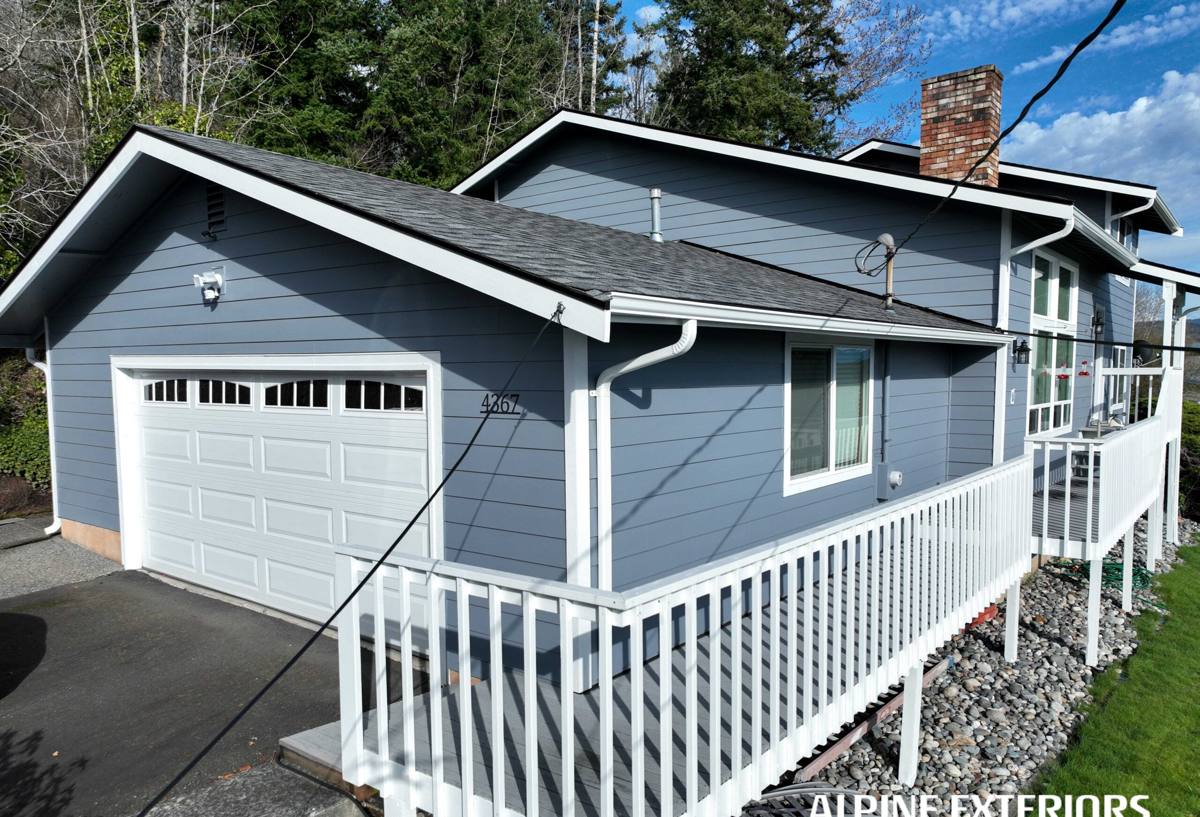
Homes in and around Nooksack sit in one of the tougher microclimates in Whatcom County for a roof to survive. You've got salt-laden air drifting in off the Salish Sea, long stretches of driving rain through fall and winter, and a moss season that can run most of the year in shaded, north-facing sections of a roof. Asphalt shingle roofing is still the right call for the vast majority of homes here — it's cost-effective, well understood by insurers, and easy to repair in sections when something goes wrong. But "asphalt shingles" isn't a one-size-fits-all product, and the difference between a roof that lasts twenty-five years and one that fails at twelve almost always comes down to the details under the shingles, not the shingles themselves.
This page focuses specifically on shingle roofing for Nooksack-area homes — what the local climate demands, what a correct installation actually involves, and how we approach the job when we're out there.
What This Climate Actually Does to a Roof
Before talking about materials, it helps to understand the specific stresses a roof in this part of Whatcom County deals with over its lifespan.
Salt Air and Metal Fatigue
Proximity to the water means airborne salt settles on every exterior surface, including the roof. Salt air accelerates corrosion on unprotected or poorly coated metal — flashing, drip edge, nail heads, and vent stacks. A roof that uses bargain-grade galvanized components instead of properly coated or corrosion-resistant metal will show rust streaks and pinhole leaks at flashing points years before the shingles themselves are worn out.
Driving Rain and Wind-Driven Water
Rain here doesn't always fall straight down. Wind off the water pushes rain sideways and up under shingle edges, valleys, and anything with a low slope. That means underlayment quality, shingle sealing, and valley detailing matter more here than they would in a drier, calmer climate. A roof that would perform fine in an inland, low-wind area can leak here if those details were cut short.
Moss, Shade, and Moisture Retention
Tree cover and long damp stretches give moss a real foothold, especially on north-facing slopes and anywhere debris collects. Moss isn't just cosmetic — it holds moisture against the shingle surface, works its way under tabs as it grows, and can lift shingle edges enough to let water in. Left unmanaged for years, moss growth shortens the usable life of an otherwise sound roof.
What a Correct Shingle Roof Job Involves
A shingle roof is a system, not a single product. Every layer has a job, and skipping or downgrading any one of them is usually where premature failures start.
Decking and Ventilation
Before anything new goes down, the deck needs to be sound — no soft spots, no rot, proper nailing pattern. Ventilation (intake at the eaves, exhaust at or near the ridge) is what keeps moisture from condensing inside the attic and rotting the deck from underneath. In a climate this wet, under-ventilated attics are a common cause of hidden deck damage that has nothing to do with the shingles above it.
Underlayment
Synthetic underlayment or a quality felt goes down as the roof's backup waterproofing layer. In wind-driven rain areas, we pay particular attention to lap direction and fastening so water is shed correctly even if it gets past the shingles temporarily.
Ice and Water Shield at Vulnerable Points
Valleys, eaves, and roof-to-wall transitions get self-adhering waterproof membrane in addition to standard underlayment. These are the spots where wind-driven rain and ice concentrate, and they're the most common leak origin points on an otherwise well-built roof.
Flashing
Flashing around chimneys, skylights, vent stacks, and wall intersections has to be sized, lapped, and fastened correctly — and in this climate, made from a metal that won't corrode out from under a still-good shingle field. This is one of the areas where corner-cutting causes the most callbacks, industry-wide.
Shingle Selection and Installation
We install architectural (laminated) shingles on most Nooksack-area homes because their multi-layer construction handles wind uplift better than older three-tab profiles, which matters given how exposed some lots are to open wind off the water. Nail placement, exposure, and sealant activation all affect how well shingles resist wind and stay watertight — installed too fast or with the wrong nail pattern, even a good shingle underperforms.
Our Process, Start to Finish
- Roof and attic inspection — we look at the deck, ventilation, flashing, and any active leak points before quoting anything, not just the shingle surface.
- Written estimate — scope, materials, and a straightforward price range, with the reasoning behind any upgrades we recommend (like added ice-and-water membrane at valleys).
- Tear-off and deck check — old roofing removed down to the deck so we can actually see and fix any rot or soft spots, rather than roofing over a problem.
- Underlayment and flashing installation — the waterproofing layer that does the real work, installed before a single shingle goes down.
- Shingle installation — laid to manufacturer spec for nailing pattern and exposure, with attention to valleys, edges, and penetrations.
- Cleanup and final walk-through — magnetic sweep for nails, debris hauled off, and a walk-through so you know what was done and why.
Comparing Roofing Options for Nooksack Conditions
Asphalt shingles aren't the only roofing material available, and it's worth understanding where they fit relative to the alternatives homeowners in this area sometimes consider.
| Factor | Asphalt Shingles | Metal Roofing | Cedar Shake |
|---|---|---|---|
| Upfront cost | Lowest | Higher | Higher |
| Salt-air durability | Good with proper flashing/fasteners | Very good with correct coating | Moderate — moisture-sensitive |
| Moss resistance | Moderate — benefits from zinc strips and cleaning | High — smooth surface sheds growth | Low — highly moss-prone without upkeep |
| Repair simplicity | Easy, section-by-section | Moderate, panel matching can be tricky | Moderate, individual shakes can be swapped |
| Typical lifespan (well maintained) | 20-30 years | 40-60 years | 20-30 years, with more upkeep |
For most Nooksack-area homes, asphalt shingles offer the best balance of upfront cost, ease of repair, and proven performance when installed with the flashing and underlayment detail this climate requires. We'll always tell you honestly if a particular roof's shape, slope, or exposure makes a different material worth considering — but that's the exception, not the rule.
Maintenance That Actually Extends Roof Life Here
A shingle roof in this climate isn't maintenance-free, but the upkeep it needs is manageable if it's done on a regular schedule rather than only after a problem shows up.
- Clear gutters and valleys of needles and debris at least twice a year — clogged valleys are a common cause of water backing up under shingles.
- Have moss growth removed gently (not pressure-washed, which strips granules) before it works under shingle tabs.
- Check and recoat or replace exposed metal flashing components before rust perforates them, not after.
- Trim back overhanging branches to reduce shade, debris, and abrasion on the roof surface.
- Schedule a walk-on inspection after major wind events to catch lifted or missing shingles early.
- Watch for granule buildup in gutters, which signals shingles are wearing faster than expected.
Signs a Nooksack-Area Roof Needs Attention
Catching problems early is almost always cheaper than waiting. Watch for:
- Shingles that are curling, cupping, or missing granules in patches
- Dark streaking or thick moss growth, especially on shaded slopes
- Rust staining running down from flashing or vent stacks
- Soft or spongy spots when walking the attic near the deck
- Daylight visible through the roof deck from inside the attic
- Water stains on interior ceilings after heavy wind-driven rain
None of these automatically mean a full replacement is needed — many are addressed with a targeted repair if caught in time. That's part of why we inspect before we quote, rather than assuming every call needs a new roof.
Why a Crew That Already Works This Area Matters
Roofing crews that work Blaine and the surrounding Whatcom County communities regularly develop a practical sense for how this specific climate behaves — which slopes hold moss longest, which exposures take the worst of the wind off the water, and where salt air tends to eat through flashing first. That's not something you get from a general specification sheet; it comes from doing the work here repeatedly and seeing what actually holds up over years, not just what looks good on installation day.
It also means straightforward accountability. A crew based in and around Blaine isn't disappearing after the job — if something needs a follow-up look during a warranty period, we're not traveling in from out of the area to get to you.
What to Expect on Materials and Warranty
We use manufacturer-recognized architectural shingle products and install them to the manufacturer's published specifications, which is what keeps the material warranty valid. Beyond the manufacturer's product warranty, we stand behind our own workmanship — the flashing, underlayment, and installation details that determine whether a roof actually performs the way it's supposed to in this climate. If something in our work causes a problem, that's on us to make right.
Get a Straightforward Estimate
If you've got a shingle roof in the Nooksack area that's showing its age, dealing with moss, or you're just planning ahead, we're glad to take a look and give you an honest read on where it stands. The estimate is free, there's no pressure attached to it, and you'll get a clear explanation of what we find — use the form below to get started.