 Blaine Roofing
 Building New in Blaine Harbor Means Building for the Water
If you're framing a new home or a major addition near Blaine Harbor, the windows you choose and how they're installed matter more than they would a few miles inland. This stretch of Whatcom County sits right up against the water, close to the Canadian border, and the same salt air and marine weather that make the harbor a nice place to live are hard on building materials. Windows installed during new construction only get one real chance to be done right — the flashing and water management details get buried behind siding and trim, and mistakes don't show up until years later as rot, stains, or a failed seal.
This page is specifically about new-construction window installation — windows going into a home that's still open framing, not a swap-out of existing windows in a finished wall. The products, the sequencing, and the stakes are different, and Blaine Harbor's climate raises the bar on all of it.
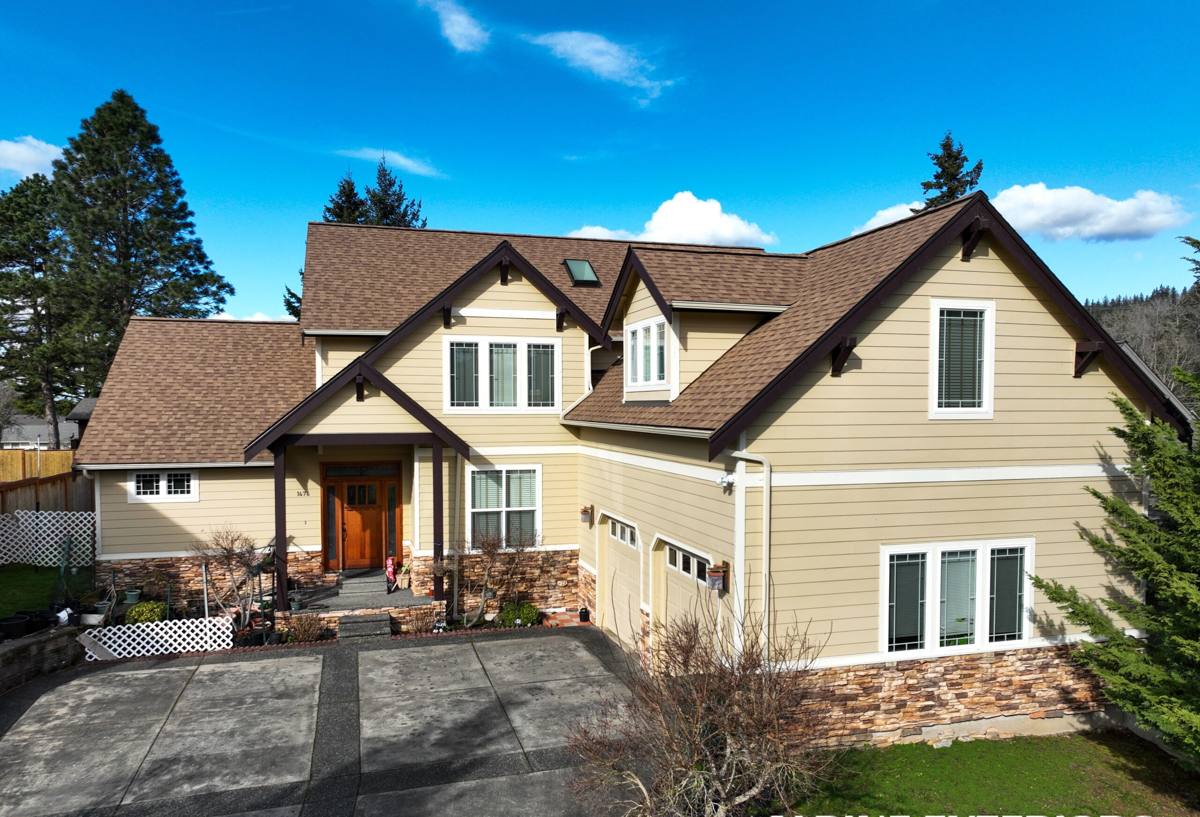
New-Construction Windows vs. Replacement Windows
The two jobs get lumped together in casual conversation, but they're not the same trade.
New Construction (Nail-Fin) Windows
These have a flange, or "nail fin," around the perimeter that gets fastened directly to the wall sheathing before the weather-resistant barrier (house wrap) and siding go on. The flange is what ties the window into the building's overall water management system — it's designed to be integrated with flashing tape and the WRB in a specific shingle-lapped order so that any water that gets behind the siding is directed back out, not into the wall cavity.
Replacement (Insert) Windows
These are built to fit inside an existing frame, without a flange, and rely on the old window's opening and trim for weatherproofing. They're a different product for a different situation — retrofitting a finished wall, not building one.
The reason this distinction matters here: a new-construction window installed without proper flange integration is one of the most common sources of hidden water intrusion in coastal homes, and it's much cheaper to catch during framing than after drywall and siding are complete.
What Blaine Harbor's Climate Actually Does to Windows
Three things define the exposure here, and all three show up in how a new build should be detailed.
Salt Air
Airborne salt from the water accelerates corrosion on unprotected metal — fasteners, hinge hardware, and lower-grade aluminum components all age faster this close to the harbor than they would inland. It also breaks down certain sealants and finishes over time, which is why hardware and cladding choices matter as much as the glass.
Driving Rain
Wind off the water pushes rain sideways, not just straight down. That means water is hitting window assemblies at an angle and with real pressure, not just sheeting off a roofline. Flashing details that would be adequate in a sheltered inland yard can be marginal on an exposed harbor-facing wall.
A Long Moss and Algae Season
Whatcom County's wet season runs long, and constant dampness plus shade encourages moss and algae growth on anything that stays damp — trim, sills, and low-slope surfaces near windows included. Detailing that sheds water quickly, rather than letting it sit, keeps that growth from taking hold around the window openings.
Frame Material: What Actually Holds Up Near the Water
There's no single "right" window brand for every project, but frame material choice does matter more here than in a typical inland build. The table below reflects how the common options generally perform in a salt-air, high-moisture environment — it's a starting point for a conversation, not a hard rule for every home.
| Frame Material | Salt-Air Performance | Maintenance | Typical Fit |
|---|---|---|---|
| Vinyl | Good — won't corrode; UV and impact resistance varies by grade | Low; occasional cleaning of tracks and weep holes | Cost-conscious builds, most window styles |
| Fiberglass | Very good — dimensionally stable, resists corrosion and warping | Low | Larger openings, harbor-facing walls, higher-exposure elevations |
| Aluminum-Clad Wood | Fair to good if finish and flashing are properly maintained | Higher — exterior finish and any exposed hardware need periodic attention | Homes prioritizing a specific interior wood look |
| Bare Aluminum | Weaker — more prone to corrosion and condensation in marine air without upgraded finishes | Higher | Best reserved for protected elevations, not harbor-facing walls |
Hardware finish matters too. On harbor-facing elevations, we steer clients toward corrosion-resistant hardware options rather than standard-grade finishes, since that's the part most exposed to salt air and most likely to show wear first.
The Install Sequence That Actually Keeps Water Out
Most window failures in coastal new construction trace back to sequencing, not the window itself. The order these steps happen in — and how each layer overlaps the one below it — is what determines whether water gets shed or trapped.
- Rough opening is checked for square, level, and correct size before anything else happens.
- A sloped sill pan is installed at the bottom of the opening so any water that reaches that point drains back outward, not into the wall.
- Flashing tape is applied at the sides and head in a shingle-lap sequence — each piece overlapping the one below it, the same way roofing shingles work — so water is always directed down and out.
- The window is set, shimmed level and plumb, and fastened through the nail fin per the manufacturer's specified pattern.
- The weather-resistant barrier (house wrap) is integrated over the top flange and taped, completing the drainage path.
- Interior and exterior sealant is applied only where the manufacturer specifies — sealing the wrong location can trap moisture instead of keeping it out.
Every step in that list is inspectable at the time it's done and invisible once siding goes on. That's exactly why it needs to be right the first time.
Our Process From Framing to Final Trim
On a Blaine Harbor new-construction project, we coordinate closely with the framing and siding timeline rather than treating windows as an isolated trade.
1. Site and Plan Review
We walk the framing, review window schedules against the plans, and flag any openings on exposed elevations that warrant an upgraded frame material or flashing detail given wind and rain exposure.
2. Flashing and Sill Pan Installation
Sill pans and flashing tape go in before any window is set, using products compatible with both the WRB and the window manufacturer's warranty requirements.
3. Window Setting
Each unit is shimmed, squared, and fastened to spec, with fastening patterns and shim placement checked against the manufacturer's installation instructions rather than a generic standard.
4. WRB Integration and Documentation
We tie the house wrap into the flashing system and photograph the sequence before it's covered, so there's a record of what's behind the finished wall if it's ever needed down the road.
5. Final Check
Once siding and trim are complete, we do a final pass on operation, weatherstripping, and sealant lines before calling the opening done.
What to Verify Before Windows Go In
Whether you're a homeowner overseeing a build or a builder bringing in a window crew, these are the things worth confirming before framing moves past the rough-opening stage:
- Rough openings match the window schedule and are square before any window arrives on site
- A sloped sill pan is planned for every opening, not just the ones facing the water
- Flashing tape and WRB are compatible with each other and with the window manufacturer's warranty terms
- Frame material and hardware finish account for salt-air exposure on harbor-facing elevations
- The installer follows the manufacturer's written instructions for fastening pattern and sealant placement
- There's a plan to photograph flashing details before they're covered by siding
Factors That Affect New-Construction Window Cost
Costs on a project like this vary by scope, so rather than quote a number that won't fit your specific build, here's what actually drives the budget:
| Factor | Why It Matters |
|---|---|
| Number and size of openings | More and larger units mean more material and labor hours |
| Frame material | Vinyl, fiberglass, and clad-wood carry different material costs and exposure suitability |
| Glass package | Upgraded glazing for energy performance or sound adds cost per unit |
| Elevation exposure | Harbor-facing walls may warrant upgraded flashing details or hardware, adding labor |
| Site access and staging | Tighter lots or multi-story openings can add time for safe handling |
| Coordination with framing schedule | Working within a tight builder timeline versus an open schedule affects crew planning |
Why a Crew That Already Works Blaine Harbor Matters
A window install crew that only occasionally works this close to the water treats every job as a first attempt at coastal detailing. A crew that regularly works Blaine Harbor and the surrounding Whatcom County waterfront has already worked through which frame materials and flashing details hold up on exposed elevations, which hardware finishes are worth the upgrade, and how the long moss season affects sill and trim detailing. That familiarity shows up in fewer callbacks and a wall assembly that's still doing its job ten and twenty years out, not just at final inspection.
Local presence also matters for something more practical: being reachable if a question comes up mid-build, and being available for a warranty check or a quick look years later without a long drive being the reason it gets put off.
If you're planning new-construction windows for a build in Blaine Harbor, we're happy to walk the plans with you and put together a free, no-pressure estimate — just fill out the form below.