 Blaine Roofing
 Siding Replacement Built for Lynden's Climate, Not a National Average
Lynden sits a bit further inland than our home base in Blaine, but it doesn't escape the weather pattern that defines this corner of Whatcom County. Marine air off Puget Sound still reaches this far, driving rain still comes in sideways during the fall and winter storm cycles, and the long stretch of gray, damp months from October through April still gives moss, algae, and mildew months to take hold on anything that stays wet. Siding here isn't decorative. It's the single biggest factor in whether moisture gets into a wall assembly or stays out of it.
A lot of siding problems we see on Lynden homes aren't the result of one bad storm. They're the slow accumulation of years spent with a product that wasn't suited to this climate in the first place, or a replacement job that skipped a step nobody can see once the new siding goes up. This page is about that one job, done right, for this one area.
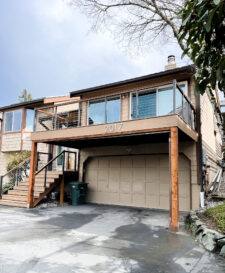
What Whatcom County Weather Actually Does to Siding
Driving rain and wind-driven moisture
Rain that falls straight down is a manageable problem for almost any siding product. Rain that gets pushed sideways by wind is a different story — it finds lap seams, panel joints, and trim gaps that were never designed to shed water at an angle. Over time, that's how moisture works its way behind siding and into sheathing, especially on the sides of a house that take the brunt of storms coming off the water.
Salt-laden air
Homes throughout this part of Whatcom County sit within reach of marine air carrying salt content, and that air accelerates corrosion on fasteners, staining on painted surfaces, and general wear on anything not built to handle it. It's a slower process than storm damage, but it's constant, and it shows up first as fading and chalking on lower-grade siding finishes.
A long moss and mildew season
Because this region doesn't get long dry stretches, siding here spends more months of the year damp than siding in drier climates does. That extended dampness is exactly what moss, algae, and mildew need to establish themselves — particularly on north-facing walls, shaded elevations, and areas near trees or landscaping that block sun and airflow. Once organic growth takes hold on a porous or poorly finished surface, it holds moisture against the siding longer, which speeds up whatever deterioration is already happening underneath.
Signs a Lynden Home's Siding Has Reached the End of Its Useful Life
Not every siding problem means full replacement, but these are the signs that tell us it's time to stop patching and start planning a real replacement:
- Boards or panels that are cracking, buckling, or visibly warping, especially on sun- and rain-exposed elevations
- Soft or spongy spots when you press on the siding, which usually means moisture has reached the substrate underneath
- Paint that's peeling, bubbling, or needing repainting far more often than it used to
- Persistent moss, algae, or dark streaking that comes right back after cleaning
- Visible gaps, separated seams, or siding pulling away from the wall at corners and trim
- Rising heating bills with no other explanation, which can point to a compromised weather barrier or insulation getting wet
- Water stains, musty odor, or soft drywall on interior walls that back up to exterior siding
If more than one or two of these show up at once, that's usually a sign the problem isn't isolated to a single board — it's the system underneath that's failing.
What a Correct Siding Replacement Actually Involves
Full removal, not overlay
We don't install new siding over old siding or over questionable sheathing. Every job starts with full removal down to the studs or sheathing so we can actually see what we're working with — not guess at it. This is the only point in a siding project where hidden damage is fully visible, and it's the point where cutting corners causes the most long-term harm.
Inspecting and repairing what's underneath
Once the old siding is off, we check sheathing for rot, soft spots, and prior water intrusion, and we check framing where damage has gone deep enough to matter. Any compromised material gets replaced before anything new goes back on the wall. Skipping this step is how homeowners end up paying for new siding twice — once now, and once in a decade when the same hidden rot resurfaces.
Weather-resistive barrier and flashing
Given how much wind-driven rain this area sees, the house wrap and flashing details matter as much as the siding itself. Proper flashing at windows, doors, roof lines, and any wall penetration is what actually keeps water from getting behind the cladding in the first place — the siding is the second line of defense, not the first.
Correct installation to manufacturer spec
Fiber cement siding has specific requirements for fastening, clearances, and joint treatment, and those requirements exist because they're what the product needs to perform as designed. Nail placement, gaps at butt joints, ground clearance, and caulking at seams all affect how well the siding sheds water and holds its finish over time. This is also where a crew's experience with the specific product shows up — installed wrong, even a good product will underperform.
Why We Only Install James Hardie Fiber Cement Siding
We made the decision to standardize on James Hardie fiber cement and stop installing vinyl, LP SmartSide, primed wood, or cedar. That wasn't a marketing choice — it's a reflection of what actually holds up in a climate like this one, year after year, without the maintenance burden or moisture risk we've seen with other products.
| Consideration | Vinyl | Wood / Primed Products | James Hardie Fiber Cement |
|---|---|---|---|
| Behavior in driving rain | Can flex and gap at seams over time | Absorbs moisture if finish fails | Non-porous cement composition, engineered joint details |
| Salt air and coastal exposure | Can fade, chalk, and become brittle | Fasteners and finish vulnerable to corrosion/wear | Factory finish designed to resist fading and hold color |
| Moss, mildew, algae resistance | Growth can take hold in seams and texture | Organic material is naturally prone to growth if damp | Dense, engineered material resists moisture retention |
| Combustibility | Combustible | Combustible | Non-combustible |
| Ongoing maintenance | Low, but limited repair options once damaged | Regular repainting and moisture monitoring needed | Factory-finished ColorPlus coating reduces repaint cycles |
Hardie's HZ5 product line is engineered specifically for regions like ours that see significant moisture cycling, and the factory-applied ColorPlus finish holds up to UV and salt exposure better than field-applied paint on wood-based products. It also comes with a strong, transferable manufacturer warranty — something worth real weight when you're choosing a product that's going to sit on your home for decades. We're happy to walk through the full case for Hardie versus other products in more detail; on this page, the short version is that it's the product we're willing to put our name behind in this climate.
Our Siding Replacement Process, Start to Finish
- On-site assessment — we walk the exterior, check current siding condition, and look for signs of trapped moisture or sheathing damage before quoting anything.
- Written estimate — a clear scope of work covering removal, repairs, materials, and installation, so there are no surprises mid-project.
- Tear-off and inspection — full removal of existing siding, with sheathing and framing checked and repaired as needed.
- Weather barrier and flashing installation — the part that does the real work of keeping water out.
- Hardie siding installation to manufacturer spec — correct fastening, clearances, and joint treatment.
- Trim, caulking, and finish details — the details that determine how the job looks and performs over the following years.
- Final walkthrough and cleanup — we review the finished work with you and clear the site.
Why It Matters That We Already Work in Lynden
A crew that only shows up in Whatcom County occasionally doesn't have the same feel for how homes here actually age. We've seen what happens to siding that wasn't detailed for wind-driven rain, what north-facing walls look like after a few unaddressed moss seasons, and which product choices hold up versus which ones create repeat callbacks. That experience shapes how we flash a window or detail a butt joint before it ever becomes a problem you'd notice.
It also means a straightforward logistics advantage — realistic scheduling, a crew that isn't stretched across a multi-state territory, and someone local to reach if a question comes up after the job is done.
What Affects the Cost of a Siding Replacement
Every home is different, so we don't quote a job until we've seen it, but these are the factors that most often move the number up or down:
| Factor | Why It Matters |
|---|---|
| Total square footage of exterior wall area | More surface area means more material and labor |
| Condition of the sheathing underneath | Hidden rot or water damage adds repair work before new siding goes on |
| Home shape and trim complexity | Dormers, multiple gables, and lots of corners take more time to detail correctly |
| Accessibility | Two-story walls, steep grades, or tight lot lines affect staging and labor |
| Siding profile and finish selection | Different Hardie profiles and colors carry different material costs |
| Trim and accessory replacement | Fascia, soffits, and window trim replaced alongside siding add to scope |
Caring for New Siding Once It's Installed
Fiber cement siding is low-maintenance compared to wood or repeatedly repainted surfaces, but "low-maintenance" isn't "no-maintenance" in this climate. A yearly rinse to clear off early moss or grime buildup, keeping gutters clear so water isn't sheeting down the siding, and trimming back vegetation that shades and dampens a wall all go a long way toward getting the full lifespan out of the installation. Catching a caulking gap or a ding in the finish early is a lot cheaper than letting moisture find its way in behind it.
If your Lynden home's siding is showing its age, or you just want a straight answer on what a correct replacement would involve and cost, we're glad to come take a look. The estimate is free, there's no pressure, and you'll get a clear scope in writing before you decide anything.