 Blaine Roofing
 Deck Replacement Built for Lynden's Weather, Not Just Any Backyard
Lynden sits close enough to the water and far enough into farm country that its decks take a beating from both directions. Homeowners here deal with salt-tinged air rolling in off the Strait, long stretches of driving rain through fall and winter, and a moss season that can run half the year on shaded, north-facing decks. A deck built to a generic national spec, or one that was fine for a drier climate, tends to show its age fast here — soft spots near the house, black streaking on boards, fasteners bleeding rust, railings that wobble more each year.
Replacing a deck in this area isn't just about swapping old boards for new ones. It's about building something that sheds water instead of holding it, resists moss instead of feeding it, and holds its fasteners tight instead of loosening every winter. That's the standard we build to on every Lynden deck replacement, and it's worth understanding before you get quotes from anyone.
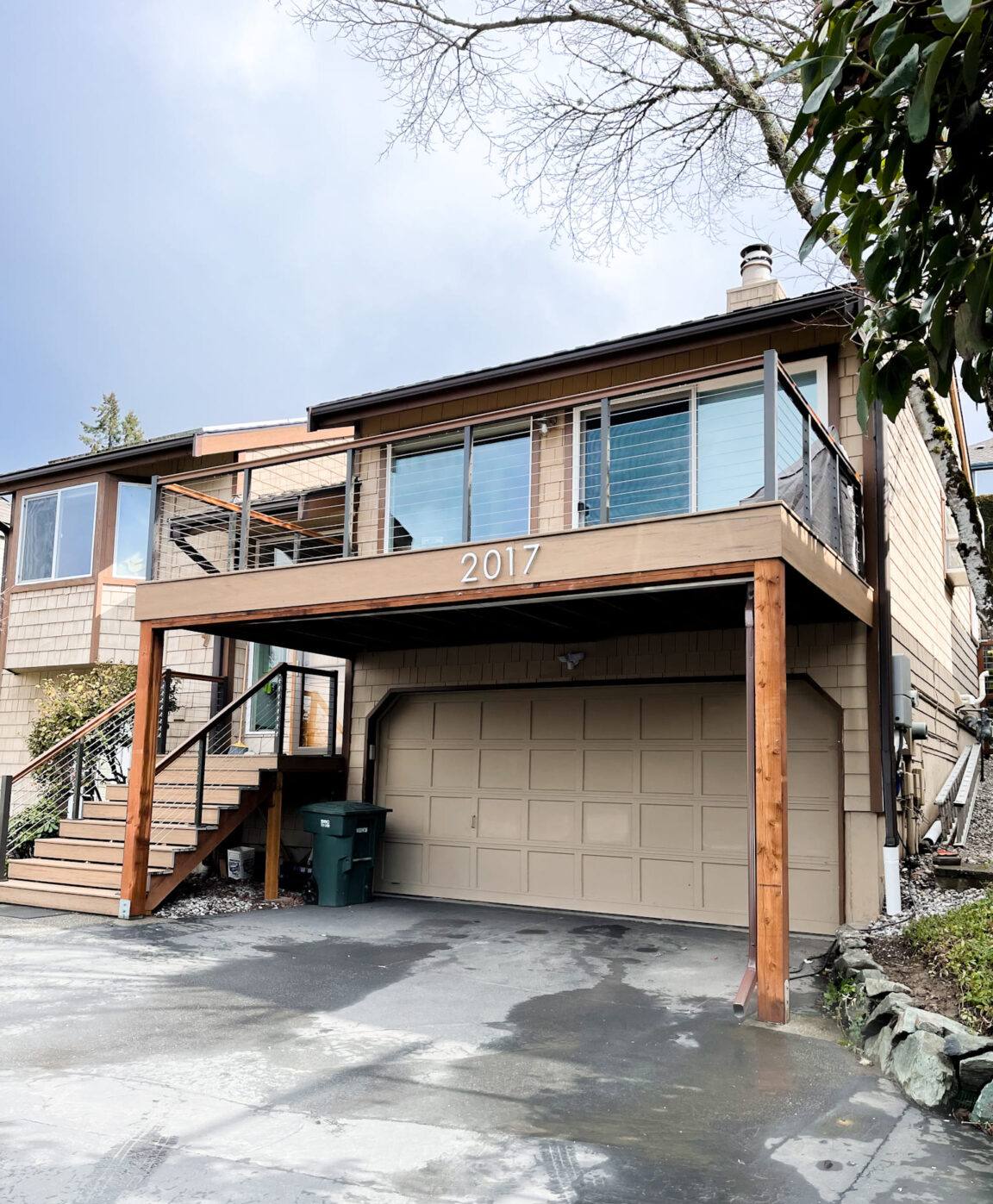
Signs a Lynden Deck Needs Replacing, Not Just Patching
Not every tired-looking deck needs a full teardown. But in Whatcom County's wet climate, certain signs mean repair is just delaying the inevitable — and spending money you'll spend again in a year or two.
- Soft, spongy, or bouncy decking boards, especially near the house or in shaded corners
- Ledger board (where the deck attaches to the house) showing water staining, soft wood, or gaps
- Persistent black or green staining that comes back within weeks of cleaning
- Rust streaks running down from screws or nail heads
- Posts or footings that feel loose, or a deck that sways when you walk across it
- Railings that have loosened from their posts — often a sign the posts themselves are compromised
If you're only seeing surface graying or minor moss on the boards themselves, cleaning and refinishing may still be an option. Once the framing, ledger, or footings are affected, replacement is the honest recommendation — patching those issues rarely holds for long in this climate.
What Whatcom County Weather Actually Does to a Deck
Salt Air
Lynden isn't right on the coast, but the marine air that moves through this part of Whatcom County still carries enough salt to accelerate corrosion on fasteners, brackets, and any exposed metal hardware. Over years, that means screws that snap when you try to remove them and structural connectors that rust from the inside before the wood around them shows any damage.
Driving Rain
Wind-driven rain doesn't just fall straight down — it gets pushed sideways into ledger connections, under railing posts, and into any gap where flashing was skipped or installed wrong. Most of the rot we find on older decks starts at these entry points, not on the open deck surface where you'd expect it.
Long Moss Season
Shaded decks, especially those under mature trees or on the north side of a house, can stay damp for weeks at a time between fall and spring. That moisture supports moss and algae growth that isn't just a cosmetic problem — it holds water against the wood surface and keeps boards from ever fully drying out, which speeds up rot from the top down.
Decking Material Options for Lynden Homes
There's no single "right" material for every deck — it depends on budget, how much maintenance you want to do, and how much sun or shade the deck gets. Here's how the common options actually perform in this climate, based on what we see holding up (and what doesn't) on local jobs.
| Material | Moss/Moisture Resistance | Maintenance | Typical Lifespan |
|---|---|---|---|
| Pressure-treated wood | Fair — needs sealing to perform well | Annual cleaning and resealing recommended | 10–15 years |
| Cedar | Good — naturally rot-resistant, still needs care | Periodic staining/sealing | 15–20 years |
| Composite decking | Very good — doesn't absorb moisture like wood | Occasional washing, no sealing | 25–30 years |
| PVC/capped composite | Excellent — fully sealed surface | Low — washing only | 25–30+ years |
Composite and capped-PVC boards have become the more common choice for shaded, damp-prone decks in this area simply because they don't wick moisture the way wood does — which matters a lot when a deck sits under trees for half the year. That said, we'll still install a well-detailed wood deck for homeowners who prefer the look and are willing to keep up with maintenance; the framing and flashing underneath matter more than the surface material either way.
Our Standard on Composite Substructure
Regardless of which decking surface you choose, we build the substructure — joists, beams, and ledger connection — to the same standard: pressure-treated or better framing lumber, joist tape or flashing on every joist top, and proper ledger flashing that directs water away from the house rather than trapping it against the band board. Skipping these details is where most premature deck failures start, no matter how nice the surface boards look.
What a Correct Deck Replacement Actually Involves
A deck replacement done right in this climate goes well beyond pulling old boards and screwing down new ones. The parts you don't see are what determine whether the deck lasts 10 years or 25.
Structural Assessment
Before anything comes off, we check the framing, ledger board, footings, and posts for rot or movement. This tells us what can be reused safely and what needs to come out — sometimes a deck looks fine on top but the framing underneath is already compromised.
Ledger Flashing
The ledger board connection to the house is the single most common failure point on decks in wet climates. Proper flashing — installed in the right sequence with the house's existing water barrier — keeps rain from working its way behind the siding and into the wall structure, not just off the deck surface.
Joist and Beam Protection
Every joist top gets protected from standing water, and beams are sized and spaced to keep the deck rigid under both foot traffic and the added weight of wet snow, which does happen here in cold snaps.
Footings and Posts
Footings are set below frost depth and sized to local code, with post bases that keep the wood post itself off standing water — a detail that's easy to skip and expensive to fix later.
Railings and Fasteners
We use fasteners and hardware rated for exterior, coastal-adjacent exposure rather than standard interior-grade hardware, since salt air corrosion is a real factor for anything metal on an exposed deck here.
Our Process for a Lynden Deck Replacement
- On-site assessment — we look at the existing deck, framing, ledger, and site drainage before quoting anything
- Honest scope discussion — what needs full replacement versus what can stay, and why
- Material selection — walking through wood, cedar, and composite options based on your budget and how much upkeep you want
- Permitting — pulling any required permits so the work is inspected and code-compliant
- Demo and disposal — removing the old deck and hauling away debris
- Rebuild — framing, ledger flashing, footings, decking, and railings installed to the standard above
- Final walkthrough — checking the finished deck with you before we consider the job done
Cost Factors for Deck Replacement
Every deck is different, so we won't quote a number without seeing the site, but these are the main factors that move the price up or down.
| Factor | Effect on Cost |
|---|---|
| Deck size and layout | Larger or multi-level decks require more material and labor |
| Decking material | Composite and PVC cost more upfront than wood, less over time |
| Framing condition | Rotted joists, beams, or footings add rebuild cost beyond surface boards |
| Height and access | Elevated decks or difficult site access can add labor time |
| Railings and features | Custom railings, built-in benches, or stairs add to scope |
| Permitting | Required for most full replacements; adds a modest fixed cost |
Why Hiring a Crew That Already Works in Lynden Matters
A deck built by a crew that hasn't worked this specific stretch of Whatcom County can still be built competently — but they're guessing at things a local crew already knows: how much shade a north-facing deck typically gets this far into the county, how footing depth needs to account for our frost line, and how much flashing detail actually matters given the rain patterns here versus a drier region. We've replaced enough decks around Blaine and Lynden to know which corners get skipped on decks that fail early, and we build every job to avoid those same shortcuts.
Working locally also means we're not disappearing after the job — if a question comes up during the first wet season, we're a short drive away, not a company that did one job in the area and moved on.
Getting Started
If your Lynden deck is showing soft spots, persistent moss, loose railings, or you're just tired of maintaining something that never seems to dry out, we're happy to take a look and give you an honest read on repair versus replacement. There's no pressure and no obligation — just a straightforward assessment and a clear estimate. Use the form below to request a free estimate and we'll get in touch to schedule a time to come out.