 Blaine Roofing
 Windows Built for Lynden's Weather
Lynden sits inland from Blaine but it doesn't escape what the rest of Whatcom County deals with every winter: weeks of driving rain, damp marine air pushing in off the Strait, and a moss season that seems to start earlier every year. Windows here take a different kind of beating than windows in a dry climate. It's not one big storm that causes problems — it's months of steady moisture finding every gap, every aging seal, and every spot where the original installation cut a corner.
Custom windows aren't a luxury item in this area. Older Lynden farmhouses, converted barns, and additions built onto homes over the decades rarely have standard-sized rough openings. When a window doesn't fit an opening exactly, someone has to make up the difference — usually with extra trim, foam, and caulk. That's where leaks start. A properly custom-built window, sized and flashed for the actual opening, is one of the simplest ways to stop water problems before they start.
What "Custom" Actually Means Here
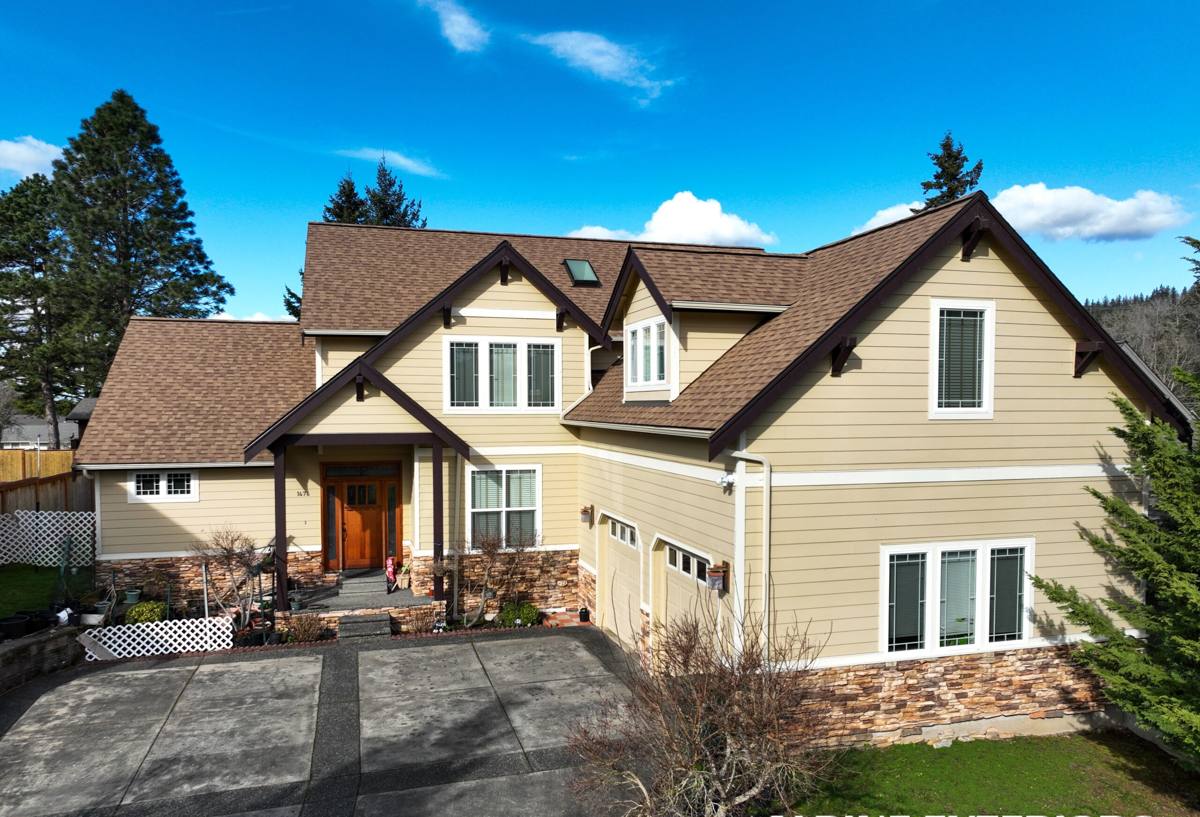
Custom doesn't just mean a non-standard size, though that's a big part of it in a county full of older homes. It also means matching the window to the specific conditions of the wall it's going into. A window on the weather side of a house — typically west or southwest facing here — needs different sealant detailing and sometimes a different frame material than a window tucked under a deep eave on the leeward side.
When we say custom windows, we mean:
- Precise measurement of the actual rough opening, not an assumption based on a "standard" size
- Frame material and glass package chosen for that specific wall's sun and rain exposure
- Flashing and sill pan detail built for the wall assembly behind it, not a one-size-fits-all wrap
- Trim and casing that match the home's existing style, especially on older farmhouses where mismatched trim stands out
- Hardware and screen options that hold up to daily use, not just what's cheapest to stock
The Moisture Problem: Flashing, Sealant, and Driving Rain
Most window failures we see in this area aren't glass failures — they're installation failures. Driving rain doesn't fall straight down here; wind pushes it sideways into walls, and a window that isn't flashed correctly will let water behind the siding long before anyone notices a drip inside. By the time staining shows up on interior trim, the sheathing behind it has often been wet for a season or more.
A correct install starts below the window, not at it. A sloped sill pan sends any water that gets past the window back outside instead of into the wall cavity. Flashing tape overlaps in the right shingle-style order — bottom piece first, sides next, top last — so water always sheds downward and outward, never into a seam. Sealant is used at the specific joints that need it, not smeared everywhere as a substitute for correct flashing. This is the part of the job that doesn't show once the trim is back on, which is exactly why it has to be done right the first time.
Moss, Sills, and Long-Term Rot Prevention
The long moss season in Whatcom County affects more than roofs. Moss and algae growth on window sills, sashes, and exterior trim holds moisture against the wood or composite surface for weeks at a time instead of letting it dry between rains. On older wood windows especially, that constant dampness is what turns a paint touch-up job into a full sill replacement.
A few things make a real difference here:
- A sill that's sloped correctly so water runs off instead of pooling
- Drip caps above the window that throw water clear of the frame instead of letting it sheet straight down the face
- Material choices — vinyl, fiberglass, or properly clad wood — that don't depend on paint film alone to stay dry
- Keeping gutters and downspouts clear so runoff isn't sheeting across upper-floor windows
None of this is complicated, but it's the kind of detail that gets skipped when a window is installed fast instead of installed right.
Choosing Materials: A Local Comparison
There's no single "best" window material — it depends on the wall, the exposure, and what the homeowner wants to maintain over time. Here's how the common options stack up for a Whatcom County home:
| Material | Moisture Behavior | Maintenance | Best Use Here |
|---|---|---|---|
| Vinyl | Won't rot; can expand/contract with temperature swings | Low — occasional cleaning | Standard replacements, budget-conscious projects |
| Fiberglass | Very stable, handles moisture and temperature swings well | Low | High-exposure walls, larger custom sizes |
| Wood-clad | Interior wood needs protection from any interior humidity; exterior clad face resists rain | Moderate — watch for clad seams and interior finish | Historic-style farmhouses where wood interior trim matters |
| Solid wood | Handsome but most vulnerable to driving rain and moss without diligent upkeep | High — regular painting/sealing | Restoration projects only, with a clear maintenance plan |
We'll walk through this with you honestly rather than push whatever's easiest to stock. A solid wood window can be the right call on a historic property if the owner knows what the upkeep looks like. It's the wrong call on a rental or a low-maintenance goal.
Glass Packages
Beyond the frame, the glass package matters for comfort and condensation control. Double-pane, low-E glass is the practical minimum for this climate — it cuts down on the interior condensation that shows up on single-pane or older double-pane windows during cold, damp mornings. Argon-filled units add a bit more performance for not much added cost. We size the glass package to the window's exposure rather than using the same spec on every opening in the house.
Our Installation Process
Every custom window job follows the same order, whether it's one window or a whole house:
- On-site measurement — we measure the actual rough opening and note the wall assembly, exposure direction, and any existing damage before ordering anything
- Material and style selection — we go over frame material, glass package, and trim options based on that specific opening, not a generic recommendation
- Removal and inspection — once the old window is out, we check the sill and framing for rot or water damage and address it before the new window goes in
- Sill pan and flashing — sloped sill pan, shingle-lapped flashing tape, and correctly placed sealant, in that order
- Install and level — the window is set, shimmed, and checked for square before final fastening
- Insulation and trim — low-expansion foam around the frame, then interior and exterior trim matched to the home
- Final check — operation, locks, and weatherstripping are tested before we call it done
Skipping step three is the most common shortcut in this trade, and it's the one that causes callbacks two winters later. We don't close up a wall on damaged framing.
Signs Your Windows Need Attention
Not every issue means full replacement. Some of these are repair-level fixes; others point to a bigger problem behind the trim. Either way, it's worth having a local crew look before another wet season passes.
- Fogging or moisture between panes (failed seal, glass unit needs replacing)
- Soft or discolored trim and sills, especially on west and southwest-facing walls
- Visible moss or dark staining building up on sills or lower trim
- Drafts you can feel near the frame even with the window fully latched
- Windows that are hard to open, close, or lock — often a sign of frame movement or swelling
- Paint that bubbles or peels near the sill faster than the rest of the trim
- Visible daylight or gaps around the frame from outside
Why a Local Crew Matters
A crew that works Whatcom County regularly knows which walls in this area take the worst weather, how older Lynden farmhouse framing was typically built, and where a "standard" flashing detail from a manual doesn't actually hold up against real driving rain off the Strait. That's not something you get from a national install crew passing through once. It comes from doing this work, on these kinds of homes, through enough wet seasons to know where problems actually start.
We also stand behind the install itself, not just the window unit's manufacturer warranty. If flashing or sealant work on our job ever needs a look, we're a local call, not a phone tree.
If your windows are original to an older Lynden home, showing sill damage, or just due for an honest look before the rain sets in again, we're happy to come take a look. Fill out the form below for a free, no-pressure estimate — no obligation, just a straight answer on what your windows actually need.