 Blaine Roofing
 Siding That Has to Work Year-Round in Grandview
Grandview homes sit close enough to the water and open farmland that the siding on a house does real work every single day. Salt-laden air moves in off the Strait of Georgia and Semiahmoo Bay, wind-driven rain comes in sideways during winter storms, and the long, wet, shaded stretches of fall through spring give moss and algae months to get established on anything that stays damp. Siding here isn't just a cosmetic layer — it's the first line of defense against moisture intrusion, wood rot, and the slow surface breakdown that salt air causes on lesser materials. When we talk to Grandview homeowners about siding, we're not selling a generic product. We're talking about what actually holds up in this specific corner of Whatcom County.
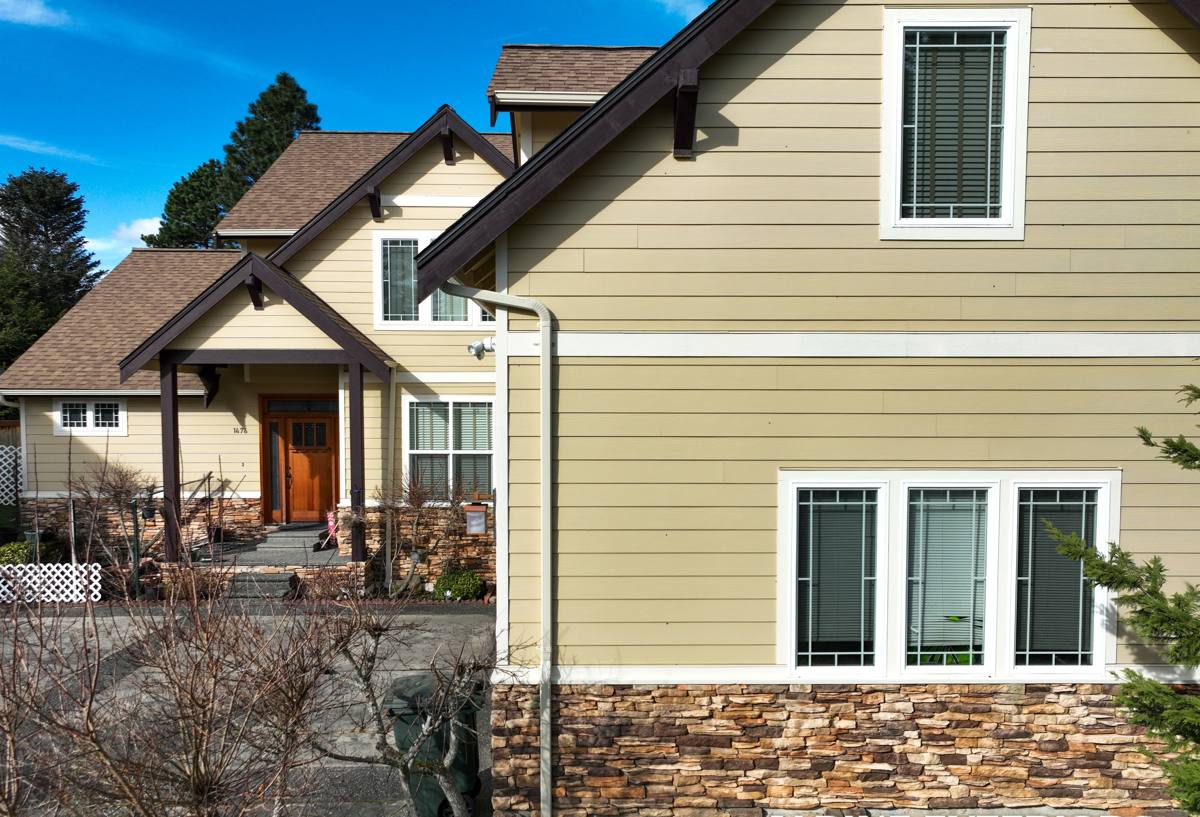
What Salt Air, Driving Rain, and Moss Season Actually Do to Siding
Salt Air and Corrosion
Airborne salt doesn't just sit on the surface — it works into seams, fastener heads, and any place where two materials meet. Over years, that accelerates corrosion on metal trim and fasteners, and it breaks down paint films and coatings faster than inland homes ever experience. Products that rely on a thin factory coat or field-applied paint tend to chalk, fade, and lose adhesion sooner near the coast than they would twenty miles inland.
Driving Rain and Wind
Blaine's winter storms don't just drop rain straight down — they push it horizontally into wall assemblies, especially on west- and south-facing elevations that catch the prevailing weather. Any gap in flashing, any butt joint that wasn't sealed correctly, any siding product with poor water-shedding geometry becomes an entry point. Once water gets behind siding, it doesn't dry out quickly in this climate — it sits, and that's when sheathing and framing start to suffer.
Moss and Algae Season
Grandview's tree cover and long overcast stretches mean many walls stay shaded and damp for extended periods, particularly north-facing sides and areas near mature landscaping. That's ideal growing conditions for moss, algae, and mildew. Porous or fibrous siding materials hold onto that moisture and give organic growth something to root into. Siding that resists moisture absorption at the surface simply gives moss less to work with.
Why We Install James Hardie — and Nothing Else
We made a decision as a company to install James Hardie fiber cement siding exclusively. We don't install vinyl, LP SmartSide, Cemplank, Allura, primed spruce, or cedar. That's not a marketing position — it's a standard we hold because of what we've seen hold up in Whatcom County's coastal climate and what hasn't.
James Hardie fiber cement is non-combustible, dimensionally stable in wet-dry cycling, and finished at the factory with ColorPlus Technology — a baked-on finish that's more consistent and more weather-resistant than field-applied paint. For homes exposed to salt air like Grandview, that factory finish matters: it's engineered to resist fading and chipping in coastal conditions far better than a coat applied on-site after installation.
Hardie also builds region-specific product lines. Their HZ5 formulation is engineered for climates with freeze-thaw cycling and sustained moisture exposure — which describes Whatcom County's winters well. That's a meaningful difference from siding products designed as one-size-fits-all for the whole country.
What We Chose Not to Install, and Why
Vinyl siding is affordable and low-maintenance in mild climates, but it can warp under heat, become brittle in cold snaps, and its seams and J-channels give wind-driven rain more opportunities to find a way behind the cladding. LP SmartSide and other engineered wood products perform well when installation is flawless, but they're wood-based, meaning any breach in the coating or a poorly sealed cut edge lets moisture in — and moisture is exactly what this climate provides in abundance. Cedar is beautiful and has a long history in the Pacific Northwest, but it requires ongoing refinishing and is far more vulnerable to the rot and moss growth this climate encourages once maintenance lapses. We'd rather install one product correctly and stand behind it than offer several and hope the installation covers for the material's weaknesses.
What a Correct James Hardie Installation Involves
The siding material is only part of the equation. In a climate like Grandview's, the assembly behind the boards matters just as much as the boards themselves.
Water-Resistive Barrier and Flashing
Every installation starts with a continuous water-resistive barrier, properly lapped and taped, with flashing integrated at every window, door, and penetration. This is the layer that actually stops water that gets past the siding — it has to be done in the correct sequence, not as an afterthought.
Rainscreen Ventilation Gap
Given how long surfaces stay damp here, we install Hardie siding over a ventilated rainscreen gap wherever the wall assembly allows for it. That gap lets any moisture that does get behind the siding drain and dry out instead of sitting against the sheathing — which matters enormously during a wet Whatcom County winter.
Fastening, Clearances, and Joints
Hardie's warranty and performance depend on following their fastening schedule, maintaining proper clearance from grade, decks, and roof lines, and sealing butt joints correctly. Skipping these details is the single most common cause of siding failures we see on homes that weren't installed by crews familiar with the product.
Caulking and Sealant Selection
Not all sealants perform the same in salt air and UV exposure. We use products rated for the movement and exposure Hardie board joints see in coastal conditions, applied at the joints and penetrations where water is most likely to test the assembly.
Matching the Product to Your Home in Grandview
James Hardie makes several distinct product lines, and choosing the right one depends on your home's style, exposure, and how much of the salt air and rain it takes on directly.
| Hardie Product | Best Suited For | Coastal Consideration |
|---|---|---|
| HardiePlank Lap Siding | Traditional and craftsman-style homes | Most common choice; wide color range in ColorPlus finish |
| HardieShingle | Accent gables, dormers, cottage-style homes | Adds texture without sacrificing coastal durability |
| HardiePanel | Modern or board-and-batten exteriors | Clean lines; joint detailing is critical in driving rain |
| HardieTrim | Corners, fascia, window and door surrounds | Matches fiber cement performance at vulnerable transition points |
We walk through these options on-site, not from a brochure, because exposure varies house to house even within the same neighborhood — a wall that's shaded and sheltered behaves differently than one facing open wind off the water.
Our Process, Start to Finish
- On-site assessment — we look at your home's current siding, exposure, drainage, and any existing moisture damage before recommending anything.
- Product and color selection — choosing the right Hardie line and ColorPlus color for your home's style and sun/wind exposure.
- Tear-off and sheathing inspection — removing old siding and checking for rot or damage that needs to be addressed before new siding goes on.
- Water-resistive barrier and flashing installation — the part of the job that determines how the wall performs for the next several decades.
- Hardie board installation — installed to manufacturer fastening and clearance specifications, not shortcuts.
- Trim, caulking, and final detailing — the finish work that keeps water out at every joint and transition.
- Final walkthrough — reviewing the completed work with you before we consider the job done.
Living With Hardie Siding in a Salt Air, Moss-Prone Climate
One of the reasons we recommend Hardie for Grandview homes is how little ongoing maintenance it demands compared to wood-based alternatives — but "low-maintenance" doesn't mean "no-maintenance." A little seasonal attention goes a long way here.
- Rinse siding with a garden hose once or twice a year to clear salt residue and airborne grime, especially on walls facing open water or wind.
- Keep gutters clear so overflow doesn't run down the siding face and feed moss growth at the top of walls.
- Trim back shrubs and tree limbs that keep siding shaded and damp longer than necessary.
- Check caulking at joints and trim annually — sealant is a wear item and should be refreshed before it fails, not after.
- Address any moss or algae growth early with a gentle wash rather than pressure that can damage the finish.
- Watch for any signs of moisture at the base of walls near grade, decks, or downspouts, where water tends to concentrate.
Why a Crew That Already Works in Grandview Matters
Correct James Hardie installation depends on details that don't show up in a sales brochure — the right clearance from a deck ledger, the right flashing sequence around a specific window style, the right approach to a wall that catches wind-driven rain differently than the one next to it. A crew that already works in Blaine and the surrounding Whatcom County communities has seen how these details play out on homes with this exact exposure, through this exact weather pattern, season after season. That local pattern recognition is part of what separates an installation that lasts from one that needs attention again in a few years.
If you're weighing a siding replacement or new construction project in Grandview, we're glad to walk your property, look at your home's specific exposure, and talk honestly about what James Hardie siding would involve — no pressure, no upsell to a product we don't stand behind. Reach out using the form below to schedule a free estimate.